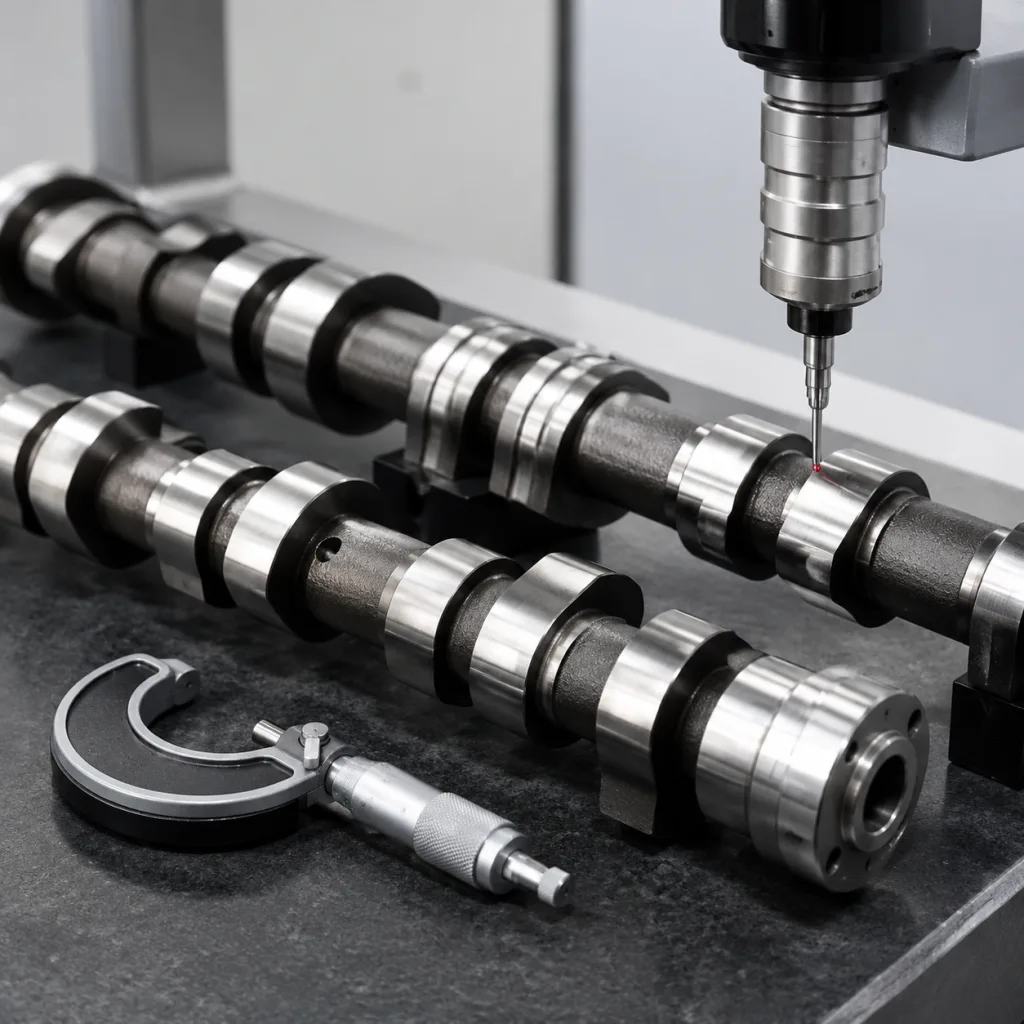
camshaft · 2026-06-17

Camshaft for Toyota Yaris Replacement Sourcing Guide

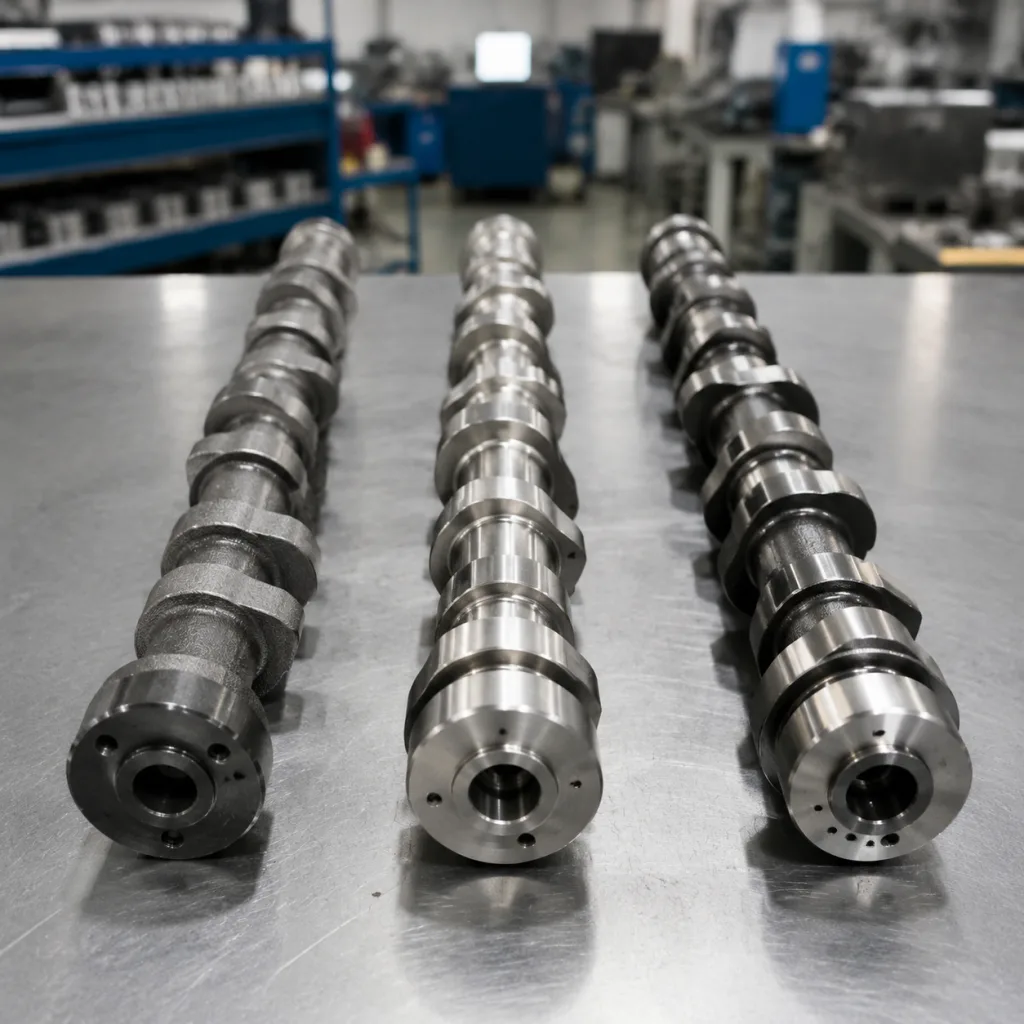
A camshaft for Toyota Yaris replacement programme fails when the buyer treats “Yaris” as the specification. It is not. The sourced part must match the target engine’s geometry, valve timing function, journal layout, oil-feed design, surface hardness, phaser or sprocket interface and export-protection needs. Small changes in lobe profile, thrust location, journal diameter or locating features can show up as start-up noise, unstable idle, emissions-related diagnostic faults or early follower wear.

For B2B buyers, the practical question is not “Can you supply a Yaris camshaft?” but “Which engine code, which position, which drawing or sample revision, which inspection limits and which delivery programme?” Before comparing suppliers, define the engine family, intake/exhaust position, drawing or master-sample basis, critical tolerances, MOQ, target price band, first-article approval route and delivery window.

This guide explains how Driventus approaches aftermarket camshaft supply for Yaris applications, from fitment confirmation and dimensional control to material selection, heat treatment, validation testing and export packaging. It is written for distributors, repair-chain buyers and sourcing engineers assessing repeatable supply. Driventus is an independent aftermarket manufacturer; vehicle brand names are used only to identify fitment.

Decision Gate 1: Confirm the Exact Yaris Engine, Not Just the Model Name

Toyota Yaris applications vary by market, model year, engine family and valve-train design. The same nameplate can use different camshaft designs across Europe, North America, Australia, Brazil and other regional programmes. A purchase file that only says “Toyota Yaris camshaft” leaves too much room for error.

Start with the data that separates one application from another: engine code, production date range, fuel type, displacement, intake or exhaust position, valve-train layout and any variable valve timing interface. Where possible, add VIN range or production month, number of journals, lobe count, dowel or keyway position, phaser or sprocket mounting pattern, oil-feed hole count and mating follower type.

Driventus confirms fitment through sample comparison, drawing review, customer-provided reference data or agreed dimensional targets. OE-style references, when supplied by the customer, are used only as cross-reference identifiers for application matching. They do not imply vehicle manufacturer approval, endorsement or genuine-part status.

For a first sourcing project, buyers usually send one new or low-mileage master sample plus 2–3 used market samples. The master sample gives the clean geometry; the used samples reveal regional variation and wear-prone zones. Driventus can then lock the application with an approved drawing, sample code and revision number so future purchase orders do not drift between similar Yaris engine variants.

Procurement teams can review related engine parts in our catalog and the engine category page at /products/engine-components.html. For modified packaging, private-label marking, application-specific drawings or added inspection documentation, custom manufacturing can be evaluated during RFQ.

Spec Deep-Dive: Dimensions That Decide Whether the Camshaft Works

A camshaft is not accepted because it looks right. It is accepted because the measured geometry preserves valve lift, timing, oil supply and assembly position. For a camshaft for Toyota Yaris replacement order, the buyer should ask which tolerance basis controls production: customer drawing, reverse-engineered sample, Driventus internal drawing or a mutually signed limit sample.

If the customer has no drawing, Driventus normally builds a control drawing from the approved sample and confirms measurable limits before mass production. That drawing should identify critical-to-function features separately from general machining dimensions.

</tr></thead><tbody> </tbody></table>A useful control plan separates 100% checks from sampling checks. Visual damage, blocked oil holes, locating features and critical mounting interfaces may justify 100% inspection. Journal diameter, lobe lift, hardness and roughness are commonly handled by defined sampling unless the programme risk requires more.

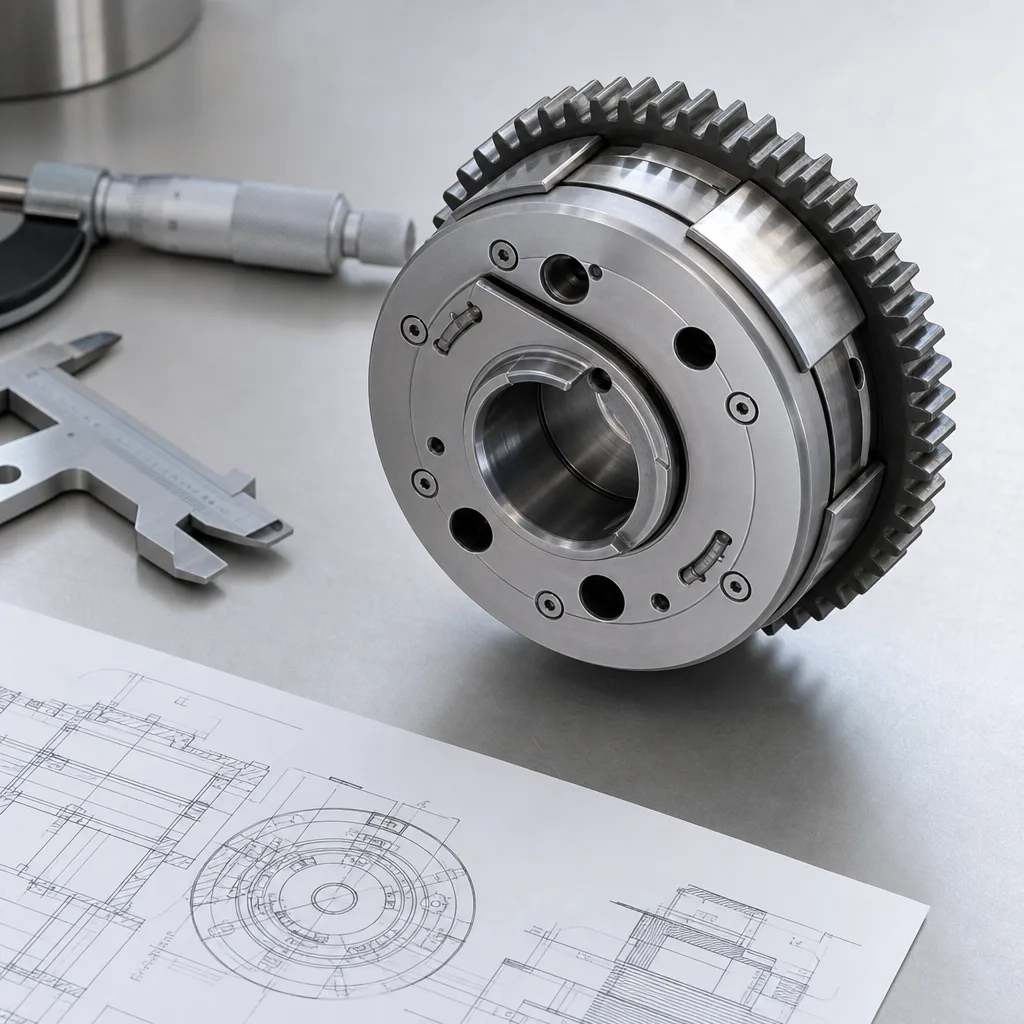
Variable valve timing adds another layer. The phaser interface, locating features and oil-control passages need separate verification because they influence start-up noise, timing response and diagnostic fault risk.

Material Route Comparison: Cast, Chilled or Steel Camshaft

The material decision should follow the follower design, load, lubrication environment, heat-treatment route and target cost. A camshaft can meet the main dimensions and still fail early if the surface structure or hardness range is wrong for the mating tappet or follower.

Common routes include chilled cast iron, ductile iron and forged or alloy steel. Chilled cast structures can provide wear-resistant lobe surfaces for suitable applications. Ductile iron may be selected where toughness and cost balance are important. Steel routes are often chosen where the design or load case calls for controlled hardening and ground bearing surfaces. The right choice is application-specific, not generic.

A typical aftermarket replacement specification may include:

  • Material route: chilled cast iron, ductile iron or alloy steel, agreed by application and confirmed by chemical composition or material certificate.
  • Hardness target: lobes commonly specified around 50–60 HRC for hardened steel routes or an equivalent HV range for chilled/cast structures, with the exact limit set by drawing/sample.
  • Case or chill depth: defined where relevant, commonly verified by metallographic cut-up on approval samples or periodic production samples.
  • Journal machining: precision grinding after rough turning and heat treatment where required, with burn marks, chatter and taper controlled at final inspection.
  • Surface roughness: specified for journal and lobe contact areas to support oil film formation and reduce break-in scuffing.
  • Straightness: checked after heat treatment and final grinding, with corrective straightening only allowed inside the agreed process window.
  • Cleanliness: oil passages blown through, deburred and checked before rust prevention and packaging.

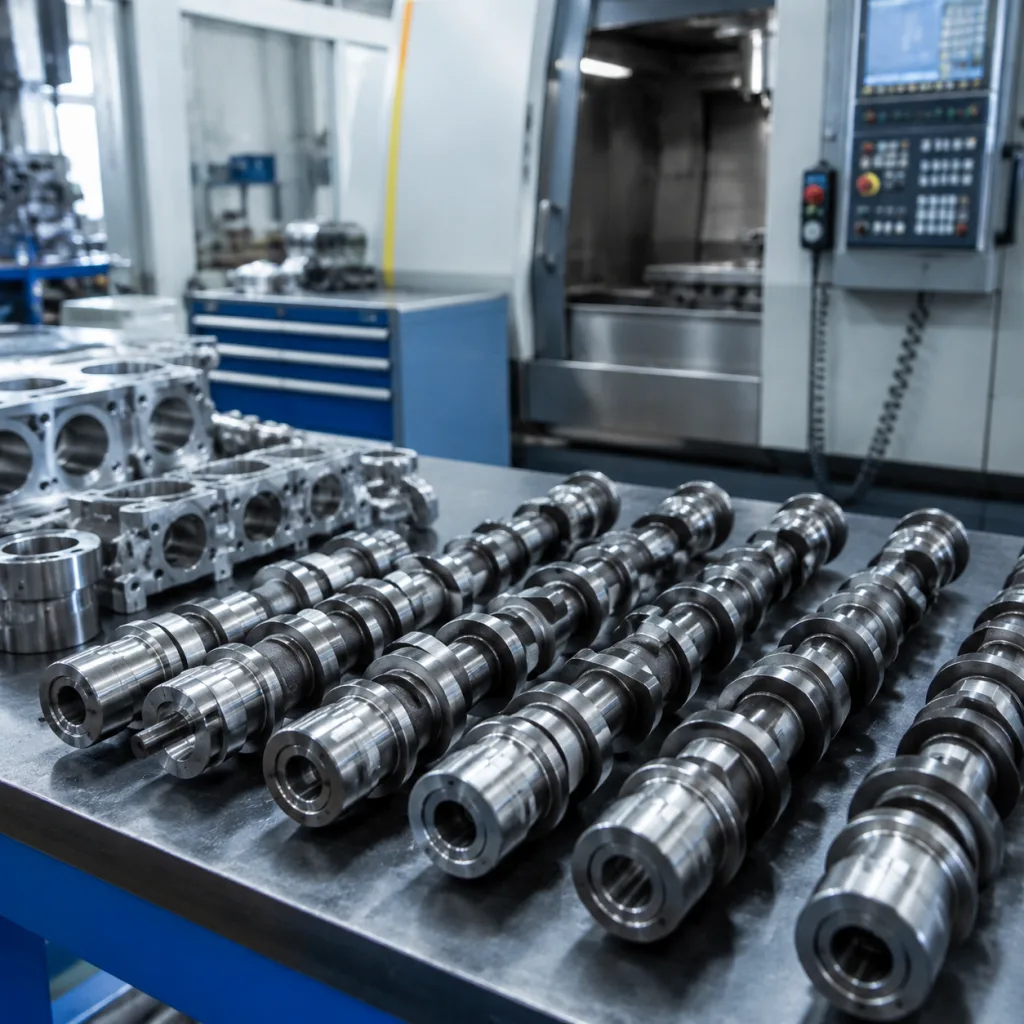
A common production route is incoming bar or casting inspection, rough turning, drilling or oil-passage machining, heat treatment or chilling control where applicable, semi-finish grinding, straightness correction, final lobe/profile grinding, deburring, washing, anti-rust treatment, final inspection and packing.

For buyers, the hold points matter as much as the process list. Confirm first piece after setup, first piece after heat treatment, final grinding approval and pre-shipment audit. Driventus uses process documentation aligned with IATF 16949:2016 and ISO 9001:2015 for production control, traceability, nonconforming product handling and corrective action. Our quality system also supports batch-level documentation for importers that need inspection records, material certificates or PPAP-style submissions for selected programmes.

Material Route Comparison: Cast, Chilled or Steel Camshaft

Approval Sequence: From First Article to Repeat Batch Control

Static dimensions are necessary, but they do not prove the whole supply programme. A new camshaft for Toyota Yaris replacement project should move through a controlled approval sequence: sample confirmation, first-article inspection, packaging review, shipment release and repeat-batch monitoring.

Typical validation items include:

Feature Practical target or tolerance to define Common inspection method
Overall lengthUsually controlled within ±0.10–0.20 mm against drawing/sampleVernier, CMM or height gauge
Journal diameter and roundnessDiameter often ±0.010–0.020 mm; roundness commonly ≤0.005–0.010 mmMicrometer, roundness tester
Lobe lift and base circleLift commonly held within ±0.03–0.05 mm; base circle matched to follower designCam profile gauge or CMM
Lobe angular positionTiming angle typically controlled within ±0.5°–1.0° where specifiedDedicated fixture, optical measurement
Thrust face widthWidth and parallelism set to prevent axial knock and scuffingMicrometer and comparator
Oil hole positionPosition, diameter and deburring checked to avoid blocked feed pathsPin gauge and visual inspection
Gear, sprocket or phaser interfaceHole PCD, dowel/keyway and face runout verified before approvalGo/no-go gauge and sample assembly
Straightness/runoutCommon final runout target ≤0.03–0.05 mm, application dependentV-block, dial indicator or CMM
Surface roughnessJournals often Ra 0.2–0.4 µm; lobes often Ra 0.4–0.8 µm by designRoughness tester

</tr></thead><tbody> </tbody></table>For first orders, a practical approval package may include 3–5 sample pieces, full dimensional layout, hardness readings at 3–5 lobe/journal locations, surface roughness readings, material certificate, photos of oil passages and packaging, and one retained master sample kept by both sides.

Repeat orders need a lighter but consistent rhythm. Buyers can agree an AQL sampling level or a fixed sample count per lot, for example 5 pieces per 500-piece batch for critical dimensions plus 100% visual and rust-prevention checks. Each lot should remain traceable to material, heat treatment, grinding inspection, final inspection and packing records.

Regulatory requirements can also affect the supply package. REACH (EC) No 1907/2006 may apply to substances used in coatings, rust inhibitors and packaging materials shipped into the EU. Vehicle emissions regulations such as ECE R-83 are not camshaft product approval standards, but camshaft timing errors can affect engine performance and emissions-related diagnostics. Replacement camshafts should therefore preserve the intended timing relationship of the original design.

Commercial Scenario: Distributor RFQ for a Yaris Camshaft Line

A technically correct camshaft still has to work as a supply item. Distributors and repair chains need stable MOQ, lead time, batch traceability, packaging, documentation and claims rules before they add a replacement camshaft line to stock. Multi-location chains have an extra risk: technicians may identify the same product by application, engine code, supplier number or internal SKU. Part-number discipline prevents wrong picks.

A strong RFQ should include:

  • Target application: Toyota Yaris, market region, model years and engine codes.
  • Required part scope: intake camshaft, exhaust camshaft or matched set.
  • Reference sample, drawing or OE-style cross-reference if available.
  • Annual volume, first order quantity and forecast by quarter.
  • Required documents: inspection report, material certificate, conformity statement or PPAP elements.
  • Packaging: neutral box, customer label, palletisation and corrosion-protection period.
  • Incoterms, destination port and required delivery window.

MOQ is usually driven by tooling status, raw-material batch size, heat-treatment load and packaging setup. Existing replacement applications may be quoted from about 100–300 pieces per part number. New or low-volume references may require 300–1,000 pieces to absorb fixture, drawing, inspection and packaging costs.

Lead time for an approved item is commonly 30–45 days after deposit and packaging artwork approval. New development with sample measurement, drawing confirmation, tooling or gauge preparation and first-article approval may require 60–90 days.

Price should be unpacked, not just compared. Material route, machining time, heat treatment, inspection level, scrap allowance, packaging, documentation and freight term all affect the quote. Separate EXW/FOB product price from carton, pallet, PPAP, testing and sea/air freight costs so a low unit price does not hide missing controls.

Driventus exports engine and powertrain components to more than 60 countries from Taizhou, Zhejiang. The product range includes pistons, crankshafts, gaskets, water pumps, turbochargers and camshaft-related engine components. This broader manufacturing base can help buyers consolidate engine parts when the technical specification, packaging plan and commercial terms fit the programme.

Commercial Scenario: Distributor RFQ for a Yaris Camshaft Line

Failure Modes to Challenge Before You Approve the Supplier

Most replacement camshaft problems are predictable. They usually trace back to weak application data, uncontrolled machining variation, unsuitable surface treatment or poor protection before installation. The sourcing job is to challenge those risks before the first bulk shipment leaves the factory.

Key failure modes include:

  • Wrong application match: similar Yaris variants share the model name but not the same camshaft geometry.
  • Timing or lift deviation: lobe profile, base circle or angular position falls outside the agreed control limit.
  • Oil-feed restriction: oil holes are misplaced, burred, blocked or poorly cleaned after machining.
  • Early wear: material, hardness, chill/case depth or roughness does not suit the mating follower.
  • Transit damage: lobes, journals, thrust faces or locating features contact other metal parts during export handling.
  • Weak traceability: batch records cannot connect a claim to material lot, heat treatment, grinding and final inspection.

Risk controls should be visible in the approval file: sample approval before bulk production, retained master samples, batch marking, inspection records and packaging drop checks for export cartons. For long-distance sea freight, camshafts need corrosion and impact protection at the lobes, journals, thrust faces and locating features. Rust-preventive oil, VCI materials, end caps and rigid separators are common options.

A typical export pack uses one camshaft in a sleeve or VCI bag, end protection on machined tips, separators that prevent metal-to-metal contact, an inner carton with part number and batch code, and a master carton or pallet designed for roughly 20–30 kg manual-handling limits where required. For humid routes or storage longer than 6 months, specify a 6–12 month corrosion-protection target and ask how the supplier verifies oil film, VCI material and carton sealing.

Claims rules should be agreed before shipment. Define the evidence required: photos of the part, carton and label, batch number, installation mileage, oil condition if available, failure location, quantity affected and whether the issue appeared before or after installation. Driventus can use batch traceability to review material lot, heat-treatment record, grinding inspection, final inspection and packing record.

When evaluating a camshaft for Toyota Yaris replacement supplier, ask for evidence rather than broad capability claims. Useful evidence includes dimensional reports, hardness readings, production flow charts, control plans, corrective-action examples and photos of the packaging method. A supplier that can explain inspection limits, sampling frequency, traceability and claims response is easier to manage over repeated shipments.

Frequently asked questions

Provide the engine code, model year range, market region, intake or exhaust position, valve-train details, variable valve timing interface, and any reference sample or drawing. If an OE-style reference is used, treat it as a fitment aid only. Final confirmation should be based on dimensions, application data and an approved sample or drawing revision.

Yes, private-label packaging and customer SKU labels can be discussed for qualified B2B orders. Include carton strength, barcode format, label language, pallet pattern, corrosion-protection period and destination-market compliance needs in the RFQ. MOQ may be higher when custom boxes, labels or printed inserts are required.

No. Driventus is an independent aftermarket manufacturer; vehicle brand names are referenced for fitment only. Replacement parts are supplied according to agreed specifications, samples, drawings and inspection criteria, without claiming vehicle manufacturer endorsement.

For drawings, samples, MOQ, lead time, target price logic or inspection-document requirements, send your application data and volume forecast to Driventus. You can [request a quote](/contact.html).

Request a Quote
Test or check Purpose Typical evidence supplied
Metallographic inspectionConfirms material structure and chill/case depth where relevantLab report, microstructure photo or production record
Hardness testConfirms lobe and journal wear resistanceHRC, HV or agreed scale report with test locations
Profile measurementConfirms lift curve and angular accuracyCam profile chart or CMM data
Runout inspectionReduces risk of noise and uneven loadingFinal inspection record
Oil passage verificationConfirms lubrication route is openVisual, air-flow or fixture check
Salt spray or rust prevention checkSupports export storage stabilityPackaging and coating record
Trial assemblyConfirms fit with mating componentsSample approval record
Packaging drop or vibration checkConfirms lobes and journals remain protected in export handlingCarton test record or photo report