Camshaft Toyota wholesale procurement usually comes down to three things: dimensional interchangeability, consistent batch quality, and dependable export supply. Buyers supporting Toyota applications often need to balance mixed demand across gasoline and diesel engine families while managing inventory pressure from distributors, fleet repair networks, and regional installers. The sourcing risk is not limited to whether a camshaft fits the cylinder head. It also includes whether every production lot holds the same lobe profile, journal finish, hardness depth, and packaging standard across repeat orders. Driventus Auto Parts manufactures engine and powertrain components in Taizhou, Zhejiang, for B2B customers in more than 60 countries. For camshaft programs, we support aftermarket distributors, OEM/Tier-1 sourcing teams, and repair-chain category managers with part-number cross-reference review, sampling, inspection records, and export documentation. Driventus is an independent aftermarket manufacturer; brand names are referenced for fitment only.
Wholesale Fitment Scope and Buyer Requirements
Toyota camshaft demand can include passenger cars, light commercial vehicles, pickups, and regional fleet applications. A practical sourcing file should define the application scope before price comparisons begin. Buyers normally provide the engine code, model year range, fuel type, intake or exhaust position, and any OE-style reference available. If a program uses generic cross-references such as OE 06A107065 or 11251..., those should be treated only as catalogue identifiers to confirm dimensional requirements, not as claims of vehicle manufacturer approval.
For an initial enquiry, Driventus asks buyers to send:
Engine family and cylinder head configuration
Intake, exhaust, or combined camshaft position
Target annual volume and first-order quantity
Required packaging format: neutral, private label, or bulk service pack
Market destination and documentation needs
Reference samples, drawings, or validated part-number list
Related engine parts can be reviewed in our catalog, including adjacent categories listed under /products/engine-components.html when a buyer is consolidating cylinder head components, gaskets, timing parts, or oil-system items.
MOQ, Lead Time, and Order Planning
Camshaft wholesale supply is most efficient when orders are planned by engine family rather than as isolated part numbers. That approach reduces changeover time, fixture variation, and packaging complexity. For mature references with existing tooling, pilot orders are often lower than they are for new-development items. New profiles, unusual castings, or dedicated private-label packaging usually require more planning.
Sourcing item
Typical B2B consideration
Procurement impact
Existing camshaft reference
Lower MOQ after sample approval
Faster replenishment planning
New part development
Higher MOQ and tooling review
Longer validation schedule
Private-label packaging
Carton artwork, label data, barcode rules
Added approval step before mass packing
Mixed-container shipment
Consolidation with other engine parts
Better freight utilisation
Distributor buffer stock
Rolling forecast or call-off order
More stable unit cost and availability
</tr></thead><tbody> </tbody></table>Lead time depends on reference maturity, order volume, machining capacity, surface treatment, and final inspection workload. For repeat programs, buyers should share a 3- to 6-month forecast so raw material, casting or forging capacity, and machining slots can be reserved. For new programs, sample approval should be separated from commercial launch timing. This prevents the first bulk order from being placed before dimensional and fitment checks are complete.
Manufacturing Controls for Camshaft Consistency
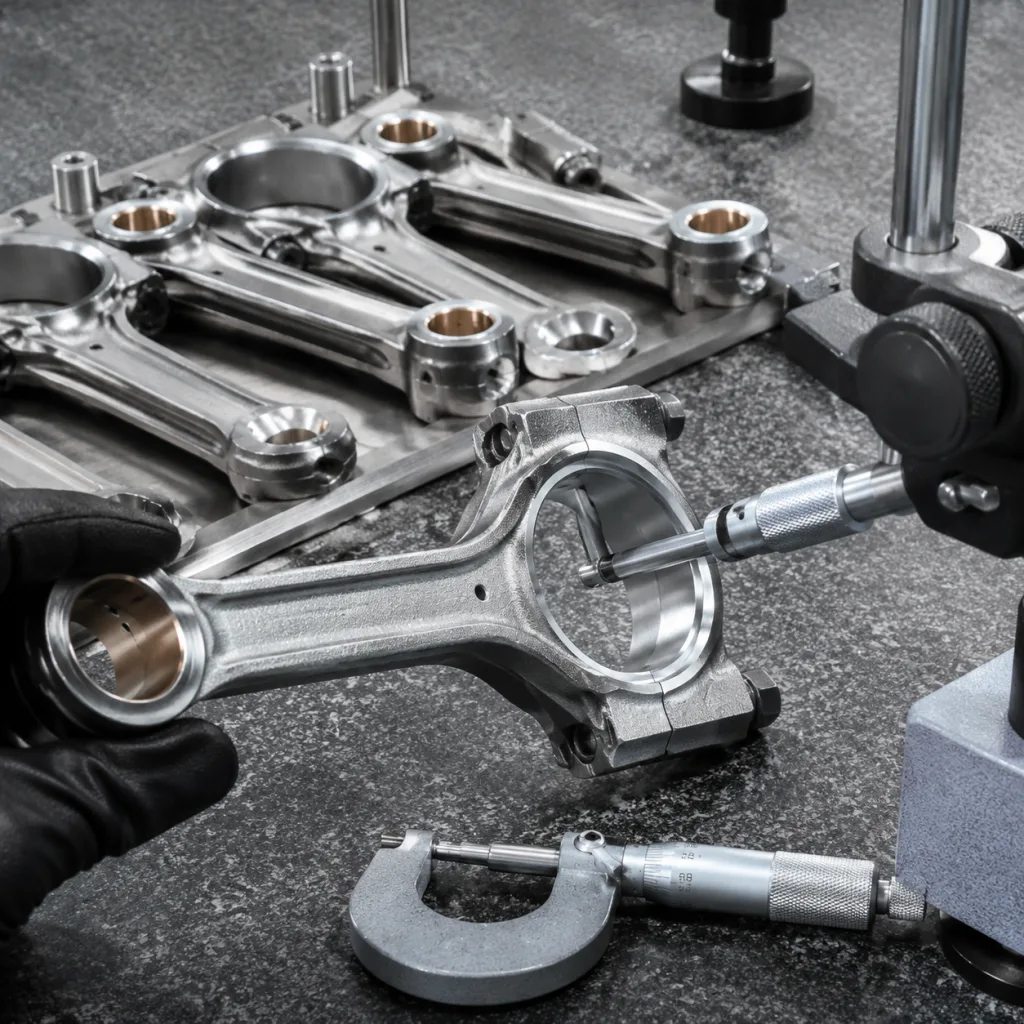
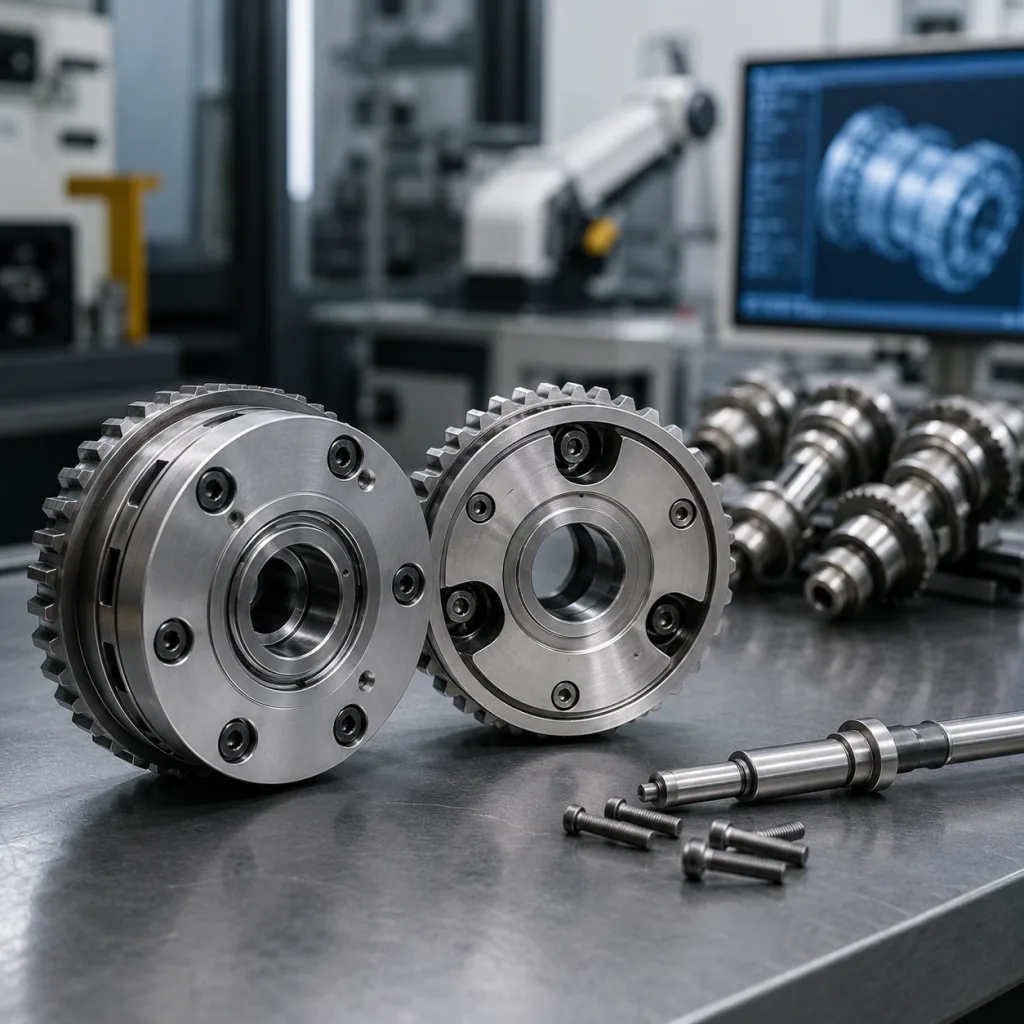
A camshaft is a precision rotating component. Small deviations in lobe geometry, journal diameter, or surface finish can affect valve timing, oil-film stability, noise, and service life. Driventus manages camshaft production through controlled material selection, machining, heat treatment or surface hardening where specified, cleaning, and final inspection.
Key manufacturing checks may include:
Lobe lift and profile verification against drawing or approved sample
Journal diameter and roundness inspection
Runout control across bearing journals
Surface roughness measurement on journals and lobes
Hardness and case-depth verification where applicable
Thread, dowel, keyway, or sensor feature inspection when present
Visual inspection for cracks, burrs, dents, and machining marks
Anti-rust oiling and protective packaging before shipment
For wholesale camshaft Toyota programs, the commercial question is repeatability. A first sample that passes is not enough unless the supplier can show lot control, traceability, and inspection discipline. Buyers should request control plans, inspection records, and batch traceability appropriate to their market risk. Driventus supports this through its documented quality system, aligned with IATF 16949:2016 and ISO 9001:2015 principles.
Factory Audit and Compliance Documentation
Import managers and sourcing engineers often need evidence before a supplier is added to an approved vendor list. For camshaft programs, a factory audit should cover process control, incoming material checks, calibration records, machining capability, inspection equipment, packaging control, and non-conforming product handling.
Driventus can support audit preparation with standard B2B documentation, subject to project scope and confidentiality requirements:
Business licence and export qualification documents
IATF 16949:2016 and ISO 9001:2015 certification evidence where applicable
Process flow, control plan, and inspection report format
Material and hardness test records for approved orders
Packaging specification and carton labelling details
Traceability records by batch or production lot
Corrective action reports when required
For EU and UK buyers, material and chemical compliance may require supplier declarations aligned with REACH (EC) No 1907/2006. For markets with strict customs review, buyers should confirm HS code treatment, country-of-origin marking, invoice detail, and carton labels before shipment. Camshafts are not emissions certification devices by themselves, but they are part of the engine system; cataloguing must avoid claims that imply vehicle manufacturer endorsement or regulatory approval unless such evidence exists.
Private Label, Cross-Reference, and Custom Manufacturing
Many distributors source camshafts as part of a broader engine repair range. Packaging, label structure, and cross-reference accuracy can be as commercially important as the component itself. Driventus can supply neutral packaging, customer-branded cartons, or bulk packaging depending on order volume and destination requirements.
Cross-reference work should be handled carefully. A buyer may provide Toyota application data, engine codes, TecDoc-style references, or OE-style identifiers. Driventus reviews these against samples, drawings, and measured features where available. The objective is fitment confidence, not brand association. Driventus is an independent aftermarket manufacturer; brand names are referenced for fitment only.
For distributors developing protected lines or filling catalogue gaps, custom manufacturing can include drawing review, sample reverse engineering, fixture planning, machining validation, and dedicated packaging. For OEM/Tier-1 sourcing teams, the same process can be adapted to drawing-controlled supply with stricter PPAP-style documentation where the customer requires it. Driventus does not claim approval or endorsement by any vehicle manufacturer.
How to Evaluate a Camshaft Supplier Before Awarding Business
Price comparison is useful only after the technical and supply assumptions are aligned. A low unit price can be offset by high rejection rates, unstable lead times, poor packaging, or weak cross-reference control. Before awarding a camshaft Toyota wholesale order, procurement teams should verify the supplier’s ability to support repeatable supply.
A practical supplier checklist:
Confirm IATF 16949:2016 and ISO 9001:2015 certification status or equivalent quality controls
Review sample inspection reports against the approved drawing or reference sample
Check whether lobe profile, journal dimensions, runout, hardness, and surface finish are measured
Ask how production lots are identified and traced after shipment
Review packaging strength for sea freight and warehouse handling
Confirm MOQ, sample cost, tooling cost, lead time, and reorder terms in writing
Verify export documents, incoterms, and destination compliance needs
Request a corrective-action process for field or warehouse claims
A supplier visit or remote audit is recommended for high-volume programs. Buyers should also test first-lot samples in the destination market before broad release, especially when the application mix includes older vehicles, regional engine variants, or private-label catalogue expansion.
Frequently asked questions
Send the engine code, application range, intake or exhaust position, annual forecast, first-order quantity, packaging requirement, and any drawing, sample, or OE-style reference available. This helps confirm fitment scope, MOQ, lead time, and inspection requirements before pricing.
Yes. Driventus can support neutral, private-label, or bulk packaging depending on MOQ and project scope. Label data, carton artwork, barcode requirements, and market compliance details should be approved before mass packing.
No. Driventus is an independent aftermarket manufacturer; brand names are referenced for fitment only. We do not claim approval, endorsement, or authorisation by any vehicle manufacturer.
For a sourcing review, sample plan, or wholesale quotation, share your camshaft application list and target volumes. You can [request a quote](/contact.html) through our contact page: /contact.html