Camshaft Toyota OE Equivalent: What Buyers Should Verify
For procurement teams, a camshaft Toyota OE equivalent part is not defined by appearance alone. The correct replacement must match the OE drawing intent for journal sizes, lobe lift, base circle, timing phasing, surface finish, and heat-treatment condition. A part that fits the cylinder head but changes valve events can raise emissions, reduce durability, or create warranty risk. Buyers should also verify packaging consistency, batch traceability, and test records before placing repeat orders.
Driventus supplies camshafts for aftermarket, OEM, and Tier-1 programmes from Taizhou, Zhejiang. We are an independent aftermarket manufacturer; brand names are referenced for fitment only. Our production system is certified to IATF 16949:2016 and ISO 9001:2015, with material and process controls aligned to export requirements in the EU, UK, US, Canada, Australia, and Brazil. This article explains what to confirm when sourcing a replacement camshaft, and how to reduce mismatch risk before production release.
What OE-equivalent means for a Toyota camshaft
OE-equivalent means the part matches the functional and dimensional requirements needed to replace the original component without changing engine calibration intent. For a camshaft, that includes:
Journal diameter and centreline location
Overall length and thrust interface geometry
Lobe lift, duration, and lobe separation relationship
Timing reference features, including keyway, sprocket interface, or trigger geometry where applicable
Surface hardness and wear resistance after heat treatment
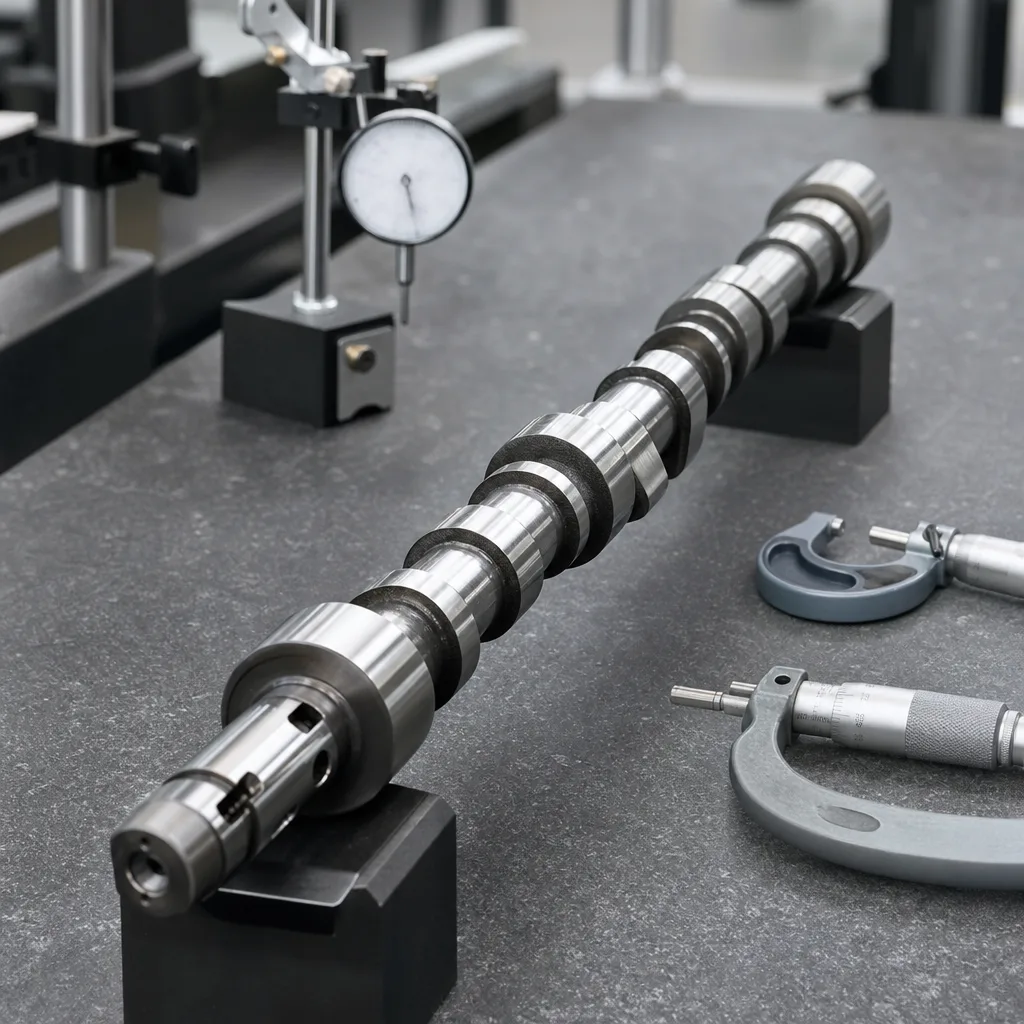
Runout, straightness, and finish on critical bearing surfaces
A catalogue listing alone is not enough. Buyers should confirm the OE number, engine code, model year range, and whether the application is for intake, exhaust, or a paired set. Driventus supports OE cross-reference review for replacement programmes, but final fitment validation must still be completed against the target engine family and the buyer’s own release requirements.
Key checks before you approve a replacement order
Use a controlled checklist before approving a camshaft purchase order:
Check item
What to verify
Why it matters
OE reference
OE 06A107065 or other application-specific cross-reference supplied by the buyer
Prevents wrong-engine substitution
Dimensions
Journal size, length, lobe profile, thrust face
Ensures assembly fit and timing integrity
Material
Alloy steel or cast iron grade, as specified
Affects fatigue life and wear
Heat treatment
Case depth, hardness range, temper condition
Controls lobe and journal durability
Runout
Measured against the agreed tolerance
Reduces bearing noise and wear
Surface finish
Critical area roughness
Protects oil film stability
Packaging
VCI protection, label traceability, batch code
Supports storage and recall control
</tr></thead><tbody> </tbody></table>For buyers working across multiple regions, also confirm compliance exposure for substances and documentation under REACH (EC) No 1907/2006 where applicable. If your programme needs a broader engine family release, review our catalog and products/engine-components.html for related components that may share the same application set.
Materials, manufacturing, and validation testing
Camshaft quality depends on process control as much as raw material selection. Common manufacturing routes include chilled cast iron for some high-volume applications and forged or machined alloy steel for higher load requirements. The correct route depends on engine speed, valve-spring load, lubrication regime, and target durability.
At a minimum, procurement teams should request evidence of:
Incoming material certification and heat number traceability
CNC machining control for journal and lobe geometry
Hardness verification after heat treatment
Dimensional inspection with calibrated gauges or CMM reports
Dynamic balance and runout checks where specified
Endurance or bench validation aligned to the programme requirement
Where a customer requires custom geometry, Driventus provides custom manufacturing for engine-component projects, including drawing-based development and controlled sampling. For standard replacement parts, our process follows the quality system built around IATF 16949:2016 and ISO 9001:2015.
How to reduce mismatch risk in cross-reference sourcing
Replacement sourcing fails most often when the buyer relies on one identifier only. The safest method is to confirm multiple reference points before release.
Recommended verification steps
1. Match the OE number, engine code, and cylinder count. 2. Check whether the part is intake, exhaust, or a complete set. 3. Compare lobe lift and timing events against the OE or approved sample. 4. Confirm sensor-trigger features, sprocket type, and thrust design. 5. Review photo evidence of the exact finished part, not a generic family image. 6. Ask for sample measurement records before volume commitment.
For large distributors and repair-chain buyers, consistent labelling is important. Batch codes, carton quantity, and country-of-origin statements should remain stable across replenishment cycles. If you need a sourcing review or drawing-based confirmation, request a quote and include the OE reference, engine code, and annual volume forecast.
What procurement teams should ask a supplier to supply
A camshaft supplier should be able to provide a controlled technical pack, not only a price list. Ask for:
Dimensional inspection report for the first article or pilot batch
Material certificate linked to heat or lot number
Heat-treatment record and hardness data
Packing specification and label format
Sample approval status and lead time by batch size
Statement of conformity to the agreed drawing or sample
If the supplier cannot show traceability from material to finished part, the risk of nonconforming supply rises quickly. For export markets, consistent documentation also helps customs clearance and internal QA review. Driventus is an independent aftermarket manufacturer; brand names are referenced for fitment only. That disclosure should remain visible in your internal master data and external item descriptions.
Even when a replacement camshaft installs correctly, small geometry differences can change engine behaviour. A slightly altered lobe profile may shift torque delivery, idle quality, vacuum level, and exhaust temperature. In modern engines, those changes can also affect emissions performance and catalyst loading.
For this reason, buyers should not accept vague terms such as “fits” or “same quality” without objective data. Better commercial language includes:
OE cross-reference confirmed
Dimensions verified to drawing or approved sample
Surface hardness tested
Runout and balance checked
Batch traceability available
For aftermarket distributors, the commercial benefit is lower return rate. For OEM and Tier-1 programmes, the benefit is controlled release and fewer field claims. The part must behave as the original design intended, not only match the packaging label.
Frequently asked questions
It means the camshaft is intended to match the original part’s fit, function, and critical dimensions for a specific Toyota application. Buyers should verify OE reference, engine code, lobe profile, and material condition before approval.
No. OE number is the starting point, not the full specification. Confirm intake or exhaust position, engine variant, timing features, and dimensional data to reduce mismatch risk.
Request material certificates, heat-treatment and hardness records, dimensional inspection data, packaging specification, and traceability details. For controlled programmes, ask for pilot sample approval records as well.
If you are validating a replacement programme or need a drawing-based cross-reference review, contact Driventus for technical support and commercial pricing at /contact.html.