Camshaft for Jaguar XF Aftermarket Replacement: Buyer Guide
A camshaft for Jaguar XF aftermarket replacement must match the original profile, journal geometry, timing reference, and material specification closely enough to support correct valve event timing and long-term durability. For procurement teams, the main risks are not only fitment errors but also variation in lobe lift, base-circle diameter, runout, and surface finish. Those variables affect idle quality, emissions, cold start behaviour, and wear on followers and timing components. Driventus produces engine and powertrain parts for B2B buyers and validates components against dimensional and metallurgical requirements before shipment. Driventus is an independent aftermarket manufacturer; brand names are referenced for fitment only. For buyers sourcing XF applications, the practical question is whether the replacement part is dimensionally consistent, traceable, and suitable for your repair or distribution channel. This article outlines what to verify, which standards matter, and how to compare supply options without relying on marketing claims.
What a Jaguar XF camshaft replacement must match
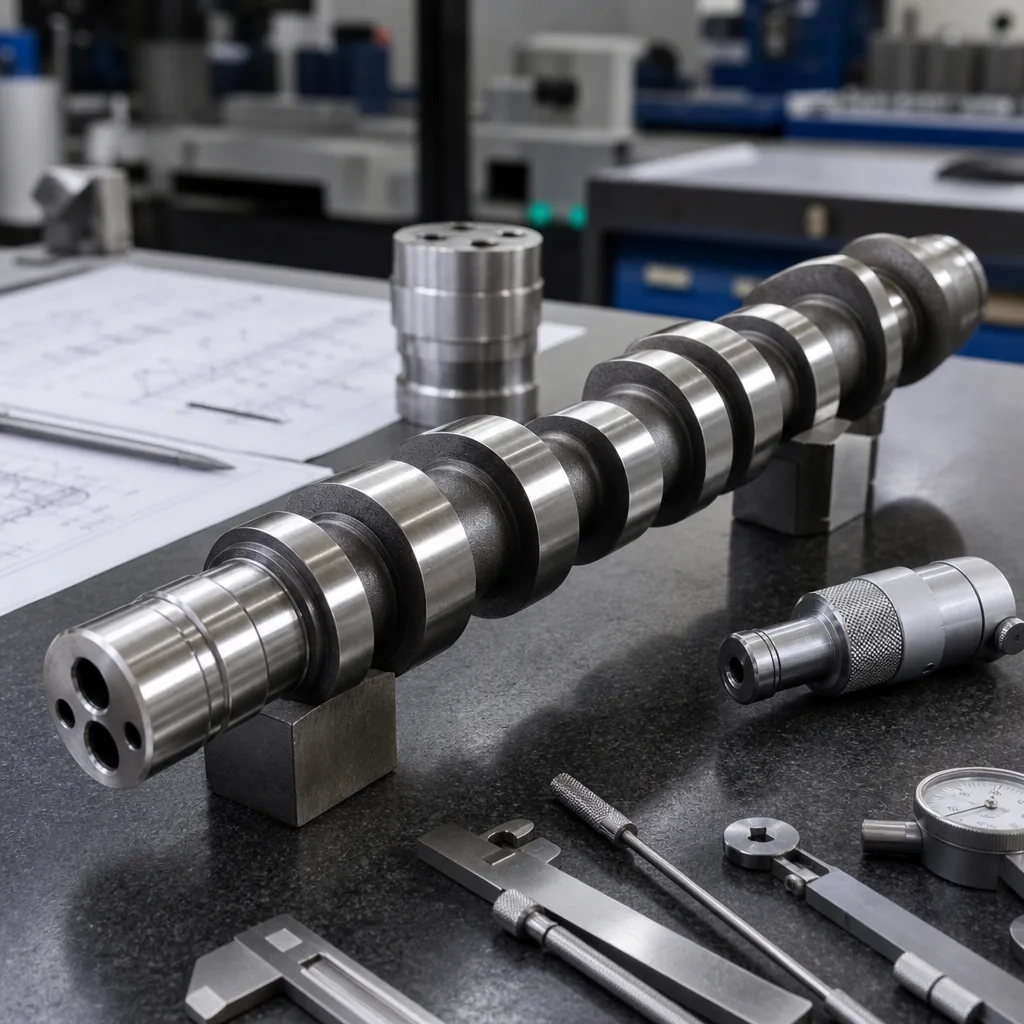
For replacement sourcing, the camshaft must align with the engine code and valve-train design, not only the vehicle model. Jaguar XF applications may differ by cylinder count, intake versus exhaust position, and generation. Procurement teams should confirm the following before purchase:
- Journal diameter and bearing spacing
- Overall length and thrust face geometry
- Lobe lift, duration, and phasing reference
- Trigger wheel or position-sensor features, if present
- Surface hardness and finish on lobe and journal areas
- OE part number cross-reference where available
A correct aftermarket replacement should preserve the original timing behaviour within the engine builder’s acceptance window. For buyers handling mixed fleets, the safest approach is to match by engine code and OE reference, then validate the physical sample against the original component before opening volume orders.
Dimensional and material checks procurement teams should request
When qualifying a camshaft for Jaguar XF aftermarket replacement, ask for measured data rather than a simple fitment statement. The most useful supplier pack includes an inspection report, material declaration, and packaging traceability.
| Check item | Why it matters | Typical buyer evidence |
|---|---|---|
| Journal diameter and runout | Prevents oil film loss and noise | CMM or micrometre report |
| Lobe lift and base circle | Controls valve opening and closing | Profile measurement sheet |
| Surface hardness | Reduces wear at the lobe-follower contact | Hardness test record |
| Dynamic balance | Limits vibration at speed | Balance certificate |
| Heat-treatment consistency | Supports repeatability across batches | Process control records |
| Traceability | Supports claims handling and batch control | Lot number and label record |
| Factor | OE-equivalent aftermarket | Low-spec alternative |
|---|---|---|
| Dimensional match | Controlled to drawing and inspection data | Often only visual fitment |
| Surface finish | Measured on critical contact areas | Not always reported |
| Heat treatment | Documented and repeatable | Variable batch control |
| Traceability | Lot-based | Limited or unclear |
| Return risk | Lower when validated | Higher due to noise or wear issues |
| Buyer use case | Distribution, workshop supply, fleet repair | Short-term price-driven buying |