Warped Cylinder Head Causes and Fixes for B2B Buyers
A warped cylinder head can create compression loss, coolant mixing, misfire, and repeat gasket failure. For procurement teams, the issue is not only the defect itself but the likely root cause, the inspection method used by the workshop, and whether the replacement part is dimensionally stable enough for fleet or aftermarket use. The usual trigger is overheating, but machining error, poor clamping, corrosion, and repeated thermal cycling can also distort the head deck. A useful response is to separate symptoms from causes, then verify flatness, hardness, surface finish, and pressure integrity before release. Driventus is an independent aftermarket manufacturer; brand names are referenced for fitment only. We produce engine and powertrain components in Taizhou, Zhejiang, under IATF 16949:2016 and ISO 9001:2015 controls, with export programs for distributors, repair chains, OEM and Tier-1 buyers across 60+ countries.
What a warped cylinder head does to engine performance
A warped head changes the seal between the head and block. Once the deck is no longer within tolerance, the gasket can lose uniform clamp load and allow combustion leakage, coolant seepage, or oil cross-contamination.
Typical field symptoms include:
Hard starting after heat soak
White exhaust smoke from coolant ingress
Unexplained coolant loss with no external leak
Bubbles in the expansion tank
Misfire on one or more cylinders
Low compression that does not recover after valve work
For procurement teams, this matters because a shop may blame the head when the actual failure started with the cooling system, the thermostat, the fan circuit, or an incorrect torque sequence. The replacement decision should follow inspection results, not symptom alone.
Common causes of cylinder head warpage
The main causes are well established and usually trace back to heat management or prior machining quality.
Cause
What happens
Typical inspection point
Overheating
Aluminium heads expand quickly and can exceed elastic recovery
Coolant passages, thermostat, radiator flow
Uneven torque
Clamp load becomes uneven across the deck
Bolt pattern, torque angle, yield bolt use
Repeated thermal cycling
Small distortion accumulates over time
History of boil-over or towing load
Corrosion
Local pitting creates sealing loss and hot spots
Water jacket condition, coolant chemistry
Poor machining
Deck flatness or surface finish is outside specification
Straightedge, feeler gauge, roughness check
Crack-related distortion
Local stress alters geometry near combustion or ports
Dye penetrant, pressure test
</tr></thead><tbody> </tbody></table>If a head has already been resurfaced once, confirm that the final thickness still supports the OE design and valve train geometry. Excessive milling can create secondary problems such as altered compression ratio, timing change on some engines, and reduced gasket robustness.
How to inspect a suspected warped head
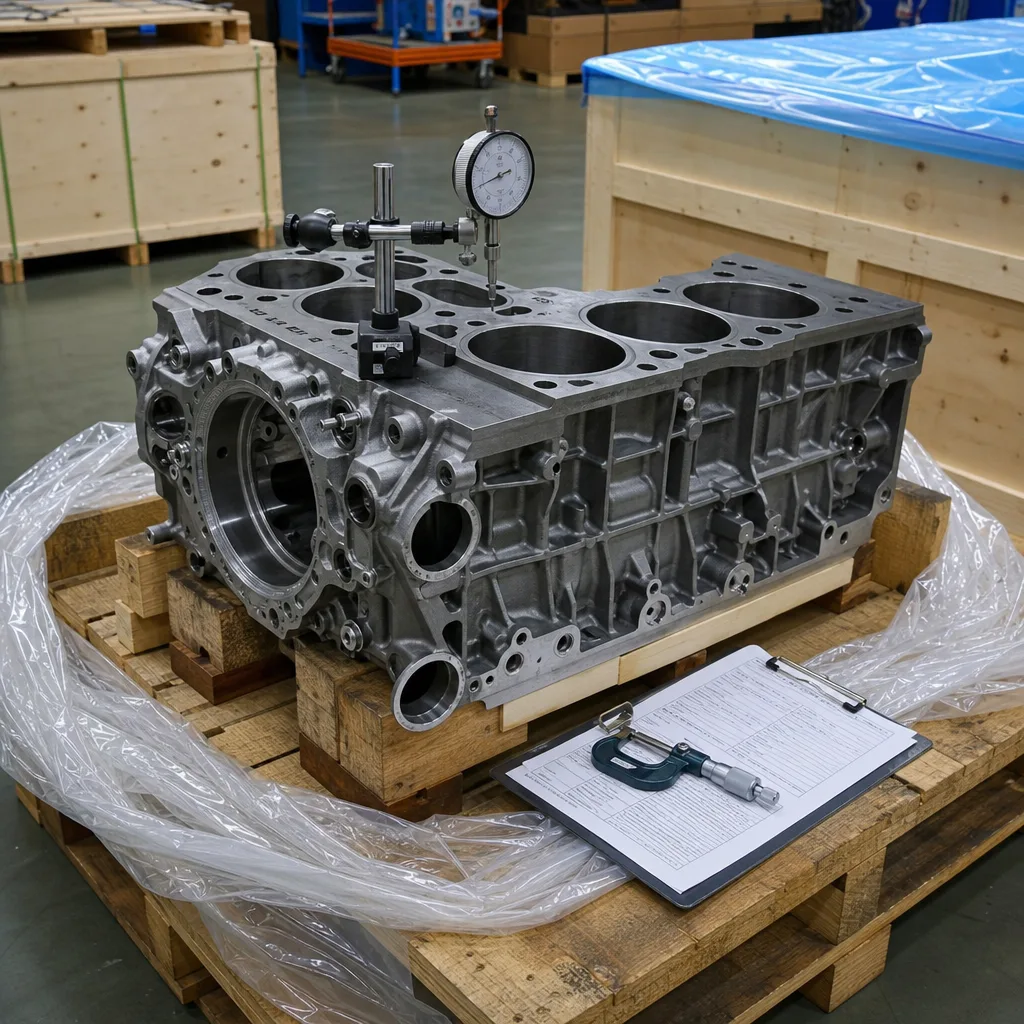
A proper inspection starts with cleaning and de-oiling the deck. Carbon deposits, gasket residue, and rust can hide the true surface condition.
Practical inspection sequence
1. Check the cooling system for the original failure source. 2. Clean the head and block mating faces. 3. Measure flatness with a calibrated straightedge and feeler gauges at multiple axes. 4. Record maximum deviation against the engine maker’s service limit. 5. Inspect for cracks around valve seats, fire rings, and coolant ports. 6. Verify valve protrusion, seat condition, and cam journal alignment where relevant. 7. Confirm pressure integrity after machining or repair.
For repeatability, use the same metrology method across incoming inspections. A head that passes one workshop’s informal check can still fail under a more controlled measurement approach. Procurement teams should ask for the inspection method, the acceptance limit, and the measured result, not just a pass/fail note.
Fix options: repair, resurfacing, or replacement
The correct fix depends on material, amount of distortion, and crack condition. Minor distortion on a serviceable casting may be corrected by resurfacing, but only if the remaining thickness stays within safe limits and the surface finish matches gasket requirements.
Replacement is usually the better option when:
The head is cracked or pressure fails after testing
Prior machining has already reduced thickness close to limit
Seat recession or guide wear is present
The engine has repeated overheating damage
The application demands high uptime and predictable lead times
For B2B buyers, the decision should also include traceability and warranty handling. Review our quality system for process controls under IATF 16949:2016 and ISO 9001:2015. If you need broader sourcing support, see our catalog or engine components for related parts.
What to specify when sourcing a replacement head
When a replacement is needed, dimensional compatibility is only the starting point. Buyers should request the following:
Material grade and heat-treatment route
Deck flatness tolerance and final machining method
Surface roughness range suitable for MLS or composite gaskets
Pressure-test status and leakage criterion
Valve seat, guide, and spring pocket verification
Packaging that protects machined faces during export
Traceability by batch or serial code
If your program needs a non-standard casting, port change, or machining variation, use custom manufacturing. For OE fitment discussions, cross-reference by the exact vehicle application and OE 06A107065-type format where applicable, but do not assume manufacturer approval. Driventus supplies independent aftermarket parts only.
Buyer checklist for repeat-failure prevention
A replacement head will only hold up if the root cause is removed. Before release to a distributor, workshop chain, or fleet customer, confirm the following:
Cooling system has been pressure-tested
Thermostat and radiator flow are verified
Head bolts or studs are replaced if specified
Block face is measured, cleaned, and within limit
Gasket selection matches combustion pressure and bore design
Torque procedure follows the service manual exactly
Final assembly includes a documented heat-cycle inspection where required
Published references that may apply by market and application include IATF 16949:2016, ISO 9001:2015, REACH (EC) No 1907/2006, and ECE R-83 where emissions-related fitment is relevant. For diesel or high-load programmes, request evidence of pressure testing and dimensional inspection before shipment.
Frequently asked questions
Yes, if crack testing passes, the remaining thickness stays within the engine maker’s limit, and surface finish is suitable for the gasket type. If the head is already near minimum thickness, replacement is safer.
Use a cleaned head, a calibrated straightedge, and feeler gauges across multiple axes. Compare the maximum gap with the service manual limit, then verify the cooling system fault that caused the heat event.
Yes. Driventus supplies independent aftermarket parts and can support dimensional checks, batch traceability, and export packaging for distributors, repair chains, and OEM-related procurement programmes. Use /contact.html to start a review.
If you are sourcing replacement heads or need inspection data for a specific application, please [request a quote](/contact.html) and our team will respond with technical support and availability.