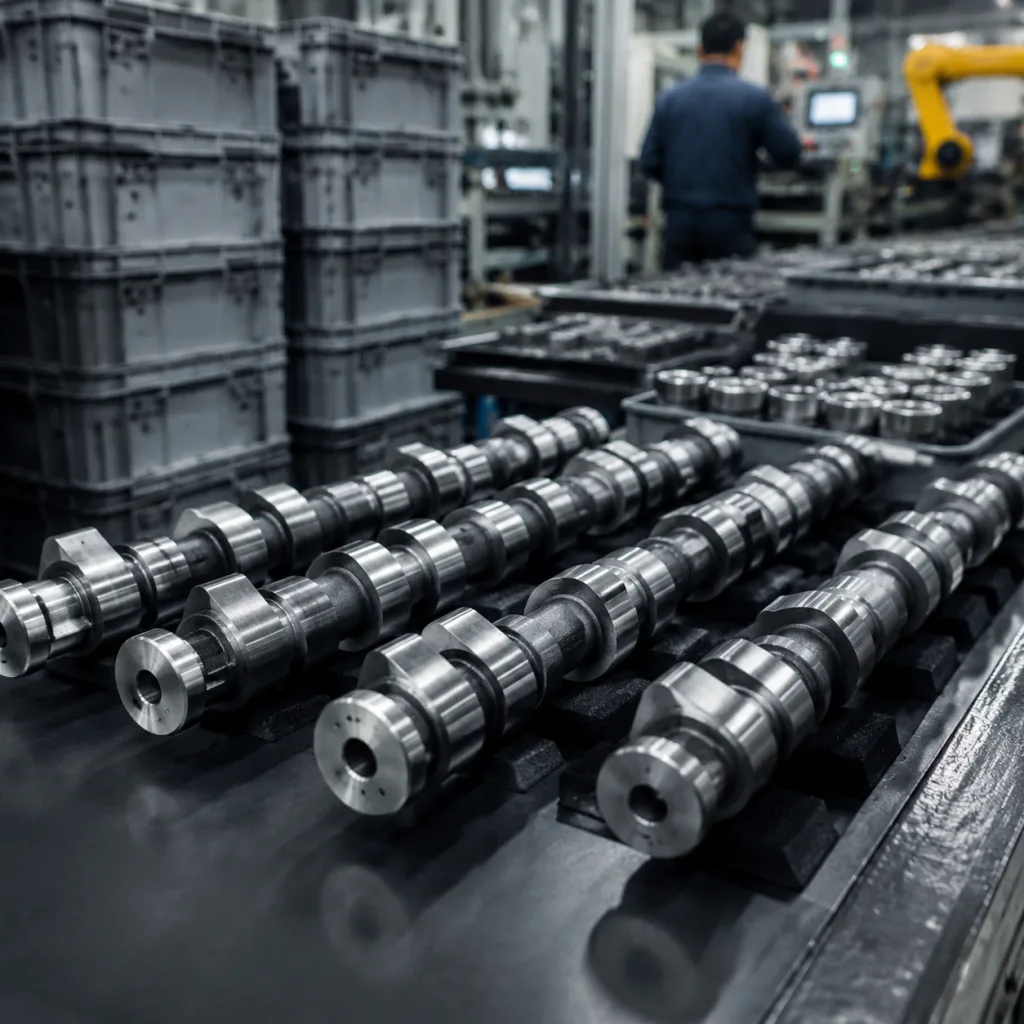
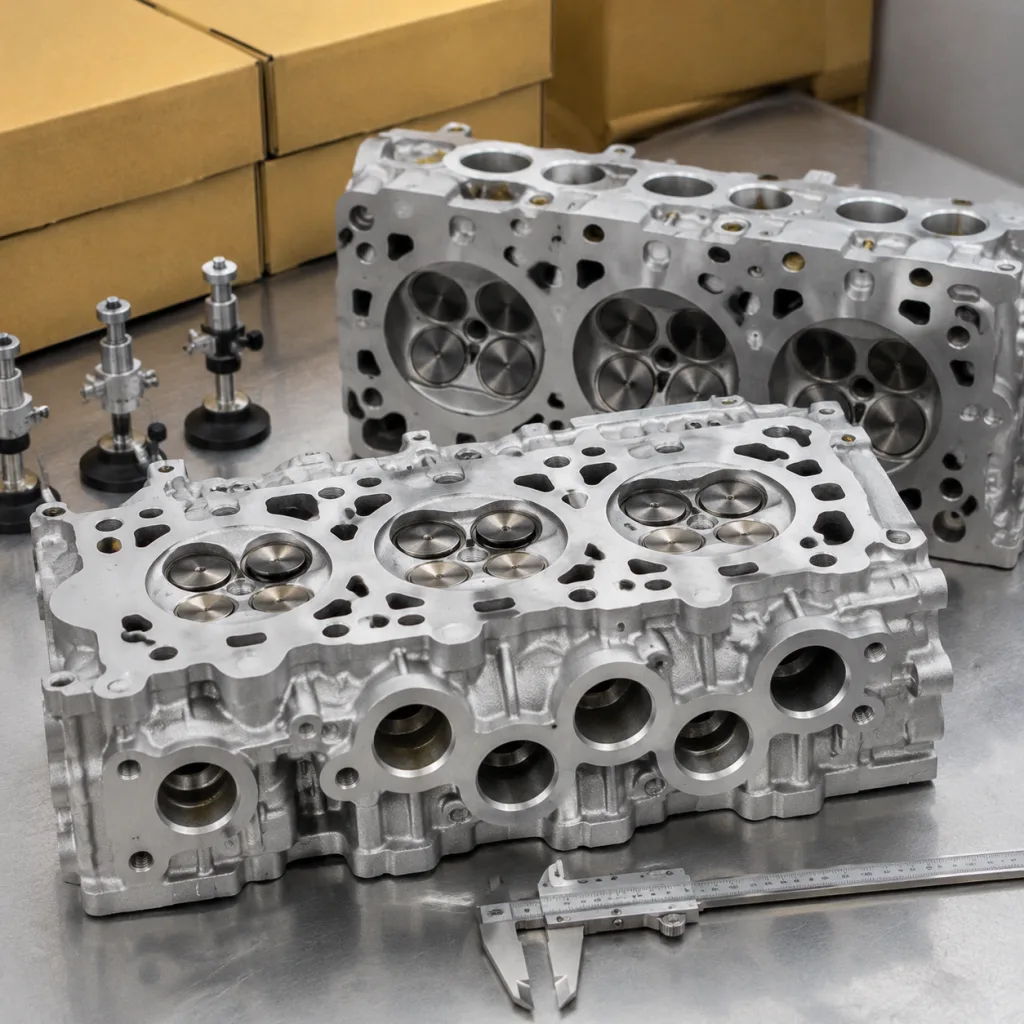
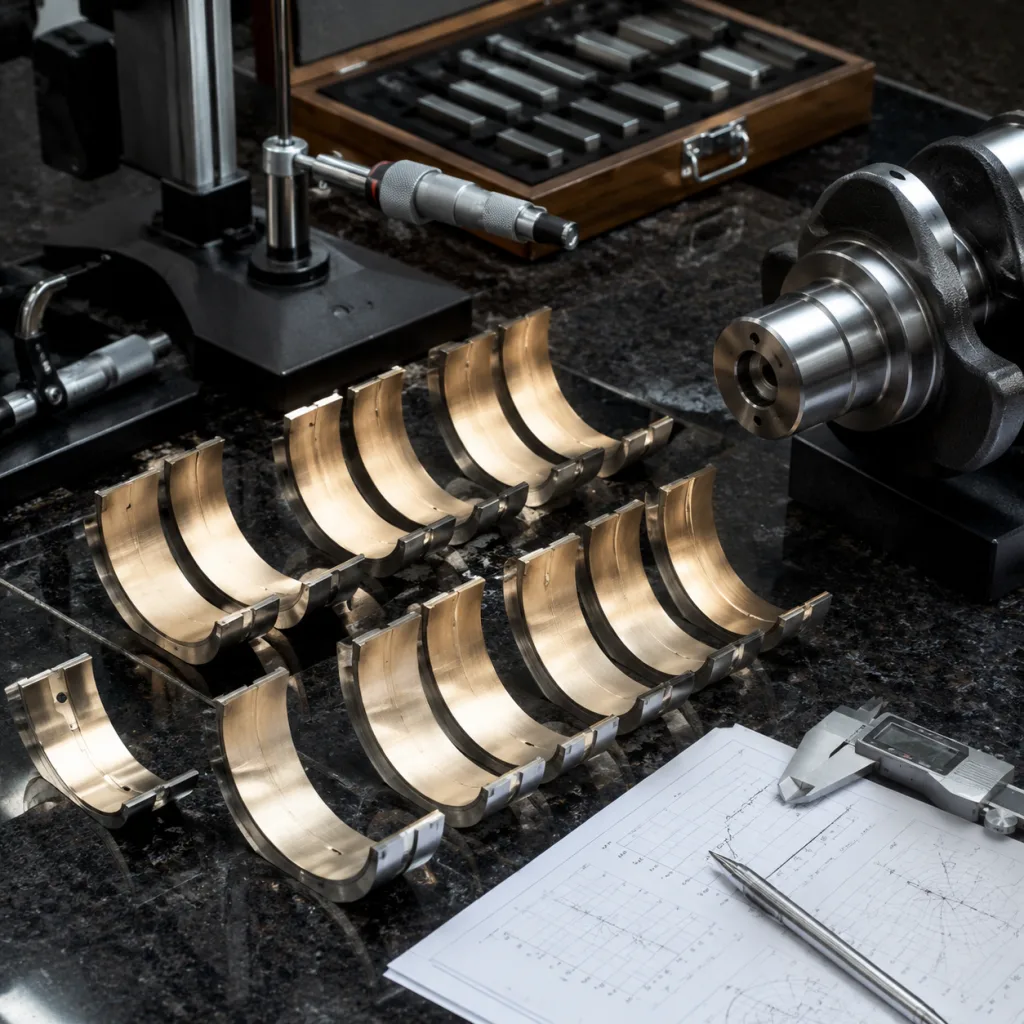
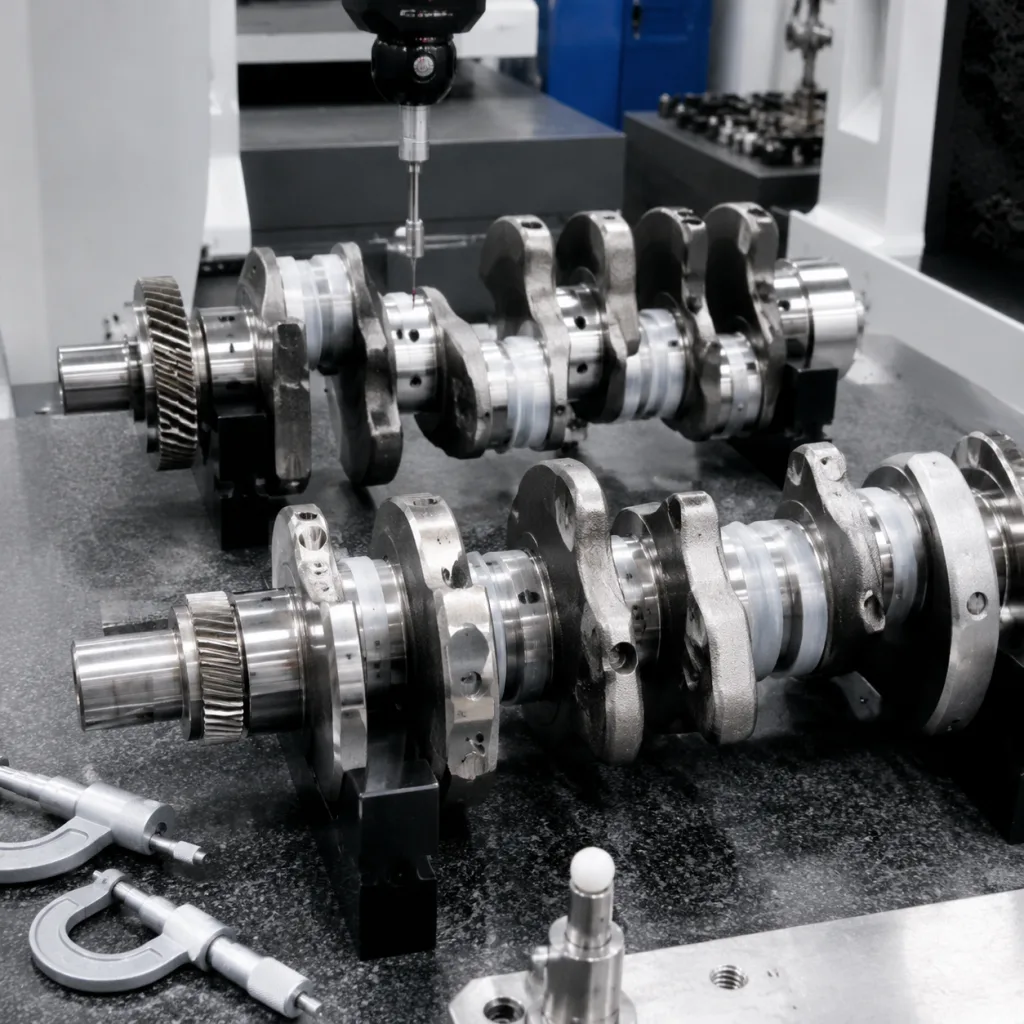
A camshaft for Skoda Fabia OE equivalent programme is not won by matching a vehicle name in a catalogue. It is won by proving that the replacement part holds the original functional geometry: valve timing, lift, oil-feed position, thrust control, journal loading, hardness, surface finish, and corrosion protection through storage and transport. For distributors, repair chains, and importers, the real sourcing question is simple: will the same reference fit correctly, run quietly, resist wear, and arrive saleable batch after batch? Driventus manufactures engine and powertrain components in Taizhou, Zhejiang, for B2B and aftermarket programmes in more than 60 countries. This article gives procurement teams a sharper way to evaluate Skoda Fabia camshaft supply: where mistakes occur, which tolerances matter, how validation should be staged, what MOQ and lead time actually depend on, and how to write an RFQ that does not leave room for guesswork. Driventus is an independent aftermarket manufacturer; brand names are referenced for fitment identification only.
Start With the Decision: Fitment Evidence Before Price
OE-equivalent does not mean approval, endorsement, or supply by the vehicle manufacturer. In aftermarket sourcing, it means the replacement camshaft is engineered to match the relevant original equipment design intent for fitment and function. That includes journal position, lobe profile, base circle, keyway or drive features, oil-feed location, thrust face geometry, surface hardness, and the timing relationship between lobes.
The first buying decision is not “which supplier is cheapest?” It is “which part definition is locked tightly enough to quote?” For Skoda Fabia engine applications, confirm the engine code, fuel type, valve-train layout, production year range, emission generation, and whether the requirement is for an intake camshaft, exhaust camshaft, or matched set. A single nameplate can cover several engines across regions and model years. Model-name sourcing creates cross-reference risk; engine-code sourcing reduces it.
Before pricing a camshaft for Skoda Fabia OE equivalent programme, lock at least four identifiers:
Engine code and market application.
Intake, exhaust, or matched-pair position.
OE or aftermarket reference used for interchange checking.
Drawing, 3D data, master sample, or sample-development status.
Reliable interchange work normally combines TecDoc-style application data, customer drawings, sample measurement, and OE reference numbers where available. If an enquiry includes an OE reference such as OE 06A… or OE 11251…, Driventus can check the interchange logic against drawings, samples, and buyer-provided fitment data. We do not invent, imply, or claim ownership of brand-owned part numbers.
When the buyer has no drawing, the safer route is reverse engineering from 2–3 clean samples. At least one should be unused or low-mileage if available. A worn camshaft can still identify layout and drive features, but it should not become the master for lobe profile, base circle, or journal condition.
A camshaft can install correctly and still fail commercially. The risk sits in small deviations: a lobe ground slightly off profile, a journal outside the oil-clearance window, an oil hole with a burr, a phase angle outside tolerance, or a surface finish that looks acceptable but accelerates follower wear.
For replacement programmes, agree measurable characteristics before production approval. Then link them to a control plan with inspection frequency, gauge method, acceptance criteria, and reaction steps for out-of-tolerance findings.
Typical aftermarket control targets are not a substitute for the approved drawing, but they show what must be discussed before purchase order release:
Parameter
Buyer target to define
Practical acceptance example
Overall length
Match drawing or master sample
Drawing nominal, commonly within ±0.10 mm
Journal diameter
Control oil clearance
Often ±0.010–0.020 mm depending on bearing design
Journal roundness
Prevent local oil-film collapse
Commonly ≤0.005–0.010 mm
Journal runout
Limit vibration and bearing load
Commonly ≤0.03 mm after final straightening
Lobe lift
Maintain valve event amplitude
Commonly within ±0.03–0.05 mm of approved profile
Base circle
Confirm follower preload relationship
Commonly within ±0.02–0.04 mm
Lobe phase angle
Maintain timing relationship
Commonly within ±0.5°–1.0° cam angle
Surface roughness, journals
Protect bearing interface
Typical Ra 0.2–0.4 µm where specified
Surface roughness, lobes
Control follower wear-in
Typical Ra 0.4–0.8 µm depending on follower type
Surface hardness
Support wear resistance
Grade-specific range, often 50–60 HRC or equivalent
Oil holes and grooves
Maintain lubrication path
100% visual/gauge check plus burr removal
Drive end geometry
Ensure sprocket or gear fitment
Go/no-go gauges and CMM confirmation
</tr></thead><tbody> </tbody></table>The inspection plan should focus first on features that affect fitment, lubrication, and valve timing. A practical launch sequence is 100% inspection on drive features, oil holes, visual defects, and critical packaging; full first article measurement on 3–5 pieces; then AQL or SPC-based sampling after the process demonstrates stability. Where the customer provides a master sample, it should be measured, photographed, labelled, and retained under controlled identification.
Process order matters. Nitriding, induction hardening, coating, straightening, polishing, washing, and rust-prevention oil application can all change runout, lobe profile, surface roughness, or inspection readability. A robust routing normally measures profile and phase after final grinding, checks hardness after heat treatment, verifies runout after straightening, and performs final visual, oil-hole, and packing checks before carton sealing.
Spec Deep-Dive: Material, Hardness, and Surface Finish
“Steel camshaft” is not a specification. Neither is “good hardness.” Buyers need a material and process definition that matches the engine design, follower type, lubrication environment, and expected duty cycle. Common routes include chilled cast iron, ductile iron, forged steel, and machined steel billets. Each route has trade-offs in core strength, lobe wear resistance, machinability, heat-treatment stability, and cost.
A practical B2B specification should define:
Material grade or agreed equivalent, supported by a mill certificate or chemical analysis, with heat number traceability.
Hardness range for lobes and journals, with test locations clearly stated; for example, lobe nose, flank, base circle, and journal where applicable.
Case depth or hardened-layer requirement where applicable, such as effective case depth at a defined hardness limit.
Surface roughness limits for journals, lobes, thrust faces, and seal-contact areas, expressed as Ra or Rz with the measurement direction defined.
Straightness or runout limit after final machining and heat treatment, not only before hardening.
Magnetic particle inspection or equivalent crack detection at defined production stages, usually after heat treatment and before final packing.
Deburring, edge-break, cleaning, and anti-rust requirements before packing, including zero sharp burrs at oil holes.
Rust-prevention oil, VCI packaging, sealed bags, desiccant, or other corrosion-control method matched to the shipment route and storage period.
Surface finish is where warranty risk often starts. The cam lobe and follower operate under high contact stress. A rough lobe can accelerate bedding wear. A surface that is too polished, too soft, or incorrectly hardened can increase scuffing risk, especially when installation conditions are poor.
Not every field failure is caused by the camshaft. Contaminated oil, blocked lubrication passages, worn followers, reused timing components, incorrect installation, or poor break-in lubrication can also damage the part. That is exactly why distributors need clear production records and agreed inspection evidence. Without them, technical diagnosis becomes argument.
Driventus aligns manufacturing controls with IATF 16949:2016 and ISO 9001:2015 principles. Compliance support for REACH (EC) No 1907/2006 can also be provided for relevant material and packaging declarations when required by EU importers. For higher-risk programmes, buyers can request a control plan covering material receipt, blank machining, heat treatment, rough grinding, straightening, finish grinding, washing, inspection, oiling, bagging, boxing, and final carton traceability.
Step-by-Step Validation for a New Reference
Replacement camshaft validation should be proportional. A buyer does not need to duplicate a vehicle manufacturer’s full validation programme for every aftermarket purchase. But a new private-label reference needs more evidence than a repeat order of a stable SKU.
A practical validation path looks like this:
1. Incoming material verification: chemical composition, certificate review, heat number recording, and supplier traceability check. 2. First article inspection: full dimensional report against the drawing or approved master sample, commonly on 3–5 pieces from the first production setup. 3. Heat-treatment verification: hardness, case depth where applicable, microstructure review where specified, and distortion measurement. 4. Profile inspection: lobe lift, base circle, flank geometry, nose radius, opening and closing points, and phase angle. 5. Runout inspection: journal alignment and straightness after final processing, with the support points defined in the inspection method. 6. Surface integrity checks: crack detection, burr control, cleanliness, thread or dowel-hole condition, and visual inspection. 7. Packaging validation: corrosion resistance during transport simulation or a defined storage period, such as 72-hour internal humidity exposure or agreed warehouse simulation. 8. Traceability review: batch records, inspection reports, labels, inner-box codes, carton marks, and pallet identification.
Certification is useful, but it is not a product dimension. IATF 16949:2016 and ISO 9001:2015 define management-system expectations for process control, corrective action, traceability, supplier management, and continual improvement. Product conformity still depends on clear drawings, inspection plans, sample approval, acceptance criteria, and documented containment if a nonconformance is found.
For a new camshaft for Skoda Fabia OE equivalent programme, use a gated launch: sample or drawing review first, quotation second, tooling or fixture confirmation third, first article production fourth, and bulk production only after written approval of the inspection report and packing standard.
Driventus can support standard replacement supply or custom manufacturing where the buyer provides drawings, samples, or a private-label specification.
Commercial Reality: MOQ, Lead Time, and Claim Risk
A low unit price can become the most expensive option in the category. Returns, catalogue corrections, repacking, emergency air freight, and disputed claims all consume margin. For category buyers, the commercial decision should be tied to technical evidence: correct cross-reference data, stable machining, verified hardness control, clear installation notes, and packaging strong enough for the chosen route.
Use this sourcing screen before placing a bulk order:
Confirm application coverage by engine code, production year range, fuel type, valve count, and market.
Separate intake and exhaust camshafts where the engine uses different profiles, drive features, or phase relationships.
Request dimensional inspection data for first article approval, including profile and phase data rather than only overall dimensions.
Review hardness, surface finish, and crack-detection reports for lobes and journals.
Confirm MOQ, lead time, and packaging specification for your distribution model before final price comparison.
Require batch traceability on cartons, product labels, inspection records, and after-sales claim forms.
Check barcode, neutral box, private-label, country-label, instruction sheet, or repair-chain kit requirements before production.
Agree carton strength, rust prevention, pallet height, gross weight limits, and palletisation for sea or air freight.
Confirm the after-sales response process for field claims, including photo evidence, mileage, oil condition, installation notes, and retained sample return.
MOQ is not arbitrary. Prototype or sample orders carry higher unit prices because setup, inspection, and engineering time are spread across a small quantity. First production MOQ is often driven by blank procurement, heat-treatment batch size, fixture setup, carton printing, and economic grinding time. For standard references, price breaks usually depend on annual forecast, call-off quantities, raw-material purchasing, and batch scheduling. For private-label packaging, printed box or label minimums may set the floor.
Lead time should be planned in stages: technical review and quotation, sample or first article production, customer approval, bulk machining and heat treatment, final inspection, packing, and export booking. Compressing the first stage often pushes risk into the last stage.
Driventus operates a vertically integrated manufacturing base for engine components including pistons, crankshafts, gaskets, water pumps, turbochargers, and camshaft-related programmes. Our quality system is structured around IATF 16949:2016 and ISO 9001:2015 requirements, with production records, inspection controls, and supplier management procedures.
For Brazil, the EU, UK, US, Canada, and Australia, documentation expectations may differ by importer, sales channel, and customs broker. Material declarations, country-of-origin documents, packing lists, invoice descriptions, and HS code alignment should be agreed before shipment. If the shipment is consolidated with other engine parts, carton marks and packing lists should identify each SKU, quantity, net weight, gross weight, batch code, and pallet position clearly enough for warehouse receiving and customs inspection.
RFQ Q&A: What to Send Before You Ask for Price
A complete RFQ lets the supplier answer four questions quickly: what exact camshaft is needed, what evidence proves it is correct, how many pieces are required over what period, and what documents and packaging are mandatory before shipment.
What vehicle data should be included?
Provide the vehicle model, production year range, engine code, displacement, fuel type, valve count, and market region. Do not rely on “Skoda Fabia camshaft” as the only description.
How should the camshaft position be stated?
Confirm intake, exhaust, or matched pair. Some engines use different profiles, drive features, or phase relationships between positions.
What references help interchange checking?
Send the OE reference if already known, written exactly as supplied by your system, for example OE 06A… only when applicable. Existing aftermarket reference numbers are also useful when your catalogue uses them for interchange matching.
What visual evidence helps?
Provide sample photos showing the drive end, oil holes, journals, thrust faces, casting or forging marks, and lobe arrangement. If a drawing, 3D file, or physical sample is available, state that clearly.
What commercial details prevent re-quoting?
Include annual forecast, first order quantity, target delivery schedule, destination market, shipment mode, and target Incoterm such as EXW, FOB, CIF, or DAP. If you have a target landed cost, separate the ex-factory part target from packaging, documentation, freight, duty, and local warehouse costs.
What packaging and documents should be specified?
State whether you need neutral box, private label, bulk packing, repair-chain kit format, barcode label, or multilingual carton marks. List required documents before quotation: first article report, material certificate, hardness report, surface roughness report, crack-detection record, control plan, packing list, or traceability record.
For replacement programmes, Driventus can quote from drawings, samples, or verified cross-reference data. For engineered variants, our team can review manufacturability, tooling, heat-treatment route, machining sequence, inspection method, packaging method, and commercial feasibility before confirming supply.
Procurement teams can request a quote with fitment data, target quantity, destination market, and required documentation. Early confirmation of the technical scope is usually more valuable than a fast price based on incomplete information.
Frequently asked questions
No. Driventus is an independent aftermarket manufacturer; brand names are referenced for fitment identification only. OE-equivalent means the part is engineered to match relevant fitment and functional characteristics, not that it carries vehicle manufacturer approval or endorsement.
Depending on the programme, Driventus can support first article inspection reports, material certificates, hardness results, surface roughness records, crack-detection reports, control plans, packing lists, and traceability records. Specific documentation should be agreed before quotation and production.
Yes. Driventus can review samples, drawings, or buyer-supplied cross-reference data. Sample-based development requires dimensional measurement, material assessment, tolerance agreement, inspection planning, and first article approval before volume production.
For sourcing support on Fabia camshaft replacements or related engine components, send your fitment data, target quantity, target Incoterm, packaging requirement, and documentation needs to our team at /contact.html