Camshaft for Seat Ibiza OE Equivalent: Sourcing Guide
A camshaft for Seat Ibiza OE equivalent has to do more than fit. It must preserve valve timing, idle quality, emissions behavior, and durability while staying consistent across batches. That means matching the original engine’s timing profile, bearing journal layout, lobe lift, phase angle, and installed centerline dimensions closely enough to behave like the OE part in service.
For procurement teams, the real challenge is deciding what counts as equivalent, what can vary, and what must stay fixed. The part also has to hold dimensional consistency, pass inspection before release, and support repeat orders without forcing re-qualification. Driventus supplies engine components from Taizhou, Zhejiang, with IATF 16949:2016 and ISO 9001:2015 systems in place. We manufacture for aftermarket, OEM, and Tier-1 supply chains, and we export to more than 60 countries. Driventus is an independent aftermarket manufacturer; brand names are referenced for fitment only. The guidance below is written for buyers who need a practical replacement path, measurable specifications, and documentation that can support warehouse, workshop, or remanufacturing use.
What actually makes it OE-equivalent?
For replacement purchasing, OE-equivalent means the camshaft reproduces the functional geometry of the original engine design within controlled manufacturing tolerance. It is not just a visual match.
The key checkpoints are:
- Overall length and shaft diameter
- Journal spacing, journal width, and bearing surface finish
- Lobe lift, duration, flank shape, and separation angle
- Timing position relative to the crankshaft
- Sensor trigger features, where applicable
A part can look similar and still fail in service if the lobe profile shifts valve timing, idle quality, torque curve, or emissions behavior. For Seat Ibiza applications, buyers should confirm the exact engine code, model year, valve count, and whether the engine uses a single overhead cam or dual overhead cam arrangement. If the reference part number is known, keep the OE cross-reference in the purchase specification, for example OE 06A107065.
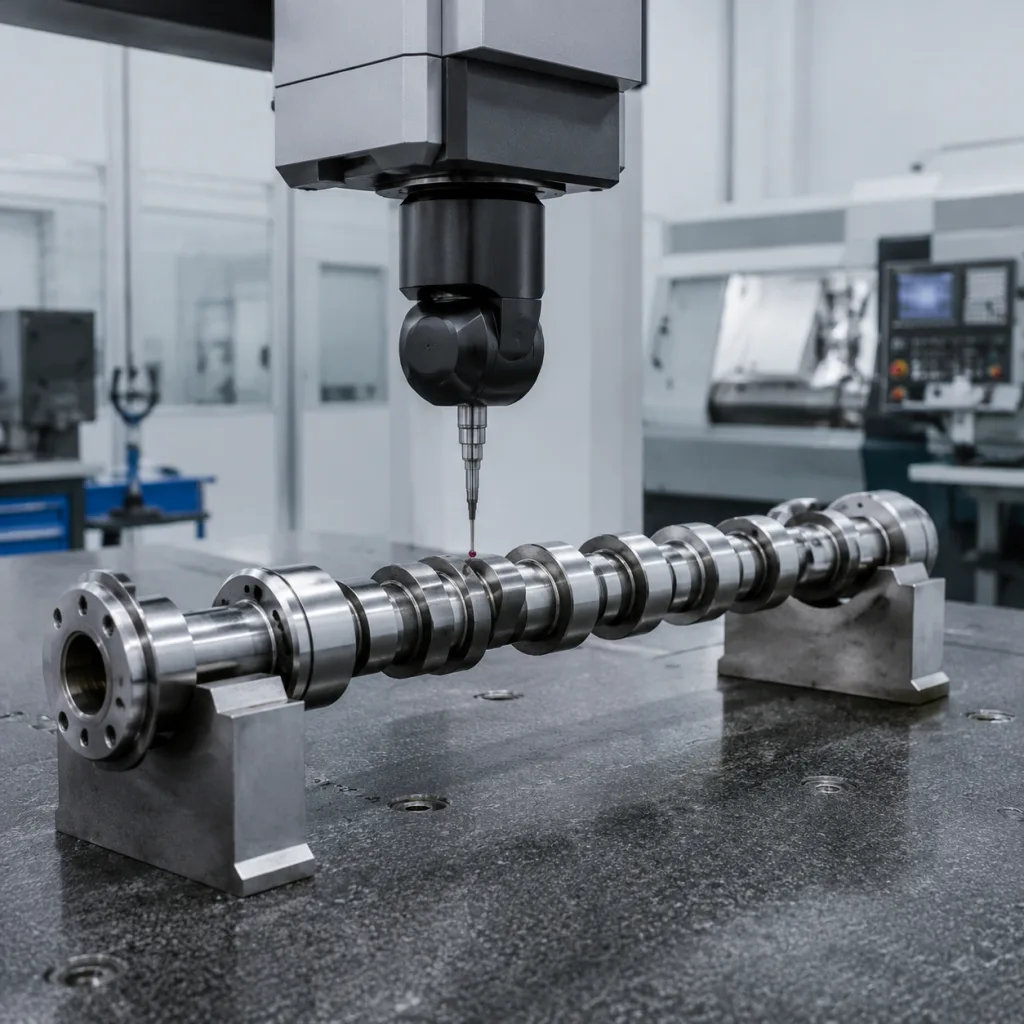
In the RFQ, do not ask only for a match. State the acceptable technical window. Example targets include shaft runout ≤ 0.03 mm, journal diameter held to drawing tolerance, lobe lift within ±0.05 mm of the master sample, and cam phasing within ±0.5°. Those numbers give the supplier a clear release target and give receiving inspection a basis for acceptance.
Where camshaft sourcing usually goes wrong
Most sourcing problems happen before the first shipment, not after installation. The common failure modes are predictable:
- The buyer matches only the outer shape and misses the engine code
- The supplier quotes the right OE number but the wrong valve-train variant
- Journal size is close enough to install, but not close enough to run cleanly
- Lobe lift is acceptable on paper but drifts batch to batch
- Sensor features are omitted or shifted by a small amount that breaks ECU behavior
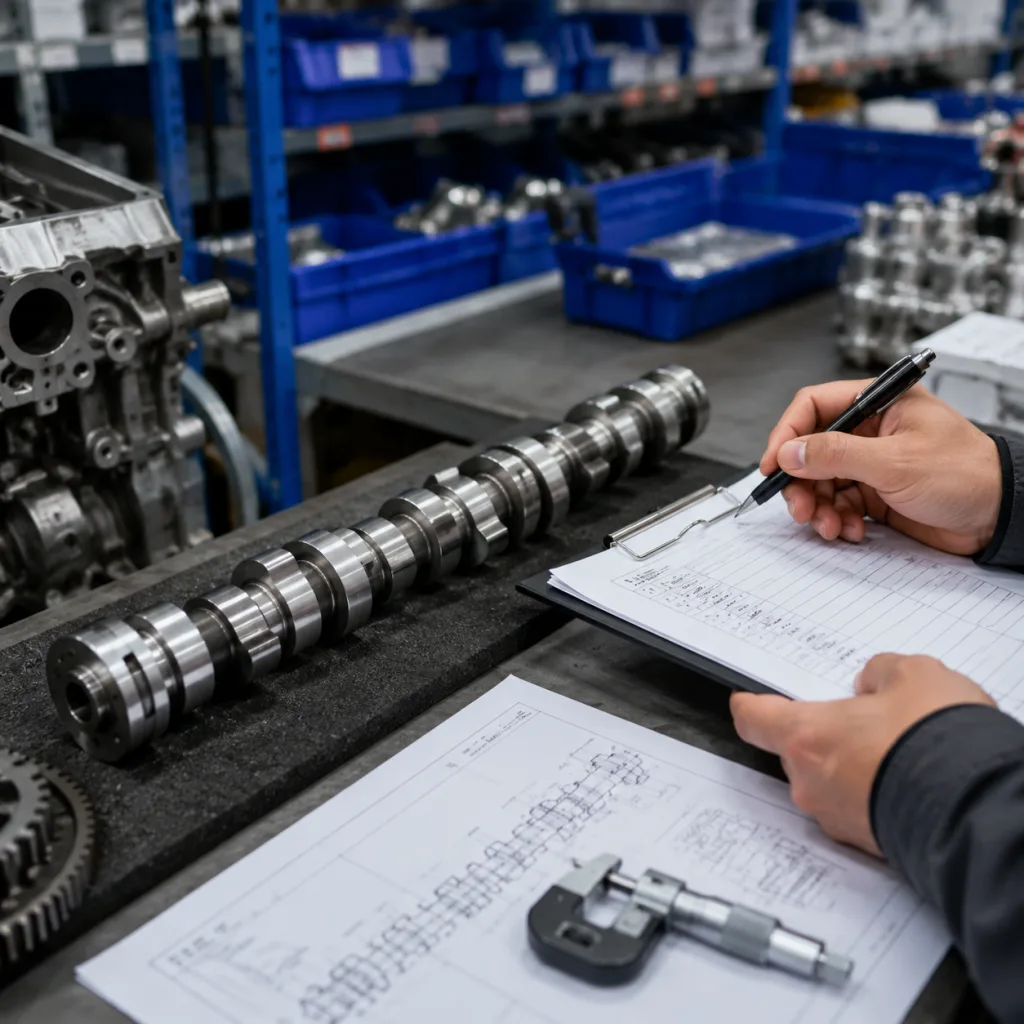
That is why procurement teams should treat camshaft sourcing as a controlled technical buy, not a simple catalog selection. If you already have a removed part, measure it and compare it with the supplier drawing before release. For repeat supply, insist on lot traceability and first article data, not just a sales sample.
A practical rule is to approve a sample only after three checks agree: dimensional report, material or heat-treatment record, and a visual fit check against the OE master. That combination catches most of the expensive mistakes before stock is committed.
A buyer’s pre-order checklist
Use a structured check before approving a sample or bulk order. The goal is to lock the part to the exact Ibiza engine family and avoid a near-match.
| Check item | What to confirm | Typical buyer target |
|---|---|---|
| Engine code | Match against the exact Ibiza engine family | 1 engine code per approved line item |
| Valve train layout | SOHC or DOHC, hydraulic or mechanical lifters | Must match OE architecture exactly |
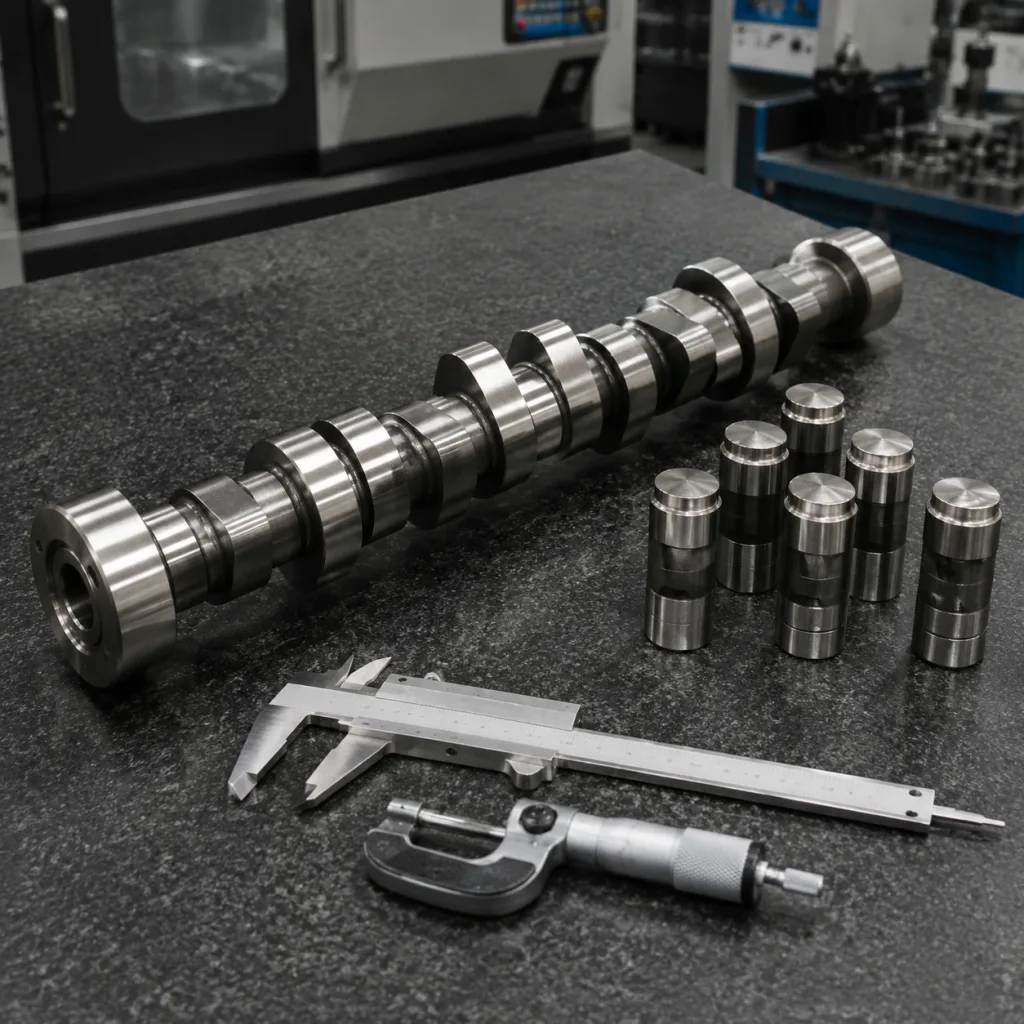
| Journal diameter | Measure against the original shaft | Within drawing tolerance, typically ±0.01 to ±0.02 mm on critical journals |
| Lobe lift and base circle | Compare against the OE sample | Within ±0.03 to ±0.05 mm on the master sample |
| Cam phasing | Measure lobe centerline/phase angle | Within ±0.5° to ±1.0° crank angle depending on engine family |
| Sensor drive features | Verify tone wheel, slot, or trigger surface | Tooth count, location, and depth must match OE |
| Surface hardness | Request hardness report and process route | Typical target 55–62 HRC on hardened lobes, as applicable |
| Runout/straightness | Measure on V-blocks or a cam fixture | Common acceptance ≤ 0.03 mm TIR unless the drawing is tighter |