camshaft · 2026-06-18

Camshaft Land Rover Aftermarket Replacement Guide

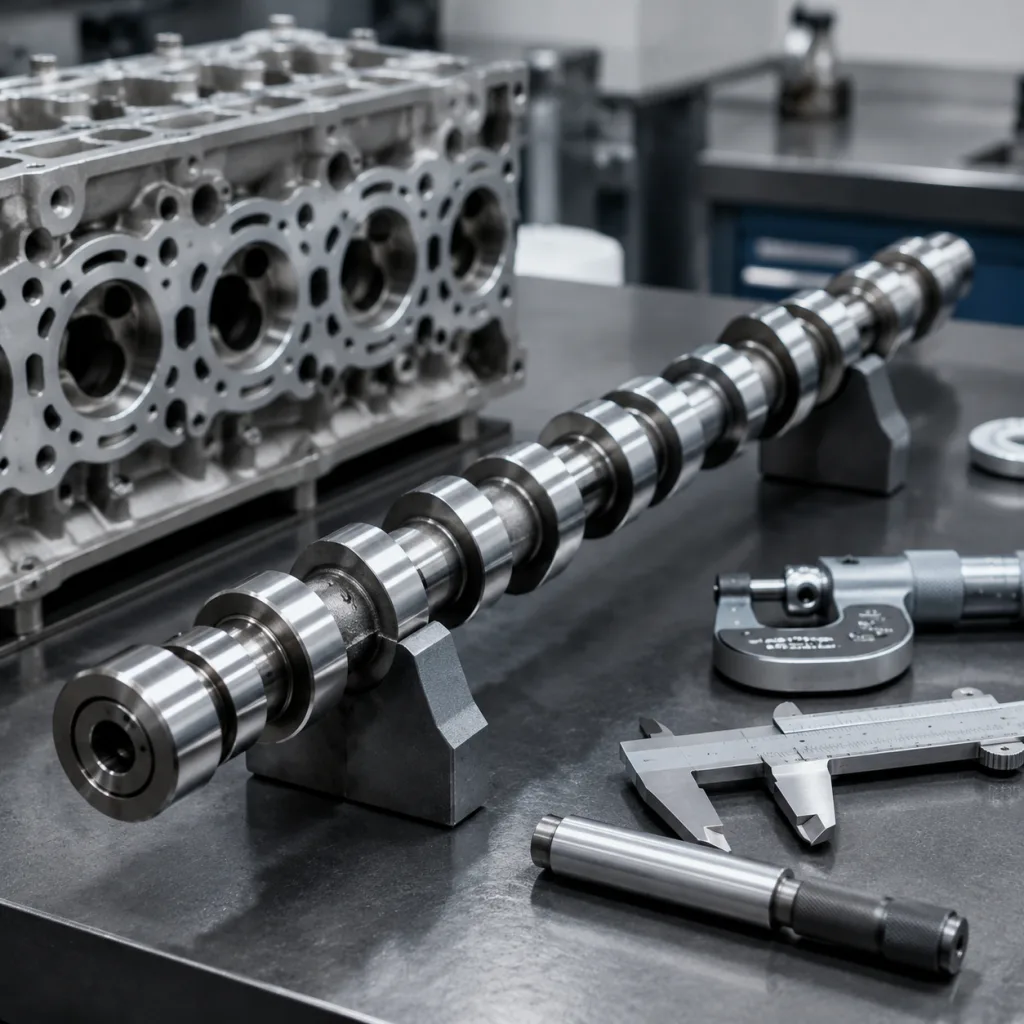
Choosing a camshaft Land Rover aftermarket replacement is a fitment decision, not a branding decision. The part has to match the OE profile, journal geometry, drive arrangement, and valve timing closely enough to restore performance without creating a new failure mode. For procurement teams, the real question is whether the shaft is dimensionally correct, materially sound, and supported by controlled manufacturing under IATF 16949:2016 and ISO 9001:2015. Driventus is an independent aftermarket manufacturer; brand names are referenced for fitment only. If you are consolidating supply across distributors, repair chains, and rebuilders, start with the engine code, the OE reference, and the inspection data that proves the part can go into service cleanly.

Start with the fitment gate, not the vehicle badge

The fastest way to avoid a mismatch is to treat the camshaft as a measured component. Engine code matters. So do the OE reference, the timing drive type, and the valve train layout.

  • Confirm the OE cross-reference before placing the order.
  • Verify overall length, base circle, lobe lift, and journal count.
  • Check the drive end: gear, sprocket, keyway, or sensor trigger arrangement.
  • Compare thrust face width and end-float allowance.
  • Ask for photos of both ends if the customer cannot supply a sample.

Similar Land Rover engines can share external fitment while using different cam profiles. That is where ordering errors happen. If the application is unclear, sample-first sourcing is safer than guessing from the badge.

Where aftermarket parts fail first

Most replacement problems do not start with the vehicle. They start with a small spec miss that slips through procurement.

</tr></thead><tbody> </tbody></table>This is why a camshaft Land Rover aftermarket replacement should be sourced against measured data, not a generic catalog description. The part may look right and still fail in service.

Spec deep-dive: the numbers that matter

A credible replacement must restore the original geometry and operating window. That means the buyer needs a small set of hard checks, not a long brochure.

Failure mode Typical cause Result
Wrong lift or durationOE number not validatedIdle issues, power loss, timing mismatch
Journal wear or scoringPoor surface finish or hardness controlOil clearance problems, premature wear
Runout outside limitWeak machining or fixturing controlVibration, follower damage
Drive-end mismatchIncorrect gear, chain, or keyway setupAssembly failure
Profile driftLoose process control across batchesRepeat warranty claims

</tr></thead><tbody> </tbody></table>For rebuilt engines, these values are not optional. They determine whether the camshaft works with the existing followers, lifters, sprockets, and seals. If the application needs a special profile, Driventus can support custom manufacturing after the engineering data is confirmed.

Material and heat-treatment choices by duty cycle

Camshaft life depends on metallurgy, hardening, and surface finish working together. The right choice changes with engine load, lubrication quality, and service interval.

  • Chilled cast iron: common where wear resistance and cost balance are both important.
  • Alloy cast iron: used when the application needs extra strength or fatigue margin.
  • Billet steel: preferred for demanding profiles or tighter control of core properties.
  • Induction hardening: localizes wear resistance where the lobes and journals need it most.
  • Through-hardening: used when the design calls for uniform hardness through the section.

Surface finish matters as much as material. A rough lobe can shorten follower life even when dimensions are correct. Buyers should ask for hardness readings, batch traceability, and a note on the heat-treatment route rather than assuming the raw material tells the whole story.

Validation steps that cut warranty exposure

A practical release process confirms that the camshaft behaves like the OE part in the intended engine family. Bench checks catch most issues before volume shipment.

1. Inspect the shaft against a master sample or drawing. 2. Measure hardness at defined lobe and journal points. 3. Check for nicks, grinding marks, burrs, and surface defects. 4. Measure runout on centres. 5. Trial-fit with the matching followers, lifters, sprockets, and seals. 6. Run an engine or rig test for oil pressure, noise, and timing stability.

For emissions-sensitive markets, timing stability also affects calibration and durability expectations. Where relevant, ECE R-83 and SAE J2527 may sit in the wider validation plan, even though the camshaft itself is a component rather than a certified vehicle system. Driventus can support document packs through our quality system.

What procurement teams should ask for up front

Good sourcing gets simpler when every supplier receives the same technical intake. That keeps part numbers repeatable and reduces back-and-forth.

  • Engine code and variant
  • OE reference or sample part number
  • Photos of both ends of the shaft
  • Timing drive type
  • Required annual volume and target MOQ
  • Packaging and labelling requirements
  • Destination market and compliance needs

If you are building a wider engine programme, review our catalog and the related engine components range to align camshafts with gaskets, pumps, and top-end parts in one order. For private label or drawing-based work, custom manufacturing is available once the technical pack is complete.

Frequently asked questions

Engine code is a good start, but it is not enough on its own. You should also confirm the OE reference, timing drive type, and a sample or photo set. That reduces the risk of mismatched lift, length, or drive-end details.

Ask for dimensional inspection, runout, hardness readings, and material traceability. If the project is for a specific market, request compliance documents for IATF 16949:2016, ISO 9001:2015, and REACH where applicable.

No. The correct standard is fitment and validation to the OE dimensions and engine requirement. Driventus is an independent aftermarket manufacturer; brand names are referenced for fitment only.

If you need an OE-matched replacement or a drawing-based programme, send the engine details and target volume through /contact.html.

Request a Quote
Check item What to confirm Why it matters
Overall lengthMatches OE sample or drawingPrevents timing and end-cap issues
Journal diameterWithin specified toleranceControls oil clearance and bearing load
Lobe liftMatches engine calibration targetPreserves idle quality and power delivery
RunoutControlled within inspection limitReduces vibration and wear
Surface hardnessVerified on lobes and journalsSupports wear resistance
Drive interfaceGear, sprocket, or keyway matchAvoids assembly failure