Toyota EGR valve wholesale sourcing is less about finding the lowest unit price and more about avoiding fitment misses, unstable actuation, and batch-to-batch variation. Buyers need dimensional consistency, reliable sealing, corrosion resistance, and traceable production records across every lot. For distributors, repair networks, and importers, the main risks are wrong port geometry, inconsistent valve response, and packaging that fails in export handling.
Driventus supplies EGR valve programmes from Taizhou, Zhejiang, with production controlled under IATF 16949:2016 and ISO 9001:2015. Driventus is an independent aftermarket manufacturer; brand names are referenced for fitment only. This article is structured as a sourcing checklist, a failure-mode review, and a decision guide so procurement teams can compare suppliers on the facts that actually drive returns. It also shows where cross-reference data, material control, and validation testing reduce downstream claims. If you are buying for regional stock, a private-label programme, or OE-style replacement supply, the same checks apply across most Toyota diesel and petrol applications.
Start with fitment, not the badge
For `egr valve toyota wholesale` purchasing, begin with the part family, engine code, and connection pattern rather than the vehicle badge alone. The same model line can use different valve bodies, flange shapes, connectors, and cooling layouts across engines and market specifications.
Use a procurement checklist:
OE cross-reference and engine code match
Mounting-face dimensions and bolt pattern
Electrical connector type and pin count
Valve travel, response time, and sealing-seat geometry
Gasket inclusion and packaging specification
Country-of-origin marking and batch traceability
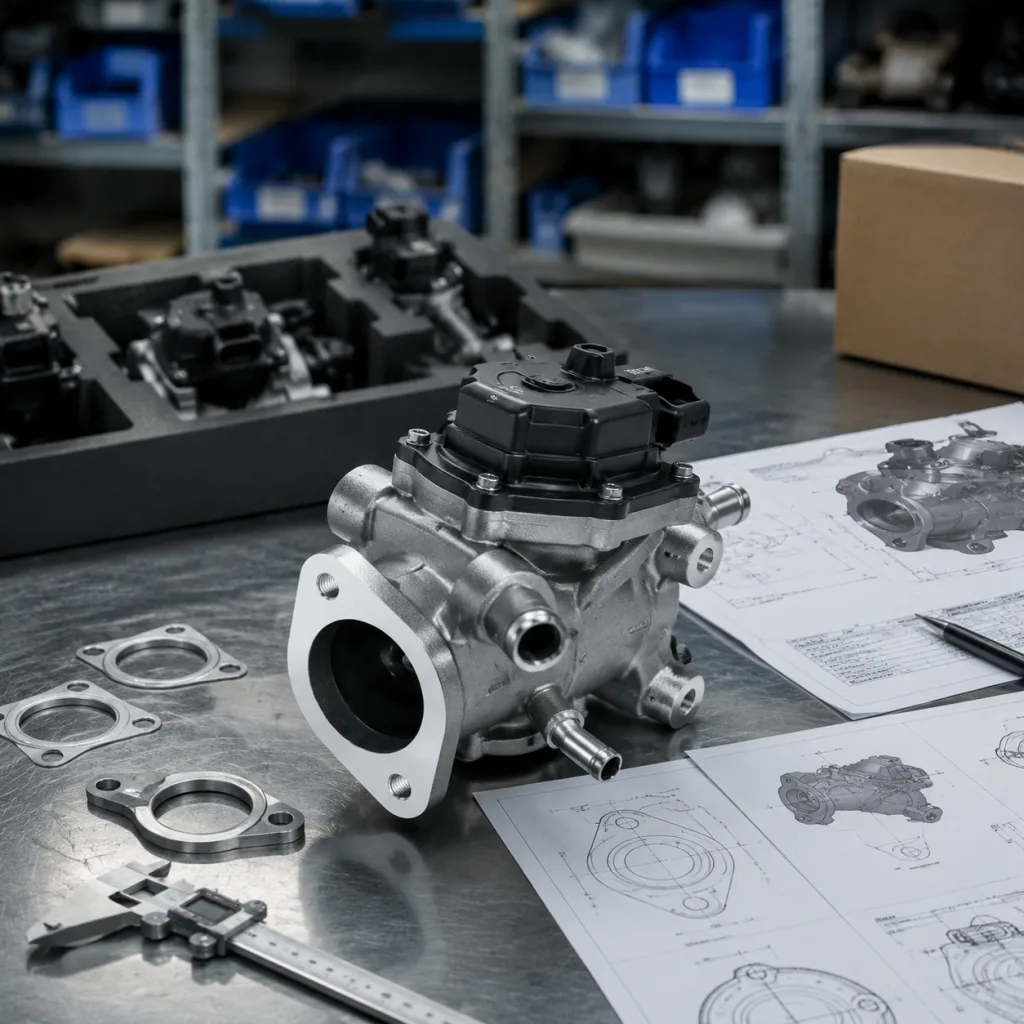
A supplier should quote against OE 25860-0L020, OE 25860-0T020, or another valid cross-reference only after the fitment record is verified. Do not rely on a catalogue title by itself. Ask for dimensional drawings, photos of the installed face, and the production revision used for the sample so the approved specification is unambiguous. For Toyota diesel applications, buyers typically confirm flange hole center spacing to within ±0.2 mm on the sample drawing, connector keying against the harness cavity layout, and overall body length within ±0.5 mm so the unit clears adjacent plumbing and brackets. If the valve is sold with a cooler connection or bracket, verify the mating depth and gasket land width as well, because a 0.3 to 0.5 mm mismatch there can create repeat returns even when the OE number looks correct.
Where EGR programs usually fail
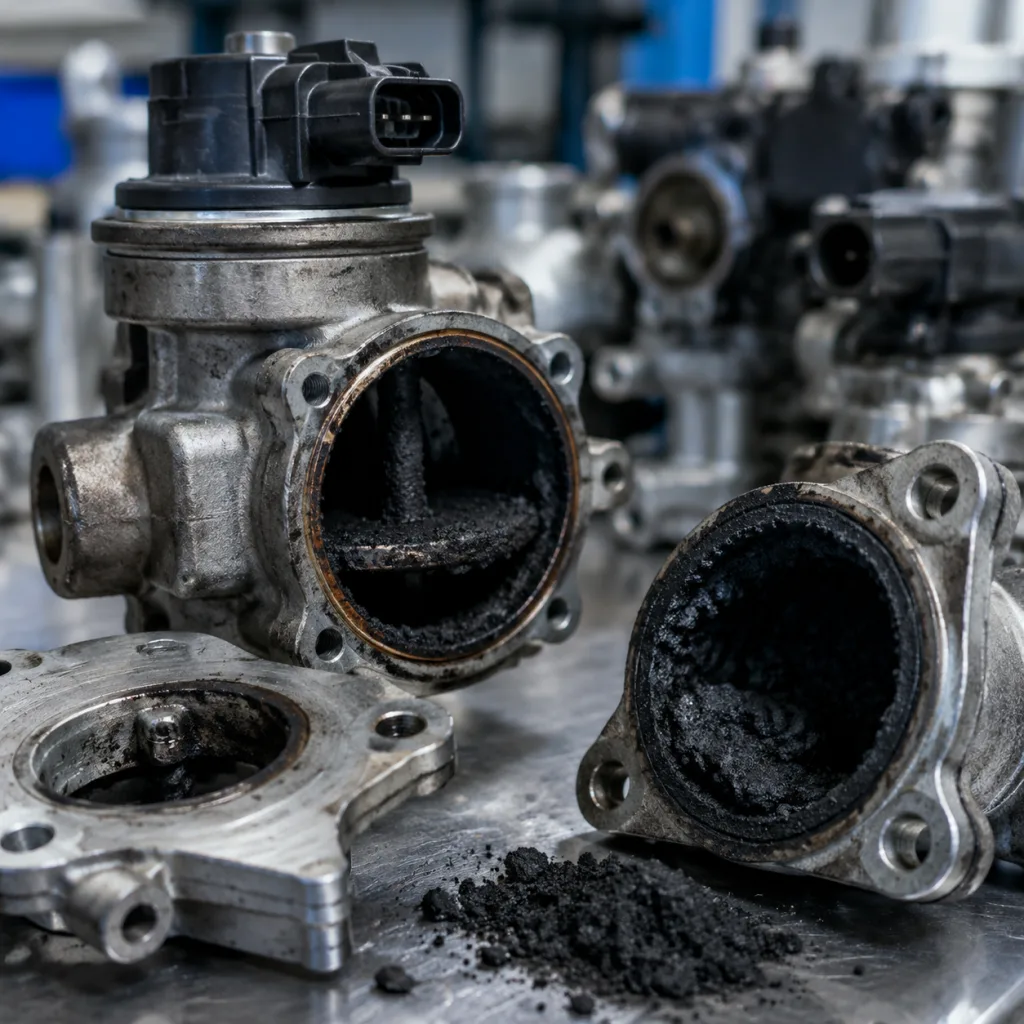
EGR valves fail commercially when the housing looks similar but the internal control behavior differs. Wholesale buyers should ask for measurable data, not general claims.
Item
What to confirm
Typical sourcing risk
Body material
Aluminium alloy, stainless insert, or cast steel where applicable
Corrosion or thermal distortion
Seat and pintle finish
Surface condition and wear resistance
Leakage after short duty cycles
Electrical actuator
Stepper, DC motor, or position-feedback type
Fault codes and slow response
Seal interface
Gasket profile and flatness tolerance
Exhaust leakage
Cleaning resistance
Carbon-deposit tolerance from validation testing
Premature sticking
Connector fit
Locking tab and terminal alignment
Harness damage at installation
</tr></thead><tbody> </tbody></table>The biggest mismatch is often not the valve itself, but the way it behaves once heat, soot, and voltage variation are added. For colder or high-load markets, request validation against relevant environmental and durability methods such as SAE J2527 where applicable to component exposure testing, plus internal endurance cycles that reflect your service-interval targets. Where emission-system compatibility matters, buyers often reference ECE R-83 at the vehicle level and then confirm that the component does not disturb calibrated system behavior. In practical sourcing terms, ask the supplier to state opening and closing duty cycle, actuator current draw, and leak-down behavior after thermal soak. A useful purchasing spec is a response time window of roughly 100 to 300 ms under bench test conditions, with repeatability checked across at least 50 cycles from hot and cold states. Seal flatness should be stated on the drawing, commonly at 0.05 to 0.10 mm across the sealing land depending on the design, and the supplier should show the measuring fixture used so the tolerance is repeatable from lot to lot.
Compare suppliers on process control
A wholesale purchase should include evidence that the production system is stable, not only that the first sample fits. Driventus operates under IATF 16949:2016 and ISO 9001:2015, which helps procurement teams review process control, corrective action, and traceability expectations.
Request these documents before order confirmation:
ISO certificate copy with validity dates
IATF certificate scope and site address
Inspection plan for incoming, in-process, and final checks
Material declarations for REACH (EC) No 1907/2006 where required
Batch traceability format and carton-label example
Sample test report with measurement results
For EU-bound shipments, a supplier should support compliance documentation for restricted substances and provide consistent records for metals, coatings, and rubber components. If the EGR valve includes a gasket or seal kit, confirm that all included materials are declared and packed under the same batch code so the shipment can be traced cleanly if a field issue appears later. A buyer should also ask whether critical-to-quality dimensions are checked with a sampling plan such as AQL 0.65 or tighter for first production lots, then moved to a stable recurring plan after the line proves capable. For wholesale contracts, it is reasonable to request a process capability target of Cpk 1.33 or higher on the key dimensions that affect leak integrity and fit. If the supplier cannot show the gage R&R or the control chart for the critical features, the certificate stack alone is not enough to reduce commercial risk.
What a usable spec sheet should include
Wholesale buyers often need more than a standard catalogue item. Some customers need carton branding, barcode labels, bilingual fitting notes, or minor design changes to align with local repair practice.
Driventus supports these commercial requirements through custom manufacturing, including:
Application-specific cross-reference matching
Drawing confirmation against sample units
Logo-neutral packaging for distributors
Label, barcode, and carton-specification control
Pilot production before volume release
For catalogue review, see our catalog and engine components. If you are building a larger sourcing programme, ask for a comparison between standard stock parts and modified versions. That helps procurement teams separate low-risk replenishment items from parts that need a formal approval sample. In practice, the approval flow should include a pre-production sample, a fit check against the target engine, and a sign-off on carton layout before the first bulk run. Buyers should also confirm whether artwork changes, barcode allocation, or label language revisions add days to the lead time, because those details often affect launch schedules more than the part build itself. If you need private-label control, define whether the supplier is printing only outer cartons or also polybags, inserts, and master cartons, since each layer can have its own MOQ and proofing step.
Ordering structure: MOQ, lead time, and landed cost
Wholesale buyers usually balance unit cost against inventory risk. The best order structure depends on forecast stability, regional vehicle mix, and whether the valve is stocked as a fast-moving repair item or a controlled programme part.
Common wholesale buying patterns:
Mixed-line carton orders for distributors
Monthly replenishment for multi-location repair chains
Annual call-off supply for private-label importers
Sample-to-volume approval for programme launches
Lead time should be agreed in writing for both sample and production orders. Confirm whether tooling, test fixtures, and packaging approval are already in place. For recurring orders, ask for the standard production batch size, minimum order quantity, and expected dispatch window after deposit. If you need a quote for a specific Toyota application, use request a quote and include engine code, OE reference, quantity, and destination port. Typical wholesale terms for this category are a sample lead time of 7 to 15 days when tooling is already validated, and 30 to 45 days for first-volume production after artwork and spec approval. For regular replenishment, MOQ may start at 50 to 100 units per application, with better pricing usually available at 200, 500, and 1,000 unit breakpoints. Buyers should ask for landed-cost logic, not just unit price: verify whether the quote includes inner box, master carton, pallets, export marks, and the test report. It is also worth asking whether price is fixed for one lot, for one quarter, or against a rolling forecast, because alloy and freight volatility can move a wholesale quote by several points if the term is not defined up front.
Frequently asked questions
Yes. Driventus supplies aftermarket EGR valve programmes for wholesale buyers, distributors, and repair networks. Fitment is checked by application data, OE cross-reference, and dimensional review before quotation.
Ask for certificates, sample inspection data, material declarations, and traceability records. For EU supply, REACH-related declarations are commonly required depending on the component build.
Yes. Driventus can support packaging, labelling, and application-specific changes through custom manufacturing, subject to sample approval and volume agreement.
Send your application details, OE reference, and annual forecast through /contact.html and we will prepare a quotation with fitment confirmation and lead-time terms.