Camshaft for Renault Megane Replacement: Fitment Guide
A camshaft replacement for Renault Megane applications has to match the engine, valve train, and sensor layout exactly. On the same nameplate, different engine codes can use different lobe profiles, journal spacing, drive-end geometry, and trigger features, so visual similarity is not enough. Driventus is an independent aftermarket manufacturer; brand names are referenced for fitment only. For procurement teams, the priority is dimensional match, stable supply, and evidence that the part was built under controlled processes. We support that with documented inspection, traceability, and programme-level validation aligned to IATF 16949:2016 and ISO 9001:2015. For EU shipments, material and chemical declarations can also be prepared with REACH (EC) No 1907/2006 in mind. The result is a replacement part that fits the intended engine family, supports repeatable assembly, and reduces avoidable returns in distribution or workshop channels.
What A Correct Replacement Must Match
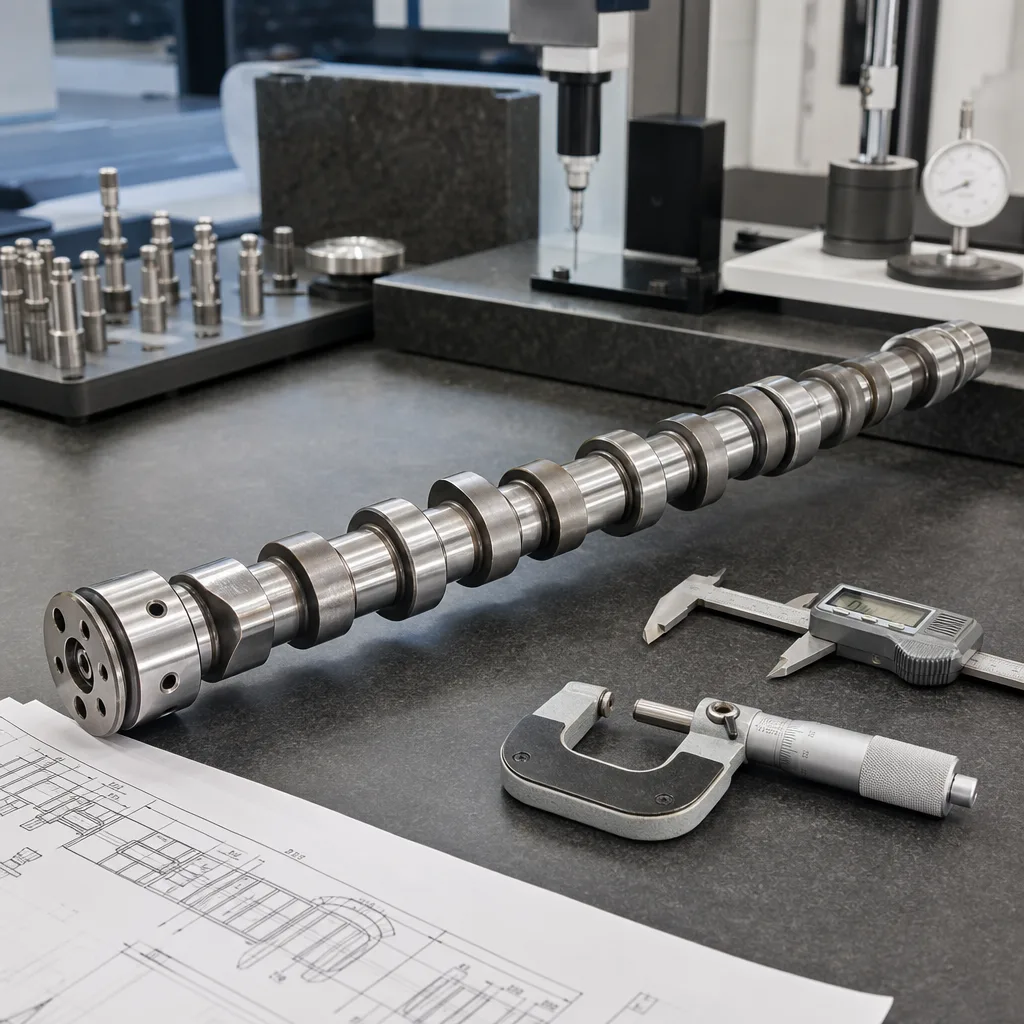
A replacement camshaft is not selected by vehicle name alone. For Megane applications, the buyer needs the engine code, valve count, cam phasing arrangement, and the exact trigger or sensor interface before ordering. A part that looks similar on the bench can still fail at installation if the lobe lift, base circle, or drive-end feature is wrong.
The critical match points are:
- Journal diameter and journal spacing
- Overall length and nose configuration
- Lobe profile, lift, and timing event
- Cam sensor target or reluctor feature
- Sprocket, keyway, or phaser interface
When these points are verified against the removed sample or drawing, the replacement part is far more likely to install cleanly and meet engine build targets. For buyers managing returns, that is usually the difference between a true OE-equivalent part and a part that only fits the catalog description.
Fitment Checks Before Ordering
The fastest way to avoid a mismatch is to collect the application data before purchase. If the old shaft is worn, measure the unworn journals and compare the trigger pattern rather than relying on the damaged surface.
| Check | Buyer question | Why it matters |
|---|---|---|
| Engine code | Which engine family is installed? | The same model can use different camshaft geometry |
| Valve train type | Single or dual overhead cam? | Changes journal count, length, and timing layout |
| Emissions variant | Which market specification is fitted? | Differences in calibration can change the cam profile |
| Trigger arrangement | Does the engine use a sensor wheel or integrated target? | A mismatch can prevent start-up or fault-free operation |
| Sample or OE reference | Can the removed part be compared directly? | Best control for dimensional and feature matching |