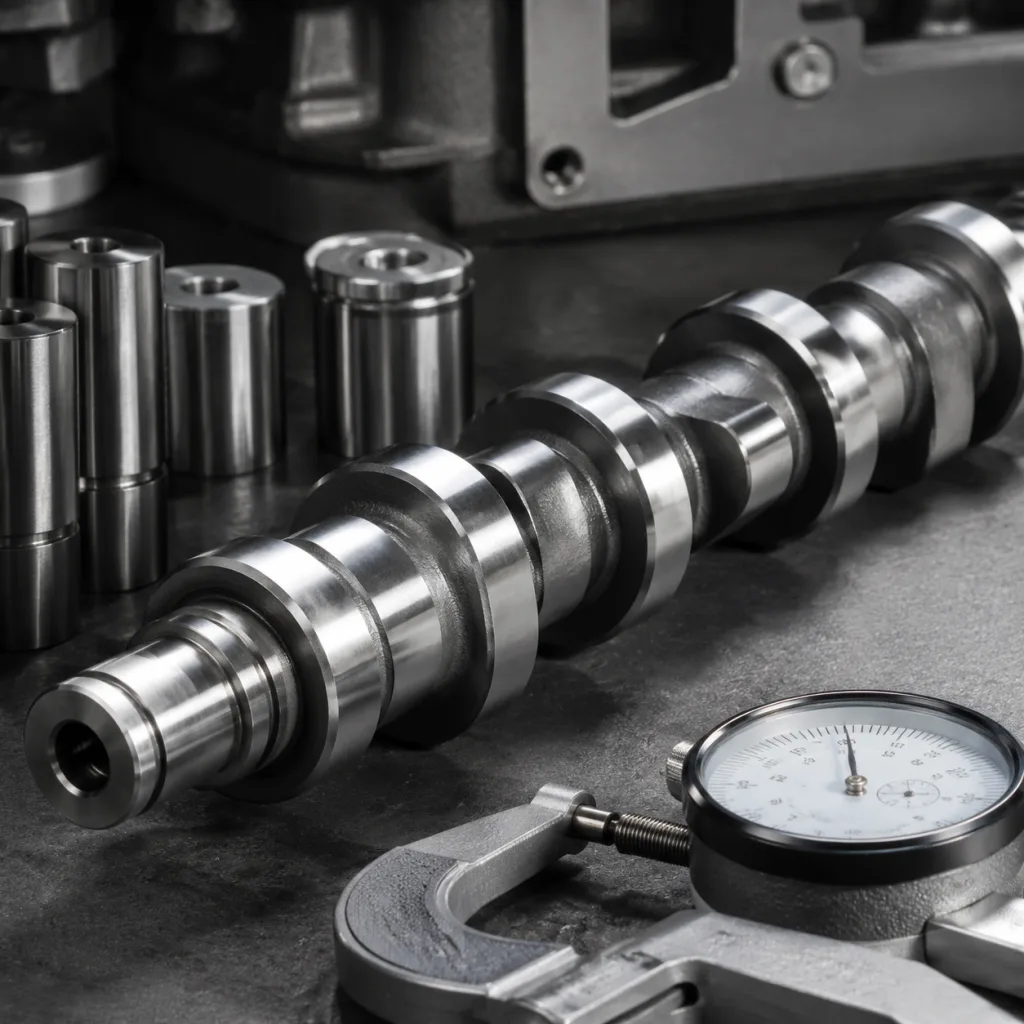
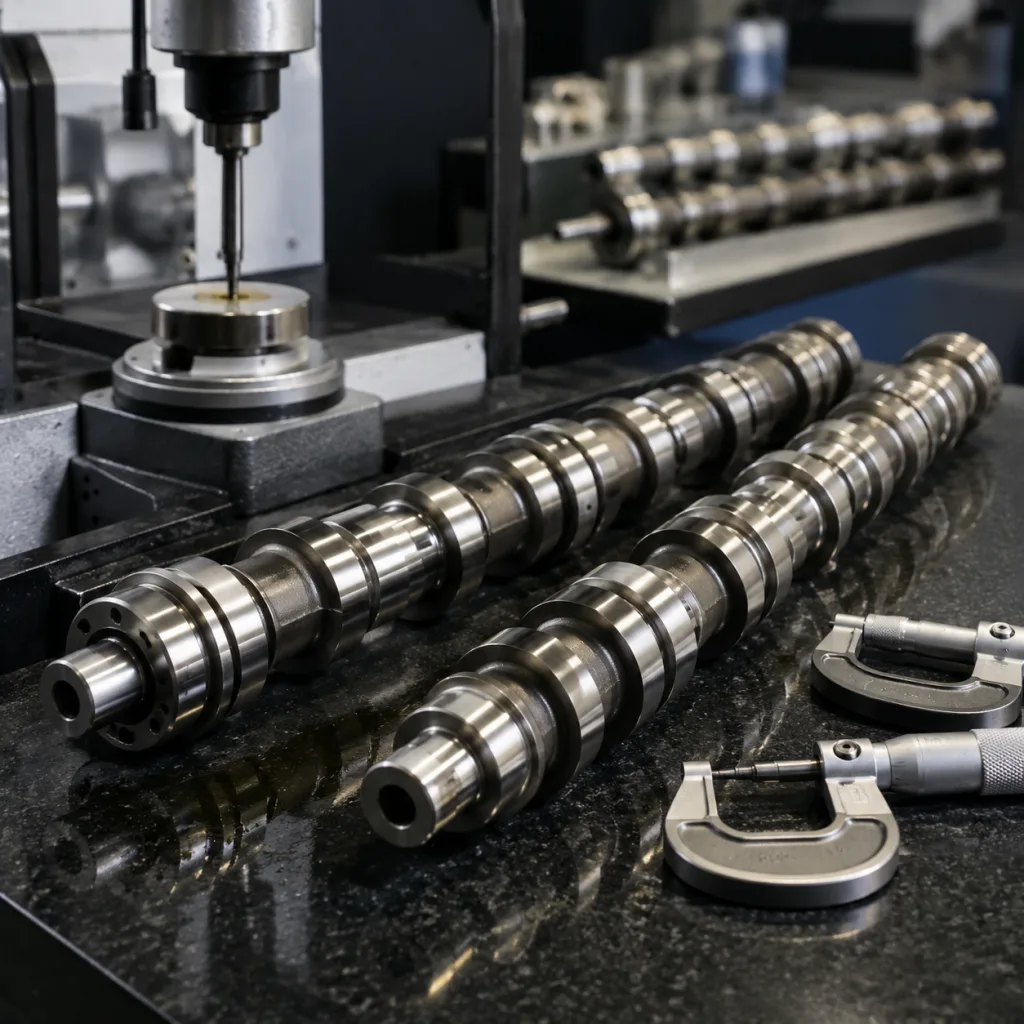
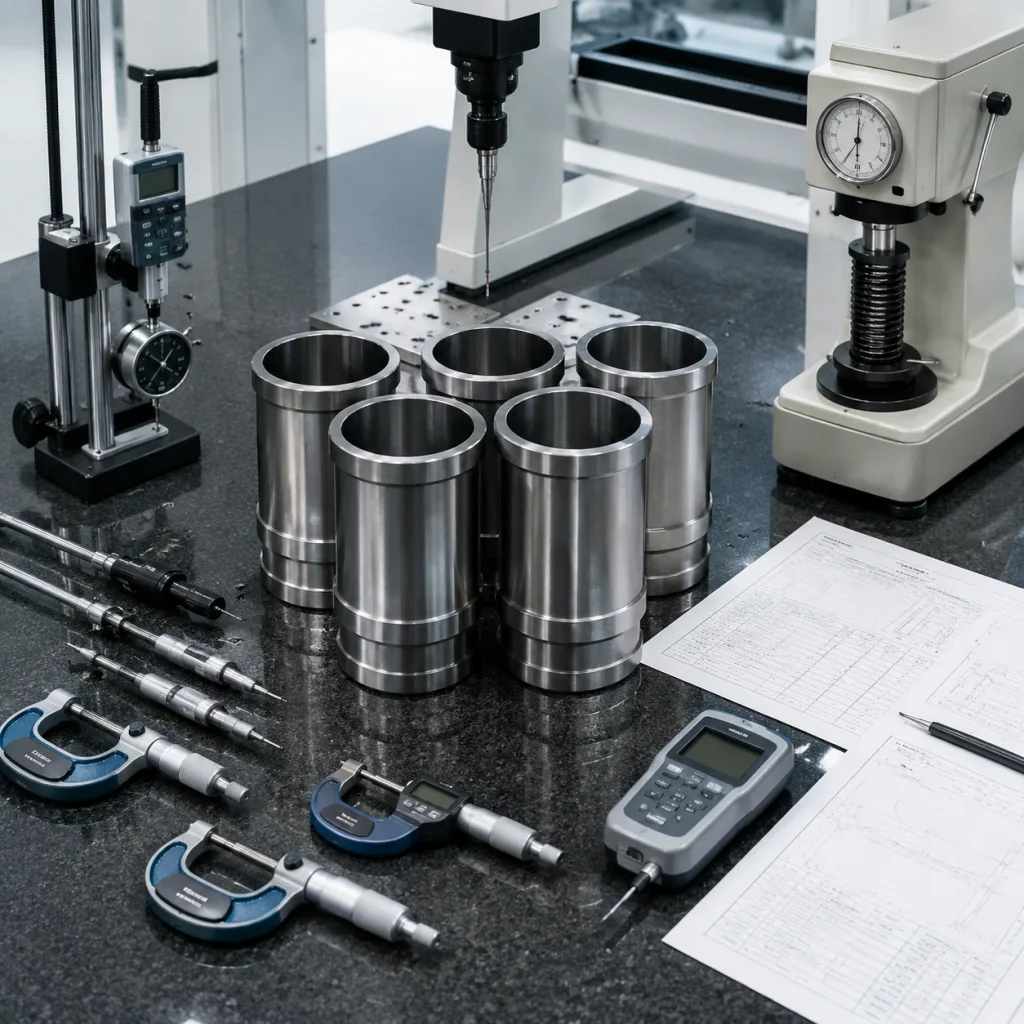
A camshaft RAM OE equivalent programme is won or lost in the details buyers cannot see in a catalogue photo. The part may look correct and still shift valve timing, lose oil pressure, create follower noise, or fail early because a lobe profile, journal diameter, thrust face, dowel position, oil hole, or hardness depth is wrong. For distributors, repair-chain buyers, and Tier-1 sourcing teams, the sourcing question is not “does it fit the RAM application?” but “can the supplier prove the camshaft repeats the original function lot after lot?”
Driventus treats RAM-fitment camshafts as controlled aftermarket equivalents: measured against an original sample, buyer drawing, or verified cross-reference; validated for timing, lubrication, surface condition, and packaging; and supported with records importers can use for audits, customs files, and warranty review. Driventus is an independent aftermarket manufacturer; brand names are referenced for fitment only.
Decision Point: What Counts as OE Equivalent?
OE equivalence does not mean vehicle manufacturer approval. It means the replacement camshaft is engineered to match the required fit, timing function, lubrication behaviour, and service durability for the intended RAM application.
The visible shape is only the start. A small error in lobe lift, base circle, journal diameter, thrust-face width, dowel location, reluctor feature, oil-hole position, or timing-slot angle can change valve events, oil clearance, noise, and wear. That is why the purchasing file needs measurable control points before unit price is negotiated.
Use one of three evidence bases:
Buyer drawing: Best option when CTQ dimensions, materials, hardness, and datums are already defined.
Original sample: Practical for aftermarket programmes where no drawing exists; ownership, measurement permission, and retention instructions should be clear.
Verified cross-reference: Useful for catalogue alignment, but not enough by itself for production approval.
Where a file uses a generic OE-style reference such as OE 06A… or OE 11251…, Driventus records it as an application reference only, not as a claim of vehicle manufacturer approval.
A complete camshaft RAM OE equivalent specification should identify:
Engine application, displacement, fuel type, emissions generation, model-year range, and engine code where available
Intake or exhaust position, including left/right bank for engines using separate shafts
Lobe lift, base circle, lobe width, ramp geometry, nose radius, opening/closing event targets, and phase-angle datum
Timing interface: sprocket, gear, phaser, dowel, slot, keyway, end thread, or sensor trigger feature
Oil holes, grooves, end plugs, seal land, and lubrication-path requirements
Material grade, heat treatment, case or chilled depth, hardness, straightness, total runout, and roughness limits
Packaging, corrosion protection, barcode format, carton strength, pallet pattern, and mixed-SKU rules
As a starting point, buyers often control journal diameter within ±0.010–0.020 mm, lobe lift within ±0.025–0.050 mm, timing datum position within ±0.5°, functional-journal runout below 0.03–0.05 mm, and lobe or journal roughness around Ra 0.2–0.8 µm, depending on follower design and drawing requirements. Final values should be confirmed against the original sample, engine architecture, and buyer drawing.
The buying objective is simple: define the features that affect fit, valve timing, lubrication, and service life before price comparison begins. Buyers can review related engine parts in our catalog and the engine component range at /products/engine-components.html.
Failure Modes Hidden in Dimensional Match
Most bad camshaft purchases do not fail because the shaft is obviously wrong. They fail because one controlled feature was treated as “close enough.” A camshaft is a long rotating component working under mixed lubrication, cyclic contact stress, and precise timing demand, so inspection has to cover the full functional geometry.
Inspection point
What can go wrong
Verification method
Buying rule
Journal diameter and roundness
Low oil pressure, tight rotation, bearing wear, hot running
Micrometer, air gauge, roundness tester
Confirm clearance against housing bore and oil viscosity, not diameter alone
Measure after final grinding, especially where heat treatment can distort the shaft
Thrust face width and finish
Excessive end float, axial noise, thrust-surface wear
Caliper, micrometer, roughness tester
Check against the mating thrust surface or assembly gauge
End feature geometry
Sprocket, gear, phaser, seal, or sensor mismatch
Gauge fixture, thread gauge, CMM
Use go/no-go gauges for repeat receiving inspection
Oil holes and grooves
Starved contact surfaces, local heat build-up, blocked lubrication path
Pin gauge, borescope, flow or visual check
Verify diameter, angular position, burr removal, and blockage risk
</tr></thead><tbody> </tbody></table>Separate critical-to-function dimensions from cosmetic or identification features. Journal diameter, lobe profile, surface finish, timing datum position, and runout need tighter statistical control than non-contact marks or packaging identifiers. For production approval, classify CTQ items, define sample size, and agree whether acceptance is based on 100% inspection, SPC capability, or lot sampling.
For new RAM-fitment programmes, Driventus recommends first-article inspection from production tooling, not prototype-only samples. The report should show measured values, drawing targets, tolerance limits, inspection equipment, calibration status, operator or lab reference, and batch identification. A typical FAI package covers 3–5 pieces from the first production run; pilot lots may use 10–30 pieces depending on application risk and order size.
Once the process is stable, repeat orders can move to a reduced control plan: 100% visual and packaging checks, 100% checks on simple gauge-critical features if required, and statistical checks for lobe profile, journal diameter, hardness, and runout. That gives buyers enough evidence to release blanket orders, annual contracts, or multi-market inventory without rechecking every dimension every time.
Spec Deep-Dive: Material, Hardness, and Surface Finish
A camshaft can be dimensionally correct and still fail if the surface system is wrong. Material route, hardening method, case depth, grinding quality, cleaning, and corrosion protection must match the follower design and duty cycle.
Driventus can produce camshafts through cast iron or steel routes depending on application, buyer requirement, and cost target. The selected route must suit contact load, follower type, oil environment, engine duty cycle, and expected warranty exposure.
Key specification items:
Material certificate with chemical composition by heat, melt, or controlled batch, such as chilled cast iron, alloy cast iron, forged steel, or induction-hardened steel where specified
Hardness targets for lobes, journals, thrust faces, and relevant end features, controlled by HRC, HV, or HB depending on material route
Case depth, chilled layer, induction-hardened zone, or nitrided layer control, including the measurement section and minimum effective depth
Surface roughness targets on lobes, journals, thrust faces, and seal-contact areas, with tighter limits on follower-contact and oil-film surfaces
Crack detection by magnetic particle inspection, eddy-current inspection, or controlled visual inspection after heat treatment and final grinding
Straightness and runout checks after machining, heat treatment, stress relief, and final grinding
Cleaning standard to reduce abrasive residue, chips, grinding sludge, and blocked oil passages
Anti-corrosion oil, VCI paper, plastic sleeves, end caps, desiccant, or sealed inner packaging for 30–90 days of sea freight and warehouse storage
Do not specify hardness alone. A hard surface with insufficient case depth can wear through. Excessive hardness, grinding burn, or poor surface finish can cause cracking, pitting, or follower distress. A useful drawing note defines material, hardness range, minimum case or chilled depth, maximum grinding burn allowance, and roughness target for each functional surface.
The quality plan should reference ISO 9001:2015 for documented process control and IATF 16949:2016 where automotive production discipline, traceability, defect prevention, and corrective-action systems are required. Chemical compliance may include REACH (EC) No 1907/2006 for EU-bound supply chains, depending on the product, packaging, preservative oil, and customer declaration scope.
Driventus does not claim approval by any vehicle manufacturer. The objective is controlled aftermarket equivalence based on measurable dimensional, material, and functional validation, supported by records that a distributor or repair-chain customer can review.
Step-by-Step Validation Before Bulk Orders
Commercial approval should not outrun technical evidence. A visual match, catalogue cross-reference, or one-off sample fit can start the discussion, but it is not enough for a distributor carrying warranty exposure across repair networks and markets.
Use this staged path for a camshaft RAM OE equivalent order:
1. Cross-reference review: Confirm application data, OE-style reference format, engine code where available, production date range, supersession notes, cam position, and market variants. 2. Drawing and sample comparison: Measure the original sample and proposed replacement against agreed datums, including lobe profile, journals, thrust face, timing interface, oil holes, seal land, and sensor features. 3. Material and hardness testing: Confirm substrate, lobe hardness, journal hardness, surface-treatment condition, case or chilled depth, and heat-treatment consistency. 4. Assembly fit check: Verify sprocket, gear, phaser, dowel, keyway, sensor trigger features, thrust location, seal land, end plug, and oil-path alignment where present. 5. Functional profile inspection: Compare lift curve, base circle, ramp sections, angular position, and repeatability across multiple production parts using the same datum method. 6. Pilot batch review: Inspect production-run parts before mass shipment, focusing on capability, burrs, cleaning, corrosion protection, label accuracy, and packaging performance. 7. Retention and feedback loop: Keep approved samples, batch records, and installation feedback so replenishment orders can be compared against the same baseline.
A practical approval path is 1–2 reference samples for initial fitment confirmation, 3–5 first-article pieces with full dimensional and hardness reporting, then a pilot lot of 50–200 pieces. That lets the buyer verify receiving inspection, installer feedback, and packaging survival before committing to container or annual-volume orders.
For high-risk applications, buyers may request dynamometer, bench rig, or engine-installation validation. These tests should be costed and scheduled before the purchase order, not added after production is complete.
For repair-chain and distributor programmes, Driventus can provide inspection reports, batch traceability, carton labelling, sample retention, and agreed pre-shipment checks. More detail on audit controls is available through our quality system. Buyers requiring drawing-based parts, private-label packaging, or controlled modifications can review custom manufacturing.
Importer Scenario: Balancing Price, MOQ, and Warranty Risk
Assume an importer needs a RAM-fitment camshaft for a regional repair network. The low quote looks attractive. The risk is that a noisy installation or timing complaint can erase the unit-price saving through returns, labour claims, catalogue corrections, and urgent replacement stock.
The buying file should make the expected application, inspection level, packaging format, documentation package, MOQ, and lead-time assumption clear before production starts.
Include these controls:
Confirmed application table with model, engine, year range, fuel type, camshaft position, market, and supersession notes
OE-style cross-reference fields using neutral references such as OE 06A… only where supplied by the buyer
Agreed AQL level for incoming inspection, in-process checks, and pre-shipment inspection, with CTQ dimensions separated from visual defects
First-article inspection before bulk production for new tooling, revised applications, or supplier-transfer projects
Batch traceability from raw material to finished carton, including casting or forging lot, heat-treatment batch, grinding date, and inspection records where required
Neutral, distributor-brand, or customer-brand packaging specification with barcode type, label layout, carton quantity, and inner protection method
Export carton drop resistance, pallet pattern, moisture protection, corrosion-protection requirement, and container-loading constraints
Incoterms, payment term, lead time, MOQ, replenishment forecast, sample approval timing, and safety-stock expectations
MOQ and price depend on tooling status, material route, inspection depth, packaging, and order mix. For existing standard aftermarket references, practical production MOQ is often 100–300 pieces per SKU, with sample quantities handled separately. For new or slow-moving references requiring tooling, fixture work, or profile development, expect higher commitment, often 300–1,000 pieces per SKU or an agreed tooling charge.
Lead time should be split into engineering approval and production. Typical timing is 7–15 days for feasibility and quotation after receiving application data, 15–35 days for sample or first-article preparation when tooling exists, 35–60 days when tooling or profile development is needed, and 30–45 days for bulk production after sample approval and deposit. Private-label cartons, barcode setup, PPAP documentation, or special surface treatment can add 7–20 days.
Driventus exports engine and powertrain components to more than 60 countries from Taizhou, Zhejiang. Procurement discussions usually cover annual volume, forecast stability, tooling status, inspection depth, sample timing, payment and Incoterms, and whether the buyer needs standard aftermarket supply, private-label packaging, or programme-level quality documentation. Mixed engine-component orders can combine camshafts with pistons, crankshafts, gaskets, water pumps, timing parts, and related components to improve container utilisation.
A clear technical file reduces disputes and speeds repeat orders. It also gives both sides a stable reference point if an application changes, a superseded reference appears, or the buyer adds a new market.
Q&A Checklist: Records Buyers Should Request
Importers serving the EU, UK, US, Canada, Australia, Brazil, and other regulated markets need records for customs clearance, customer audits, warranty review, and internal supplier approval. Agree the document package before the purchase order. Some records must be created during production and cannot be rebuilt accurately after shipment.
What documents support shipment and customs?
Commercial invoice and packing list with buyer part number, quantity, carton count, gross weight, net weight, and HS-code reference where agreed
Certificate of origin where requested for customs, free-trade agreement review, or customer file completion
What documents prove the camshaft was built to spec?
Material certificate or internal material confirmation linked to heat, melt, casting, forging, or controlled batch number
Dimensional inspection report for lobe lift, base circle, journal diameter, thrust width, timing datum, runout, and oil-hole position
Hardness test record for lobes, journals, thrust faces, and specified surfaces, with test method and measurement points stated
Batch traceability record linking production date, inspection results, operator or line reference, and carton or pallet identification
What records are needed for higher-control programmes?
Process flow, control plan, and FMEA where the programme involves Tier-1, fleet, or repair-chain contracts
PPAP documentation for qualified OEM or Tier-1 projects where agreed in advance, including PSW level, sample quantity, and submission timing
REACH declaration for EU-relevant chemical compliance where applicable, including preservative oil and packaging materials if requested
Packaging inspection record covering label format, barcode readability, carton strength, corrosion protection, inner sleeve, and quantity per box
For aftermarket supply, the camshaft should be identified by buyer part number, neutral aftermarket reference, or agreed cross-reference format. Brand names may be used only for fitment context in catalogues, marketplace data, or TecDoc-style application files. Driventus is an independent aftermarket manufacturer; brand names are referenced for fitment only.
Procurement teams can request a quote with application data, target annual volume, first order quantity, sample requirements, packaging expectations, destination market, Incoterms preference, required inspection level, and any existing drawing or OE reference. Supplying this information early helps Driventus confirm feasibility, tooling status, MOQ, unit-price basis, inspection scope, lead time, and documentation options.
Frequently asked questions
Yes, if the buyer provides reliable application data, drawings, or verified cross-reference information. For higher-risk programmes, an original sample is recommended so the lobe profile, journal geometry, thrust location, timing interface, oil holes, surface hardness, and roughness requirements can be compared before tooling or bulk production.
No. OE equivalent means the aftermarket part is engineered to match the required fit, function, and performance targets for the intended application. Driventus does not claim approval, authorisation, or endorsement by any vehicle manufacturer.
Typical records include dimensional inspection, hardness testing, material confirmation, batch traceability, surface and packaging checks, and pre-shipment inspection results. PPAP, control plan, process flow, FMEA, capability data, and sample-retention records can be agreed for qualified OEM, Tier-1, repair-chain, or private-label programmes.
Send application data, target annual volume, first order quantity, packaging requirements, destination market, Incoterms preference, inspection level, and any OE-style cross-reference for review. Driventus can confirm feasibility, tooling status, MOQ, price basis, lead time, and documentation options through /contact.html