A camshaft for Ram 2500 aftermarket replacement has to do more than physically install in the engine. It must match the correct engine family, valve-train geometry, cam sensor reference, lubrication path and material performance expected from the original design. For distributors, repair-chain buyers and engine-component importers, the sourcing decision is therefore not only about fitment coverage. It is about whether each production batch can hold lobe profile, journal diameter, hardness depth, surface finish and runout within a repeatable control plan.
Driventus manufactures engine and powertrain components in Taizhou, Zhejiang, for aftermarket and contract manufacturing programs exported to more than 60 countries. For Ram 2500 applications, procurement teams typically need OE-equivalent dimensional matching, stable metallurgy, traceable inspection records and packaging that protects parts through long-distance transport and warehouse handling. Driventus is an independent aftermarket manufacturer; brand names and model names are referenced only to identify fitment. This article outlines the checks buyers should complete before approving a replacement camshaft program for wholesale, private-label or multi-location service use.
Replacement Fitment Starts With Engine Identification
Ram 2500 platforms span multiple model years, engine displacements, fuel systems and valve-train layouts. A replacement camshaft should therefore be sourced against the exact engine code, fuel type, emissions configuration and production year range, not only the vehicle name. The same vehicle line can include materially different camshaft designs, especially when comparing petrol and diesel applications or changes linked to variable valve timing, camshaft position sensing and calibration updates.
For aftermarket cataloguing, Driventus recommends matching the following data before quotation:
Vehicle: Ram 2500 fitment range by model year and engine displacement
Engine configuration: petrol or diesel, cylinder count and valve-train type
Camshaft position: intake, exhaust or single in-block camshaft where applicable
Sensor interface: trigger wheel, reluctor feature or machined reference target
Lubrication path: oil feed holes, grooves, cross-drilling and journal alignment
Related parts: lifters, followers, timing set, cam bearings, seals and thrust-control parts
Catalogue status: supersessions, exclusions and any market-specific application notes
This information reduces the risk of catalogue overlap, especially for distributors managing private-label references across several sales channels. A visually similar camshaft can still be unsuitable if the sensor target is indexed differently, if an oil feed is missing, or if the lobe phasing does not match the intended engine control strategy.
Buyers can review adjacent engine parts in our catalog and engine-component groupings at /products/engine-components.html. Where the program uses private-label or importer-specific part numbers, the bill of materials should define fitment rules clearly enough for warehouse staff, e-commerce data teams and repair-chain systems to avoid substitution errors.
OE-Equivalent Dimensions to Control
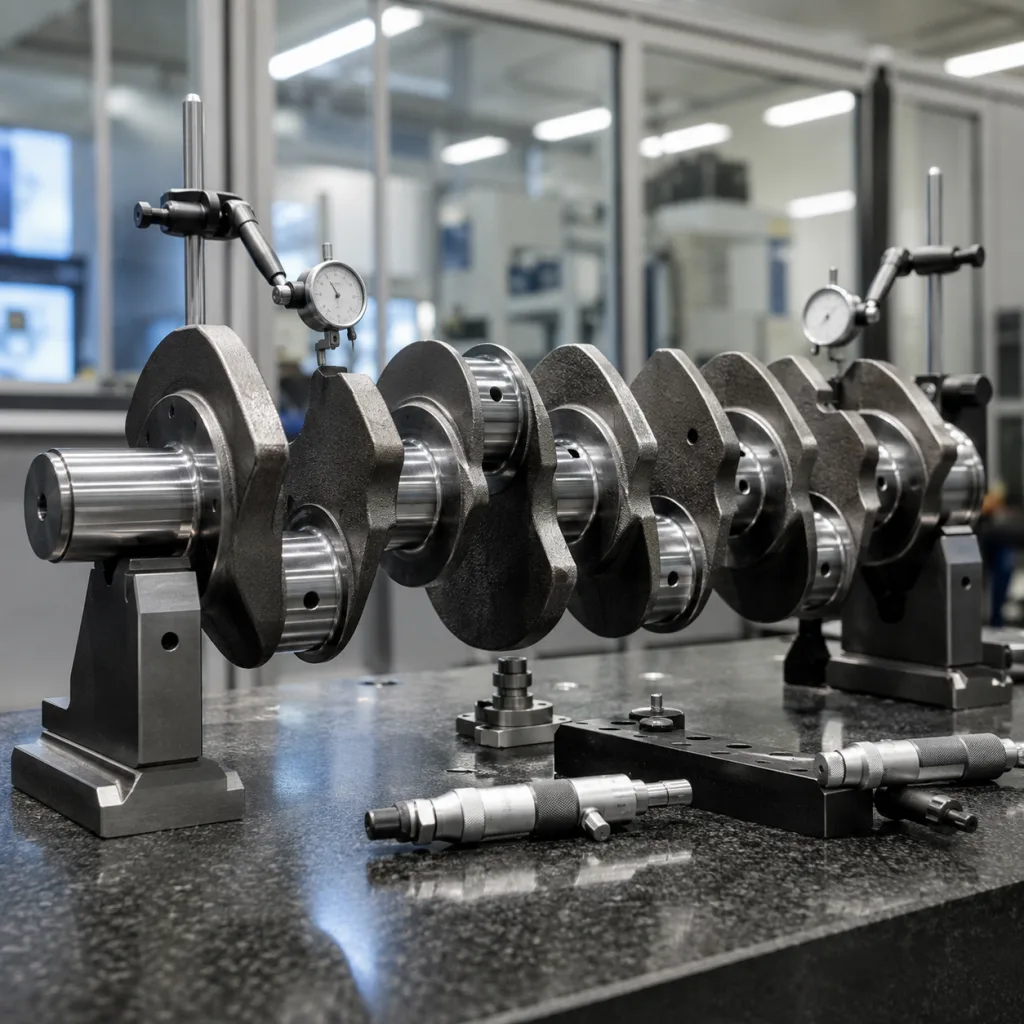
A camshaft for Ram 2500 aftermarket replacement must reproduce the functional geometry of the original component. Small differences in lobe lift, opening ramp, base circle, journal alignment or thrust-face location can alter valve timing, oil pressure, idle quality, emissions performance and long-term durability. For B2B approval, a supplier should provide first-article inspection and batch control data rather than relying on sample appearance or catalogue matching alone.
Control point
Procurement relevance
Typical verification method
Journal diameter
Bearing oil clearance and oil pressure
Micrometer, bore correlation, roundness check
Lobe lift and base circle
Valve lift, valve-train load and combustion stability
Cam profile measuring fixture
Lobe phasing
Valve timing accuracy and engine calibration compatibility
Coordinate or rotary indexing inspection
Shaft straightness/runout
Bearing load, noise and rotation stability
V-block and dial indicator or dedicated runout fixture
Thrust face width
End-play control and timing alignment
Gauge and functional fixture
Sensor target position
ECU synchronisation and start/run reliability
Fixture-based angular inspection
Oil hole position
Lubrication reliability and bearing protection
Visual, gauge pin and coordinate check
Surface roughness
Bearing film stability and follower contact life
Profilometer measurement
</tr></thead><tbody> </tbody></table>For replacement programs, Driventus normally aligns inspection plans with customer drawings, reverse-engineered master samples or approved reference data. Dimensional tolerances are agreed during project launch because the correct tolerance depends on engine family, material route, critical-to-function features and production volume. A practical control plan should identify which dimensions are checked on every lot, which are monitored by sampling, and which require capability review during ramp-up.
Where buyers provide OE cross-reference information, it should be used carefully and lawfully. Generic references, such as OE 06A… or OE 11251…, can support internal fitment mapping when they are already part of the customer’s approved catalogue data, but they should not replace technical validation. The commercial reference tells the warehouse what to sell; the engineering file tells the factory what to make.
Materials, Heat Treatment and Surface Finish
Camshaft durability depends on the interaction between material, hardening method, lubricant film, follower type and contact stress. A replacement part for heavy-duty pickup use should resist adhesive wear, pitting, lobe scuffing and journal damage under high load, frequent start-stop operation and variable maintenance conditions. Material choice may include chilled cast iron, ductile iron, forged steel or billet steel depending on the application, production method and customer specification.
Driventus applies process controls for:
Chemical composition verification for each material batch
Hardness checks at journals, lobes and thrust surfaces
Case-depth, induction-depth or chilled-depth evaluation where specified
Surface roughness checks on bearing journals and lobe contact areas
Straightening and stress-control procedures after heat treatment
Machining controls for oil holes, chamfers, sensor features and thrust faces
Cleaning controls to reduce abrasive residue before rust prevention and packaging
Common buyer specifications include lobe hardness targets, journal surface roughness limits, maximum total indicated runout and acceptable case-depth range. Exact values should be set by drawing, master sample or technical agreement, not by generic catalogue language. If a buyer is consolidating several aftermarket references into one sourcing project, each engine family should still be reviewed separately because material and heat-treatment assumptions may not transfer across applications.
Surface finish is especially important because a camshaft is a loaded sliding and rolling contact component. Rough journals can disturb the oil film and accelerate bearing wear, while an incorrect lobe finish can shorten lifter or follower life. Cleanliness also matters; residual grinding dust, metal chips or unremoved abrasive can damage the engine shortly after installation even when the dimensions are correct.
For procurement teams operating in the EU and UK, chemical compliance questions may include REACH (EC) No 1907/2006 declarations for relevant materials and packaging inputs. Driventus can support documentation review as part of its quality system, while recognising that importers remain responsible for market-specific compliance files, customs declarations and downstream customer requirements.
Validation Testing for Replacement Approval
A replacement camshaft should pass more than a dimensional inspection. For a Ram 2500 aftermarket program, validation should confirm that the part can run with the intended lifter or follower system, timing components, bearing arrangement and lubrication environment. This is particularly important for distributors supplying repair chains, because field failures often create labour claims, vehicle downtime and reputational risk that exceed the cost of the component itself.
A practical validation plan may include:
Incoming material certification and hardness confirmation
First-article dimensional report against approved reference data
Profile comparison of production samples against master camshaft geometry
Runout inspection before and after heat treatment where relevant
Surface roughness measurement on all functional contact areas
Oil-hole, groove and chamfer verification before final cleaning
Salt-spray or humidity exposure for protective coatings and packaging, where specified
Trial assembly with timing, bearing and thrust-control components
Batch traceability from raw material to finished product lot
Corrective-action procedure for any dimensional, material or packaging nonconformity
Published management standards such as IATF 16949:2016 and ISO 9001:2015 do not replace part-specific validation, but they define expectations for process control, corrective action, document control and traceability. Buyers should treat certificates as a starting point and then confirm that the supplier’s inspection plan addresses the real failure modes of the camshaft.
Emissions-related vehicle regulations, including ECE R-83 in relevant markets, are also useful context for engine calibration integrity. A replacement camshaft should not be selected in a way that changes intended valve timing, cam phasing or emissions performance. If the program is sold as a standard replacement rather than a performance modification, the engineering target should be OE-equivalent function, not altered lift or timing characteristics.
Sourcing Checklist for Importers and Repair Chains
Buyers comparing suppliers should review both the component and the production system behind it. A low unit price is not useful if lobe geometry drifts between batches, if hardness is inconsistent, or if packaging allows corrosion during sea freight. For multi-location repair chains, consistency is also needed so technicians do not encounter installation variation by lot or by distribution centre.
Before placing a production order, confirm:
Application coverage and interchange data by engine family and year range
Sample inspection report with lobe, journal, thrust and sensor-target measurements
Material grade, heat-treatment route and hardness specification
Process capability data for critical dimensions where volume justifies it
Cleaning, rust-prevention and packaging method for export transit
Barcode, label and carton requirements for warehouse and point-of-sale systems
Warranty handling process, claim evidence requirements and return-analysis procedure
MOQ, lead time, tooling status, sample timing and forecast flexibility
Private-label artwork, neutral packaging or customer-branded carton requirements
Required documents, such as inspection reports, certificates of origin or compliance declarations
A complete RFQ shortens development time and helps avoid ambiguous quotations. For new camshaft programs, the most efficient request includes annual volume, target market, engine application list, existing cross-references, packaging format, inspection document requirements and any required PPAP-style approval steps. If the buyer has a known field issue with an existing supplier, that history should be shared so the replacement program can address the root cause rather than copying the same weakness.
Driventus supports aftermarket distribution programs, OEM/Tier-1 supply discussions and repair-chain sourcing projects. Standard camshaft programs can be quoted against existing application data, while custom manufacturing is available where buyers provide drawings, approved samples or technical files.
Commercial and Compliance Notes
For the keyword camshaft for Ram 2500 aftermarket replacement, the main commercial risk is often catalogue accuracy rather than basic manufacturability. A part may look correct in photos and still fail if it uses the wrong sensor feature, oil passage, journal configuration or lobe phasing. Procurement teams should therefore treat fitment data as a controlled document and update it whenever the vehicle application range, engine code coverage or supersession logic changes.
Driventus does not claim approval, sponsorship or endorsement by any vehicle manufacturer. Brand names and model names are used only to identify fitment and application context. Driventus is an independent aftermarket manufacturer; brand names are referenced for fitment only. Buyers should ensure that their catalogue descriptions, marketplace listings and packaging claims follow local trademark, advertising and consumer-protection rules.
For regulated markets, importers should confirm documentation, labelling, origin marking, packaging recyclability requirements and any local obligations for chemical declarations. Depending on the sales channel, additional requirements may include carton drop-test expectations, barcode formats, country-of-origin wording, warranty language and installation disclaimers. Driventus can provide production inspection data, quality-system certificates and agreed compliance documents for review. Final market approval, catalogue claims, installer instructions and customer-facing statements remain the responsibility of the importer, distributor or service organisation selling the finished product.
Frequently asked questions
Provide model year range, engine displacement, fuel type, camshaft position, annual volume, packaging requirements and any OE or aftermarket cross-reference data already approved in your catalogue. Drawings, technical files or physical samples improve quotation accuracy and help define the inspection plan.
Yes. Driventus can measure approved samples and build a technical file covering material, profile, journal dimensions, sensor features, oil passages and surface finish. Production approval still requires agreed validation, inspection criteria and customer sign-off.
No. Driventus supplies catalogue-based aftermarket components and also supports custom manufacturing programs for buyers that provide drawings, samples, target specifications, packaging requirements and volume forecasts.
If you are sourcing a replacement camshaft program for distribution or repair-chain supply, share your fitment list, target volume and inspection requirements to [request a quote](/contact.html).