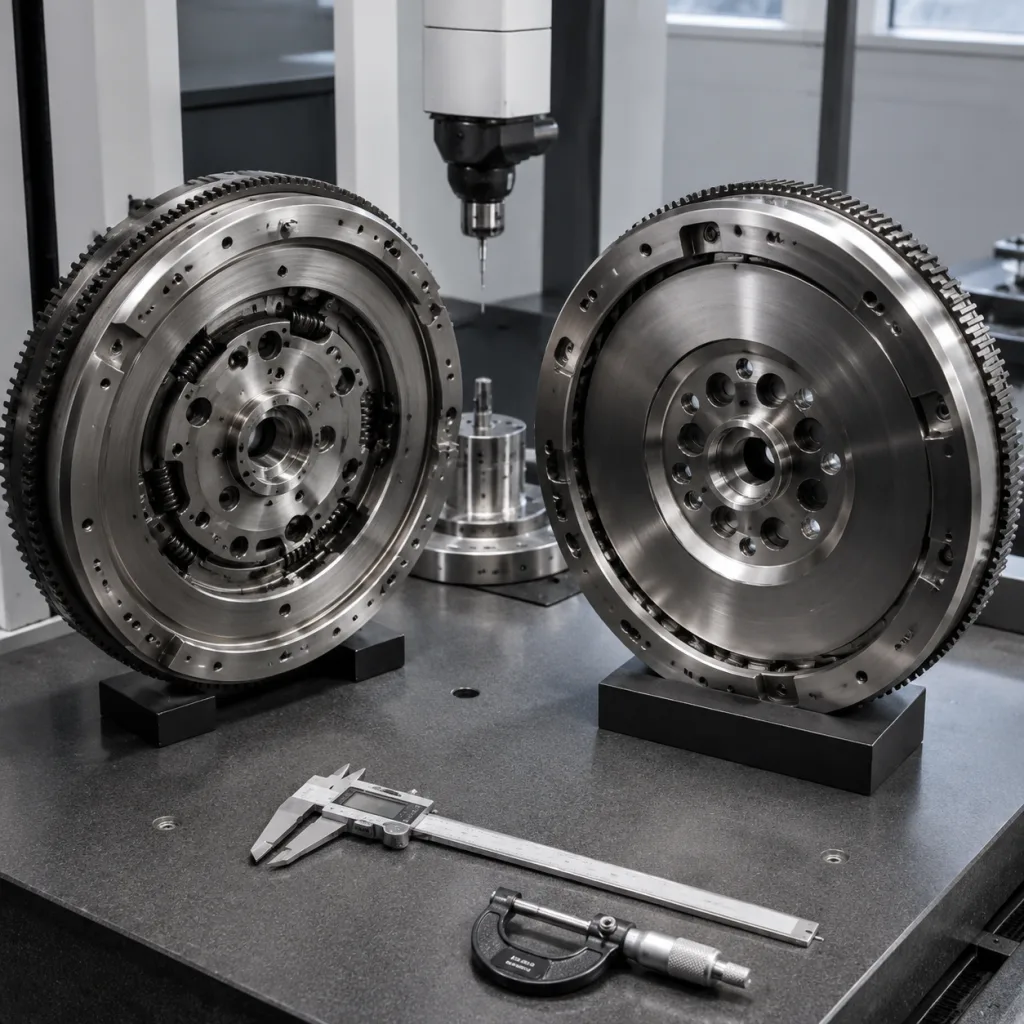
A camshaft phaser RAM supplier should be judged on more than part-number coverage. The real buying question is whether each unit holds timing accuracy, controls oil flow, survives export handling, and arrives with records your team can approve before stock is released. For distributors, Tier-1 sourcing teams, and repair-chain category managers, the expensive failures are familiar: batch drift, unstable vane sealing, weak traceability, mixed revisions, delayed 8D response, and packaging damage on machined faces.
Driventus manufactures engine and powertrain components in Taizhou, Zhejiang, and supplies export markets in more than 60 countries. Our camshaft phaser supply model combines IATF 16949:2016 and ISO 9001:2015 process controls, PPAP-style documentation where required, and order structures suited to aftermarket, distributor, and private-label programmes. Driventus is an independent aftermarket manufacturer; vehicle brand names and OE-style references are used for fitment identification only.
Start With Fitment Risk, Not Catalogue Similarity
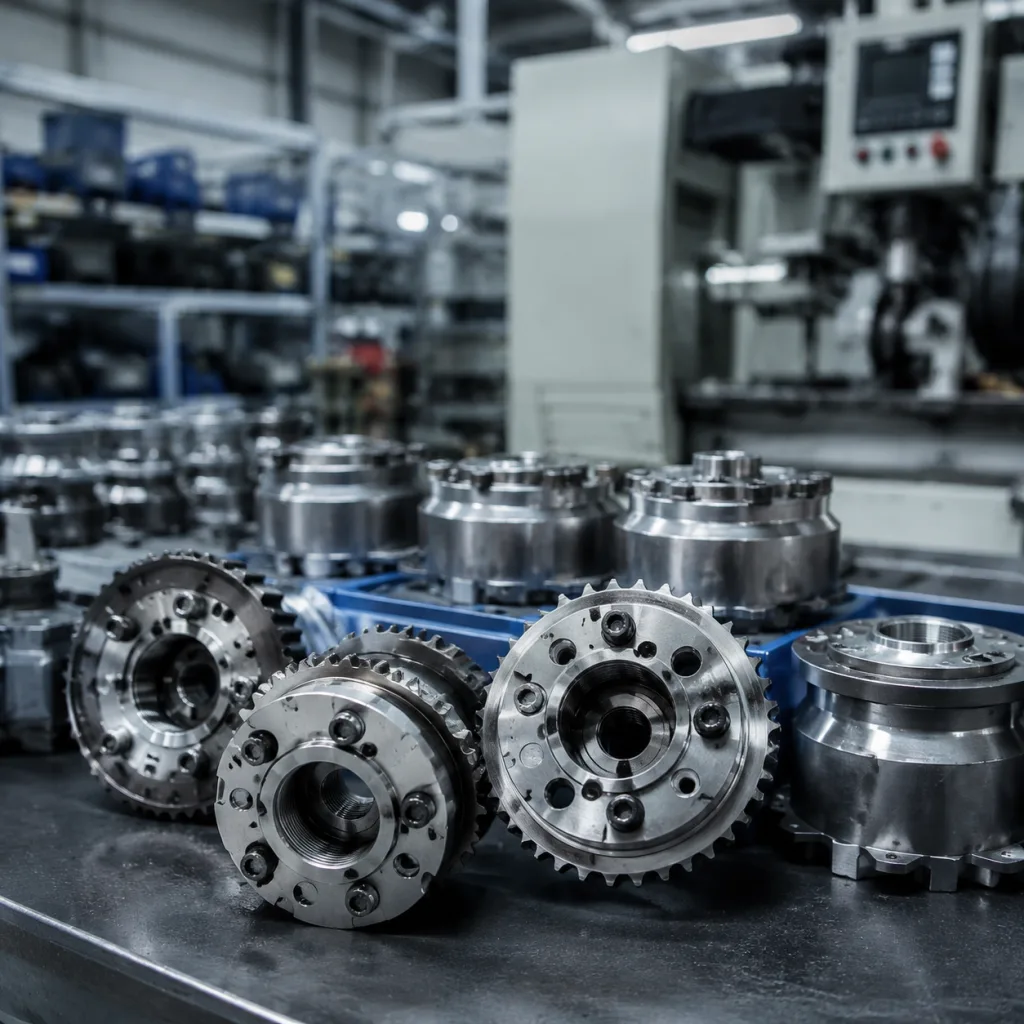
RAM applications can change by engine family, model year, cam position, oil-control valve strategy, timing-chain layout, and ECU calibration. Two phasers can look almost identical on a screen and still differ in vane travel, spring load, oil-feed logic, or cold-start locking behaviour. That is why sourcing should begin with application data, not appearance.
Before approving samples, confirm engine code, intake or exhaust position, tooth profile, bolt pattern, locking-pin design, vane travel range, and oil-feed port geometry. Driventus can review fitment against buyer-supplied OE-style references, drawings, photos, and physical samples. When a buyer provides an OE-style reference such as OE 06A… or OE 11251…, Driventus treats it as a cross-reference for identification, not as evidence of vehicle manufacturer approval.
Use this decision screen before moving to price negotiation:
Application scope: intake or exhaust camshaft phaser, engine family, displacement, VIN or engine-code range, market region, and related timing-system parts.
Interface dimensions: sprocket tooth count, centre bore, mounting face, bolt circle, dowel or locating features, oil-port position, and chain alignment offset.
Functional features: locking-pin release pressure, vane travel angle in crankshaft degrees, return spring behaviour, response consistency, leakage rate, and cold-start locking repeatability.
Compliance records: material declarations, restricted-substance review, inspection history, heat-treatment records where applicable, and lot traceability.
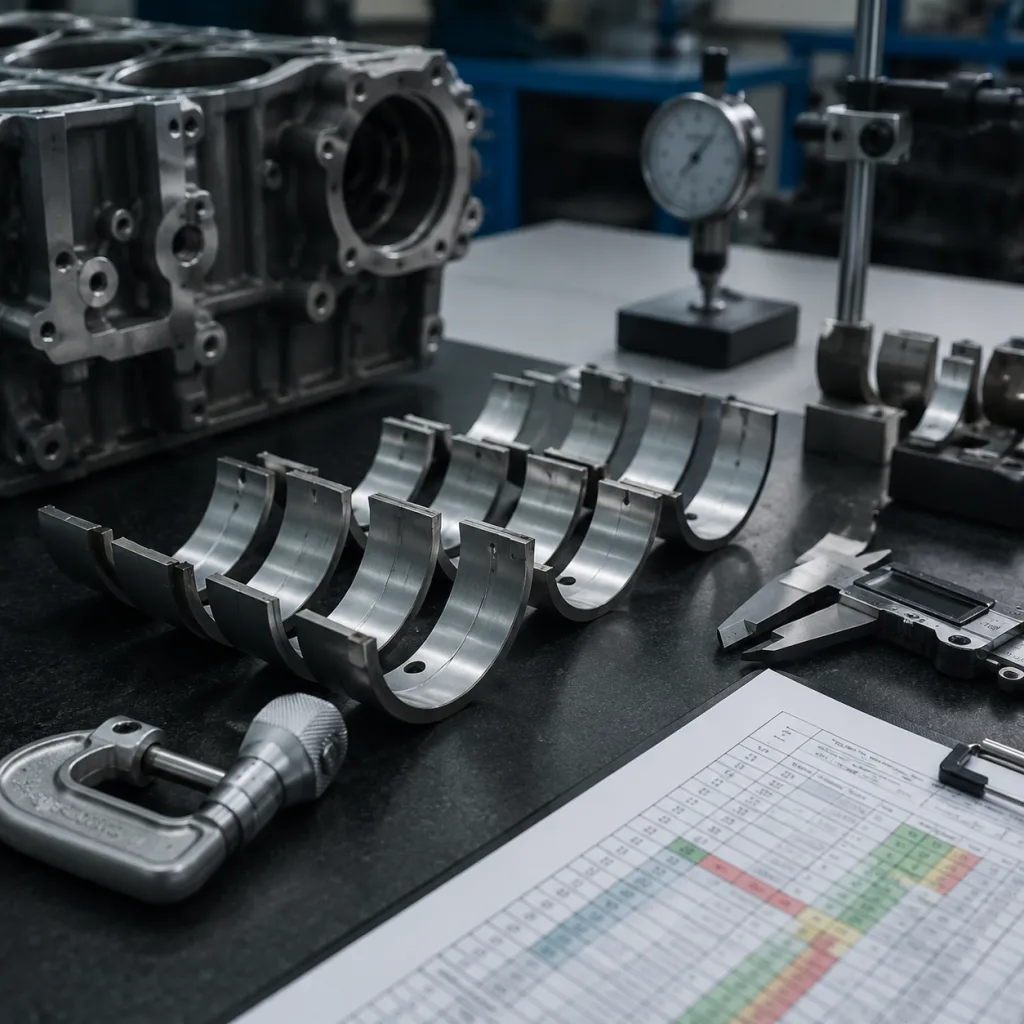
Do not approve a camshaft phaser from catalogue photos alone. Request at least 5 sample pieces from the intended production route. Measure the centre bore, bolt circle, sprocket runout, oil-port position, and mounting-face flatness, then compare response and leakage results with the retained original sample.
For mixed RAM coverage, keep separate approval files for intake and exhaust units. Opposite-side phasers can share a similar outer profile while using different vane timing, spring load, or oil-feed logic.
MOQ, Lead Time, and the Cost Trade-Off Buyers Miss
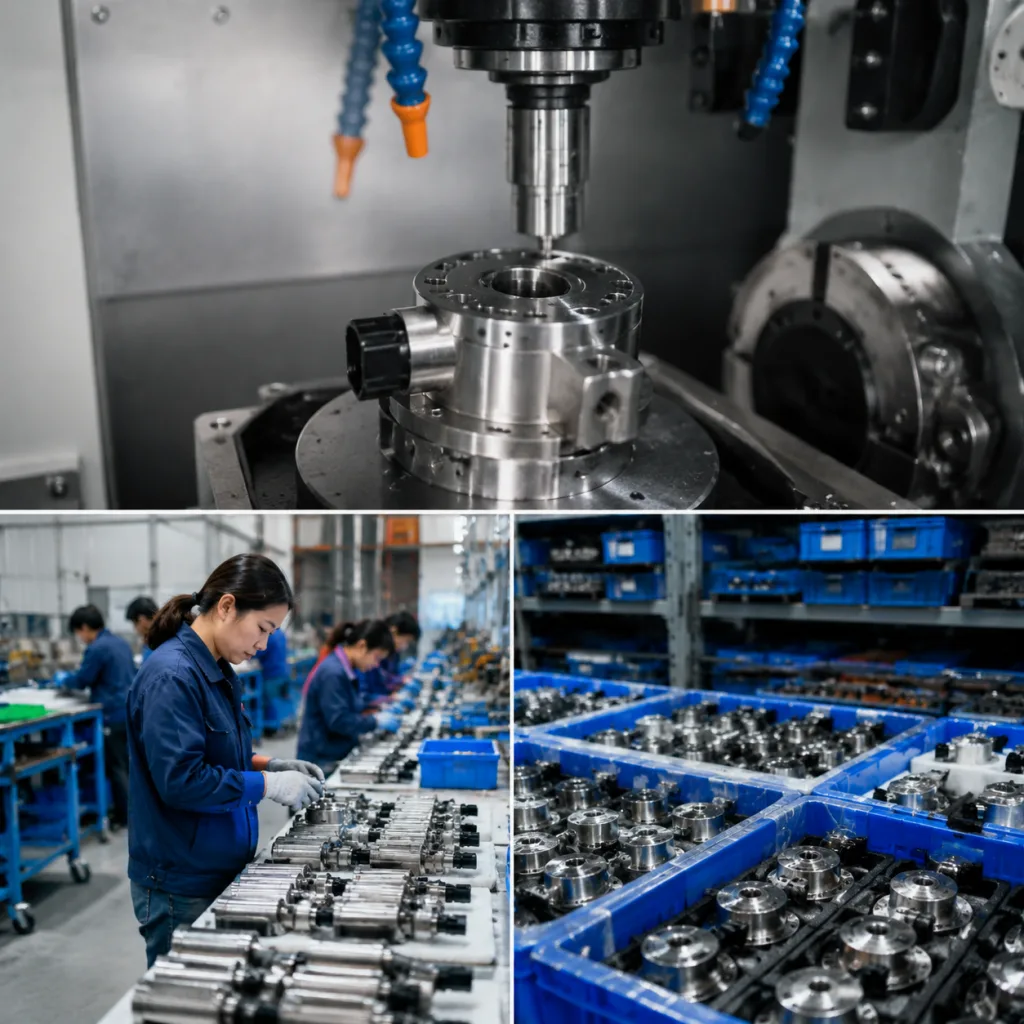
A camshaft phaser combines precision-machined, sintered, stamped, heat-treated, and assembled elements. Risk rises when these steps are scattered across unverified subcontractors or when critical processes are not tied to a controlled inspection plan. Driventus uses managed production routes for engine and powertrain components, with supplier qualification applied to purchased materials and function-critical process steps.
Commercial terms depend on tooling status, reference maturity, surface finish, validation depth, and packaging complexity. The figures below are planning ranges for B2B discussions, not fixed commitments.
Sourcing item
Typical planning range
Buyer notes
MOQ for active references
300–800 pieces per part number
Lower 100–200 piece trial orders may be reviewed for approved distributors or first-article validation
New reference development
90–150 days
Depends on sample availability, drawings, tooling needs, bench-test scope, and buyer sign-off speed
Repeat-order lead time
35–60 days
Excludes sea freight, customs clearance, and destination warehousing; add 7–15 days for complex private-label packing
Sample quantity
5–20 pieces
Use 3–5 pieces for dimensional review and the balance for bench validation, fitment, and retained master samples
Indicative price drivers
Tooling, vane design, machining tolerance, surface treatment, order quantity, and inspection level
A 300-piece order normally carries higher unit cost than 800–1,500 pieces because setup, testing, and packing are spread over fewer units
Packaging
Neutral, distributor brand, or bulk service pack
Common export cartons should pass buyer handling rules; label content can follow buyer template after artwork approval
Documentation language
English as standard
Additional formats, inspection report templates, and buyer portals should be agreed during project launch
</tr></thead><tbody> </tbody></table>MOQ and price should be reviewed together. A buyer launching 6 RAM phaser references may get a better landed cost by ordering 300–500 pieces of fast-moving SKUs and 100–200 pieces of slow movers as a trial, instead of forcing one flat MOQ across the range. If the reference is new, low-volume, or requires dedicated tooling, Driventus may quote tooling or validation charges separately from unit price so reorder pricing stays transparent.
Early forecast sharing prevents avoidable delays. Annual volume, launch date, target markets, stocking model, and warranty expectations influence tooling capacity, inspection frequency, and finished-goods strategy. Multi-location repair chains usually need stable replenishment quantities, not one-time spot buys. Distributors may prefer mixed-container planning with gaskets, water pumps, timing components, pistons, or crankshaft parts to reduce landed cost per SKU and improve inventory turns.
Audit Evidence That Separates a Factory From a Trader
Final inspection is not a quality system. Procurement teams should ask for evidence that controls are built into production before parts reach the packing table. Driventus operates under IATF 16949:2016 and ISO 9001:2015 certified management systems, supporting process control, risk-based thinking, corrective action, internal audit, supplier management, and traceability in automotive production environments.
For camshaft phasers, audit discussions usually move quickly to machined datum surfaces, vane-to-rotor clearance, oil-channel cleanliness, spring load, locking mechanism behaviour, assembly torque, and the link between inspection records and finished lots. A buyer audit may also review calibration records, gauge repeatability and reproducibility, nonconforming material handling, rework approval, and batch segregation.
Ask for an audit file that can prove control at each stage:
Process flow diagram and control plan with special characteristics marked for oil ports, bore, bolt circle, sealing faces, and lock-pin function.
Incoming material inspection records for steel, sintered components, springs, fasteners, seals, and bought-in subcomponents.
Critical dimension inspection plan, including first-piece, in-process, and final inspection frequencies.
Torque and assembly parameter records for bolts, plugs, retaining parts, and any press-fit or staking operation.
Gauge calibration and measurement-system evidence where applicable, including CMM, runout gauges, torque tools, pressure gauges, and flow meters.
Traceability method from raw material or component batch to finished carton, pallet, packing list, and shipment invoice.
Corrective action format for 8D or buyer-specific reporting, with containment, root cause, corrective action, verification, and recurrence-prevention fields.
For first production, request a control-plan extract and an inspection report listing nominal dimensions, tolerances, measured values, sample size, instrument used, and pass/fail judgement. If drawings are buyer-owned, tolerances should be stated on the drawing. If the project is based on reverse engineering and reference samples, the quotation should define agreed critical-to-function ranges before tooling release.
Common checkpoints include bore diameter, bolt-circle position, sprocket runout, mounting-face flatness, oil-port location, vane travel, lock-pin release pressure, leakage at agreed oil pressure, and residual particle cleanliness.
Our quality system page gives an overview of certification and production controls. For programmes requiring buyer-specific APQP, PPAP, annual requalification, or additional endurance testing, confirm the documentation scope before quotation because test depth, reporting format, and sample size affect cost and lead time.
Where Camshaft Phasers Fail After a “Good” Dimensional Check
A phaser can pass a bench measurement and still fail in service. Leakage, slow response, rattle, or inconsistent locking can create warranty claims even when the centre bore and bolt pattern are correct. RAM engine applications place high demand on oil cleanliness and control accuracy, especially where variable valve timing affects emissions, idle stability, torque delivery, fuel consumption, and cold-start behaviour.
Driventus validation planning is based on supplied application requirements, available reference data, and buyer risk level. Where drawings, original samples, or defined test standards are available, the engineering team can set measurement points and bench checks around function rather than visual comparison.
Validation should cover the failure modes buyers actually pay for:
Dimensional inspection: coordinate measurement of mounting faces, bore, tooth geometry, bolt circle, oil-feed alignment, chain line, and runout.
Material verification: hardness, surface treatment checks, material certificate review, spring verification, and confirmation of critical bought-in parts.
Oil-control function: pressure response, leakage, vane movement range, actuation stability, return behaviour, and lock-pin release consistency.
Endurance review: cycle testing under defined oil temperature, pressure, and speed conditions when required by the buyer.
Cleanliness control: washing process checks, particle monitoring, oil-channel protection, and protection of oil passages before final packing.
Noise assessment: abnormal rattle checks linked to lock pin, rotor clearance, spring preload, vane contact, or uncontrolled internal wear.
A usable validation plan needs measurable conditions. Avoid broad wording such as “test OK”. Specify oil grade or viscosity, oil temperature, pressure range, actuation frequency, cycle count, leakage acceptance, response-time target, and whether the part is tested alone or against an oil-control valve and timing set. Where no buyer standard exists, Driventus can propose a bench-test plan for approval, but acceptance criteria should be agreed in writing before mass production.
For tolerance planning, classify dimensions by warranty risk. Centre bore, bolt circle, mounting face, sprocket alignment, and oil-port location usually need tighter control and first-piece verification. Cosmetic features, external casting or sintering marks, and non-contact surfaces may use broader rules if they do not affect sealing, timing, oil flow, or installation.
Relevant compliance requirements may include REACH (EC) No 1907/2006 for restricted substances in EU supply chains. Engine-system performance and emissions regulations such as ECE R-83 apply at vehicle type-approval level, not as direct approval for an individual aftermarket camshaft phaser. Suppliers should avoid implying that a component alone carries vehicle-level approval unless a valid certificate specifically supports that claim.
Private-Label Launch: A Practical Sequence
Many B2B buyers are not purchasing a loose replacement part. They need a sellable SKU with stable fitment data, shelf-ready packaging, barcode rules, installation notes, warranty coding, carton strength, and revision control. Driventus can support distributor-label and repair-chain programmes when the buyer provides brand rules, regional requirements, and approval standards.
For custom manufacturing, engineering inputs may include an original sample, 2D drawing, 3D scan data, material requirements, functional targets, validation plan, and packaging specification. The development route is different for a direct cross-reference part than for a buyer-controlled modification, especially when changes affect oil flow, spring force, vane geometry, or installation instructions.
A practical launch sequence is:
1. Confirm application list, annual forecast, target markets, target price band, MOQ by SKU, and warranty expectations. 2. Review OE-style cross-reference data, drawings, photos, physical samples, and any “do not use” interchange conflicts. 3. Agree critical dimensions, functional tests, compliance needs, inspection frequency, and documentation level. 4. Produce samples with dimensional report, functional test summary, and packaging mock-up where required. 5. Complete buyer validation, fitment review, label approval, barcode scan check, and carton drop or handling checks if specified. 6. Release the first production order with the agreed inspection plan, revision code, packaging artwork version, and shipment schedule.
Private-label supply also needs firm rules for artwork ownership, carton revision control, label data, and SKU supersession. For importers serving the EU, UK, US, Canada, Australia, and Brazil, disciplined change control helps prevent stock disputes when carton artwork changes, a barcode is updated, or an application range is revised.
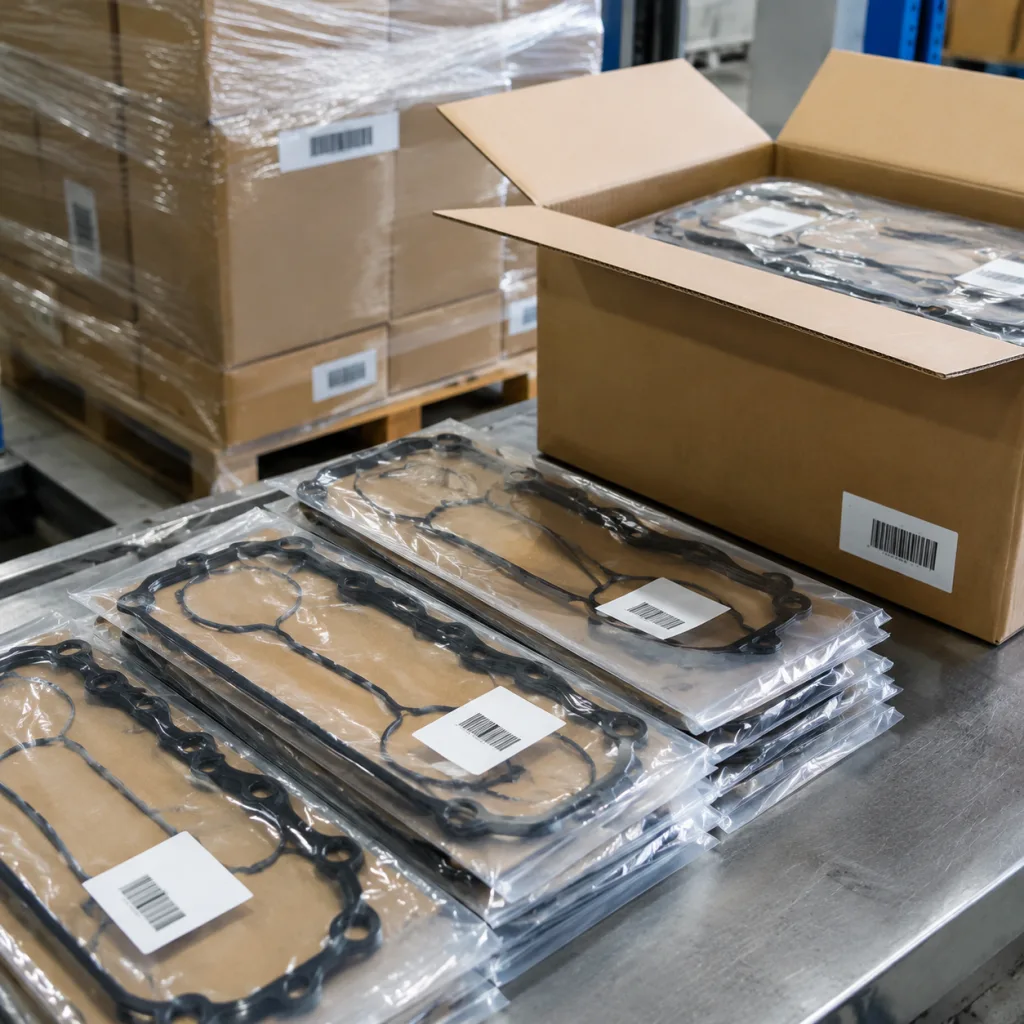
Treat packaging as part of the product. Define unit-box dimensions, carton quantity, gross-weight limit, pallet height, barcode type, label position, country-of-origin marking, humidity protection, and whether oil ports need caps or internal bags. If e-commerce or marketplace fulfilment is required, confirm carton compression, edge protection, scannable labels, and “no mixed SKU carton” rules before artwork release.
Import and Warranty Controls Before the First Container Ships
A supplier relationship should lower total sourcing risk, not just unit cost. For camshaft phasers, warranty exposure often comes from incomplete application coverage, oil-passage contamination, mixed revisions, weak installation guidance, or packaging damage that marks machined surfaces before the part reaches the installer.
Driventus supports export documentation and shipment planning for regular B2B orders. Buyers should specify destination country, shipping mark rules, carton strength, pallet configuration, fumigation requirements where applicable, and any marketplace, 3PL, or warehouse label requirements before order release. These details affect packing method, document preparation, and the risk of delays at receiving warehouses.
Use these controls before stock leaves the factory:
Lock the approved sample, drawing status, revision code, test criteria, and packaging artwork before mass production.
Use batch-level traceability on unit labels, cartons, pallets, packing lists, and inspection records.
Request pre-shipment inspection for first orders, new references, high-value launches, or any batch after tooling or process change.
Define warranty evidence requirements, including installation mileage, oil condition, fault codes, scan data, installation photos, and returned-part condition.
Review slow-moving SKU exposure before committing to large MOQ across multiple references.
Agree a process for quarantining stock if a suspected batch issue appears after delivery.
A professional camshaft phaser RAM supplier should be ready to discuss corrective action timing before a problem occurs. For distributors and repair chains, a 30–60 day delay in technical response can create chargebacks, lost shelf space, and customer churn. Agree escalation contacts, photo requirements, return-sample routing, and 8D response expectations in the supply contract.
For claim handling, separate installation issues from suspected manufacturing defects. A complete claim file normally includes the part number, batch code, invoice or shipment reference, vehicle application, mileage at installation, mileage at failure, oil service history, DTC or scan report, photos of the timing set, and whether the oil-control valve was replaced or reused. That evidence allows faster containment, helps identify mixed-application errors, and reduces unnecessary returns of good stock.
Frequently asked questions
Please provide application details, engine family, intake or exhaust position, annual forecast, target markets, target MOQ, price target where available, packaging requirements, and any OE-style cross-reference such as OE 06A… if available. Photos, drawings, or original samples improve quote accuracy and help confirm critical interfaces.
Yes. Driventus can support neutral, distributor-brand, or buyer-specified packaging, subject to artwork approval, MOQ, and label requirements. Barcode, carton, pallet, warranty-code, country-of-origin marking, and revision-control rules should be confirmed before production.
No. Driventus is an independent aftermarket manufacturer; brand names are referenced for fitment only. Any OE-style numbers are used only as cross-references to help buyers identify application compatibility.
For a sourcing review, send your application list, target MOQ, price target, required lead time, and packaging requirements. To discuss samples or a supply programme, [request a quote](/contact.html).