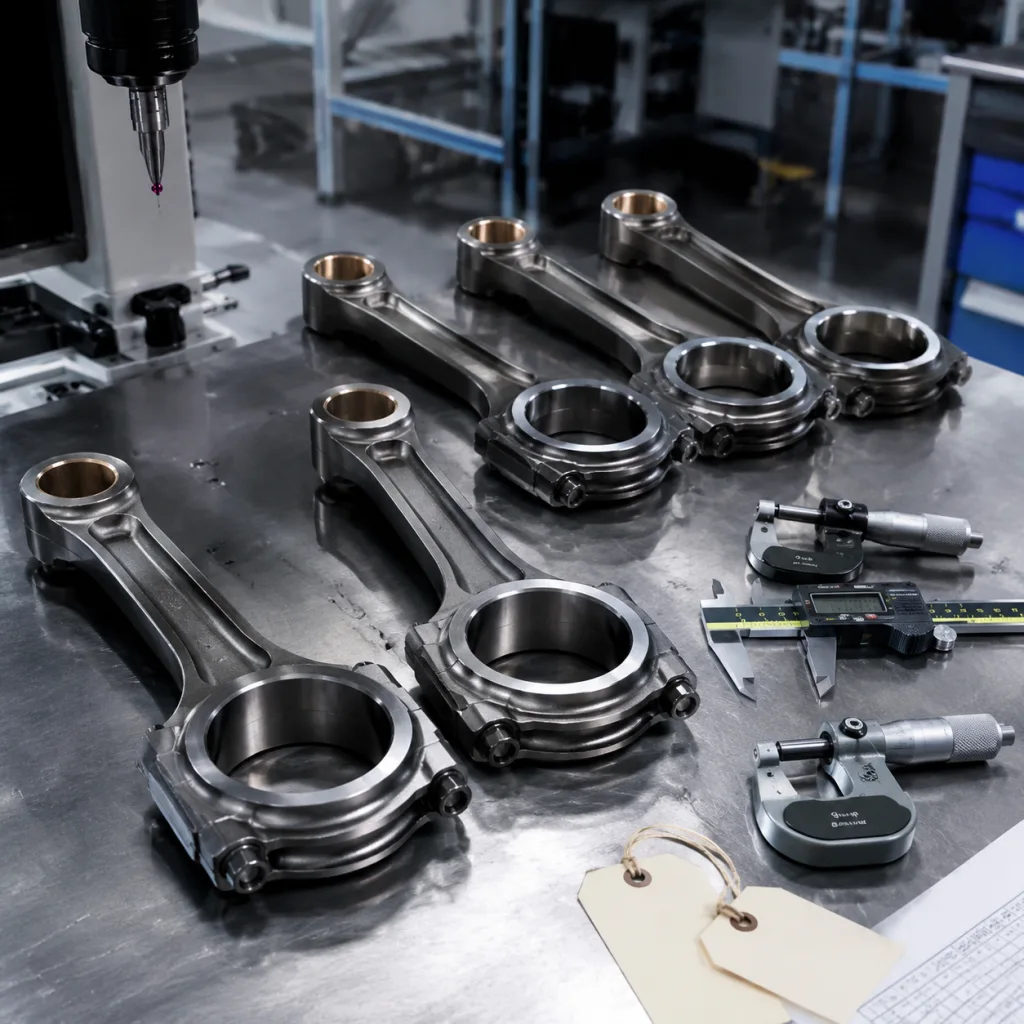
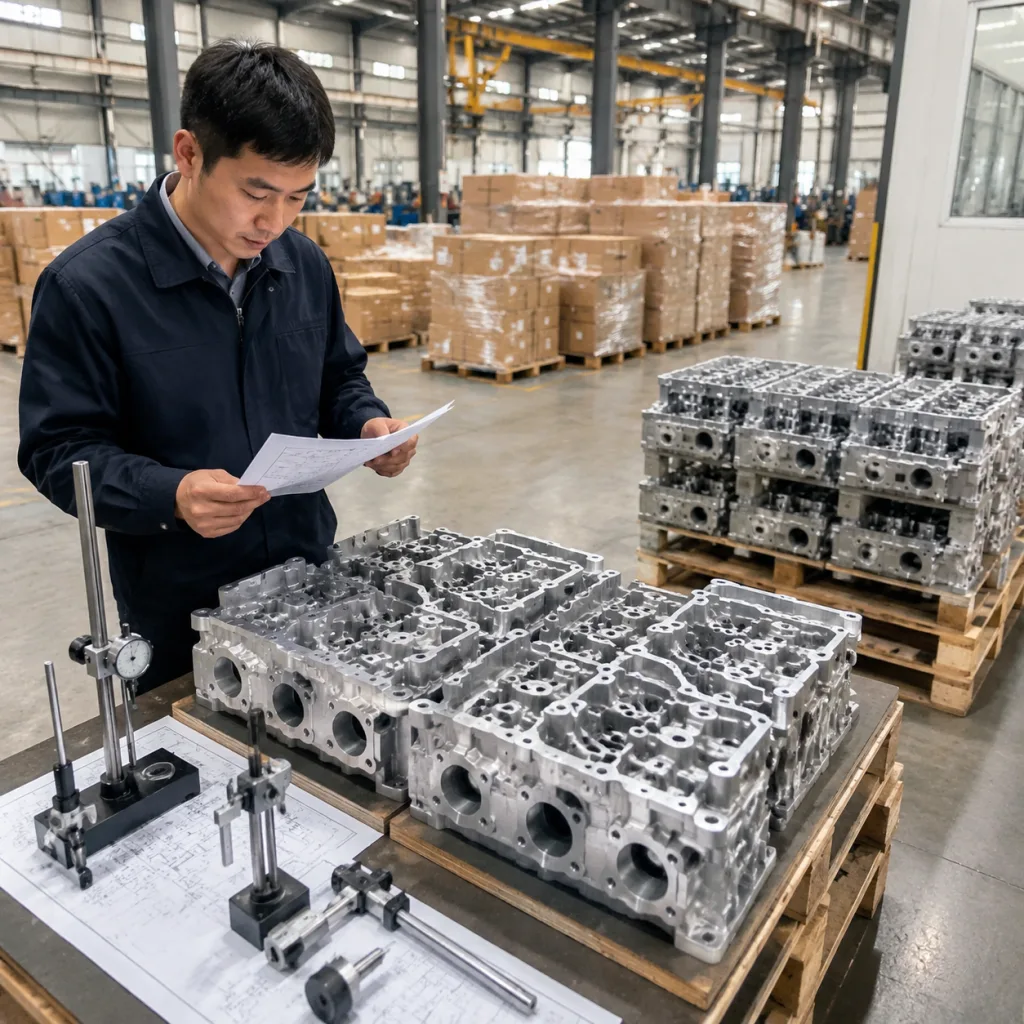
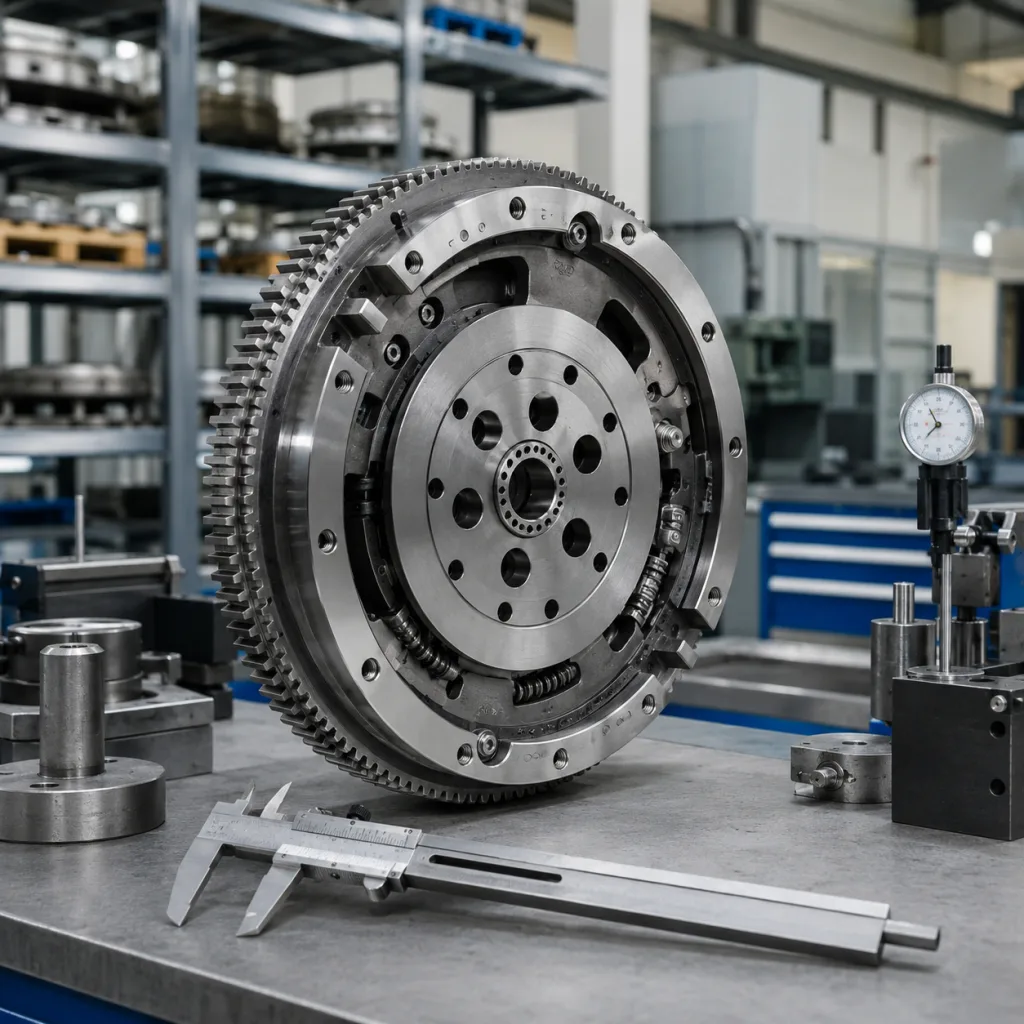
Procurement teams looking for a camshaft phaser RAM manufacturer China partner usually have to balance three priorities at once: dimensional consistency, stable lead times, and documented quality control. Driventus supplies engine and powertrain components from Taizhou, Zhejiang, with production management systems aligned to IATF 16949:2016 and ISO 9001:2015. We support aftermarket distributors, OEM and Tier-1 supply chains, and multi-location repair groups that need repeatable fitment, controlled incoming inspection, and dependable export support.
Driventus is an independent aftermarket manufacturer. Brand names and OE references, where mentioned, are used only to identify fitment and application compatibility. For buyers comparing suppliers, the decision should not be based on unit price alone. A camshaft phaser is a timing-control component, so the sourcing review should cover sealing performance, oil control, spring and vane behaviour, phaser angle repeatability, compatibility with the camshaft sprocket interface, and the quality evidence supplied with each shipment. This guide explains what to verify before placing a programme order, how to compare factories, and which documents matter during supplier qualification and receiving inspection.
What buyers should verify before sourcing
When a buyer searches for a camshaft phaser RAM manufacturer China supplier, the first screening step should be technical rather than commercial. The part has to match the engine family, oil pressure range, phaser travel angle, chain or belt drive architecture, and the intended service environment. A low quotation is not useful if the part cannot hold timing position, seal correctly, or match the mounting interface.
Key procurement checks
OE part-number cross-reference where available, for example an OE-format reference such as 06A107065 only when the target application already uses that reference
Bore, spline, bolt-circle, locating feature, and camshaft interface match
Phasing angle tolerance, return position, and end-stop repeatability
Surface finish on oil passages, sealing lands, and mating faces
Seal retention, leakage risk, and oil response under hot operating conditions
Spring, vane, lock-pin, and internal rotor behaviour during functional cycling
Packaging method that protects machined faces, threads, and oil-control surfaces during export
For fitment references, buyers should compare listings against our catalog and, where needed, the broader engine components range. The RFQ should include the target engine family, existing part number, sample availability, annual demand, and any known market complaints. Do not accept a quotation without a clear application statement, revision level, and sample approval plan. For programme sourcing, the most reliable suppliers will confirm what they can validate, what they need from the buyer, and which assumptions are included in the price.
Why certification and audit evidence matter
A low unit price does not remove the buyer’s responsibility for process control. For cam phasers, variation in machining, component cleanliness, assembly sequence, or torque control can create timing instability, noise, oil leakage, diagnostic faults, or warranty returns. A credible supplier should be able to show documented control of production, inspection, material traceability, and nonconforming-parts handling.
Driventus operates under our quality system, with management systems aligned to IATF 16949:2016 and ISO 9001:2015. IATF 16949 is important because it reflects automotive-specific disciplines such as risk-based process control, change management, traceability, and corrective action. ISO 9001 supports broader management-system consistency, but buyers should still confirm that the certificate scope is relevant to the products being supplied. For cross-border sourcing, buyers should also ask whether product materials, coatings, lubricants, and packaging are reviewed against REACH (EC) No 1907/2006 when shipments enter the EU or UK supply chain.
Documents to request during supplier qualification
Document
Why it matters
ISO 9001:2015 certificate
Confirms basic management system control and audit status
IATF 16949:2016 scope
Shows alignment with automotive supply chain discipline
PPAP-style submission or equivalent
Helps verify part approval, revision control, and traceability
Material declaration
Supports REACH-related and customer compliance review
Inspection report with key dimensions
Confirms batch-level dimensional stability for critical features
Functional or leak-test summary
Shows how oil response, sealing, and movement are checked
Packaging and label standard
Reduces warehouse mis-picks, corrosion risk, and transit damage
</tr></thead><tbody> </tbody></table>If a supplier cannot explain process capability, gauge strategy, calibration status, or traceability from raw material to finished carton, the quote should be treated as preliminary only. Strong documentation does not guarantee a perfect part, but weak documentation makes root-cause investigation slower and warranty exposure harder to control.
Lead time, MOQ, and supply model
For buyers in Europe, North America, Brazil, Australia, and other export markets, supply continuity matters as much as technical fit. A reliable sourcing plan should define MOQ, standard lead time, sample timing, replenishment frequency, and the triggers for expedited production. It should also state whether the supplier is quoting from existing inventory, scheduled production, or a new development run.
Typical questions to ask a camshaft phaser RAM manufacturer China supplier:
What is the MOQ per reference, per engine family, or per consolidated shipment?
Are pilot lots and mass-production lots built on the same line and with the same approved process?
Is inventory held for fast-moving references, and how is stock age controlled?
What is the revision-control process when OE specifications or aftermarket requirements change?
Can the supplier support mixed-SKU export cartons for distributor programmes?
How are urgent orders handled without bypassing inspection or packaging controls?
Which lead-time risks are tied to raw material, machining, assembly, testing, or export booking?
Driventus supports B2B orders for aftermarket distributors, OEM / Tier-1 suppliers, and repair chains. For larger programmes, custom manufacturing can include customer-specific packaging, labelling, carton configuration, and application-specific validation. Buyers should still verify that agreed lead times are linked to raw material availability, machining capacity, assembly scheduling, inspection workload, and logistics planning rather than sales estimates alone. A realistic delivery plan is usually more valuable than an optimistic promise that cannot survive the first repeat order.
Technical comparison: what separates suppliers
The table below gives sourcing teams a practical comparison framework for RFQs, sample approval, and factory audits. It helps separate suppliers with controlled processes from suppliers that rely mainly on final visual checks.
Evaluation point
Acceptable supplier
Higher-risk supplier
Dimensional control
Critical features measured and recorded by batch
General visual inspection only
Cleanliness
Controlled assembly, cleaning, and flush or contamination checks
No documented cleaning step
Traceability
Lot code, date code, revision control, and production records
Box-level identification only
Validation
Oil pressure response, leakage, cycle, and movement testing
No published or repeatable test method
Change management
Engineering changes approved and communicated before shipment
Informal substitutions or unexplained revisions
Commercial support
Clear MOQ, lead time, packing plan, and escalation path
Vague delivery commitment and limited order visibility
Compliance file
REACH-related documents and quality certificates available
Documents incomplete or provided only after dispute
</tr></thead><tbody> </tbody></table>For phasers used in timing-critical engines, validation should include functional cycling, oil response checks, leakage assessment, and inspection of end-stop repeatability. Buyers should also review how the supplier confirms lock-pin engagement, rotor movement, return position, and abnormal noise during operation. If the application references standards such as SAE J2527 for durability-related environmental testing or ECE R-83 for emission-related vehicle context, the buyer should confirm whether the supplier’s data package aligns with the programme’s own validation plan. The standard named in the purchase file should always be the one actually used in testing, and any deviation should be agreed before sample approval rather than discovered during warranty analysis.
Factory audit checklist for procurement teams
A factory audit for cam phasers should focus on process discipline rather than show-room presentation. The most useful evidence is usually visible on the shop floor: marked gauges, controlled work instructions, traceable lots, calibrated tools, clean assembly areas, and a clear response when something goes wrong. Auditors should look for repeatable control points, not only completed forms.
Audit checklist 1. Confirm incoming material control and heat/lot traceability. 2. Review machining gauges for critical diameters, locating faces, splines, bores, and oil passages. 3. Check assembly cleanliness, contamination control, and handling of machined surfaces. 4. Verify torque tools, calibration records, preventive maintenance, and tool-change intervals. 5. Review leak testing, oil-pressure response checks, or functional testing methods. 6. Inspect packing validation for vibration, corrosion protection, label accuracy, and export handling. 7. Confirm how nonconforming parts are identified, segregated, analysed, reworked, or scrapped. 8. Ask how production records are connected to carton labels and shipment documents. 9. Review how engineering changes are approved before parts move into production or export stock.
A supplier that can show documented control of these steps is usually easier to qualify for long-term supply. Buyers sourcing from China should also ask how engineering changes are communicated, how samples are retained, and whether production approval is tied to a frozen revision level. These controls matter more than a single pre-shipment inspection report because they reduce the chance that approved samples and mass-production parts drift apart over time.
How Driventus supports B2B sourcing
Driventus manufactures engine and powertrain components in Taizhou, Zhejiang, with an export model built for repeat orders, mixed-SKU demand, and distributor programme support. For procurement teams, the value is in disciplined specification control, responsive quotation, practical engineering communication, and a clear documentation path from RFQ to shipment.
What we can support
RFQ review against application data, drawings, samples, and market references
OE-format cross-reference review where the application already carries one
Sample runs for approval, measurement, and functional review
Export packing designed for distributor, warehouse, and mixed-carton handling
Customer-specific labelling under defined programme rules
Documentation support for quality review, inspection planning, and ongoing replenishment
If your team is qualifying a new camshaft phaser RAM manufacturer in China, prepare technical drawings where available, expected annual volume, target launch date, destination market, packaging requirements, and the required validation standard set. A complete brief shortens sampling time, reduces quotation ambiguity, and limits revision churn during the first order. It also allows both sides to confirm whether the programme is best handled as an existing reference, a modified aftermarket item, or a custom manufacturing project.
Frequently asked questions
Start with the quality certificate set, material declaration, dimensional report, and a clear OE cross-reference if one exists. Also ask for the supplier’s test method, traceability format, packaging standard, and revision-control notes before placing volume orders.
Yes. Packaging, labelling, carton configuration, and export packing requirements can be discussed under [custom manufacturing](/oem-services.html), provided the programme requirements, artwork rules, and compliance checks are clearly defined.
Use the application data, drawing revision, and critical dimensions first. If an OE reference is already used in the market, compare it in the standard OE format and validate against your sample, installation requirements, and inspection plan before release.
If you are comparing suppliers, send your part number list, annual volume, destination market, and required test standard, and we will review the programme with you. [request a quote](/contact.html)