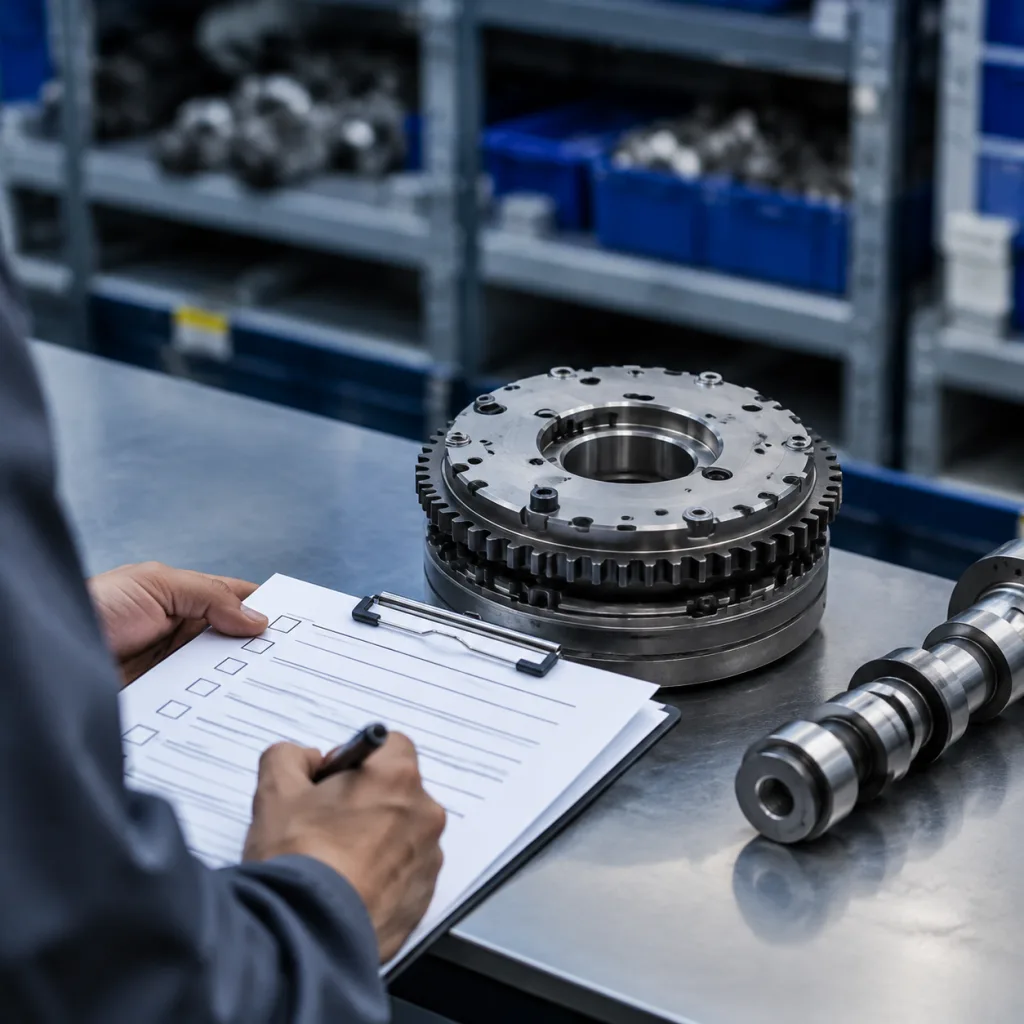
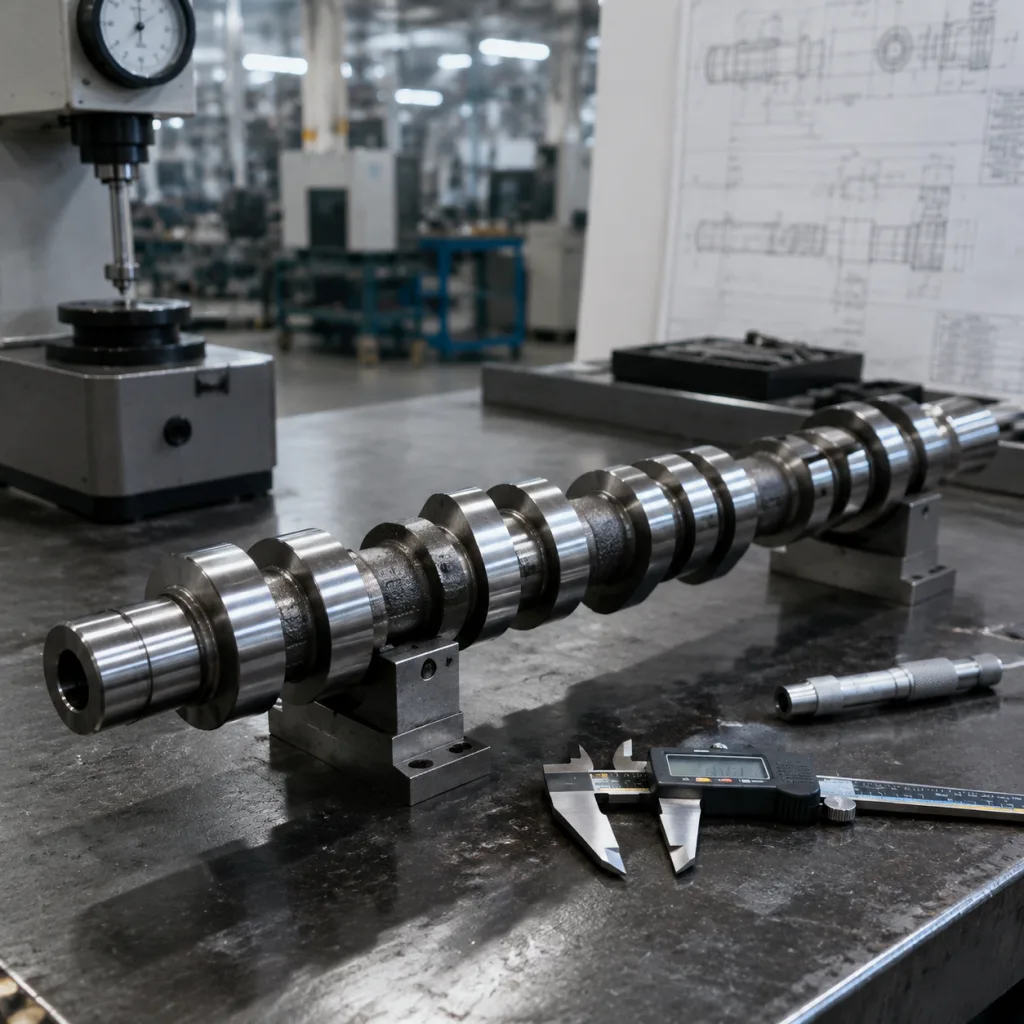
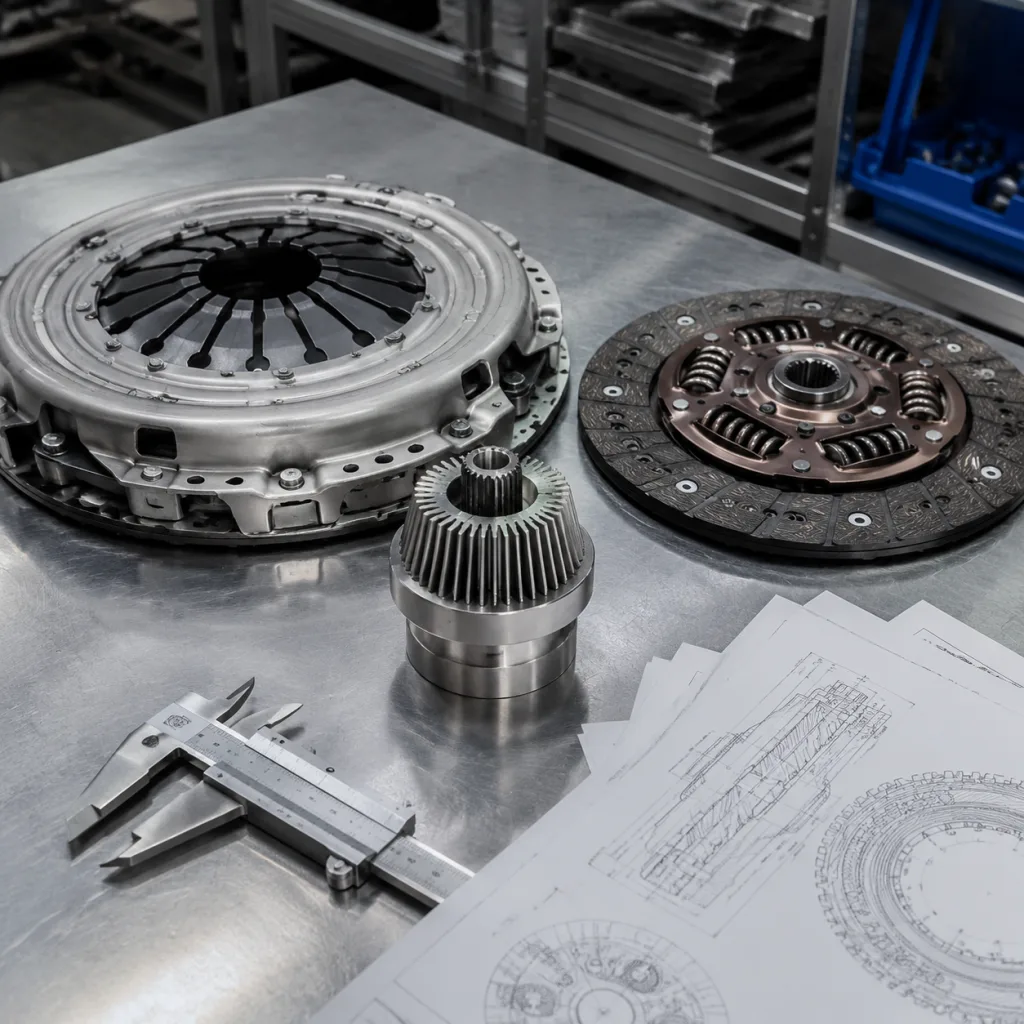
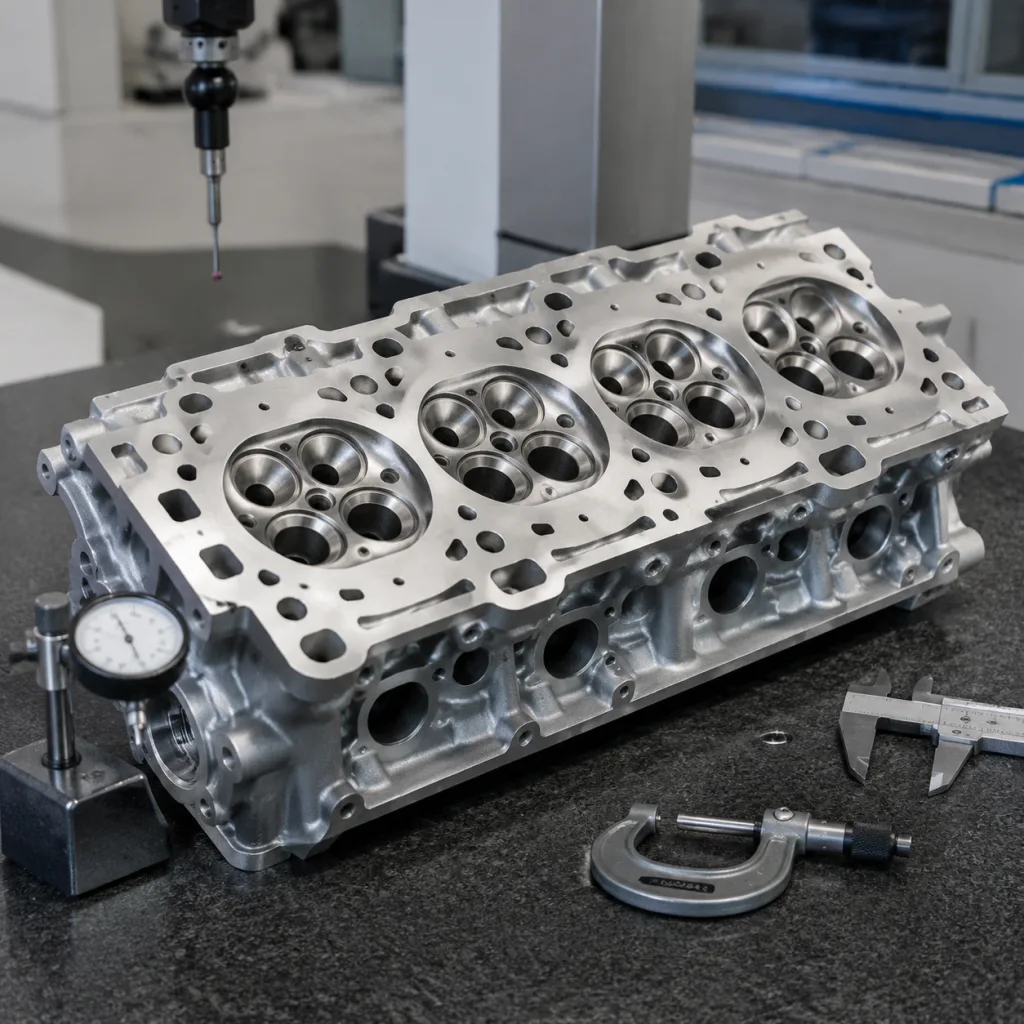
Selecting a camshaft phaser Opel replacement is mainly a fitment and validation exercise. For procurement teams, the key question is not whether the part looks similar, but whether the cam phasing unit matches the OE geometry, oil-control behaviour, connector interface, and calibration window for the engine family. That is especially important on modern Opel applications where variable valve timing affects idle quality, torque delivery, emissions, and fault-code stability. Driventus supplies independent aftermarket engine components for B2B buyers and works to documented quality controls under IATF 16949:2016 and ISO 9001:2015. Driventus is an independent aftermarket manufacturer; brand names are referenced for fitment only. This article covers the checks buyers should use before ordering, the validation data to request, and how to reduce mismatch risk on replacement programmes for distributors, repair chains, and remanufacturers.
What makes an Opel phaser a true replacement
A usable replacement must match more than the outside diameter. For a camshaft phaser Opel replacement, buyers should confirm the following before purchase:
Check
What to verify
Practical tolerance / target
Why it matters
OE cross-reference
OE number format, engine code, and bank position
Exact match on OE number; engine code and bank position must be 100% aligned
Bolt-circle and hole positions should match the OE sample within ±0.10 mm; thread class must be identical
Affects installation and oil control
Phasing range
Mechanical advance/retard window
Match OE commanded window; typical acceptance is within ±2° crank angle unless the buyer spec is tighter
Impacts timing authority and drivability
Electrical fitment
Solenoid connector type, pin count, seal profile
Connector keying and pinout must be identical; seal compression should be stable with no housing interference
Avoids DTCs and harness mismatch
Dynamic response
Fill/empty time, leakage, repeatability
Leak-down and response curves should stay within OE-equivalent band; repeatability target should be ≤5% variation across samples
Controls idle stability and emissions
</tr></thead><tbody> </tbody></table>For procurement, the practical target is dimensional match plus functional match. If the part is used in a fleet, repair-chain, or wholesale setting, ask for drawing confirmation and validation evidence against the OE sample, not only catalog text. A buyer-ready approval should include a measured sample, a reference revision, and the exact engine application so the same part is not reused across incompatible variants.
OE-equivalence checks that reduce returns
A replacement phaser should be treated as an engineered component, not a commodity casting. Buyers should compare:
Bore and journal diameters
Bolt-circle diameter and thread specification
Rotor/stator indexing
Oil feed hole location and diameter
Locking-pin engagement geometry
Installed height and face runout
Mass balance, where available
Surface hardness or wear-treatment spec, if supplied
If the supplier can provide measured data against an OE benchmark, that is more useful than a generic fitment claim. For Opel programmes, this is particularly important when the same engine family appears across multiple model years and control strategies. As a practical buyer rule, request a dimensional report for at least 5 critical-to-fit features and define an acceptance band before the PO. Typical B2B tolerances used for release control are ±0.05 mm on precision bores, ±0.10 mm on locating features, and flatness/runout limits stated directly on the drawing.
Cross-check any OE number such as `OE 06A107065` only when it appears in your own sourcing data or the buyer’s request list. Do not rely on vehicle badge alone; verify engine code, production date, and bank position before release. If the vehicle has multiple timing variants in the same model year, ask the customer for VIN-based confirmation plus the old part sample before you commit volume.
Validation tests to request from the supplier
For replacement sourcing, validation should prove that the phaser operates within the intended window under oil pressure and thermal load. Useful test evidence includes:
1. Static dimensional inspection report with critical-to-fit dimensions and the measured sample count. 2. End-of-line leakage check at a stated pressure, usually with pass/fail threshold and test duration. 3. Functional response test across the commanded phasing range, showing response time, overshoot, and return-to-lock behaviour. 4. Durability cycling data using representative oil and temperature conditions, ideally with cycle count and failure criteria. 5. Salt-spray or corrosion resistance evidence for exposed metal surfaces, where relevant. 6. Packaging validation if the part is shipped in export cartons or private-label boxes.
Published standards should be cited by name where applicable. Common references for automotive environmental and emissions-related validation include IATF 16949:2016, ISO 9001:2015, REACH (EC) No 1907/2006, and, when relevant to vehicle-level calibration discussions, ECE R-83 and SAE J2527. The exact test plan should follow the engine family and buyer specification, but the evidence should always show repeatability, not only a single pass result. A practical minimum request is 30-cycle functional verification on each sample lot, plus batch-level traceability tied to the inspection record. For higher-risk programmes, ask for PPAP-style evidence even if the supplier does not use formal PPAP terminology.
How Driventus supports replacement sourcing
Driventus produces engine and powertrain components in Taizhou, Zhejiang, with export experience across 60+ countries. For replacement programmes, the useful part of a supplier’s offer is consistency: stable dimensions, controlled materials, traceable batches, and repeatable inspection. That matters when a distributor needs the same phaser delivered over multiple purchase cycles.
If you are building a wider engine-component programme, review our catalog and the wider engine components range. Buyers that need drawing-based alignment or special packaging can use custom manufacturing for programme-specific requirements. Driventus documents its quality system under IATF 16949:2016 and ISO 9001:2015, which supports incoming inspection and supplier audits.
For commercial planning, buyers should also ask for MOQ, forecast window, and lead-time tiers before they finalize a source. A common sourcing structure is: sample order MOQ of 1–5 sets for validation, standard production MOQ of 50–100 units per reference for repeat supply, and a forecast-backed price break at 200+ units. Lead time is typically fastest for stock items, moderate for built-to-order inventory, and longest for first-run drawing-based approvals. If your programme needs mixed part numbers, confirm whether MOQ applies per SKU or per consolidated order, and whether packaging or labeling changes add extra time.
Ordering checklist for procurement teams
Use this short checklist before issuing a PO:
Confirm engine code, model year, and bank position
Match OE cross-reference and catalogue number
Verify material specification and surface finish
Request dimensional report for critical interfaces
Ask for validation summary and test conditions
Confirm MOQ, lead time, and packing standard
Specify labelling and batch traceability requirements
Set acceptable dimensional tolerance and response criteria in writing
Require sample approval before mass release on new references
For high-volume distributors, the main risk is not price alone; it is mixed fitment within a common engine family. The fastest way to reduce claims is to standardise the incoming check against a drawing pack and keep the same revision level across repeat orders. If the supplier quotes multiple price tiers, compare them on the same basis: unit price at MOQ, unit price at 100–200 pcs, tooling or setup cost if any, and landed cost including packaging, inspection, and freight. A lower piece price is not useful if lead time slips beyond your service-level window or if the replacement still needs secondary sorting at arrival.
When to replace instead of repair
A worn phaser can create cold-start rattle, unstable idle, cam correlation faults, and sluggish torque response. Rebuild is rarely the best option when the locking mechanism, vanes, or oil-control surfaces show wear or scoring. Replacement is usually the better route when:
The unit has repeated oil-pressure-related faults
The lock pin no longer holds consistently
Wear marks are visible on the rotor or housing
The vehicle has already had solenoid and oil-service correction without improvement
Measured end-play, lash, or leakage exceeds the buyer’s repair threshold
For workshops and multi-site repair chains, using a verified replacement part reduces repeat labour. For distributors, it reduces the cost of returns caused by partial compatibility rather than outright failure. A practical rule is to replace when the failure mode is repeatable, the unit is non-serviceable, or inspection shows surface damage that would require re-machining beyond the original tolerance stack. In fleet use, replacement is also preferable when downtime cost is higher than the differential between repair and new supply.
Frequently asked questions
Match the engine code, OE reference, bank position, and connector interface. Then compare critical dimensions and phasing range against the OE sample before release. For production orders, also confirm the supplier’s measured tolerance band, sample approval status, and whether the part is intake or exhaust-specific.
Request dimensional inspection data, functional test evidence, batch traceability, and confirmation that the supplier works to IATF 16949:2016 and ISO 9001:2015. For higher-risk sourcing, also ask for sample photos, test pressure values, cycle count, and the revision level of the drawing used for approval.
Yes. Driventus supports drawing-based and programme-specific supply through its OEM service process, subject to technical review and order requirements. Buyers should share target annual volume, MOQ expectation, label format, packing method, and required lead time so the quotation reflects the actual programme scope.
If you need a verified replacement match or a programme quote, contact Driventus for technical review and sourcing support at /contact.html.