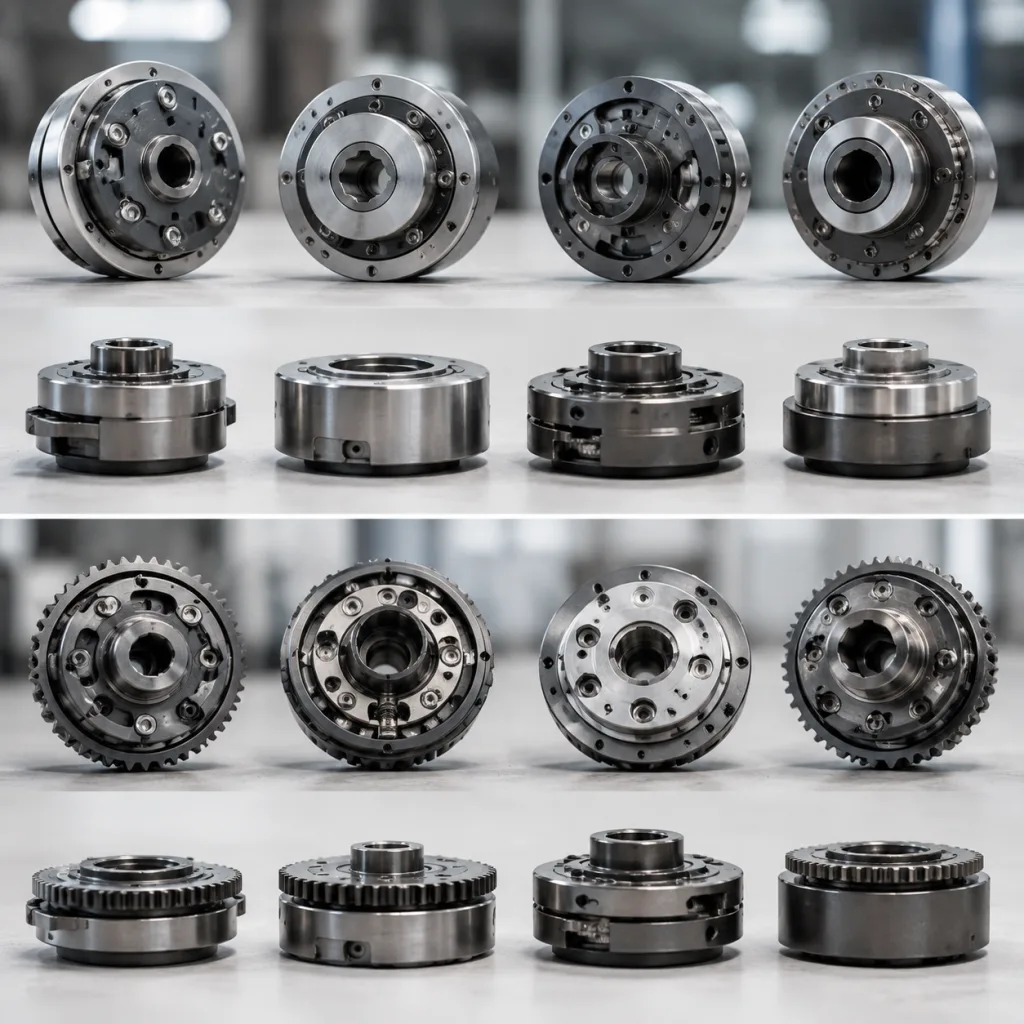
Camshaft Phaser Mini Replacement: OE-Fit Sourcing Guide
Procurement teams replacing a camshaft phaser on a compact engine platform need more than a catalogue match. The part must align to the OE geometry, hydraulic response, trigger wheel layout, and control strategy used by the engine management system. A small deviation in vane angle, oil passage timing, or sprocket stack height can change cam timing and create drivability complaints after installation. For buyers, the main task is to separate visual similarity from true interchangeability. Driventus is an independent aftermarket manufacturer; brand names are referenced for fitment only. We support replacement sourcing with dimensional checks, material control, and validation testing under IATF 16949:2016 and ISO 9001:2015. This article explains what to verify before placing a camshaft phaser mini replacement order, how to compare alternatives, and where to request technical support for OE cross-reference work.
What a replacement part must match
A camshaft phaser mini replacement is acceptable only when it matches the OE interface and operating envelope. For procurement, that means verifying the following points before release:
Check item
What to confirm
Typical buying tolerance
Why it matters
Mounting interface
Bolt pattern, centre bore, drive teeth, and sprocket offset
Bore and offset within the OE drawing tolerance, often ±0.02 mm to ±0.05 mm on critical fits
Prevents assembly interference
Timing range
Advance/retard angle and stop position
Stop-to-stop angle typically within ±1° crank, unless the OE drawing is tighter
Preserves ECU calibration
Oil control
Feed port location, seal land, and spool response
Port location and seal land must match the OE datum scheme; leakage should remain within the supplier test limit
Avoids slow actuation or oil loss
Mass and inertia
Rotor and housing dimensions
Mass variation typically controlled within ±2% to ±5% by lot, depending on platform sensitivity
Affects response and control stability
Sensor features
Target wheel count and phasing
Tooth count, tooth width, and phase relationship must match the reference sample
Keeps cam signal within expected window
</tr></thead><tbody> </tbody></table>If the application already cites an OE number such as OE 06A107065, use it as the first filter and then confirm the technical drawing. A part can share the same market description and still fail in stack height or phaser lock position. For mini phaser sourcing, buyers should also check installed axial end play, housing face runout, and vane-to-housing clearance against the OE sample before approval. A practical acceptance target is to hold critical stack dimensions within the OE print tolerance and, where the print is unavailable, within the measured sample window with a guard band of at least 10% of the observed spread.
Validation checks procurement should request
Replacement sourcing should include objective evidence, not only a part number match. Ask for the drawing set, inspection report, and test summary for the specific lot being supplied.
Minimum validation set
100% dimensional inspection on critical features such as bore diameter, keyway form, phaser face runout, and stack height
Material verification for major load-bearing components, including hardness and alloy confirmation where applicable
Oil-pressure actuation test across the specified operating range, typically from idle pressure to the upper controlled limit used in the OE system
Lock/unlock function test at cold and hot oil conditions, commonly evaluated around 20°C and 100°C oil temperature
Leak test for hydraulic sealing surfaces with a recorded pressure decay or hold-time result
Traceability by batch, date, cavity or tool number, and inspection record
Functional cycle test, often 50,000 to 100,000 cycles for production validation depending on the buyer spec
For European and UK buyers, confirm REACH (EC) No 1907/2006 compliance for relevant substances. For emissions-related applications, suppliers should be able to reference the test basis used for internal validation, such as ECE R-83 where applicable to the system context, or SAE J2527 for durability-related environmental exposure if relevant to the purchasing specification. Where the application is sensitive, ask for the specific acceptance criteria in writing: maximum leak rate, maximum actuation delay, minimum lock force, and allowable angular error at each test point. A useful procurement rule is to reject any lot that cannot produce a measured report with date, operator, instrument ID, and the calibration status of the gauge used.
How Driventus supports OE-equivalent supply
Driventus builds engine and powertrain components as a vertically integrated manufacturer in Taizhou, Zhejiang. For replacement buyers, the main benefit is process control across machining, assembly, and inspection.
We support:
OE cross-reference review using the customer’s target application and existing sample
Dimensional matching for housing, rotor, and timing interface features, including stack height, vane angle, bore size, and trigger wheel geometry
Validation against customer drawings and measured samples, with first-article review before mass production
Stable repeat ordering for distributors and multi-location repair groups, with lot control and reorder consistency
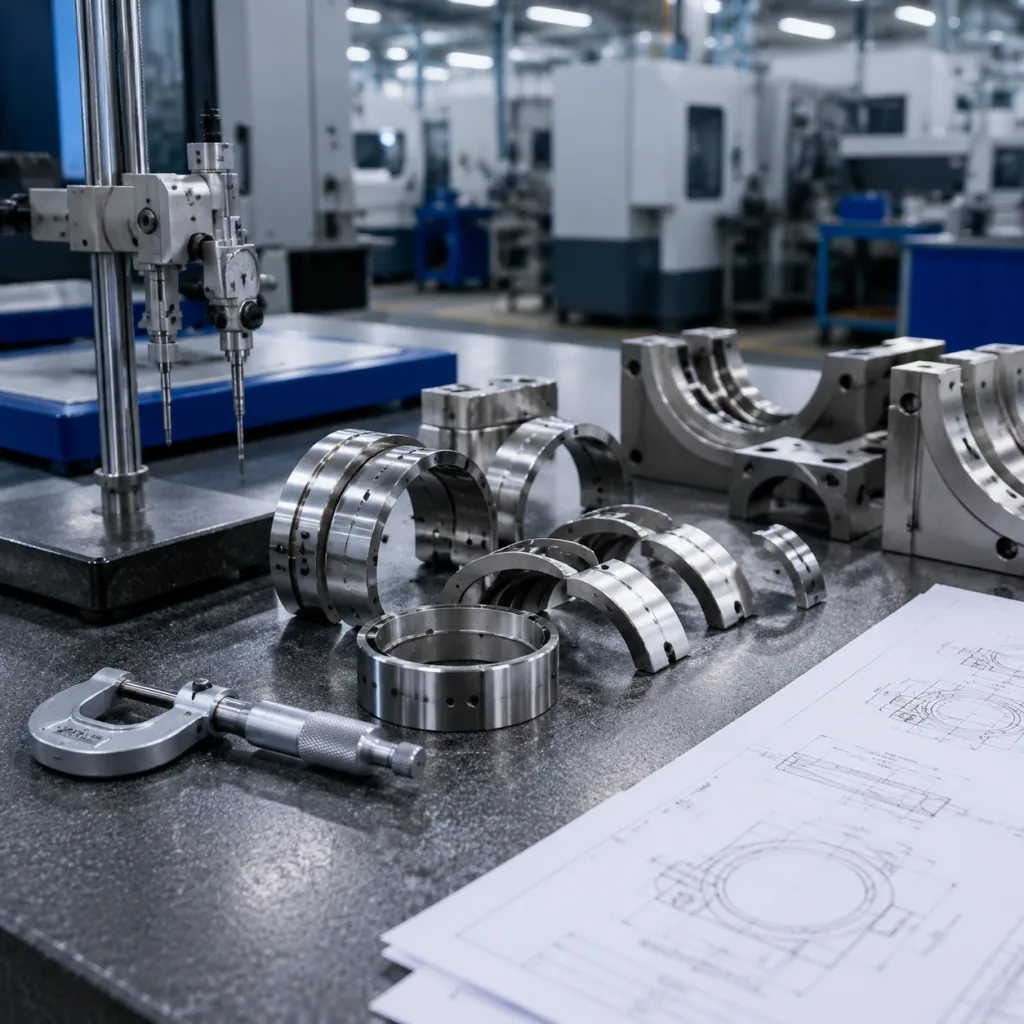
Our quality system is built around IATF 16949:2016 and ISO 9001:2015. That matters when the part must fit a known engine family without rework at the workshop or the assembly line. Typical process control includes CNC machining of critical datums, in-process inspection, final CMM verification, cleaning for oil-circuit parts, and controlled packaging to prevent damage to seal faces and alignment tabs. If your team needs a broader view of related parts, see our catalog and the engine-related range at /products/engine-components.html.
Comparison points for mini phaser alternatives
When comparing suppliers, focus on measurable differences rather than catalogue wording.
OE-equivalent geometry versus general-fit description
Full traceability versus lot-only traceability
Validation test data versus visual inspection only
Stable machining tolerance versus nominal-only listing
Packaging and labelling suited to warehouse scanning and reordering
Measured actuation time, lock repeatability, and leak rate instead of generic quality claims
A low-cost replacement may be acceptable for an older fleet if the timing window is wide and the ECU strategy is tolerant. For newer engines, small differences in control response can trigger fault codes or idle instability. That is why dimensional conformity and test evidence should carry more weight than unit price alone. As a practical benchmark, buyers often compare the supplier’s final inspection tolerance against the OE print and ask whether the supplier can hold Cpk 1.33 or better on the critical dimensions. If the supplier cannot state the control limit, the comparison is incomplete. Also check whether the alternative uses the same surface treatment, anti-corrosion coating, and oil-compatible seal material as the OE reference, because those details affect durability more than catalogue descriptions suggest.
Buying process for distributors and repair networks
For B2B sourcing, the fastest path is to submit the OE number, engine code, sample images, and a target annual volume. Include whether the part is for aftermarket distribution, fleet maintenance, or OEM/Tier-1 supply.
Procurement should also define:
Required packaging format
Labelling language and barcode format
Lead-time target
Minimum order quantity
Incoming inspection criteria
Annual forecast and call-off schedule
Target price band and approved currency
A workable buying brief should include MOQ, target unit price at the first tier, and the replenishment cadence. For example, distributors often request a pilot order of 50 to 200 units, a production MOQ of 300 to 1,000 units per part number, and a standard lead time of 25 to 45 days after sample approval, depending on tooling status and order size. For urgent replenishment, ask whether the supplier can ship stock units within 3 to 7 days and whether partial shipments are allowed. Price should be discussed with volume breaks, such as 100 units, 500 units, and 1,000 units, because the machining and inspection burden per unit changes materially with batch size.
Where a direct catalogue match does not exist, Driventus can evaluate custom manufacturing under the customer specification. That is usually the correct route when the original part has been superseded, the control strategy changed, or a platform uses a regional variant with different phasing hardware. For enquiries, request a quote with the OE reference, sample photos, measured dimensions, expected annual volume, target price, and any required packaging or barcode standard. If the part is for a repair network, include the country list and preferred incoterm so lead time and landed cost can be quoted accurately.
Frequently asked questions
Not automatically. Interchangeability depends on bore size, phasing range, lock position, oil feed geometry, trigger wheel pattern, and ECU calibration. Verify the OE reference, measured dimensions, and the supplier’s test data before approval. When possible, compare the sample to the OE part at the datum points, not only the overall diameter.
Ask for the drawing, inspection report, lot traceability, and validation test summary. For regulated markets, also confirm REACH (EC) No 1907/2006 compliance where relevant. If the application is sensitive, request the actual measured results for bore size, stack height, runout, leak rate, and actuation timing rather than a pass/fail statement alone.
Yes. If the OE part is unavailable or region-specific, Driventus can review the sample and drawing for custom manufacturing. Driventus is an independent aftermarket manufacturer; brand names are referenced for fitment only. For custom work, share the OE number, target annual volume, required tolerances, and any lead-time or packaging constraints so the quote reflects your actual buying conditions.
If you need an OE-equivalent source for a mini phaser application, send the OE number, sample photos, target volume, and required tolerances through /contact.html.