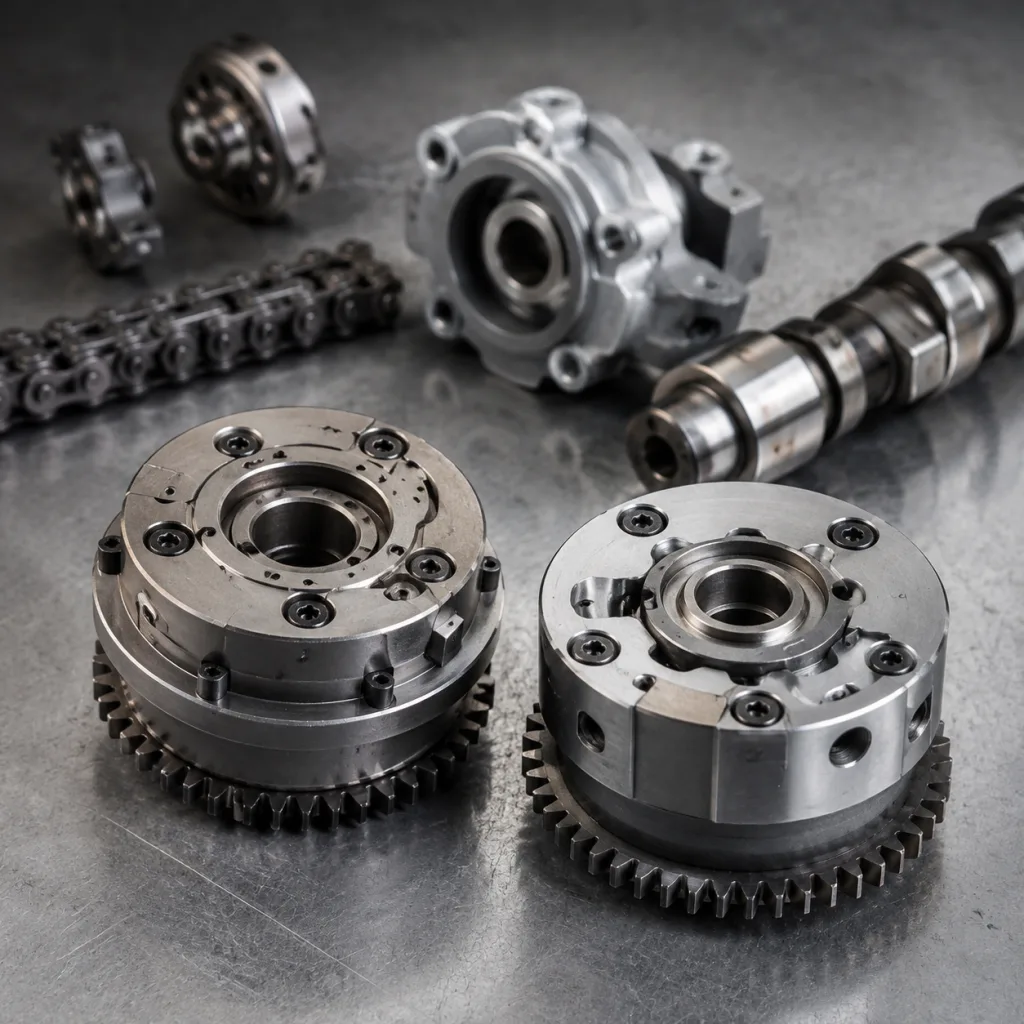
Camshaft phaser Mercedes-Benz replacement programmes carry more risk than a simple visual match suggests. For distributors, repair-chain buyers, and import managers, the real exposure sits in fitment accuracy, oil-control response, start-up noise, and warranty return rate. A phaser can match the bolt pattern yet still miss critical details such as vane geometry, lock-pin timing, angular travel, oil passage layout, or sprocket surface finish. Those gaps can lead to start-up rattle, cam/crank correlation faults, slow advance or retard response, chain wear, and repeat labour claims.
This guide outlines the procurement checks Driventus uses when developing and supplying variable valve timing phasers for Mercedes-Benz fitment applications. It covers dimensional confirmation, OE part-number cross-reference handling, functional validation, packaging control, traceability, and supplier audit points. Driventus is an independent aftermarket manufacturer; Mercedes-Benz and other brand names are referenced for fitment identification only.
What Buyers Should Confirm Before Sourcing
Camshaft phasers are oil-actuated timing assemblies. Their performance depends on the relationship between the rotor, stator, vanes, lock pin, return spring, sealing surfaces, sprocket, central fastener, and the engine oil-control valve. A replacement part must hold and adjust the commanded camshaft angle within the engine management strategy. It is not enough for the component to attach to the camshaft and align with the chain.
For Mercedes-Benz fitment applications, procurement teams should confirm the application data and physical specification before issuing a purchase order:
Engine family, displacement, engine code, and production year range.
Intake or exhaust position; many engines use different phasers by side, bank, or camshaft position.
Chain sprocket tooth count, pitch, runout limits, and timing mark location.
Central bolt specification, thread form, torque requirement, and locating interface.
Lock-pin position at rest and the oil pressure range required for clean release.
Rotor-to-stator angular travel, measured in crankshaft degrees or camshaft degrees as specified by the application.
Packaging label format, barcode content, and cross-reference structure for warehouse scanning.
Where an OE reference is required, use controlled cross-reference conventions only when the number has been supplied through the customer catalogue, physical sample, drawing, or a verified interchange database. OE numbers and vehicle brand names should be treated as fitment references, not as evidence of manufacturer approval. Driventus does not claim approval, endorsement, or affiliation with any vehicle manufacturer.
OE-Equivalence Criteria for Phaser Replacement
A camshaft phaser Mercedes-Benz replacement should be assessed as a functional assembly, not as a single machined part. Low-price sourcing often fails in areas that are difficult to detect during a basic incoming inspection. Common gaps include excessive internal lash, incorrect vane sealing pressure, unstable lock-pin release, poor oil cleanliness, inaccurate timing mark placement, and inadequate surface hardness on the sprocket teeth.
Evaluation point
Procurement requirement
Typical verification method
Mounting interface
1:1 dimensional match to approved sample or drawing
CMM, thread gauge, fixture check
Angular travel
Within application-specific tolerance
Functional oil bench test
Lock-pin behaviour
Positive lock at rest; clean release under oil pressure
Pressure ramp test
Sprocket profile
Correct tooth count, pitch, timing mark, and runout
Gear measurement and radial runout check
Rotor/stator clearance
Controlled leakage without sticking or binding
Air leak and oil-flow test
Noise control
No abnormal rattle under simulated start-up conditions
NVH screening and endurance review
Surface protection
Corrosion resistance suitable for storage and sea freight
Salt-spray or humidity exposure as specified
</tr></thead><tbody> </tbody></table>For aftermarket distributors, the practical target is batch-to-batch repeatability. One approved sample does not prove stable production. Buyers should ask how the supplier controls machining accuracy, heat treatment, deburring, assembly torque, spring and lock-pin consistency, oil cleanliness, and final functional testing. These controls are especially important for variable valve timing parts because small changes in leakage or friction can become drivability faults once the part is installed.
Validation Testing and Quality Documentation
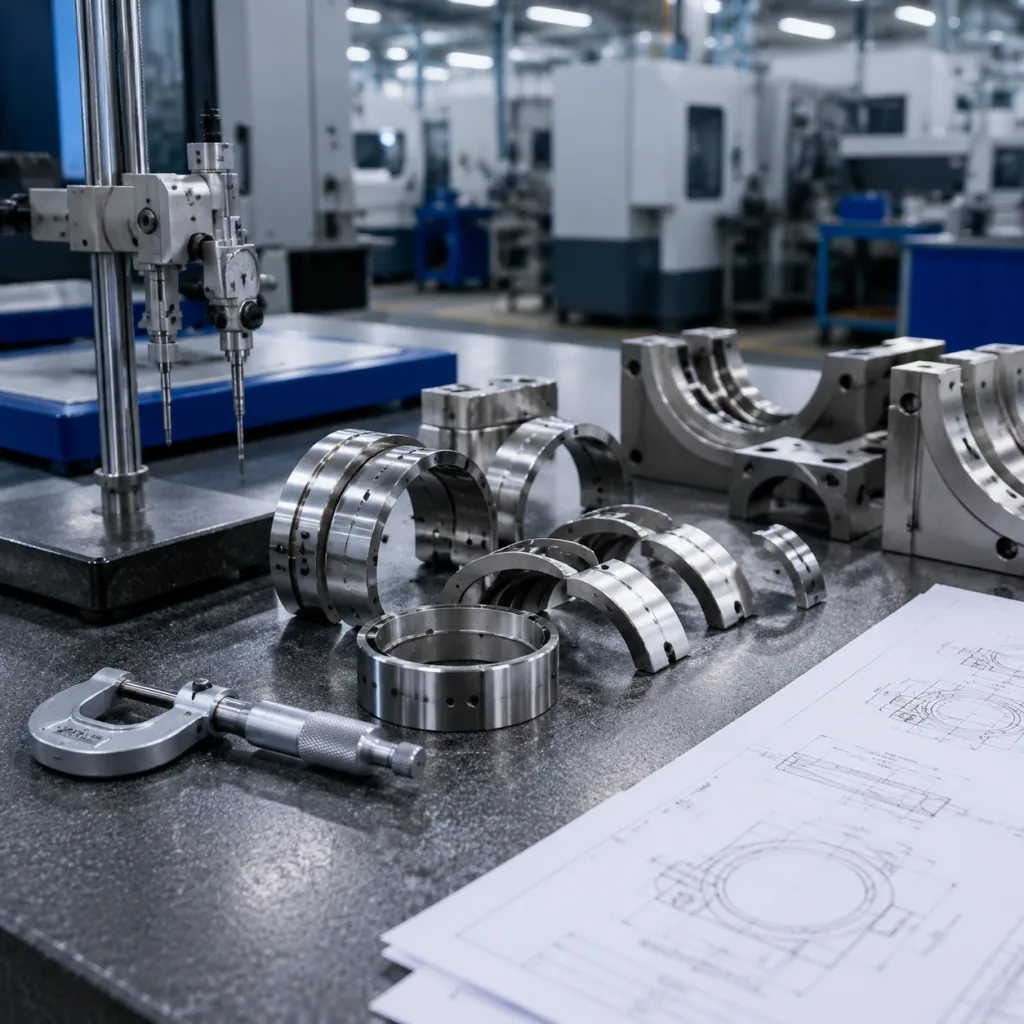
Driventus structures replacement camshaft phaser validation around dimensional inspection, material verification, assembly control, cleanliness, and functional testing. The quality framework is aligned with IATF 16949:2016 and ISO 9001:2015, with production records retained for batch traceability.
A typical buyer file may include:
Sample inspection report with key dimensions, tolerances, and measurement results.
Material certificate for steel, powder-metal, or other specified components where applicable.
Heat-treatment record covering hardness, case depth, and surface condition targets.
Surface roughness checks on sealing, bearing-contact, and oil-control areas.
Assembly torque records for fastened subcomponents.
Functional oil-pressure test data for lock, release, advance, and retard movement.
Leakage, response, or flow data where required by the customer specification.
Appearance, cleanliness, preservation, and packaging inspection report.
PPAP-style documentation when required by the customer programme.
For regulated markets, procurement teams should also check broader compliance requirements. REACH (EC) No 1907/2006 may apply to materials and restricted substances for EU importers. Packaging, country-of-origin marking, barcode rules, and language requirements differ by destination market, especially when parts move through multiple wholesale channels. These requirements should be agreed before mass production, not after the first container is packed.
Details of Driventus process controls are available through our quality system.
Common Replacement Risks in the Aftermarket
A failed phaser replacement usually appears as a vehicle-level complaint, but the root cause may be catalogue data, installation conditions, engine oil quality, or part manufacturing. Buyers should separate these risks before judging warranty performance.
Catalogue mismatch is often the first issue. A single engine family may include intake and exhaust variants, left-bank and right-bank variants, or a running production change. The warehouse label should clearly show application, side, position, engine reference, and cross-reference set so similar-looking phasers are not mixed during picking or installation.
Installation sensitivity is another major risk. Variable valve timing systems require clean oil, correct timing-chain alignment, correct central fastener torque, and proper oil-control valve function. A new phaser can be damaged or misdiagnosed quickly if the oil-control valve is restricted, the chain tensioner is not reset correctly, the timing marks are misread, or contaminated oil blocks the internal passages.
Manufacturing variation creates a different failure pattern. Excess clearance increases leakage and delays response. Insufficient clearance can cause sticking after thermal expansion. Incorrect lock-pin geometry can produce start-up rattle. Poor sprocket hardness can accelerate chain wear, while rough sealing surfaces may prevent stable oil control.
For repair chains, these issues convert directly into repeat labour cost. For distributors, they create slow-moving stock disputes because the part may pass a static fitment check but fail under dynamic oil pressure, temperature, and engine control conditions.
Sourcing Checklist for Importers and Distributors
Before approving a camshaft phaser Mercedes-Benz replacement supplier, buyers should request evidence that covers both the product design and the factory process. The goal is to confirm that the approved sample can be repeated consistently across production batches, shipments, and private-label programmes.
Supplier approval checklist
Confirm IATF 16949:2016 or ISO 9001:2015 certification scope, issuing body, and expiry date.
Review sample parts against the original approved sample, drawing, or verified customer specification.
Require functional oil-pressure test data, not only dimensional reports.
Check whether every assembled phaser is function-tested or whether testing is sample-based.
Confirm marking format, carton label layout, barcode data, and private-label requirements.
Driventus supports distributors through our catalog, including engine timing and engine components programmes. For customers with proprietary drawings, samples, or regional catalogue requirements, the engineering team can review custom manufacturing options.
Packaging, Traceability and Launch Control
Replacement camshaft phasers are high-liability parts because the labour cost often exceeds the component price. Launch control should therefore include tighter inspection during the first production batches, with clear rules for sample approval, carton marking, and early warranty feedback.
Driventus normally recommends first-article approval before bulk release, followed by batch-level traceability on cartons and inner labels. Each carton should identify SKU, quantity, production batch, destination customer, and applicable cross-reference set. For multi-location repair chains, scan accuracy matters because similar-looking phasers may differ only by bank, timing mark, oil passage, or lock-pin configuration.
Private-label packaging can be supplied, but technical data must remain controlled. Catalogue teams should avoid broad fitment claims unless the application has been checked against sample data, engine code information, production year range, and customer interchange records. This is especially important in Europe and North America, where returns are often caused by overextended application coverage rather than physical product defects.
A controlled launch normally includes pilot shipment review, installation feedback, returned-part analysis, and a formal corrective-action path. This gives buyers a clearer view of whether issues are caused by product quality, application data, oil-system condition, or service procedure. It also reduces dispute time when several distributors, workshops, or regional warehouses are involved.
Frequently asked questions
Yes. Driventus can supply private-label packaging for approved aftermarket programmes. Fitment, marking, carton labels, barcode data, and cross-reference information should be confirmed before production. Driventus is an independent aftermarket manufacturer; brand names are referenced for fitment identification only.
Request dimensional inspection reports, material and heat-treatment records, surface and cleanliness checks, functional oil-pressure test data, batch traceability, and certification evidence under IATF 16949:2016 or ISO 9001:2015. For EU importers, REACH (EC) No 1907/2006 substance compliance may also be relevant.
Use verified fitment data, separate intake and exhaust variants clearly, require functional testing, control packaging labels, and analyse returned parts before assigning fault. Many complaints are linked to oil contamination, incorrect timing installation, oil-control valve restriction, or catalogue overcoverage.
For drawings, samples, interchange files, or batch quotation requirements, contact Driventus to review fitment and validation options. You can [request a quote](/contact.html).