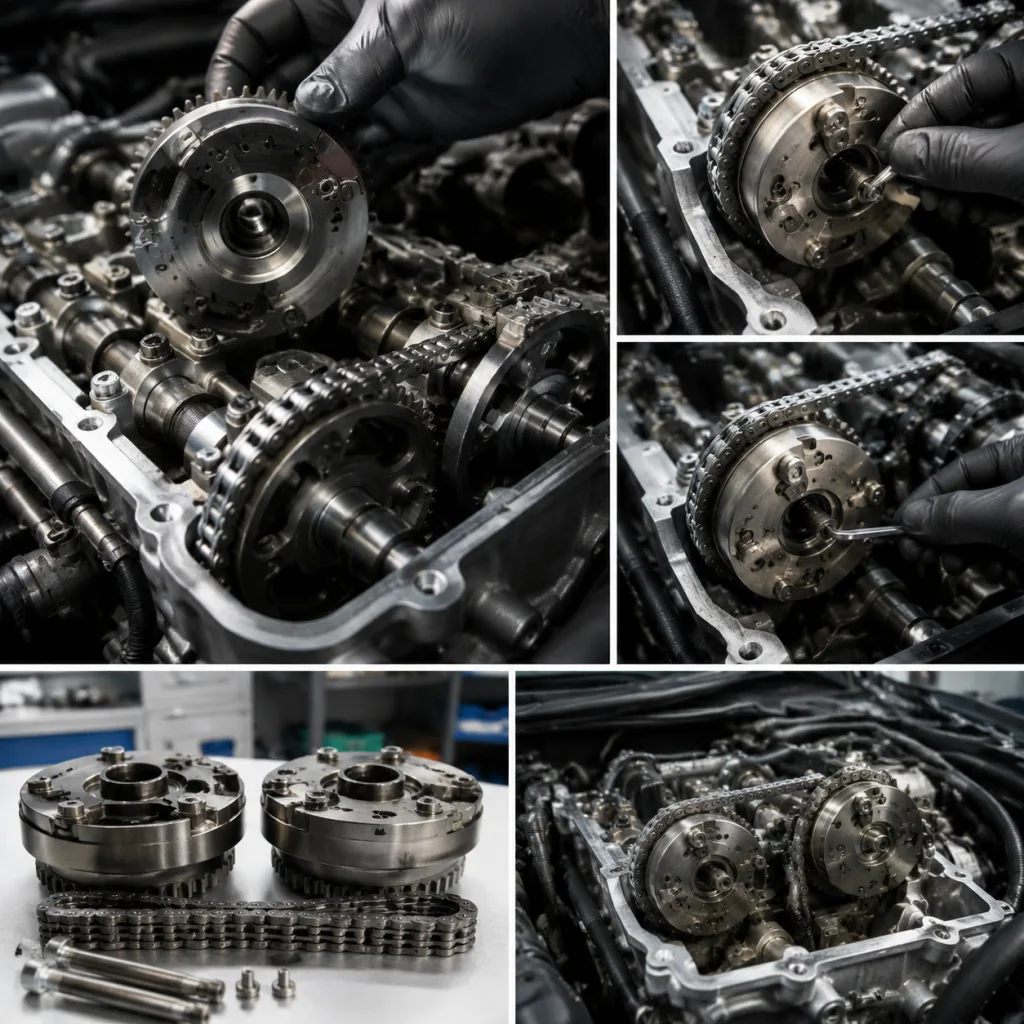
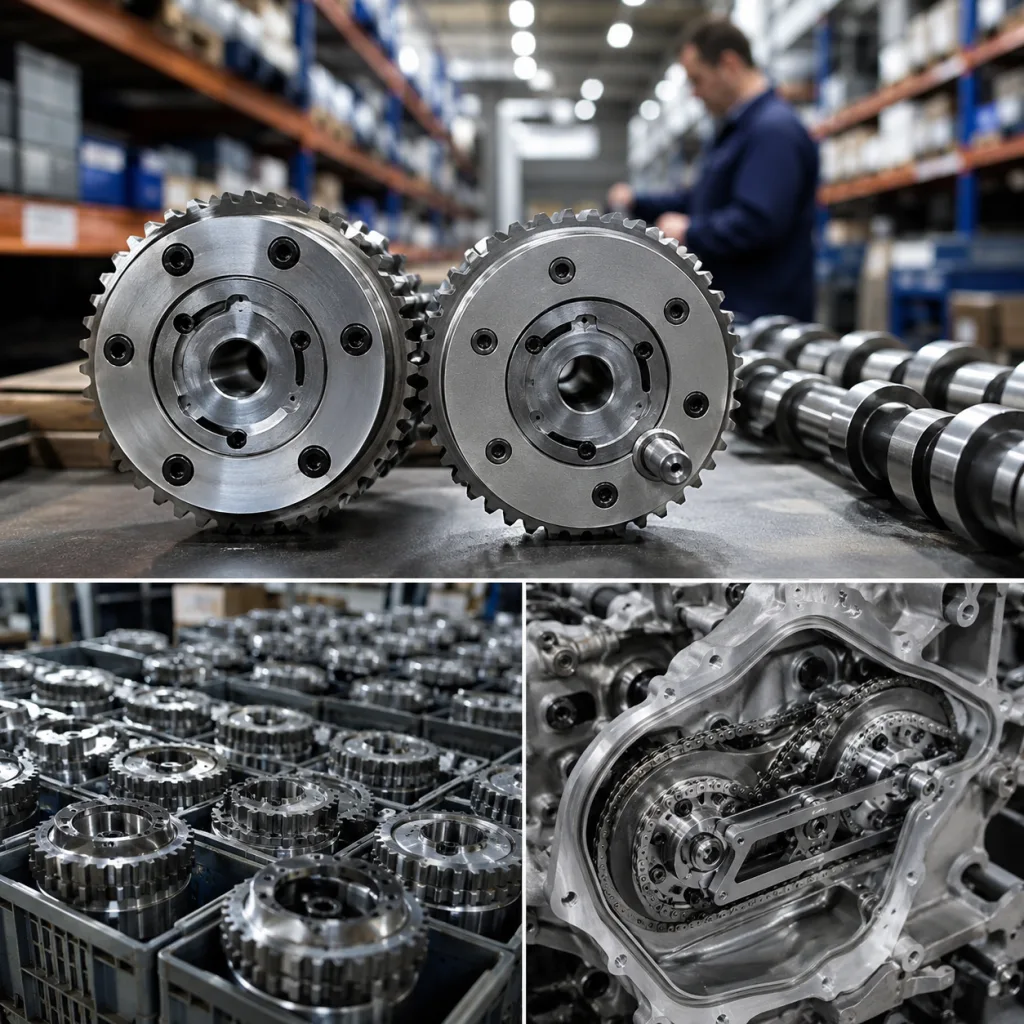
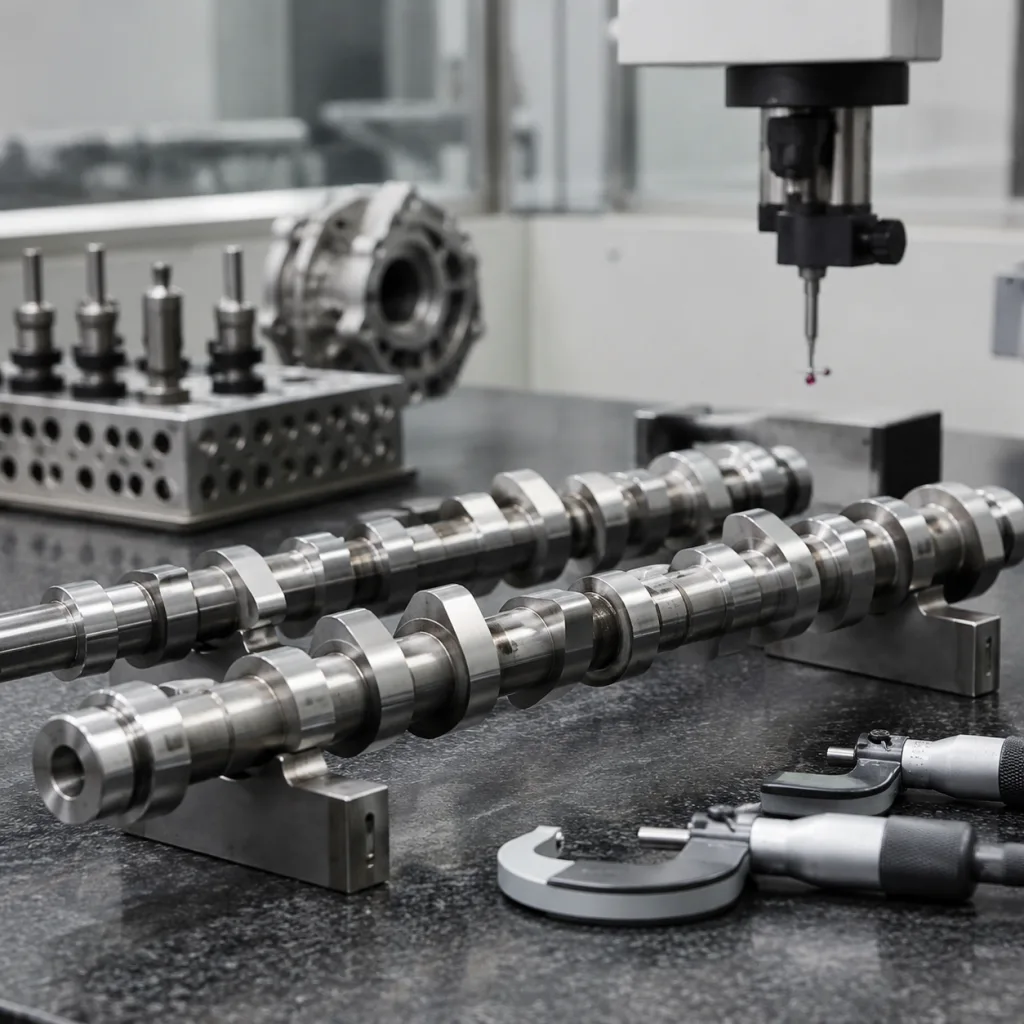
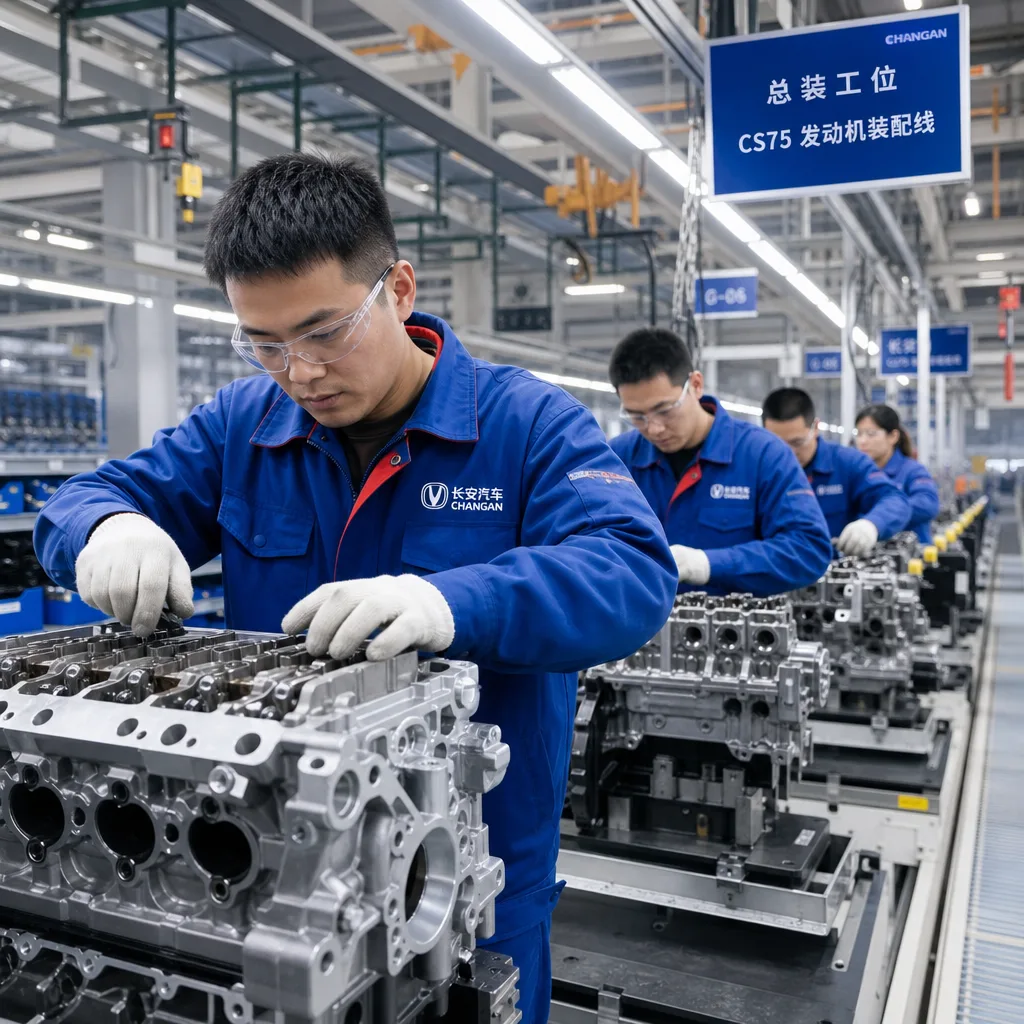
Camshaft phaser GMC wholesale sourcing is not a catalog exercise. It is a fitment, quality, and supply-control decision. Procurement teams need more than a part number match: they need repeatable dimensions, traceable lots, clear packaging rules, and a supplier that can keep revisions under control across multiple model years and engine codes. Driventus supplies engine and powertrain components from Taizhou, Zhejiang, with IATF 16949:2016 and ISO 9001:2015 systems in place. Driventus is an independent aftermarket manufacturer; brand names are referenced for fitment only. For buyers in North America, Europe, Australia, and Brazil, the real screening questions are MOQ, lead time, validation data, and cross-reference accuracy. This article shows how to evaluate those points before you place a wholesale order.
Where camshaft phaser sourcing fails
Most sourcing problems start with a bad assumption: that one OE-style reference is enough. Camshaft phasers are sensitive to oil control, phasing response, connector interface, and sprocket geometry, so a near match can still create noise, timing errors, or rejection at receiving.
Before you go further, verify:
OE cross-reference by engine code, model year range, and part-family revision
Material specification for housing, rotor, vanes, and seals
Assembly cleanliness and end-of-line test records
Packaging standard for export and warehouse handling
For `camshaft phaser GMC wholesale`, ask for measurable limits instead of a simple catalog match. Request critical bore or hub dimensions against the drawing, runout or concentricity limits where applicable, assembly torque values, and the supplier’s acceptance criteria for phasing response or leakage. If you need adjacent engine parts for the same program, review our catalog and the broader engine components range.
Compare suppliers before you compare price
Price only matters after variation is under control. A supplier that cannot show process discipline can look cheap on paper and expensive in returns, delays, and rework.
Use this comparison lens:
Sourcing item
What to request
Why it matters
MOQ
Per part number, per color/variant if any, and per shipment; ask for sample MOQ and production MOQ separately
Prevents hidden consolidation costs and avoids mixing unrelated references
Lead time
Tooling, sample, pilot run, and mass production lead times in calendar days
Supports launch planning and stock coverage
QC records
Incoming, in-process, final inspection, and AQL level used
Confirms repeatability and lot control
Test data
Functional test, leak test, phase response, and noise/vibration criteria if applicable
Revision notice process, PPAP-style reapproval triggers, and PCN timing
Prevents fitment drift
Packaging
Carton spec, inner pack count, desiccant, rust prevention, and label format
Lowers transit damage and receiving errors
</tr></thead><tbody> </tbody></table>Driventus operates under IATF 16949:2016 and ISO 9001:2015, which helps buyers assess process control and document discipline. For pricing, request tiered quotes at 1x, 3x, and 12x monthly demand so you can compare unit cost against inventory burden. Also confirm whether the quote is EXW, FOB, or CIF, and whether tooling or sample charges are credited against the first production PO. If you need supplier documentation for audit files, review the quality system before RFQ stage.
Lock fitment with a step-by-step check
Do not rely on description text alone. Camshaft phasers are often listed against multiple GM vehicle lines and engine codes, so the verification process needs to be physical, not just descriptive.
1. Match the OE reference to engine family, displacement, and model year range. 2. Check physical interface data: hub diameter, flange thickness, tooth count, bolt circle, and fastener pattern. 3. Confirm oil-control strategy and actuator compatibility, including connector pinout if electronically controlled. 4. Ask for sample approval against a known-good part and record key dimensions on the inspection sheet. 5. Verify packaging labels against the purchase order, including part number, revision level, and quantity per carton. 6. Define acceptance tolerance in advance for critical dimensions, such as ±0.05 mm for machined interfaces where the drawing allows, or the supplier’s actual print tolerance if tighter.
Also ask for a first-article report with nominal, measured, and tolerance values for controlled dimensions. If the supplier cannot provide that level of traceability, the fitment risk is not worth hiding behind an OE-style listing. Driventus does not claim vehicle manufacturer approval or endorsement. Brand references are used for fitment only.
Spec sheet: what the part must prove
A camshaft phaser is a rotating hydraulic or electromechanical timing device, so material selection and cleanliness are central to service life. Buyers should ask for the exact evidence behind the spec, not just a general quality statement.
Typical procurement documents:
Material declaration or composition summary
Dimensional inspection report with measured values and tolerance callouts
Functional test result by lot, including pass/fail criteria and sample size
Corrosion protection and packaging specification
REACH compliance statement, where required by customer policy
Traceability label example showing lot code and production date
Clarify the test environment as well: oil temperature, cycle count, air pressure or hydraulic pressure range, leakage limit, and any allowable variance in phasing response. For exports into regulated markets, document support for REACH (EC) No 1907/2006 is often requested, especially where the customer has restricted-substance declarations in place. If the program needs custom packaging, label content, or revised interface features, see custom manufacturing.
How Driventus fits B2B programs
Driventus is set up for distributor, OEM/Tier-1, and multi-location repair-chain supply. That changes the conversation. The focus is stable part identification, controlled production, and shipment planning rather than retail fulfillment.
For wholesale programs, procurement teams usually ask for:
Sample sets for bench verification with measured key dimensions
Production photos, inspection reports, and lot traceability data
Export carton and pallet instructions with pack count and stack limit
Part-number mapping across legacy and current references
Periodic quality feedback on recurring orders and corrective-action response timing
A practical launch flow is inquiry review, cross-reference confirmation, sample approval, production release, pre-shipment inspection, and final booking. If you are building a broader sourcing bundle, the catalog and OEM support pages can be used with the RFQ process to align timing, packaging, and documentation before the first order.
Commercial terms to settle before release
Wholesale buyers should settle terms before they release a PO. The critical items are payment schedule, Incoterms, sample policy, and corrective-action response time if a deviation is found after receipt. If the project is launch-sensitive, confirm that the supplier can commit to a realistic sample-to-production timeline and can state capacity by month.
A practical RFQ set includes:
Target annual volume, first-order quantity, and safety stock target
Required lead time for samples, pilot run, and mass production
Packaging and labelling format, including carton count and barcode needs
Destination market and compliance documents
Required inspection level at receipt and any AQL target
Price-break structure by order size and whether the quote includes tooling or test fees
Compare landed cost, not just unit price. Base price, freight, duty, packaging, inspection, and expected claim risk all belong in the same calculation. For pricing and availability, use request a quote so the engineering and commercial teams can align on the exact application before shipment.
Frequently asked questions
Yes, if the application data is provided. We verify engine family, build range, interface details, and revision level before confirming supply. Brand names are referenced for fitment only.
Typical documents include inspection records, packing details, material information where applicable, test summaries, and export paperwork. Additional compliance files can be prepared to match customer requirements.
Yes. Through our OEM support process, we can discuss packaging, labelling, carton count, and part-level adjustments before production release. See /oem-services.html for details.
If you are sourcing camshaft phaser GMC wholesale supply, send the part number, annual volume, target delivery window, and required tolerance or test criteria. Start with /contact.html and we will review the application with you.