Camshaft Peugeot Manufacturer China: B2B Sourcing Guide
Buyers searching for a camshaft Peugeot manufacturer China are usually balancing fitment accuracy, repeatable material performance, and reliable delivery. A camshaft cannot be selected on part number alone: the lobe profile, journal size, hardness depth, straightness, oil passage design, and timing reference features all affect engine operation and warranty risk. For aftermarket distributors, workshop networks, and OE-tier sourcing teams, the supplier must be able to confirm application data, control production lots, and provide inspection evidence before shipment. Driventus supplies engine and powertrain components from Taizhou, Zhejiang, with quality management aligned with IATF 16949:2016 and ISO 9001:2015. We support standard catalogue production, drawing-based development, private-label packaging, and export orders that require traceability and documented inspection. Driventus is an independent aftermarket manufacturer; Peugeot and other vehicle names are used only to identify fitment. This guide explains what to check before placing a purchase order, which specifications matter most, and how to compare China-based camshaft suppliers using technical evidence rather than unsupported claims.
What buyers should verify in Peugeot camshaft sourcing
Start with the exact application. Peugeot engines may share a family name while using different camshaft variants by fuel type, emission standard, cylinder head design, timing system, sensor trigger, or production year. Before price comparison, confirm the OE reference, engine code, vehicle model range, intake or exhaust position, and whether the part is for a naturally aspirated, turbocharged, diesel, or petrol application.
A reliable supplier should help check the following points before order release:
- Part number cross-reference: OE number, aftermarket number, and any supersession history.
- Engine fitment: engine code, displacement, fuel system, model year, and regional market differences.
- Functional geometry: lobe lift, base circle, duration-related profile data where available, journal diameters, thrust face dimensions, and keyway or timing slot location.
- Assembly interface: sprocket or gear mounting, sensor target features, oil feed holes, end plug design, and bearing surface finish.
- Order context: expected annual volume, packaging method, inspection level, and destination compliance documents.
For B2B sourcing, the goal is not only to find a camshaft that looks similar. The goal is to prevent mixed fitment, timing deviation, abnormal valve train noise, premature lobe wear, and installation disputes. When technical data is incomplete, a target sample and a controlled measurement report can reduce risk before tooling, machining, or bulk production begins.
Material, heat treatment, and wear performance
Camshaft durability depends on the combination of base material, casting or forging control, machining accuracy, and heat treatment. Common camshaft production routes may include chilled cast iron, alloy cast iron, steel billet, or assembled camshaft designs, depending on the engine and commercial requirement. The correct route should be selected according to the original design and the expected duty cycle, not only the lowest unit price.
Key quality factors include:
- Metallurgical consistency: stable chemical composition and microstructure help reduce lobe scuffing, pitting, and surface fatigue.
- Surface hardness and effective depth: lobes and journals need the specified hardness range while avoiding brittleness or distortion.
- Straightness after processing: excessive runout can affect bearing load, oil film stability, and timing accuracy.
- Surface roughness: journals and lobes must be finished to support lubrication and reduce early wear.
- Clean oil passages: internal drilling, plugs, and oil holes must be free from chips, burrs, and contamination.
A capable camshaft Peugeot manufacturer China should be able to explain the chosen material, heat-treatment process, and inspection method for the requested application. For repeat orders, buyers should also ask how hardness, runout, lobe dimensions, and surface finish are monitored by batch. This is especially important for distributors that sell under their own brand and need consistent field performance across multiple shipments.
How Driventus supports OEM and aftermarket orders
Driventus works with procurement teams that need practical sourcing support rather than a simple catalogue quote. For standard aftermarket demand, we can review part numbers, confirm available references, and prepare quotations based on quantity, packaging, lead time, and shipping terms. For custom or OE-tier programmes, we support drawing review, sample comparison, engineering feedback, and pre-production validation before mass production.
Our service model can include:
- Catalogue supply: established camshaft references for aftermarket distribution and repair-channel replenishment.
- Custom manufacturing: development based on drawings, target samples, or defined technical specifications.
- Private-label support: carton, label, and packing adjustments for distributors and brand owners.
- Batch traceability: production lot identification and records for quality follow-up.
- Export coordination: commercial documents and shipment preparation for international buyers.
Because Peugeot applications can vary by region and engine generation, we encourage buyers to send as much data as possible at the beginning of the enquiry. Useful inputs include OE number, VIN-based fitment information where available, engine code, sample photos, drawings, annual forecast, and required documentation. Clear requirements help shorten confirmation time and reduce the chance of selecting an incorrect variant.
Inspection and validation before order release
Inspection should be defined before the purchase order is placed, not negotiated after production. A camshaft is a precision valve-train component, so visual checking alone is not enough. Buyers should request a practical validation plan that matches the risk level of the order, especially for new references, private-label programmes, or high-volume distribution.
Typical inspection items include:
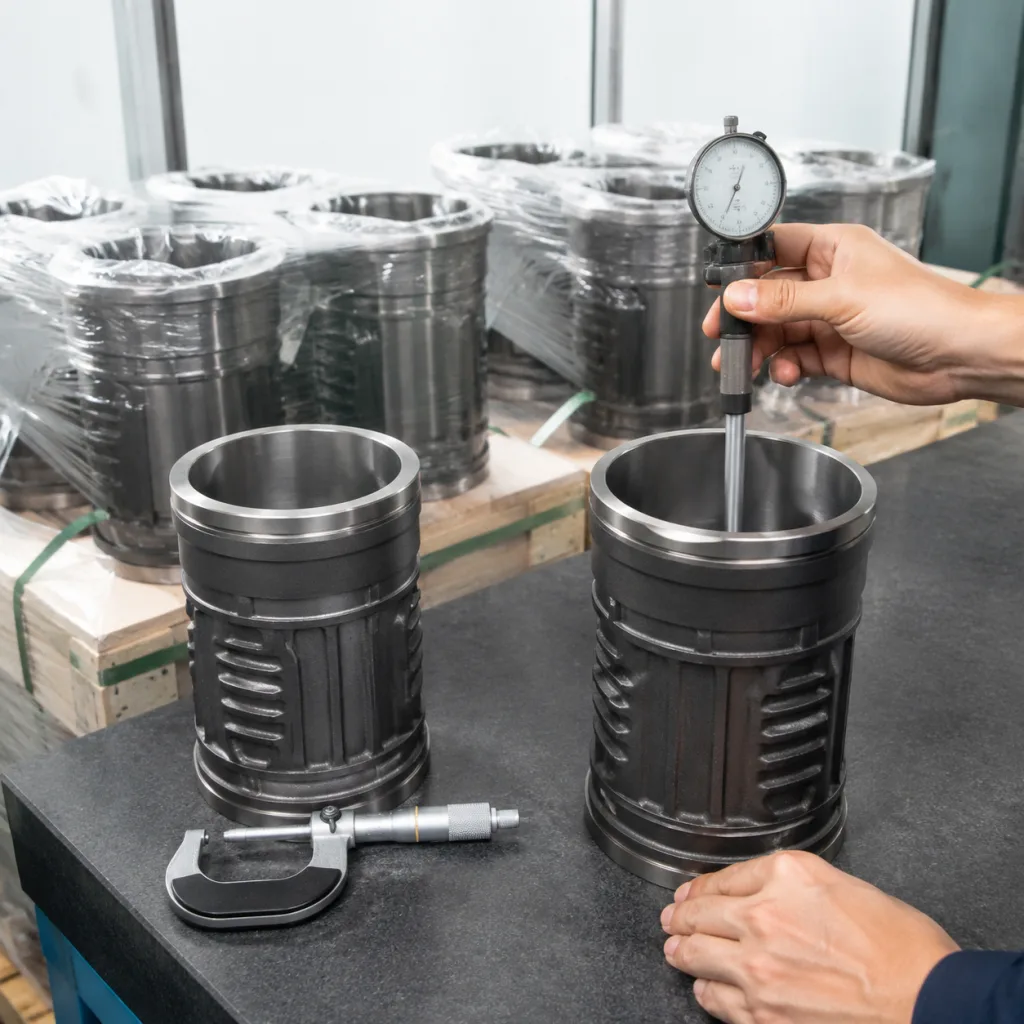
- Dimensional measurement: journal diameter, lobe height, base circle, overall length, thrust surfaces, keyway or slot position, and mounting features.
- Runout and straightness: confirmation that the shaft remains within the agreed tolerance after machining and heat treatment.
- Hardness testing: verification of lobe and journal hardness according to the specified process and material.
- Surface finish review: roughness and visual condition of functional surfaces.
- Oil passage and cleanliness checks: confirmation that oil holes, internal passages, and plugs are clean and correctly formed.
- Packaging inspection: protection against corrosion, impact, and mixed-part shipment.
For first orders, Driventus can align inspection records with the agreed specification and provide supporting quality documents where applicable. For repeat production, lot-based records help buyers manage claims, distributor audits, and inventory traceability. The best result comes from setting acceptance criteria early: drawings, reference samples, photos, tolerance tables, packaging requirements, and labelling rules should all be confirmed before release.
Supplier comparison: what separates a usable source from a risky one
Many suppliers can quote a Peugeot camshaft, but not every supplier can control the part consistently. A low price may become expensive if the shipment includes mixed references, poor surface hardness, incorrect timing features, or packaging damage. When comparing a camshaft Peugeot manufacturer China, buyers should look beyond product photos and ask for evidence of process control.
A usable supplier should be able to provide:
- Clear confirmation of fitment and part-number cross-reference.
- A realistic explanation of material and production route.
- Defined inspection points for critical dimensions and hardness.
- Traceability by batch or production lot.
- Quality-system evidence, such as IATF 16949:2016 and ISO 9001:2015 alignment.
- Practical communication about lead time, MOQ, packaging, and export documents.
- Willingness to review drawings, samples, and technical deviations before production.
Warning signs include vague fitment claims, reluctance to discuss tolerances, no batch records, inconsistent packaging, and quotations that ignore application details. Buyers should also be cautious when a supplier claims broad brand coverage without showing how references are controlled. A serious supplier will ask questions before quoting if the application data is incomplete, because the cost of an incorrect camshaft is much higher than the cost of a careful review.
Ordering notes for distributors, Tier-1 suppliers, and repair networks
Different buyers need different levels of support. Aftermarket distributors may prioritise fast-moving references, consistent carton design, barcode labels, and stable replenishment. Tier-1 or programme-based buyers may need drawings, PPAP-style documentation, tighter change control, and more detailed validation. Repair networks usually focus on correct fitment, dependable packaging, and predictable availability for scheduled service work.
To make the ordering process smoother, prepare the following information before contacting Driventus:
- OE or aftermarket part number and any known superseded numbers.
- Engine code, model year range, and intake or exhaust camshaft position.
- Required quantity, annual forecast, and preferred delivery schedule.
- Sample, drawing, or measurement data if the part is not already confirmed.
- Packaging requirements, label format, and private-label instructions.
- Destination market and required shipping or customs documents.
- Inspection documents needed for internal approval or customer audit.
For new references, a sample review or pilot batch may be recommended before bulk shipment. For repeat orders, forecast sharing helps stabilise production planning and reduce lead-time pressure. Driventus can support both standard aftermarket camshaft supply and custom manufacturing projects, with the objective of delivering parts that meet the agreed specification and are ready for B2B distribution, assembly support, or repair-channel use.
Frequently asked questions
Yes. We supply B2B aftermarket channels with catalogue production, traceable lots, and export documentation. Fitment should be confirmed against the OE reference, engine code, and application data before order release.
Yes. We support drawing review, target sample comparison, sample development, packaging changes, and private-label requirements through our OEM service workflow. Final specifications depend on the engine programme, technical data, and target volume.
Buyers can request dimensional reports, hardness results, lot traceability, inspection records, and quality-system evidence aligned with IATF 16949:2016 and ISO 9001:2015. Document availability should be confirmed during quotation.
If you are building a Peugeot camshaft sourcing plan, send your part number, drawing, or target sample data and we will review the requirement with you. Start here: /contact.html
Request a Quote