Cylinder Sleeve Cadillac Manufacturer China: Sourcing Guide
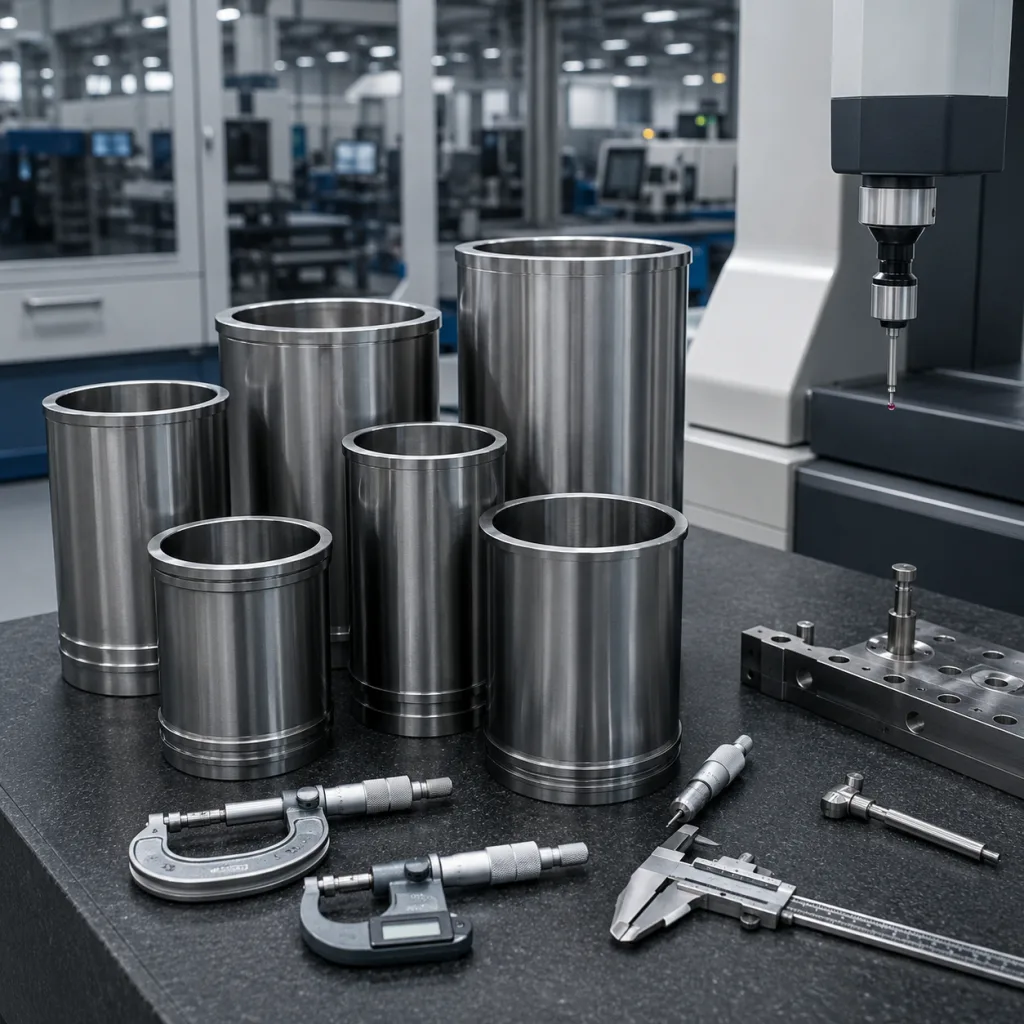
Procurement teams looking for a cylinder sleeve Cadillac manufacturer China source are usually balancing three requirements: repeatable dimensions, traceable material, and a supplier that can maintain delivery performance across ongoing orders. Driventus supplies engine and powertrain components from Taizhou, Zhejiang, with production managed under IATF 16949:2016 and ISO 9001:2015. For cylinder sleeves, that translates into controlled machining, hardness verification, inspection records, and export-ready packaging for shipments to North America, Europe, South America, and other major aftermarket regions. Driventus is an independent aftermarket manufacturer; Cadillac and other brand names are referenced only to describe vehicle fitment. Whether you are matching an OE reference such as OE 06A107065, developing a drawing-based sleeve, or validating a sample for fleet service, the sourcing process should start with bore size, flange geometry, wall thickness, material grade, and surface finish—not appearance alone.
What buyers should verify before sending an RFQ
A useful RFQ for cylinder sleeve sourcing should do more than list a vehicle model. It should identify the engine family, nominal bore, sleeve style, target finish size, and the inspection standard the buyer will use when parts arrive. The supplier should also be asked to confirm base material, heat-treatment or stress-relief process where applicable, and the machining tolerance stack-up.
Minimum data to include
- Application: passenger car, light commercial, fleet service, or performance rebuild
- Sleeve type: dry sleeve, wet sleeve, or flanged sleeve
- Nominal bore, semi-finished bore, and final finish size if different
- Wall thickness, outside diameter, and overall length
- Flange height, flange diameter, and sealing-land details where applicable
- Material specification, microstructure expectation, and hardness range
- Surface roughness target and honing requirement
- Quantity, annual volume, and forecast split by shipment
- Packing requirement, corrosion protection, and export mark requirements
For Cadillac-fit applications, the safest approach is to compare the sample or OE reference against the engine drawing instead of relying on a visual match. Small differences in flange height, counterbore fit, or finish allowance can create installation problems even when the sleeve looks correct. For procurement records, keep the drawing revision, first article inspection report, hardness result, and clear photo records of approved samples. Those records make repeat orders easier to control and help both sides resolve questions if a later production lot is reviewed.
Material and dimensional control for export supply
A cylinder sleeve has to remain stable under press fit, combustion load, thermal cycling, and coolant exposure when the design is a wet sleeve. For cast-iron sleeves, buyers commonly look for controlled pearlitic structure, consistent hardness, stable machinability, and bore roundness after finishing. For wet sleeves, the sealing lands, flange flatness, and outside-diameter surface quality are just as important as the internal bore.
| Control item | Typical buyer request | Why it matters |
|---|---|---|
| Bore diameter | Drawing-specific | Affects piston clearance, ring seating, and oil control |
| Roundness | Tight controlled limit | Helps prevent local scuffing, uneven wear, and blow-by |
| Concentricity | Drawing-specific | Supports stable ring sealing and consistent wall loading |
| Outside diameter | Drawing-specific | Controls press fit or block-location accuracy |
| Flange flatness | Controlled limit | Critical for wet-sleeve sealing and installed height |
| Surface roughness | Ra/Rz per drawing | Influences break-in, oil retention, and ring life |
| Hardness | Material-specific range | Balances wear resistance with machinability |
| Edge condition | Deburred and protected | Reduces handling damage and installation risk |