Finding the right camshaft phaser Isuzu supplier is a technical sourcing decision, not only a price comparison. A phaser directly influences variable valve timing response, idle quality, emissions calibration, oil-pressure control, and engine service life. For procurement teams, the priority is to confirm that the part matches the intended application and that the factory can repeat the same result over multiple orders.
A reliable sourcing review should cover fitment data, OE cross-reference handling, dimensional control, material traceability, machining consistency, assembly cleanliness, inspection records, packaging, and export documentation. These details reduce the risk of false matches, unstable timing performance, and costly returns.
Driventus is an independent aftermarket manufacturer; brand names are referenced for fitment only. Based in Taizhou, Zhejiang, Driventus supplies engine and powertrain components with IATF 16949:2016 and ISO 9001:2015 certification. This guide explains how to evaluate a camshaft phaser supplier for Isuzu-related replacement programmes, what documents to request, and how to structure a first-order qualification process.
What procurement teams should verify first
A camshaft phaser is an actuator assembly with tight functional requirements. Before comparing unit prices, confirm the exact engine family, the OE cross-reference used by your programme, and whether the application requires an intake phaser, exhaust phaser, or matched set. For Isuzu-related sourcing, this step helps prevent false matches where a part appears similar but has the wrong phasing range, oil-feed layout, trigger geometry, or mounting interface.
Key checks:
OE cross-reference format, for example OE 06A107065 when the programme uses a published reference
Engine code, displacement, fuel type, and cylinder count
Intake or exhaust position, including left/right bank where relevant
Electrical connector or oil control valve interface if supplied as an assembly
Hydraulic locking, mechanical locking, or return-position features
Tooth count, trigger wheel profile, and indexing position
Packaging requirement for retail, workshop, distributor, or bulk export supply
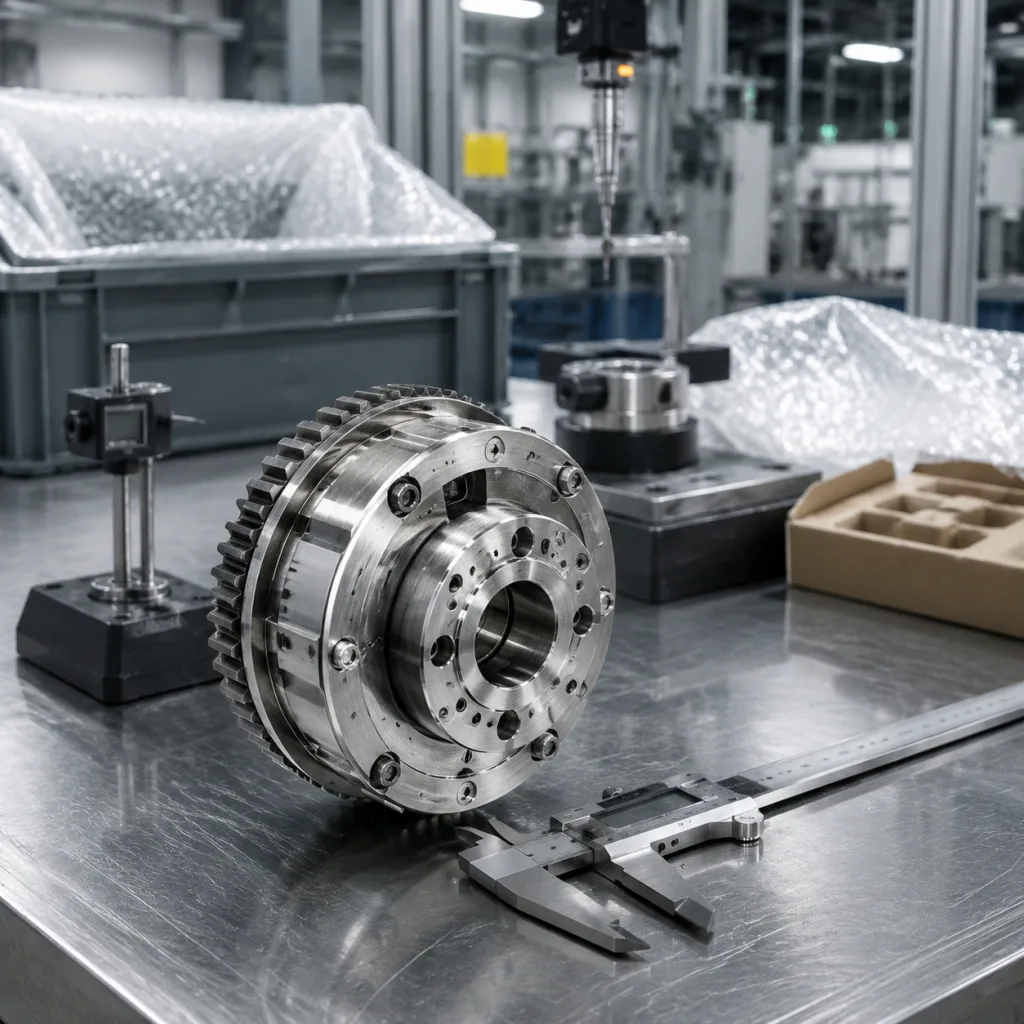
Ask the supplier for a dimensional drawing before placing a trial order. At minimum, the drawing should show outer diameter, bore size, tooth count or trigger wheel geometry, mounting bolt pattern, oil passage location, and critical stack-up dimensions. A controlled drawing also makes communication easier when your team is comparing samples from multiple factories.
If a supplier can only provide catalogue images and cannot confirm drawing revision, inspection criteria, or application notes, the sourcing risk is high. Visual similarity is not enough for timing-control components.
Factory capability and certification that matter
For B2B supply, certification should be reviewed as part of the commercial and technical file, not treated as a sales slogan. Driventus operates under IATF 16949:2016 and ISO 9001:2015. These systems are relevant because camshaft phaser production depends on disciplined control of machining, heat treatment or surface treatment where applicable, cleaning, assembly, function checks, and final inspection.
A buyer should request the following documents:
Item
Why it matters
IATF 16949:2016 certificate
Indicates automotive quality management system control
ISO 9001:2015 certificate
Confirms general quality system management
Material certificate
Verifies alloy grade, batch identity, and traceability
Dimensional inspection report
Shows measured features, tolerances, and pass/fail criteria
PPAP-style pack, if available
Supports launch approval and repeat production consistency
Process flow or control plan summary
Helps buyers understand how critical features are managed
Export packing specification
Reduces damage, corrosion risk, and label errors in transit
</tr></thead><tbody> </tbody></table>For EU-bound shipments, ask about REACH (EC) No 1907/2006 compliance status for relevant subcomponents, coatings, lubricants, and packaging materials where applicable. If your market requires additional substance declarations or restricted-material statements, request them during RFQ rather than after production.
For emissions-sensitive applications, documentation that supports timing consistency is especially important. If the part family is related to regulated engine performance, ask whether the supplier understands validation references such as ECE R-83 or SAE J2527 when discussing test support. The goal is not to overcomplicate the RFQ, but to confirm that the supplier can communicate in the same technical language as your quality and compliance teams.
Fitment control, tolerances, and validation
A camshaft phaser supplier should be able to explain how fitment is controlled from sample approval through mass production. In many sourcing projects, the most common failure is not immediate material breakage; it is interface variation. Small differences in tooth position, oil passage geometry, rotor-to-housing clearance, or locking-pin engagement can change timing response and create installation complaints.
Typical control points include:
Concentricity and runout on rotating elements
Axial play and end float
Tooth index accuracy and trigger geometry
Oil passage location and flow path consistency
Surface finish on sealing, bearing, and contact faces
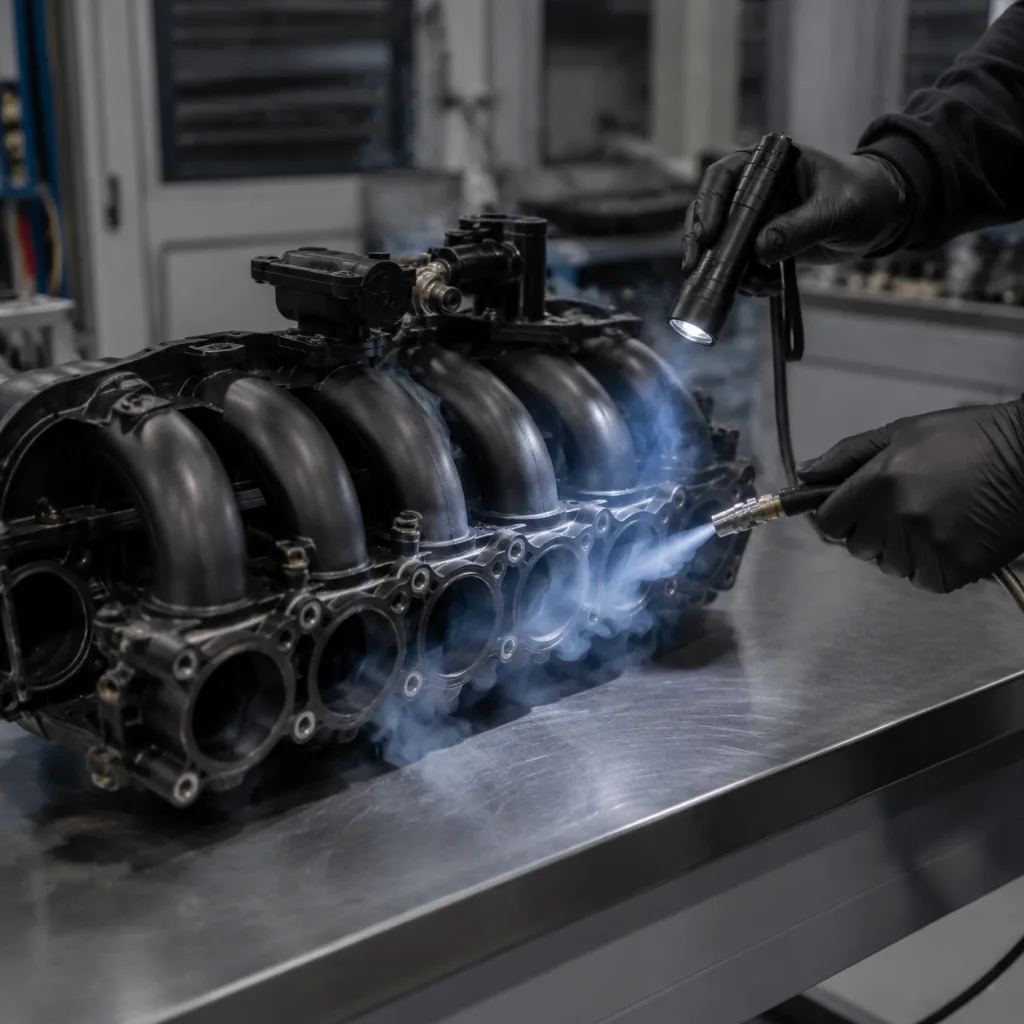
Cleanliness after washing and before assembly
Locking-pin engagement and release behaviour
Torque retention on fasteners, where applicable
Validation questions to ask
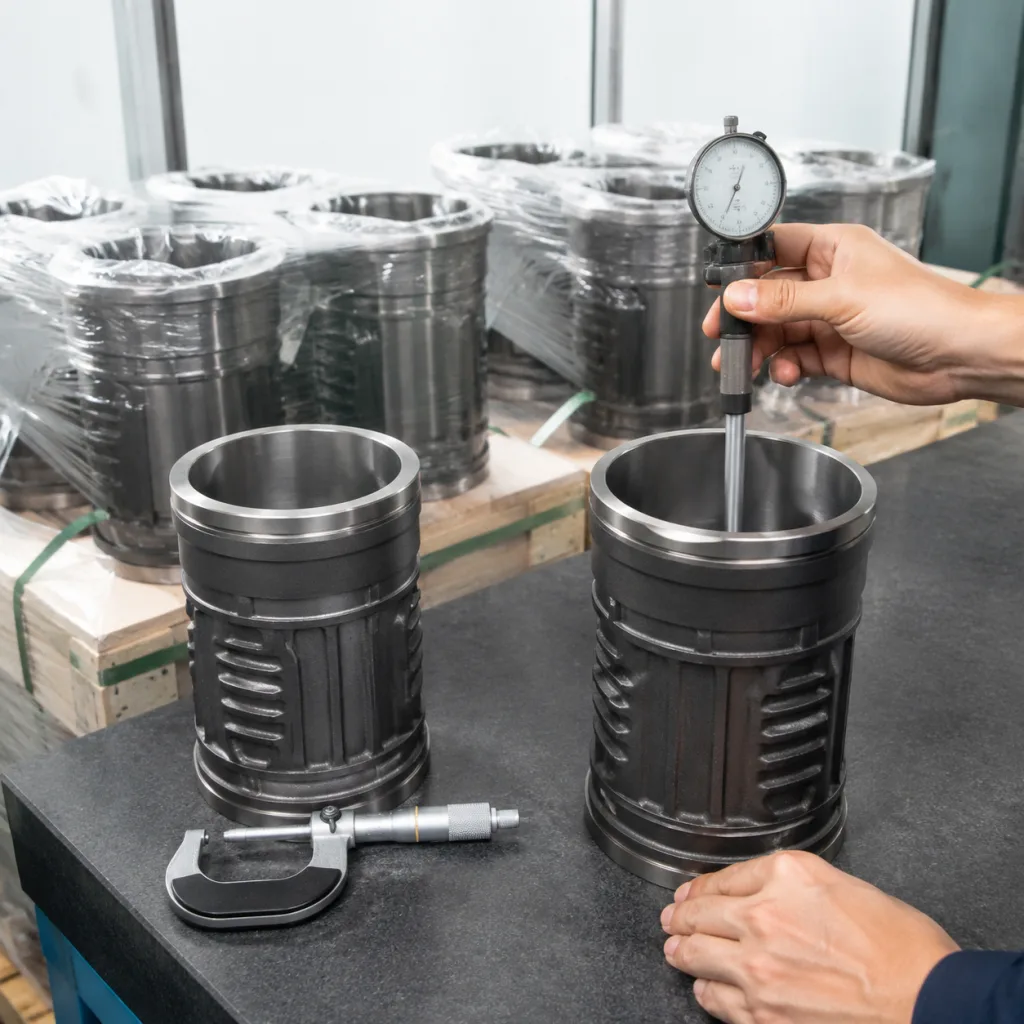
1. Which gauges or fixtures are used for critical features? 2. Are first-article samples measured against a controlled drawing revision? 3. Is batch traceability linked to heat number, lot number, machining date, and assembly date? 4. Is function testing performed under oil pressure or simulated actuation conditions? 5. How are nonconforming parts segregated, reviewed, and prevented from entering export stock? 6. Are samples retained for comparison if a later claim occurs?
A supplier that answers these questions clearly is usually easier to manage during volume production. For replacement programmes, insist on dimensional match and functional verification rather than accepting visual similarity. If your internal team has the capability, measure pilot samples against the drawing and keep a golden sample for incoming inspection reference.
Stable validation routines also help when the same phaser is sold through different channels. Workshop customers, regional distributors, and e-commerce fulfilment teams may see different types of feedback, so the original technical file should be strong enough to support claim review and batch investigation.
MOQ, lead time, and export supply planning
For import managers, commercial terms are part of technical sourcing. Ask for MOQ by part number, packaging format, and whether mixed-SKU cartons are allowed. These details affect cash flow, warehouse planning, customs documentation, and service levels for workshops, distributors, and e-commerce fulfilment.
A practical supplier brief should include:
MOQ per SKU and per order line
Sample lead time and mass-production lead time
Standard carton quantity and pallet configuration
Incoterms offered, such as EXW, FOB, CIF, or other agreed terms
Spare-gasket, bolt, seal, or accessory inclusion rules
Label requirements for barcodes, lot numbers, country of origin, and customer part numbers
Neutral, Driventus, or private-label packaging requirements
Expected forecast range and replenishment frequency
Lead time becomes more predictable when the supplier controls machining, surface treatment, cleaning, and final assembly in one facility or in a tightly managed supply chain. Driventus is vertically integrated in engine and powertrain components, which helps with schedule control and cross-checking of related parts.
If your programme includes other timing or sealing components, it is useful to review them together instead of treating the phaser as an isolated item. Consolidated review can reduce duplicate sampling, simplify inspection planning, and improve container or pallet efficiency. You can review our catalog and the broader engine range at /products/engine-components.html.
In procurement documents, wording matters. Buyers should avoid language that suggests vehicle manufacturer endorsement, especially when building line cards, online listings, customs files, or distributor catalogues. A correct supplier statement is: Driventus is an independent aftermarket manufacturer; brand names are referenced for fitment only.
This protects both sides. It clarifies that the part is being sourced for compatibility, not as an OEM-branded item. It also helps compliance teams avoid confusion during customs review, catalogue creation, sales training, and distributor onboarding.
Use this wording when building RFQs, line cards, or internal sourcing notes:
Brand reference only for fitment
OE number used as cross-reference only
No claim of OEM approval, sponsorship, or endorsement
Final suitability confirmed by buyer application review
Customer packaging and listings checked before market release
Clear disclaimers do not weaken the offer. In fact, they make the transaction more professional because the buyer, supplier, and downstream distributor all understand how the product should be described. This is especially important for independent aftermarket programmes that cover multiple vehicle brands and regional catalogue systems.
If you need non-standard packaging, private label support, or a drawing revision matched to a legacy application, ask about custom manufacturing. For buyers comparing suppliers, the availability of controlled documentation is often more important than a marginal unit-price difference.
How to qualify a supplier before first order
Before placing a production order, run a short qualification process that tests both the technical part and the supplier’s communication discipline.
1. Send the target OE cross-reference and application data. 2. Request drawing confirmation and a sample photo set. 3. Ask for material certificates, inspection reports, and current quality certificates. 4. Review packaging method, label format, and export carton strength. 5. Order a pilot batch and measure incoming consistency. 6. Confirm transit condition, label accuracy, and fitment feedback. 7. Record any installation notes, claim data, or dimensional deviations before approving repeat orders.
A qualified supplier should answer technical questions without switching to general marketing language. They should be able to state what is measured, how often it is measured, which records are kept, and how nonconforming stock is handled. If your team needs a direct commercial discussion, use request a quote.
For buyers consolidating engine-component sourcing, it is efficient to group phasers with related timing and sealing items in the same programme review. That reduces administration, especially when the procurement team manages multiple warehouses, distributors, or regional product launches.
A well-structured qualification process may take slightly more time before the first order, but it usually shortens later claim handling and improves replenishment reliability. For a camshaft phaser Isuzu supplier, that reliability is often the difference between a one-time purchase and a sustainable aftermarket supply relationship.
Frequently asked questions
Start with the OE cross-reference, engine code, intake or exhaust position, and controlled drawing revision. Then ask for certificates, inspection reports, MOQ, sample lead time, mass-production lead time, and packaging details.
Yes, depending on the programme requirements. Ask about artwork control, carton configuration, label format, barcode rules, and batch traceability during the RFQ stage.
No. Driventus is an independent aftermarket manufacturer; brand names are referenced for fitment only. OE numbers and vehicle brands are used only to help buyers confirm compatibility.
If you are sourcing a stable supply partner for a camshaft phaser programme, send your OE reference, target volume, packaging requirements, and destination market, then [request a quote](/contact.html).