Camshaft Opel Wholesale: Supplier Guide for Buyers
Procurement teams sourcing camshaft Opel wholesale supply need more than a price list. The part must match OE dimensions, maintain lobe geometry, and pass repeatable inspection across production lots. For distributors, repair networks, and OEM-related programs, the main variables are fitment control, material consistency, batch traceability, and lead time. Driventus supplies engine components from Taizhou, Zhejiang, with vertically integrated production for cast and machined parts. We work to IATF 16949:2016 and ISO 9001:2015, and we export to more than 60 countries. Driventus is an independent aftermarket manufacturer; brand names are referenced for fitment only. This article explains what buyers should verify before placing a wholesale order, how to compare suppliers, and what documentation to request during qualification.
What wholesale buyers should check before ordering
For a camshaft programme, the buying decision is usually driven by three factors: fitment accuracy, supply stability, and traceability. A supplier should be able to confirm the following for each part number or OE cross-reference:
Material specification and heat treatment route
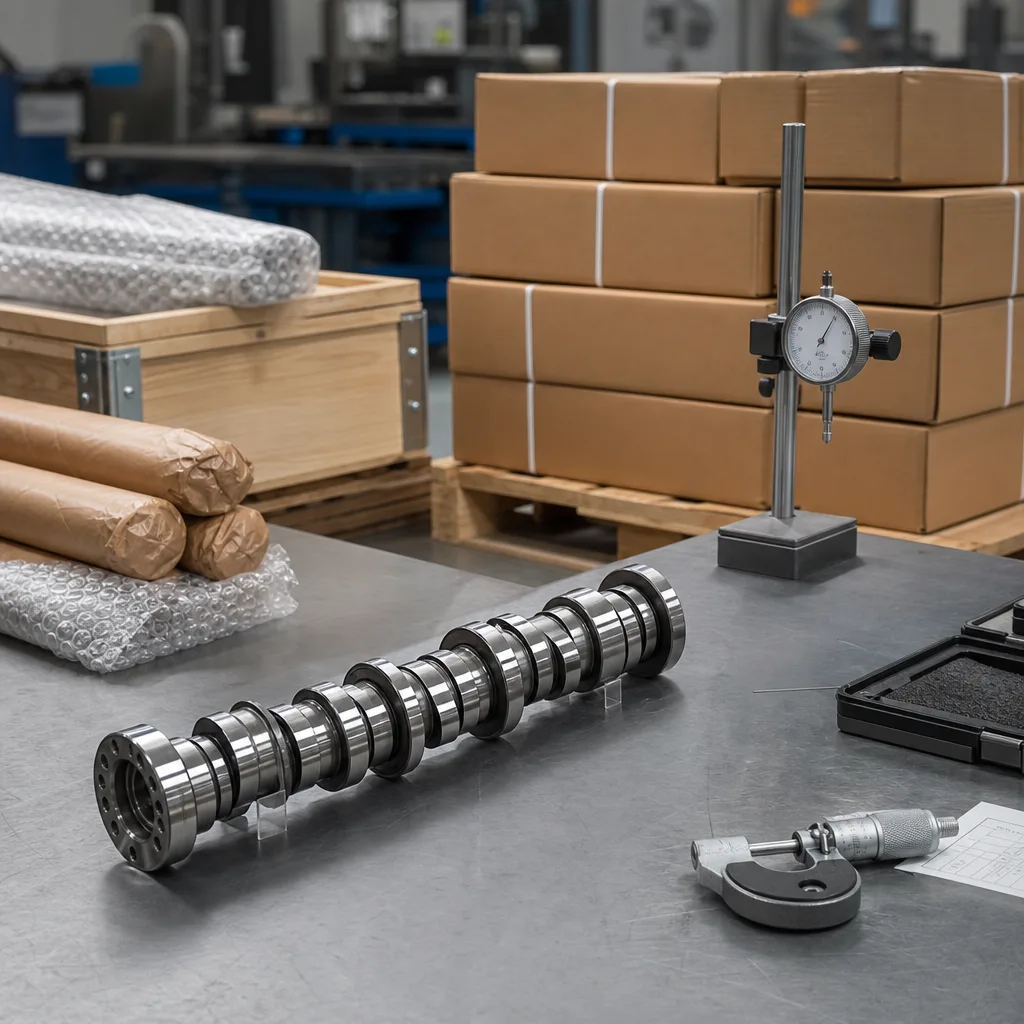
Lobe height, base circle, journal diameter, and runout control
Surface finish and hardness range after machining
Packaging that prevents corrosion and handling damage
Batch coding for traceability back to melting and processing records
For Opel applications, buyers often source against OE 06A… or other engine-family references. The correct cross-reference must be verified by engine code, valve train layout, and emission version, not by vehicle model alone. If you are building a wholesale line, ask for dimensional drawings, inspection reports, and production photos before approval. A supplier that cannot provide stable documentation is a higher risk than one with a slightly longer lead time.
Technical specifications that matter in wholesale supply
Camshafts are not commodity castings. Small deviations can change valve timing, idle quality, emissions, and durability. The key characteristics below should be defined in the purchase specification.
Specification item
What to confirm
Why it matters
Material
Alloy cast iron or steel, per application
Impacts wear resistance and machining stability
Heat treatment
Induction hardening or equivalent process
Controls lobe and journal life
Runout
Measured on support journals
Excess runout can affect timing accuracy
Lobe profile
Intake/exhaust geometry to drawing
Incorrect profile changes engine behaviour
Surface finish
Journal and lobe finish values
Affects oil film and wear
Packaging
VCI, sleeve, or formed tray
Reduces corrosion and transit damage
</tr></thead><tbody> </tbody></table>For buyers in the EU and UK, REACH (EC) No 1907/2006 matters if surface treatments, coatings, or packaging materials require chemical compliance review. For validation, ask whether the supplier uses in-process gauges, final inspection, and retained samples per lot. Where a programme requires durability evidence, request test records aligned to SAE J2527 where applicable for corrosion-related evaluation, or customer-specific bench and endurance criteria. Published standards should be named in the supplier file, not assumed.
How Driventus supports wholesale programmes
Driventus is set up for B2B sourcing rather than retail fulfilment. That matters when you need consistent replenishment across multiple markets. We manufacture engine and powertrain components in Taizhou, Zhejiang, with process control across machining, inspection, and packing. Our quality system is built around IATF 16949:2016 and ISO 9001:2015 requirements, with traceable lot control and documented checks at key stages.
For wholesale buyers, the practical benefits are:
Stable repeat production for approved part numbers
MOQ structures suitable for distributors and regional importers
Export packing for container and mixed-SKU shipment
Support for documentation packs, including inspection reports and technical sheets
Coordination for private label or neutral packaging where required
If you are expanding a catalogue, review our catalog and, where relevant, the broader engine components range. We can also discuss custom manufacturing when your programme needs a revised profile, packaging format, or application-specific validation.
MOQ, lead time, and supplier audit questions
Wholesale procurement is usually limited by three constraints: minimum order quantity, production lead time, and audit readiness. These should be clarified before commercial terms are signed.
Questions to ask any camshaft supplier
What is the MOQ per OE reference and per shipment?
What is the typical lead time after drawing approval or order confirmation?
Can you provide PPAP-style documentation if requested?
Which gauges are used for runout, diameter, and profile inspection?
How are nonconforming lots isolated and reported?
What is the traceability format on cartons and inner packs?
A factory audit should verify raw material control, in-process inspection, final inspection records, and shipping traceability. Buyers should also confirm whether the supplier keeps retained samples and how long records are archived. If your team sources across the EU, UK, US, Canada, Australia, or Brazil, ask for export experience with customs documents and pallet configuration. That reduces clearance risk and avoids damage during long-haul transit.
When wholesale camshafts need application validation
Even when a camshaft is dimensionally close, validation is still necessary before full programme release. This is especially important for replacement channels serving older Opel platforms, mixed repair fleets, and remanufacturing partners.
A sensible validation plan includes:
1. Confirm engine code, valve count, and timing drive layout. 2. Match the OE cross-reference to the correct revision level. 3. Check journal diameters, lobe lift, and end play against the reference sample. 4. Inspect surface finish and hardness on the supplied lot. 5. Install a pilot batch and review noise, oil pressure, and timing stability. 6. Expand only after the pilot lot passes internal acceptance criteria.
If your team sources from multiple plants or markets, keep one master specification file per part number and do not rely on catalogue descriptions alone. The strongest wholesale supply chains use the same drawing, the same inspection method, and the same packaging standard across every replenishment cycle.
Commercial fit for distributors and repair networks
For aftermarket distributors and multi-location repair chains, the commercial value of a camshaft line depends on fill rate, return rate, and application coverage. A supplier should be able to support both fast-moving references and slower, older applications without changing inspection discipline.
Driventus is an independent aftermarket manufacturer; brand names are referenced for fitment only. That statement matters because buyers need accurate cross-reference data without any claim of vehicle manufacturer approval or endorsement. For wholesale programmes, we recommend defining three documents at the start:
Application list with engine codes and OE cross-references
Technical specification sheet with critical dimensions and material data
Commercial sheet with MOQ, lead time, packing, and Incoterms
If you are consolidating sourcing across engine components, our request a quote page is the fastest way to start a review of target references, volumes, and packing requirements.
Frequently asked questions
Yes, provided the application data, engine code, and revision level are confirmed. We verify the fitment target before quoting and can support dimensional documentation for approval.
Typical documents include technical sheets, inspection records, lot traceability, packing details, and commercial terms. Additional validation documents can be discussed during sourcing.
Yes. We can discuss neutral packaging, barcode labels, and custom manufacturing requirements depending on order volume and application scope.
If you are building a camshaft programme for Opel fitment, send your reference list, target volumes, and packing requirements. We will review the source specification and reply through /contact.html.