Camshaft Renault Supplier: Sourcing Notes for Buyers
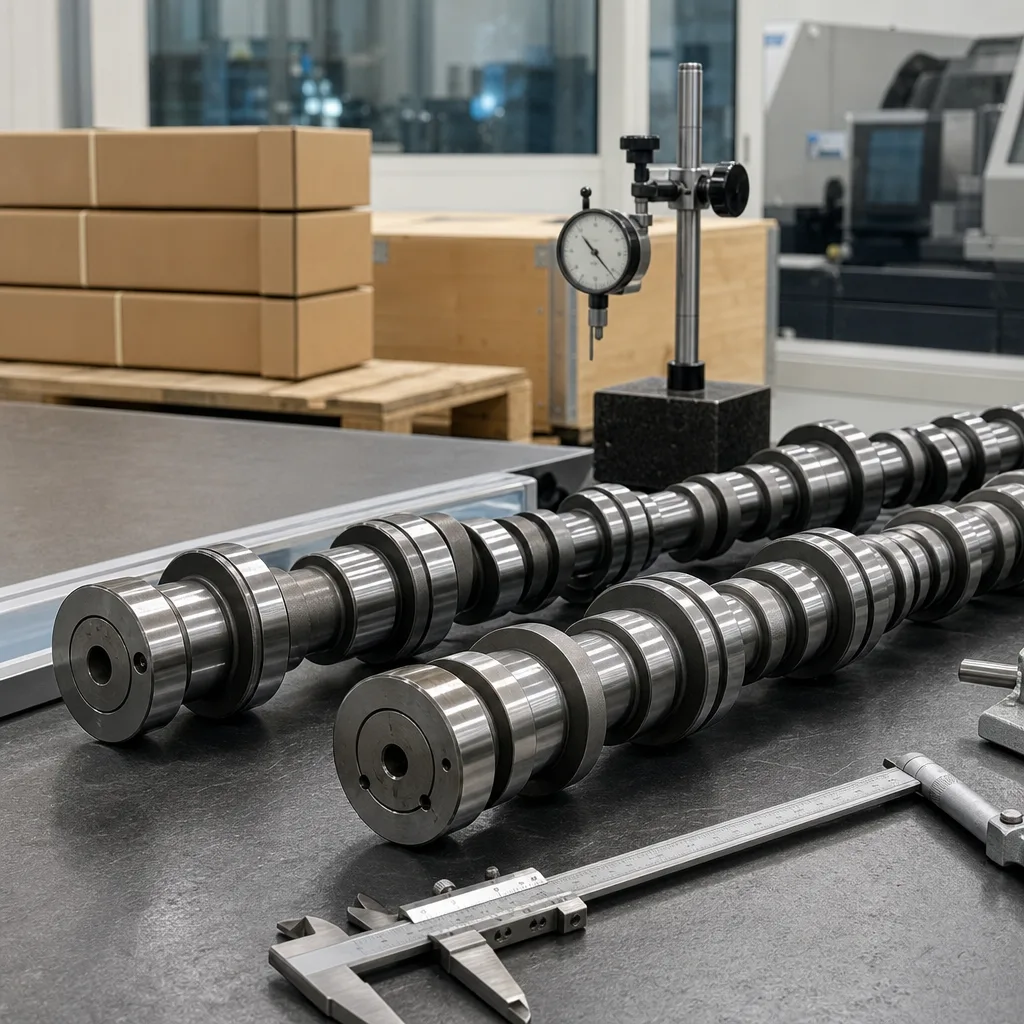
Buying a camshaft for Renault applications is a sourcing task, not a catalogue exercise. Procurement teams need consistent metallurgy, stable machining, correct hardening depth, and dimensional control across batches. They also need clear traceability, packaging that prevents corrosion in transit, and documentation that supports incoming inspection. Driventus supplies camshafts for aftermarket and B2B channels from its vertically integrated plant in Taizhou, Zhejiang, with production aligned to IATF 16949:2016 and ISO 9001:2015. Driventus is an independent aftermarket manufacturer; brand names are referenced for fitment only. For buyers comparing suppliers, the key questions are MOQ, lead time, tolerance control, OE cross-reference accuracy, and whether the factory can support audits and private-label or custom manufacturing requests. This article outlines the practical points to verify before placing a purchase order for Renault engine programs.
What procurement teams should check first
A camshaft purchase should begin with fitment data, not price. For Renault applications, confirm engine code, valve train type, lobe arrangement, journal count, overall length, and OE cross-reference where available. If the part is replacing an existing unit, buyers should verify the base material, surface treatment, and any induction-hardened or nitrided areas.
Use this checklist during RFQ review:
Engine code and displacement
Intake/exhaust configuration
Cam journal diameter and spacing
Lobe lift, base circle, and timing phasing
Sensor trigger features, if applicable
Packaging and corrosion protection requirements
Required documents: CoC, material report, inspection record
Camshaft quality depends on repeatable control of the forging or casting route, machining accuracy, and heat treatment. Buyers typically ask for material specification, hardness profile, and runout data. For aftermarket programs, the most useful evidence is not a marketing claim but a consistent inspection record.
Typical supplier checks
Check item
Buyer purpose
Common evidence
Material grade
Confirms base metal suitability
Mill report or chemistry report
Journal finish
Reduces wear and oil starvation risk
Surface roughness record
Lobe profile
Supports valve timing consistency
CMM or profile measurement
Hardness depth
Confirms wear resistance
Hardness test report
Runout / straightness
Protects engine assembly quality
100% or batch inspection
Corrosion protection
Preserves transit condition
VCI bag, oil coating, carton spec
</tr></thead><tbody> </tbody></table>Driventus can build these controls into the quality system documentation package. The factory operates under IATF 16949:2016 and ISO 9001:2015, which are relevant when buyers need documented process control and audit readiness.
Lead time, MOQ, and sourcing model
For import managers, the supplier model matters as much as the part itself. A vertically integrated manufacturer can usually control more of the process, which helps with planning, schedule stability, and post-order technical support. That is important when programs cover multiple Renault fitments or regional variants.
When you compare offers, ask for these commercial terms in writing:
MOQ by part number and by carton configuration
Sample lead time versus mass-production lead time
Tooling status and whether tooling is already in-house
Incoterms, packing method, and palletisation details
Batch traceability and lot coding format
Replacement policy for nonconforming parts
If you need private label, packaging changes, or drawing-based development, use custom manufacturing. That route is often better than trying to adapt a standard listing after the PO is released.
Validation testing before approval
Even for aftermarket supply, a buyer should request validation data before approval. The exact test plan depends on engine family and market, but the intent is the same: confirm the part can be installed, rotated, and loaded as expected.
Common validation items include:
Dimensional comparison against the reference part
Hardness and case depth verification
Surface finish inspection on journals and lobes
Dynamic balance check where the design requires it
Fitment trial in a sample engine assembly
Corrosion exposure review for shipment and storage
Where a customer has its own test protocol, Driventus can align with that request and document the result set. In European supply chains, buyers may also want material or coating declarations aligned with REACH (EC) No 1907/2006. For some programmes, reference to ECE R-83 or SAE J2527 may be relevant in adjacent engine or emissions-related validation workflows, depending on the buyer’s internal requirements.
Why factory audit access matters
A camshaft supplier should be able to answer technical and process questions clearly during audit review. Buyers usually focus on process flow, incoming material controls, heat treatment control, inspection frequency, nonconformance handling, and traceability.
For Renault-related sourcing, a practical audit checklist includes:
1. Raw material receiving and lot segregation 2. Machining line capability and gauge control 3. Heat treatment records and furnace monitoring 4. Final inspection and packaging controls 5. Complaint handling and corrective action records 6. Export documentation and carton traceability
Driventus supports B2B procurement with audit-oriented documentation and defined quality procedures. If your team needs samples, technical drawings, or market-specific packaging, use request a quote.
How to compare suppliers without overpaying
Lowest unit price does not always produce the lowest landed cost. Buyers should compare suppliers on measurable factors:
Dimensional rejection rate on incoming inspection
Consistency across repeat orders
Responsiveness to technical questions
Packaging damage rate in transit
Documentation completeness
Ability to support OE cross-reference updates without guessing
For a camshaft Renault supplier search, a technically solid offer is one that reduces inspection burden and keeps replenishment predictable. Driventus supplies aftermarket customers, wholesalers, and repair-chain buyers who need stable supply, practical documentation, and responsive export support. Driventus is an independent aftermarket manufacturer; brand names are referenced for fitment only.
Frequently asked questions
Yes, where the reference data is provided and the fitment is technically verified. Buyers should confirm engine code, dimensions, and installation details before purchase.
Typical documents include material or chemistry data, inspection records, packing details, and traceability information. Additional declarations can be discussed for specific markets.
Yes. Packaging, labelling, and product development can be discussed under our OEM and private-label workflow, subject to MOQ and technical review.
If you are sourcing a camshaft for Renault programmes and need pricing, samples, or technical confirmation, contact our team to discuss the right supply option: /contact.html