Camshaft for Nissan Patrol OE Equivalent Sourcing
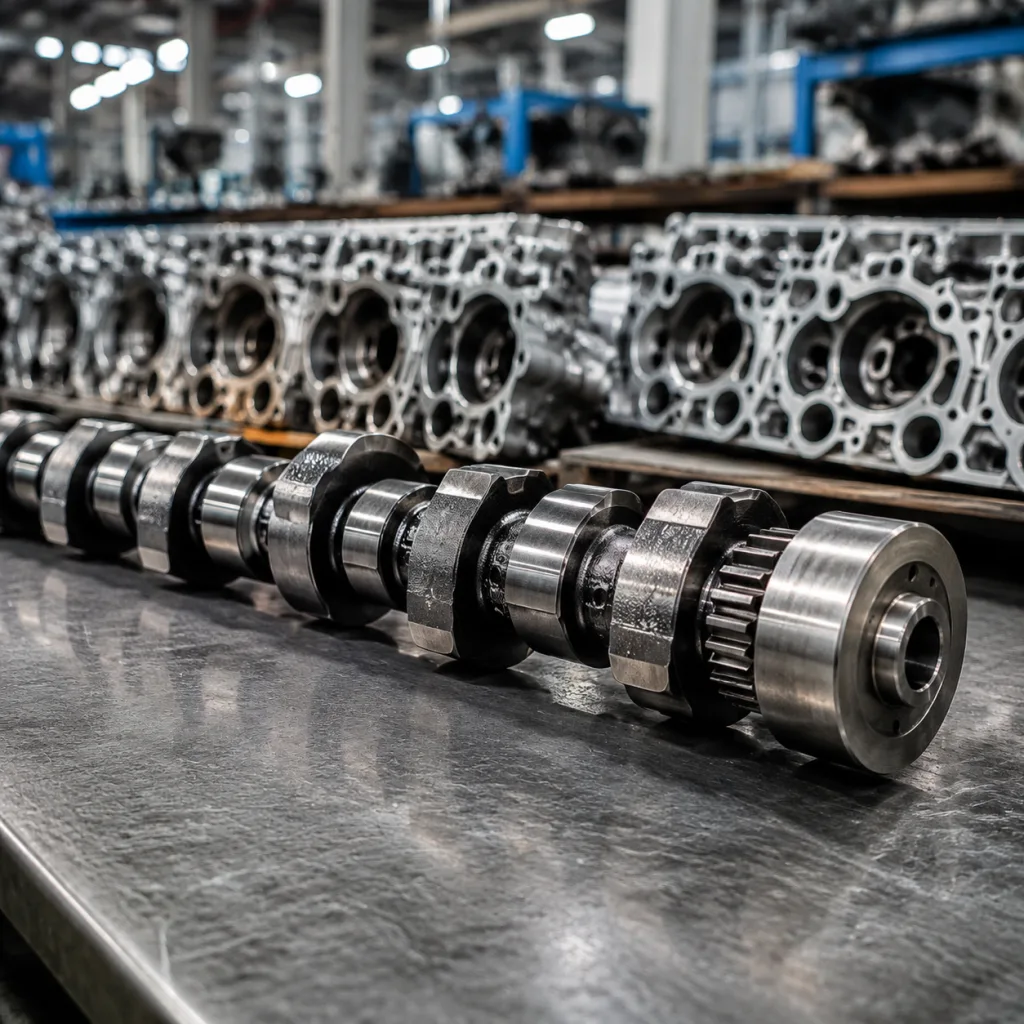
A camshaft for Nissan Patrol OE equivalent sourcing is not a simple catalogue exercise. For distributors, repair-chain buyers and engine rebuilders, the part has to match the original valve timing geometry, journal dimensions, lobe profile and material behaviour closely enough to install without modification to mating components. Nissan Patrol applications span multiple engine families and market variants, so part identification, sample validation and production control should be treated as separate procurement steps. Driventus manufactures engine and powertrain components in Taizhou, Zhejiang, with IATF 16949:2016 and ISO 9001:2015 certified processes for B2B aftermarket supply. This article explains what to verify before placing an order, how OE-equivalent camshafts are validated, and what import buyers should request from a supplier before adding the part to a regional programme.
What OE-Equivalent Means for Patrol Camshafts
OE-equivalent does not mean vehicle manufacturer approval. It means the replacement camshaft is engineered to match the relevant original design envelope for fitment, timing and durability in the specified engine application. Driventus is an independent aftermarket manufacturer; brand names are referenced for fitment only.
For Nissan Patrol sourcing, buyers should confirm the exact engine code, model year range, fuel type and market destination before selecting a camshaft. Patrol platforms have been sold globally with petrol and diesel engines, and small differences in timing layout, sensor indexing or cylinder head design can change the camshaft requirement.
A robust replacement programme normally checks:
- Lobe lift, base circle and flank geometry against approved samples or drawings
- Journal outside diameter and bearing contact width
- Overall shaft length, thrust face position and gear or sprocket interface
- Keyway, dowel, slot or sensor trigger features where applicable
- Surface hardness and hardened depth on lobes and journals
- Straightness, runout and surface finish after heat treatment
- Packaging protection against corrosion and impact during ocean freight
For broad aftermarket coverage, buyers can review our catalog and the engine component range at /products/engine-components.html before confirming specific fitment details.
Dimensional and Material Checks Before Approval
Camshaft replacement failures often start with small specification errors rather than visible defects. A lobe height deviation, incorrect thrust face width or poor surface finish can create noise, accelerated follower wear or valve timing issues after installation.
A procurement specification should separate critical-to-function dimensions from general machining dimensions. Critical characteristics need tighter control, recorded inspection and batch traceability.
| Check point | Typical procurement requirement | Why it matters |
|---|---|---|
| Journal diameter | Controlled to drawing tolerance, often within micron-level inspection capability | Maintains oil film and bearing fit |
| Lobe lift and profile | Matched to validated OE-equivalent sample or customer drawing | Controls valve opening, duration and engine performance |
| Shaft straightness/runout | Checked after heat treatment and final grinding | Reduces vibration and uneven bearing loading |
| Surface hardness | Verified on lobes and journals according to agreed method | Protects against scuffing and premature wear |
| Surface roughness | Measured on journals and cam lobes | Supports lubrication and follower contact life |
| Timing interface | Gear, sprocket, slot or dowel position verified | Prevents timing error during assembly |
| Risk | Likely cause | Control method |
|---|---|---|
| Incorrect valve timing | Wrong engine variant or timing interface | Confirm engine code and compare timing features before listing |
| Noisy operation after installation | Surface finish, lubrication issue or follower mismatch | Inspect lobe finish and advise replacement of worn mating parts |
| Premature lobe wear | Hardness, material or heat-treatment variation | Require batch hardness records and approved process controls |
| Bearing seizure | Journal dimension or oil clearance mismatch | Verify journal diameter and straightness on samples |
| High return rate | Catalogue cross-reference too broad | Separate listings by engine family and market variant |