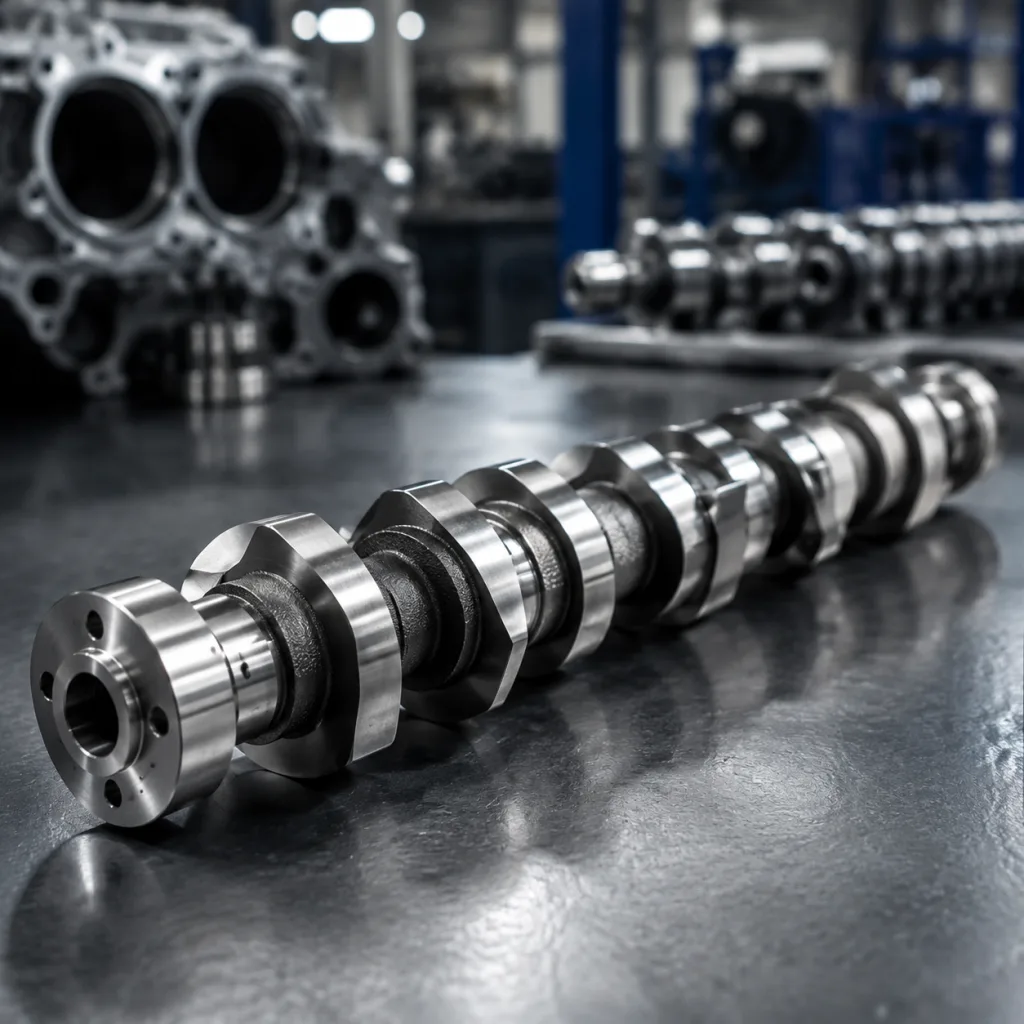
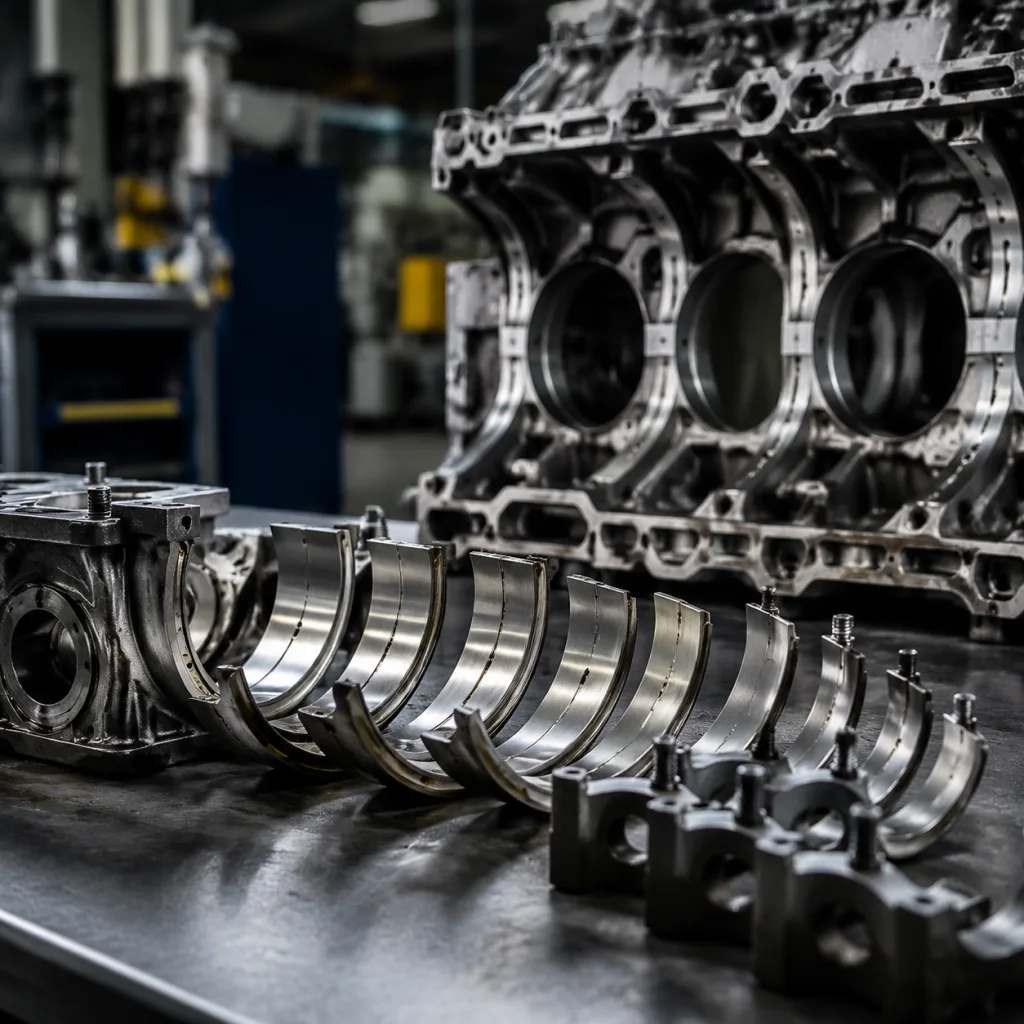
When buyers source a **camshaft Mitsubishi replacement** for petrol or diesel engines, the safest decisions come from measured fit, metallurgy, and validation data—not from catalogue claims alone. A camshaft may match journal diameter yet still cause problems if the lobe profile, hardness depth, trigger geometry, thrust-face dimensions, or oil-hole location are off. The result can be valve-train noise, unstable idle, accelerated follower wear, emissions issues, cam/crank correlation DTCs, and costly warranty returns. That is why procurement teams need a disciplined review of dimensions, material route, heat treatment, surface finish, traceability, packaging control, and pilot validation before approving supply.
This matters even more for distributors serving mixed regional demand. One Mitsubishi platform can have several engine codes, cylinder-head revisions, and emissions variants that look similar at vehicle level but differ at engine-build level. A listing may appear correct and still miss the actual application. The sections below outline what to verify against OE intent, how to assess first-article evidence, and how to lower risk during pilot testing and ongoing batch release. Driventus is an independent aftermarket manufacturer; brand names are referenced for fitment only.
What to Confirm Before You Place an Order
Most sourcing mistakes in a camshaft Mitsubishi replacement program begin with incomplete identification. Mitsubishi applications can use different cam profiles within the same engine family because of cylinder-head updates, variable valve timing, emissions changes, or market-specific production differences. If the RFQ is based only on a vehicle description, the supplier may quote a part that bolts in but does not reproduce the intended valve timing, lift curve, or wear behavior.
Before RFQ, confirm these application identifiers:
engine code, model year, destination market, and fuel type
intake or exhaust position, and bank position where applicable
naturally aspirated or turbocharged configuration if relevant to the engine family
VVT/non-VVT status and the matching phaser, sprocket, or trigger wheel interface
cam sensor trigger geometry: slot count, tooth form, angular position, and datum reference
dowel location, flange form, thrust surface dimensions, and oil-feed hole position
journal diameters, journal spacing, overall length, base circle, lobe lift, and lobe phasing
number of lobes, lobe separation, and spacing between critical features
mating component status: followers, rockers, lash adjusters, valve stem tips, seals, and sprocket or phaser
In practical buying terms, there are three levels of identification, and the third usually prevents the most returns:
1. Vehicle-level identification: model, year range, displacement 2. Engine-level identification: engine code, head revision, emissions spec 3. Part-level identification: drawing, OE number cross-reference, or approved sample
Application coverage in our catalog is a useful starting point, but it should not be the only basis for approval. Buyers should ask for drawing-level confirmation or an approved-sample comparison, especially when the same vehicle line spans multiple outputs or production revisions. A stronger RFQ package includes the OE number, engine code, clear photos, measured critical dimensions, and any visible casting, forging, or machining marks.
If your team also buys related engine components, keep revision control aligned across the full valve-train kit. A camshaft should not be qualified in isolation. A part validated with one follower shoe radius, rocker ratio, or lash-adjuster design may behave differently with another combination. In aftermarket supply, kit logic often separates a smooth launch from repeated warranty claims.
Critical Specifications for OE-Equivalent Performance
For any replacement program, the core question is simple: does the part reproduce OE function within controlled limits? Final acceptance should always follow the approved drawing or golden sample, but the checkpoints below are commonly used when evaluating a camshaft Mitsubishi replacement supplier.
Parameter
Typical approval target
Why it matters
Journal diameter
commonly within +/-0.005 to +/-0.010 mm to drawing
Controls oil clearance, seizure risk, and bearing stability
Journal cylindricity/roundness
often <=0.005 mm on critical journals
Prevents localized load and oil-film collapse
Total indicated runout
typically <=0.02-0.03 mm over full length
Reduces vibration, noise, and uneven wear
Lobe profile deviation
commonly <=0.01-0.02 mm against master profile
Affects lift curve, opening rate, and cylinder filling
Lobe lift
typically within +/-0.02 mm to drawing
Directly influences valve opening and performance
Lobe phasing
often within +/-0.5° cam angle or drawing requirement
Maintains valve-event timing and cam/crank correlation
Base circle
controlled to drawing, often within +/-0.01-0.02 mm
Influences lash, follower preload, and contact pattern
Journal surface roughness
often Ra <=0.2-0.4 um, reported to ISO 4287
Supports oil film stability and wear resistance
Lobe surface hardness
commonly 55-62 HRC, tested to ISO 6508-1
Limits scuffing, pitting, and follower wear
Effective hardened depth
typically 0.8-2.0 mm depending on design
Prevents early fatigue in loaded contact zones
Axial endplay control features
to drawing or approved sample
Prevents thrust-face wear and timing drift
</tr></thead><tbody> </tbody></table>Each specification influences installed performance in a different way:
Journal geometry affects whether the shaft rotates on the intended hydrodynamic oil film without localized drag.
Runout influences smooth rotation and can lead to noise, uneven lobe contact, and abnormal thrust loading.
Lobe profile, lift, and phasing determine real valve-event timing, which affects torque, idle stability, emissions, and OBD correlation.
Surface finish, hardness, and case depth shape bedding-in behavior and long-term contact fatigue resistance.
Material route matters as well. In the aftermarket, common camshaft manufacturing routes include:
chilled cast iron, typically used where the OE design relies on a hard wear surface formed during casting
forged steel or machined alloy steel, usually followed by induction hardening on lobes and journals
assembled or tubular cam designs on some modern engines, where lobe indexing and joint integrity become additional control points
Buyers should ask suppliers to state clearly:
material grade or internal material specification
casting, forging, or billet-machining route
hardening method such as induction hardening, chill casting, or equivalent controlled process
hardness inspection locations and acceptance limits
microstructure verification method, such as metallographic sectioning on first article or periodic lot checks
critical grinding and superfinishing controls on journals and lobes
If a supplier cannot clearly explain the material grade, hardening method, and inspection plan, the claim of OE equivalence is weak. In camshaft sourcing, appearance proves very little. What matters is geometry, metallurgy, and repeatability.
Validation and Quality Controls Buyers Should Request
A supplier operating within a documented quality system should be able to show evidence, not just a fitment list. For a camshaft Mitsubishi replacement program, the technical package should demonstrate control from raw material or casting through final packing.
The typical document set includes:
material certificates and heat-treatment records
dimensional reports for journals, lobe lift, lobe phasing, overall length, and key interface features
hardness test results and, where relevant, hardened-depth or microstructure checks
surface finish data referenced to ISO 4287
runout measurement reports
batch traceability from melt, forging lot, or casting lot to final carton
corrosion protection details and substance compliance documentation for REACH (EC) No 1907/2006
packing specification with labeling and lot identification rules
For first approval, it helps to look beyond a single report and ask how the numbers are generated and controlled. Useful questions include:
What measuring equipment is used for lobe profile and phasing: CMM, dedicated camshaft measuring system, or master-profile comparator?
Are runout and journal dimensions checked 100% or by sampling plan?
Which features are designated as critical-to-function or special characteristics?
How is gauge calibration managed and what is the MSA approach for key dimensions?
What is the containment process if one lot fails hardness, runout, or phasing?
How are engineering changes communicated to the customer and recorded in revision control?
IATF 16949:2016 and ISO 9001:2015 do not guarantee correct fitment on their own, but they do suggest that the supplier should have controlled processes for calibration, change management, non-conformance handling, and lot segregation. For importers and multi-location repair chains, that process discipline is often what keeps one approved pilot batch from turning into inconsistent serial supply months later.
It is also good practice to request a defined submission package at first article, such as:
approved sample photos or retained golden sample reference
ballooned drawing or dimensional checkpoint list
first-article inspection report
control plan or inspection flow
packaging approval sample
deviation list, if any feature is accepted under concession
Where the supplier supports PPAP-style documentation, buyers may also request process flow, PFMEA summary, and capability evidence for critical dimensions. This makes future reorders easier because the approval baseline is clear. If a field problem appears later, traceability and retained records also make root-cause analysis faster and more defensible.
How to Reduce Field Failure Risk During Replacement Programs
Do not release volume stock on dimensional inspection alone. A pilot batch should be tested on representative cylinder heads from the target market, because installed behavior often exposes issues that bench gauging will miss. This is one of the most important steps in a camshaft Mitsubishi replacement launch, especially when multiple engine revisions sit behind similar catalog descriptions.
Bench checks
verify oil clearance, endplay, and journal seating against workshop or drawing limits
confirm timing alignment with the sprocket or phaser, including dowel and bolt-seat fit
inspect sensor trigger position and air gap where applicable
review follower or rocker contact pattern across the lobe face using marking compound if needed
confirm free rotation after assembly and lubrication, without tight spots through 360° rotation
inspect oil-feed alignment and any thrust-face contact points
Vehicle or dyno checks
monitor cold-start noise, hot-idle stability, and fault codes
inspect wear debris after the initial running period and after oil/filter change if specified
compare valve timing correlation if scan data are available
verify there is no abnormal misfire, rough idle, power loss, or VVT performance error
tear down one endurance sample to inspect lobes, journals, and followers
document post-test contact pattern, scuffing, pitting, discoloration, and surface condition
Pilot validation should be structured rather than informal. Even a small 5-10 piece pilot can show whether a problem is isolated or systematic. A sound launch sequence is:
1. Incoming dimensional review on pilot pieces 2. Trial build on representative heads or engines 3. Short-run functional test for noise, timing, oil pressure behavior, and scan-data stability 4. Endurance sample teardown to inspect wear surfaces 5. Corrective-action loop if any mismatch appears before serial release
The costliest failures usually come from geometry mismatch or inadequate hardening, not from cosmetic defects visible at incoming inspection. Common field symptoms of an incorrect camshaft include:
ticking or abnormal valve-train noise after installation
unstable idle or poor cold-start behavior
check-engine light related to cam/crank correlation
accelerated follower, rocker, or lash-adjuster wear
metallic debris in oil after early service
premature warranty claims concentrated in one batch or engine variant
For warranty-sensitive distributors, pilot testing is far cheaper than broad field exposure. If the end market includes fleets, repair chains, or export regions with difficult return logistics, pre-release validation becomes even more important commercially.
When Customisation Makes Commercial Sense
Some programmes need more than an off-the-shelf part number. Private-label packaging, mixed regional fitment, corrosion protection for sea freight, or customer-specific label rules may all require custom manufacturing rather than a standard pack. In a camshaft Mitsubishi replacement program, commercial success often depends not just on technical approval, but also on how well the supply format fits the buyer’s distribution model.
Typical customization requirements include:
private-label boxes, inner labels, and master-carton branding
customer barcode format, QR code, or serial label rules
rust-preventive oil type or VCI packaging for long transit routes
mixed-language installation or caution labels
region-specific fitment labeling to reduce warehouse picking errors
master-carton quantity optimized for branch distribution or e-commerce fulfilment
Buyers should define these points before mass release:
annual volume forecast and release pattern
MOQ and reorder frequency
carton quantity and palletization standard
barcode format and label content
rust-preventive specification and packaging shelf-life expectation
traceability label structure, including lot number and production date
whether prototype, pilot, and serial stock must carry separate part numbers
Separating prototype, pilot, and serial part numbers is especially sensible. It helps prevent approved geometry from being mixed with pre-release stock and gives both buyer and supplier a clear audit trail if a field issue arises.
If your team is comparing sources, ask each supplier to confirm the following in writing:
material route
lobe hardening method
measuring equipment used for critical checks
standard documentation package
packaging specification
change-control process
lead time for pilot and serial supply
That approach makes quote comparisons much more accurate than judging price against an application list alone. A lower-priced camshaft may carry hidden cost if the supplier cannot support traceability, private-label requirements, or stable packaging protection during export transit. When the technical and commercial file is complete, it becomes much easier to request a quote on a like-for-like basis and approve the right source with confidence.
Frequently asked questions
Ask for a dimensional report, material and heat-treatment records, hardness results, hardened-depth or metallographic evidence where applicable, surface finish data, runout results, batch traceability, and substance compliance documents for the destination market. If the supplier works to IATF 16949:2016 or ISO 9001:2015, request the related control plan, inspection flow, and first-article package as well.
No. A part may install correctly and still fail in service if lobe phasing, trigger geometry, hardening depth, runout, profile accuracy, or surface finish do not match the intended function. Approval should include dimensional checks, documentation review, and a small pilot validation on the target engine family.
Yes, provided the buyer defines the technical baseline first. Packaging format, anti-corrosion treatment, barcode labels, traceability rules, and customer-specific inspection records can be managed through a controlled custom programme, but they should be frozen before serial production begins.
If you are qualifying a new Mitsubishi camshaft source, send the engine code, target market, annual volume, and approval requirements for a technical review. [request a quote](/contact.html)