Minimum Order Quantity for Oil Filter Housing: Buyer Guide
For procurement teams, the minimum order quantity for oil filter housing is a sourcing decision, not just a sales term. It affects tooling allocation, batch size, inspection cost, packaging, and landed cost per unit. Buyers in the EU, UK, US, Canada, Australia, and Brazil often need to separate catalog parts, OE-cross-referenced replacements, and custom variants. Driventus is an independent aftermarket manufacturer; brand names are referenced for fitment only. We supply B2B customers from Taizhou, Zhejiang, with IATF 16949:2016 and ISO 9001:2015 controls in place. This article breaks the topic into how MOQ is actually calculated, where deals fail, and what to compare before placing an order.
What really sets MOQ for an oil filter housing
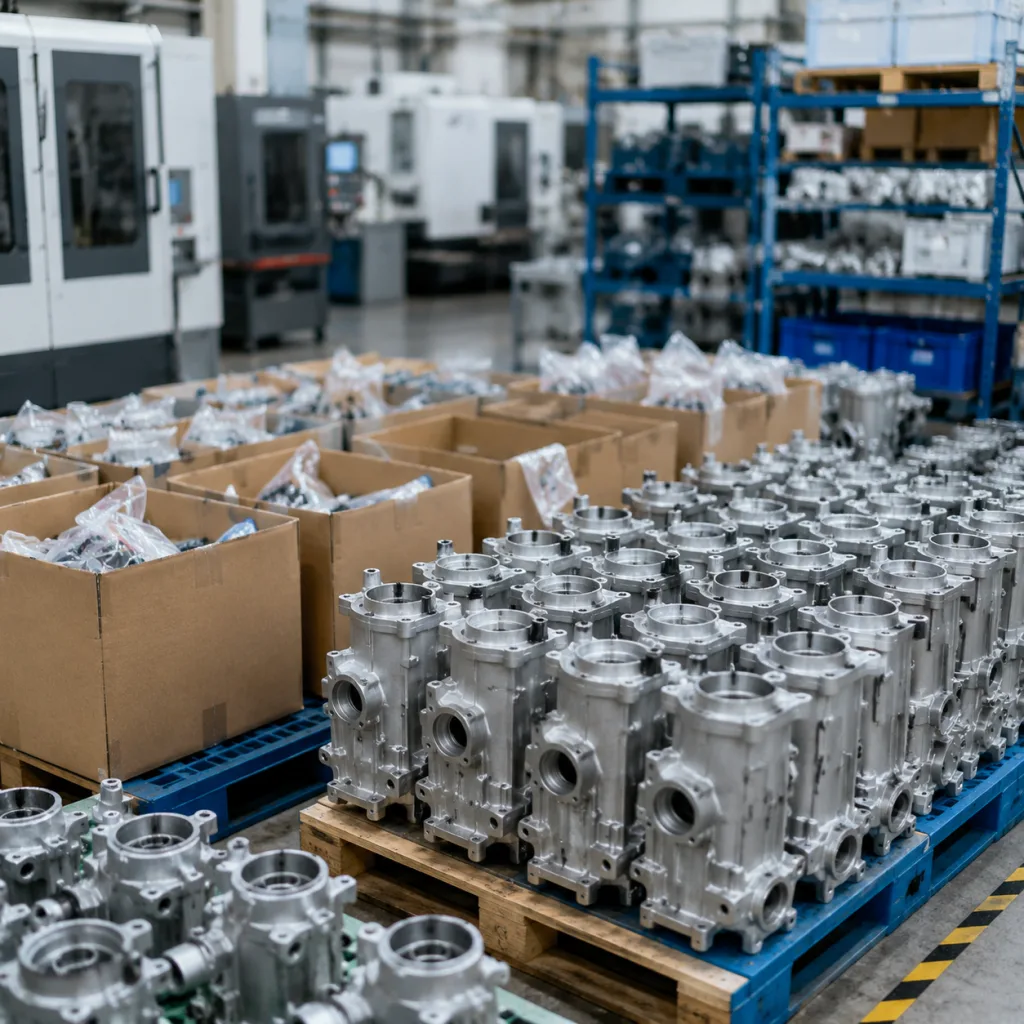
MOQ usually follows the production route, not a fixed sales rule. A cast aluminium housing with CNC finishing often needs a larger batch than a simple machined cover because setup time, fixture cost, programming, and inspection effort are higher.
Typical cost drivers include:
- Tooling amortisation for casting, die-casting, or mould inserts
- CNC setup and fixture changeover time
- Raw material purchase minimums
- Surface treatment, gasket, and seal sourcing
- Final inspection, packaging, and export carton requirements
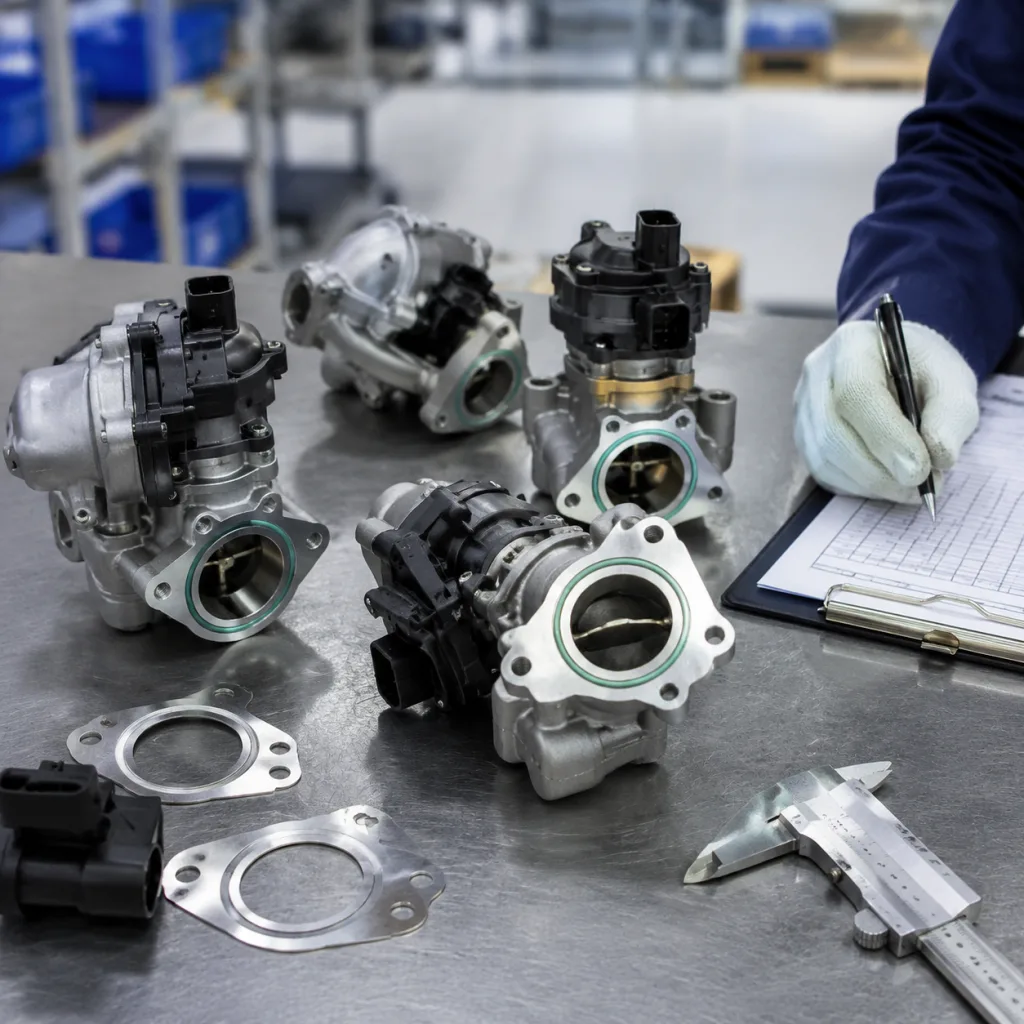
In practice, the minimum order quantity for oil filter housing is often the first economical batch, not the first sellable piece. One CNC cell may need 45 to 90 minutes of setup time, one to three dedicated fixtures, and first-article inspection before output stabilises. If the housing needs multi-axis machining, thread gauging, pressure testing, and a machined seal face within 0.05 mm to 0.10 mm flatness, a supplier may need 100 to 200 pieces before the unit price makes sense.
The key is specification stability. If a supplier accepts a very small order, confirm whether the part comes from stock, existing tooling, or a one-off sample run. Low MOQ can help, but only if the part still matches the mounting face, port geometry, pressure rating, and oil passage layout. Ask whether the quote assumes a standard alloy such as ADC12 or a specific cast aluminium grade, because material choice can change melt scheduling and price.
Where low-MOQ offers go wrong
A low minimum looks attractive until the hidden compromises appear. The usual failure mode is not price alone; it is inconsistency between the sample, the first shipment, and the repeat order.
Watch for these warning signs:
- MOQ is low because the supplier is selling stock, not manufacturing to your spec
- The quote omits tooling, fixtures, or inspection charges
- The sample fits, but the production part changes alloy, finish, or gasket face quality
- The supplier cannot say which measurements are controlled on every lot
- Packaging is loose enough to damage threads, seals, or machined faces
For oil filter housing programs, the danger is especially high when a part looks simple. A housing can still fail on thread depth, sealing groove finish, porosity, or bore alignment. A buyer that accepts a low MOQ without a defined control plan may save on the first invoice and lose money on returns, rework, or delayed launch.
The practical rule is simple: if the MOQ is unusually small, ask what is being reused. Existing tooling, stock material, and an established inspection route can support small orders. A truly new design cannot usually be priced like a catalog item. If the supplier cannot explain the route clearly, the offer is not ready for sourcing.
MOQ ranges by supply route
Different supply routes produce very different order floors. The table below shows the commercial pattern buyers usually see.
| Supply route | Typical MOQ pattern | Buyer use case |
|---|---|---|
| Stock replacement part | 20–100 pcs | Fast replenishment, trial order |
| Existing tooling, minor revision | 100–300 pcs | Cross-reference replacement |
| New machining program | 200–500 pcs | Stable aftermarket or distributor demand |
| New casting or custom design | 500+ pcs | Private label or OEM/Tier-1 programme |