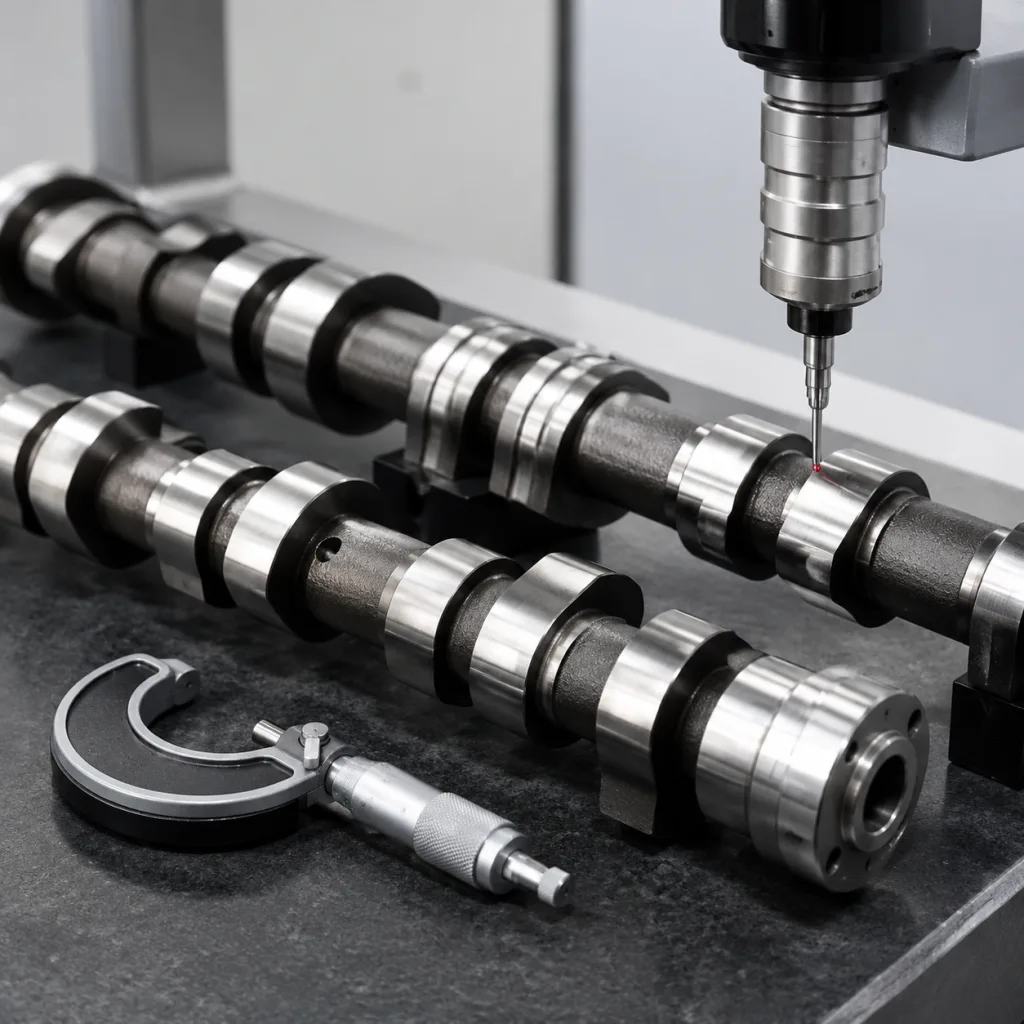
Camshaft for Mercedes-Benz Sprinter Aftermarket Replacement
A camshaft for Mercedes-Benz Sprinter aftermarket replacement is not a simple “fits Sprinter” line item. For B2B buyers, the risk sits in the details: valve timing, lobe lift, journal geometry, surface finish, hardness depth, batch traceability and whether the supplier can repeat those controls after the first approved sample.
Sprinter vans usually work hard. Courier routes, trade fleets, shuttle service and high-mileage delivery operations leave little room for valve train failure. One bad camshaft can park a vehicle for days, delay customer repairs and create warranty costs that erase the margin on an entire batch.
This article reframes the sourcing decision around what procurement teams actually need to verify before adding aftermarket Sprinter camshafts to a replacement programme: fitment discipline, OE-reference control, metallurgy, machining limits, heat treatment, validation evidence, packaging, MOQ logic, price drivers and import-ready labelling. Driventus manufactures engine and powertrain components in Taizhou, Zhejiang under IATF 16949:2016 and ISO 9001:2015 quality systems, supplying B2B customers in Europe, North America, Australia and Brazil. Driventus is an independent aftermarket manufacturer; Mercedes-Benz and Sprinter names are referenced for fitment identification only.
Decision Point: Which Sprinter Camshaft Variant Are You Really Buying?
The first sourcing mistake is treating “Sprinter camshaft” as one application. It is not. Sprinter platforms have used different diesel engine families, cylinder head layouts, emission generations, timing interfaces and camshaft variants across markets. A part that looks close on the bench can still be wrong in the cylinder head.
Before requesting price, separate the programme by engine code and camshaft position. Then confirm the details that affect installation and timing:
Engine family, engine code and displacement range, such as 2.1 L / 2.2 L or 3.0 L diesel applications where relevant
Model year or production date range by target market, because EU, North American, Australian and Brazilian catalogues may differ
Intake or exhaust camshaft position, where separate shafts are used
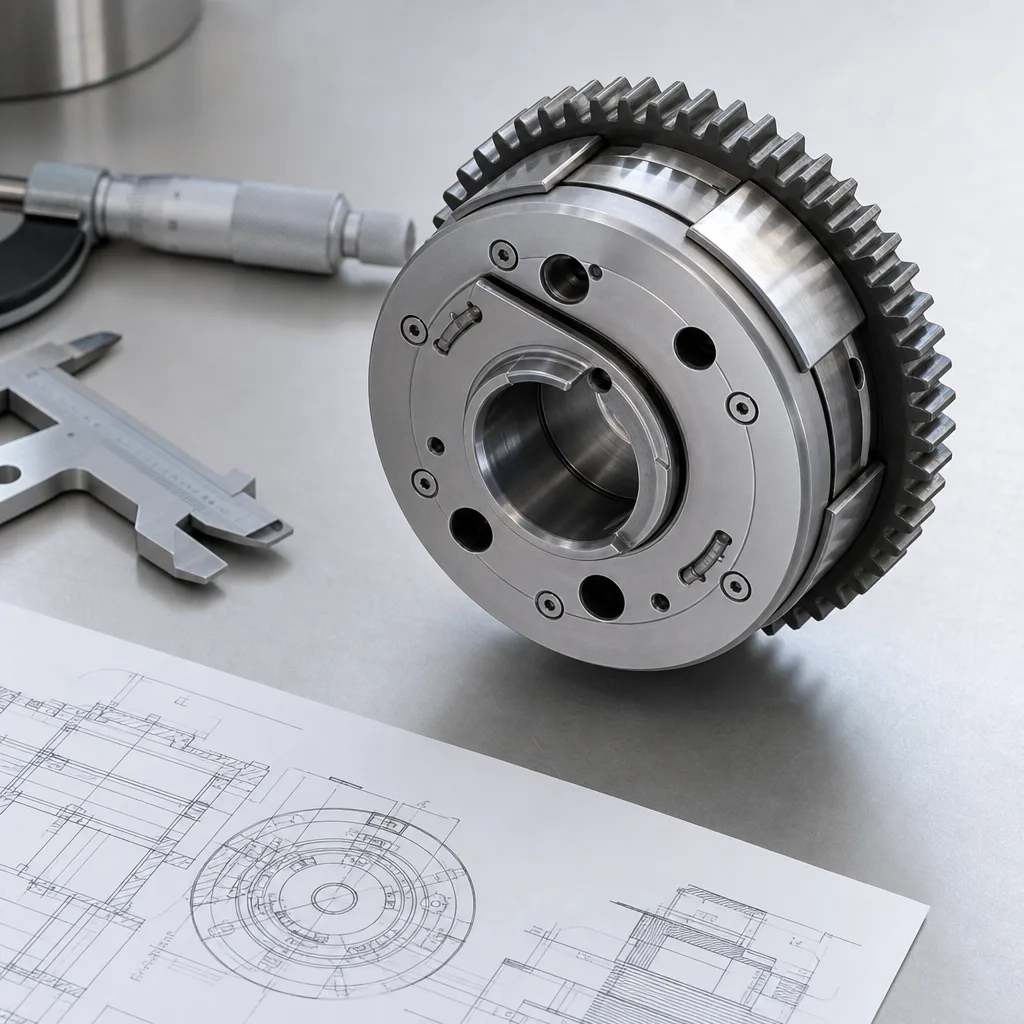
Cam gear, sprocket, drive slot, keyway, timing wheel or reluctor interface type
Number of lobes and journals, plus journal order from the drive end
Journal diameter, oil-feed groove position, thrust control design and permitted bearing clearance
Sensor trigger profile, trigger count and angular position, if applicable
Timing mark position and indexing reference from the first journal, keyway or drive slot
Required marking, packaging label format, barcode type and batch traceability
A workable RFQ should include at least one reliable reference point: OE reference, aftermarket reference, drawing, sample, VIN-derived engine code list or customer fitment table. More is better. Combining similar-looking variants to chase a lower unit price usually creates the opposite result: returns, credit notes and workshop disputes.
OE part-number cross-references should be used as fitment references only, not as claims of vehicle manufacturer approval. Where a buyer provides OE references, existing aftermarket numbers or sample parts, Driventus verifies dimensional and application data against drawings, physical samples and customer fitment lists before quoting.
Spec Deep-Dive: Geometry That Decides Timing, Wear and Idle Quality
A replacement camshaft has one job: open and close valves at the right time, by the right amount, for a long service life. That sounds simple until a small error in lobe profile, base circle, journal concentricity or phase angle shows up as rough idle, emissions complaints, hydraulic lifter noise, poor oil-film control or accelerated wear.
Use feature-level requirements rather than a generic “OE quality” statement. The table below shows common control points for a Sprinter aftermarket camshaft sourcing package:
Feature
Typical Control Target*
Procurement Check
Why It Matters
Lobe lift
±0.02–0.04 mm
Controlled against approved drawing or master sample
Maintains valve opening and engine breathing
Base circle diameter
±0.02–0.03 mm
Batch measurement by lobe position
Supports correct hydraulic lash adjustment
Journal diameter
±0.008–0.015 mm
Micrometre, roundness and cylindricity checks
Controls oil film stability and bearing clearance
Journal roundness
≤0.005–0.010 mm
Roundness gauge or CMM check
Reduces local oil-film collapse
Runout
≤0.03–0.05 mm TIR
Checked between centres
Reduces valve train vibration and uneven wear
Lobe phase angle
±0.25–0.50° cam angle
CMM, cam analyser or profile inspection
Maintains valve timing accuracy
Surface roughness, journals
Ra 0.2–0.4 µm
Profilometer measurement
Reduces bearing wear and oil-film disruption
Surface roughness, lobes
Ra 0.4–0.8 µm
Profilometer measurement
Supports controlled bedding-in
Hardness depth
Per drawing or agreed sample
Verified after heat treatment, where applicable
Supports contact fatigue resistance
</tr></thead><tbody> </tbody></table>\*Final tolerances must be confirmed against the customer drawing, approved sample, engine variant and production process. The figures above are sourcing targets, not universal guarantees.
A useful control plan separates what must be checked every time from what can be sampled. Visual defects, total length, timing interface presence and packing count may require 100% checks. Lobe lift, journal diameter and runout may be first-piece and sampling checks. Full profile mapping is often reserved for first article approval and periodic audits.
For high-volume or private-label orders, Driventus can provide PPAP-style documentation when agreed in the sourcing package, including control plans, inspection reports and material certificates. OE-equivalent geometry does not mean vehicle manufacturer approval. It means the aftermarket component is manufactured to match the functional dimensions required for the specified application.
Failure Modes: Where Cheap Camshafts Usually Cost More
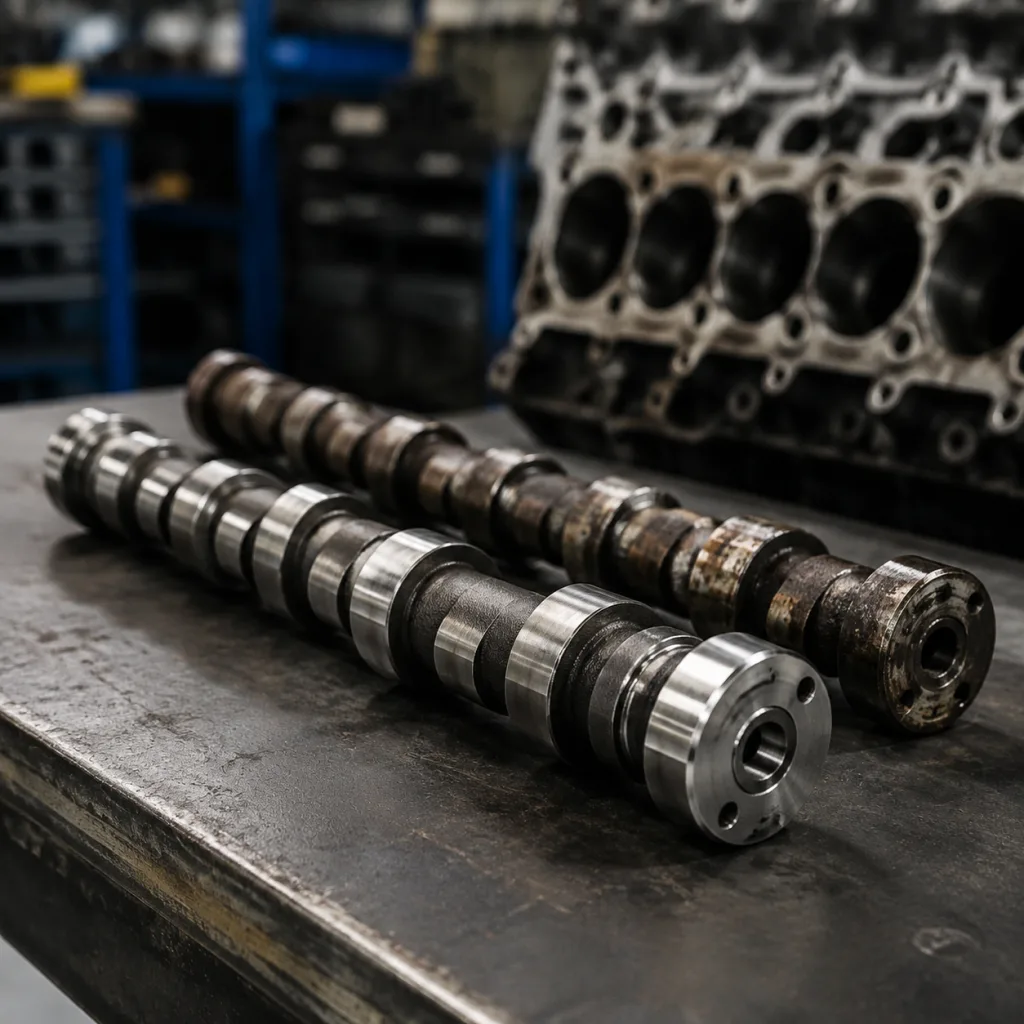
Most camshaft claims do not start with a dramatic fracture. They start smaller: a noisy lobe, uneven journal wear, corrosion marks from transport, a timing trigger that does not match the application, or hardness that looked acceptable in one area but failed where the follower actually runs.
For fleet vans, the margin for error is narrow. Cold starts, extended idle time, heavy payloads and long service intervals punish weak metallurgy and poor surface control. Buyers should look closely at these production variables:
Chilled cast iron, ductile iron or steel grade selected according to the application and lobe loading
Controlled chemical composition with melt, batch or material certificate records
Casting cleanliness checks for shrinkage, inclusions and porosity in non-critical and critical zones
Heat treatment validated for surface hardness and case depth where applicable
Typical chilled or hardened lobe surface hardness target in the range of 50–60 HRC, when suitable for the application
Typical journal hardness target defined separately from lobe hardness to protect bearing compatibility
Case depth or chill depth verification, commonly specified as an agreed minimum depth at functional lobe contact areas
Crack inspection after rough machining, heat treatment or final machining as specified
Controlled grinding of lobe, journal and thrust surfaces after straightening and stress relief where required
Surface roughness checks on contact and bearing areas
Rust-preventive oil, VCI bagging or equivalent preservation for 30–90 days of sea freight and warehouse exposure
A typical production route may include raw material or casting approval, rough turning, stress relief where required, straightening, semi-finish machining, heat treatment or chilled-surface verification, finish grinding, deburring, washing, anti-rust treatment, final inspection and packing. Each step affects either durability, dimensional stability or claim risk.
Buyers should confirm whether the quote includes crack testing, full profile inspection and hardness mapping. These checks add cost. They also reduce the chance of discovering a process weakness after the parts are already in the market.
Surface hardness should be defined by the buyer’s drawing, approved sample or mutually agreed standard. Driventus does not treat hardness as a catalogue-only value because different camshaft families require different metallurgy, chilling, induction hardening or other processing routes.
For regulated markets, procurement teams should also consider material compliance obligations. REACH (EC) No 1907/2006 is relevant for substances in products shipped into the European market, and packaging or preservation materials may need review under customer-specific restricted substance lists.
Step-by-Step Approval Before Serial Supply
A camshaft for Mercedes-Benz Sprinter aftermarket replacement should not move straight from quote to container order when the buyer is supporting repair chains, fleet service providers or national distributors. A staged approval process is slower than a quick purchase order, but it reduces mismatch risk, installation disputes and warranty exposure.
A practical sequence looks like this:
1. Confirm fitment references, engine codes, camshaft position and target markets. 2. Approve the drawing, sample or customer specification used for production. 3. Produce pilot samples from the intended process route. 4. Complete first article inspection, usually on 3–5 pilot pieces. 5. Review packaging, labelling and corrosion protection. 6. Release serial production only after dimensional, material and packing evidence is accepted.
Recommended validation evidence includes:
First article inspection report covering all critical dimensions, normally 3–5 pieces from pilot production
Material certificate with chemical composition and mechanical properties, where applicable
Hardness and microstructure report, when specified, with lobe and journal positions identified
Cam profile measurement report for lobe lift, base circle and phase angle
Runout, straightness and journal geometry inspection records before and after final grinding where required
Surface roughness report for lobes, journals and thrust faces
Corrosion prevention or packaging approval check, including VCI, oil film or salt-spray-equivalent storage assessment when requested
Installation trial on a representative cylinder head or engine fixture to confirm rotation, end float and timing interface engagement
Batch traceability from raw material lot to finished part carton label
Driventus aligns validation with the agreed customer drawing, approved sample, application list and inspection plan. Relevant quality management frameworks include IATF 16949:2016 and ISO 9001:2015. These standards do not certify or approve a specific camshaft design by themselves; they define the process controls, traceability, corrective action and continual improvement methods used in automotive manufacturing.
For urgent replenishment, buyers can shorten the calendar by approving a known sample and limiting documentation to critical dimensions, material certificate and packing photos. For new private-label SKUs, a more complete approval package is safer.
For buyers with specific drawings, samples or private-label programmes, Driventus can discuss custom manufacturing, including controlled machining routes, laser marking, neutral packaging and customer-defined inspection plans.
Commercial Reality Check: Unit Price Is Only One Line in the Risk Model
Replacement camshaft sourcing is often driven by availability. That is understandable. But the cheapest line on the quote sheet may become the most expensive SKU in the programme if fitment data, hardening, runout control or packaging are weak.
Use this checklist during supplier qualification:
Application data: Confirm engine code, year range, emission generation, market relevance and camshaft position.
Cross-reference control: Use OE and aftermarket references for fitment mapping only; avoid implying approval by any vehicle manufacturer.
Drawing status: Define whether supply is sample-based, drawing-based or customer-specification-based.
Critical characteristics: Agree lobe lift, base circle, journal geometry, phase angle, hardness, surface finish and runout requirements.
Inspection level: Set sampling frequency, measuring method, report format and approval responsibility before purchase order release.
MOQ logic: Separate trial, first order and repeat-order quantities; small trial lots may use higher unit pricing because set-up, inspection and packaging costs are spread across fewer parts.
Price drivers: Confirm whether the quote includes tooling, sample development, PPAP-style documents, private labels, laser marking, VCI packing, export pallets and third-party testing.
Lead time: Allow time for sample verification, material procurement, machining, heat treatment, inspection, packing and sea or air freight.
Traceability: Require batch code, production date, material lot and inspection lot linkage.
Packaging: Specify anti-corrosion protection, carton strength, palletisation, label language and barcode format.
Claims process: Confirm evidence required for warranty review, including photos, installation records, vehicle data and returned parts.
Compliance: Review REACH (EC) No 1907/2006 and customer restricted substance requirements for the target market.
Indicative commercial planning should be treated as RFQ guidance, not a fixed catalogue promise. For new Sprinter camshaft SKUs, buyers commonly start with sample or pilot quantities, then move to carton or pallet-based repeat orders after fitment and inspection approval.
Unit price normally improves when the order quantity covers production set-up, grinding wheel dressing, inspection time, packaging print set-up and export handling more efficiently. If a quote looks unusually low, ask what is excluded. The missing item may be inspection reporting, anti-corrosion packing, private labelling, documentation or proper batch traceability.
Driventus’ quality system is structured for B2B automotive supply, including incoming material control, in-process inspection, final inspection and corrective action tracking. Buyers can request the documentation scope during RFQ so the quotation reflects the required approval workload.
Scenario: The Part Passes Inspection but Fails in Transit
A camshaft can leave the factory within tolerance and arrive unusable. Corrosion on journals, impact marks on lobes or slight bending from poor carton support can turn a technically correct part into a warranty problem before installation.
That is why packaging belongs in the product specification, especially for EU, UK, US, Canadian, Australian and Brazilian importers moving parts through sea freight, mixed warehouses and regional distribution networks.
Recommended packaging controls include:
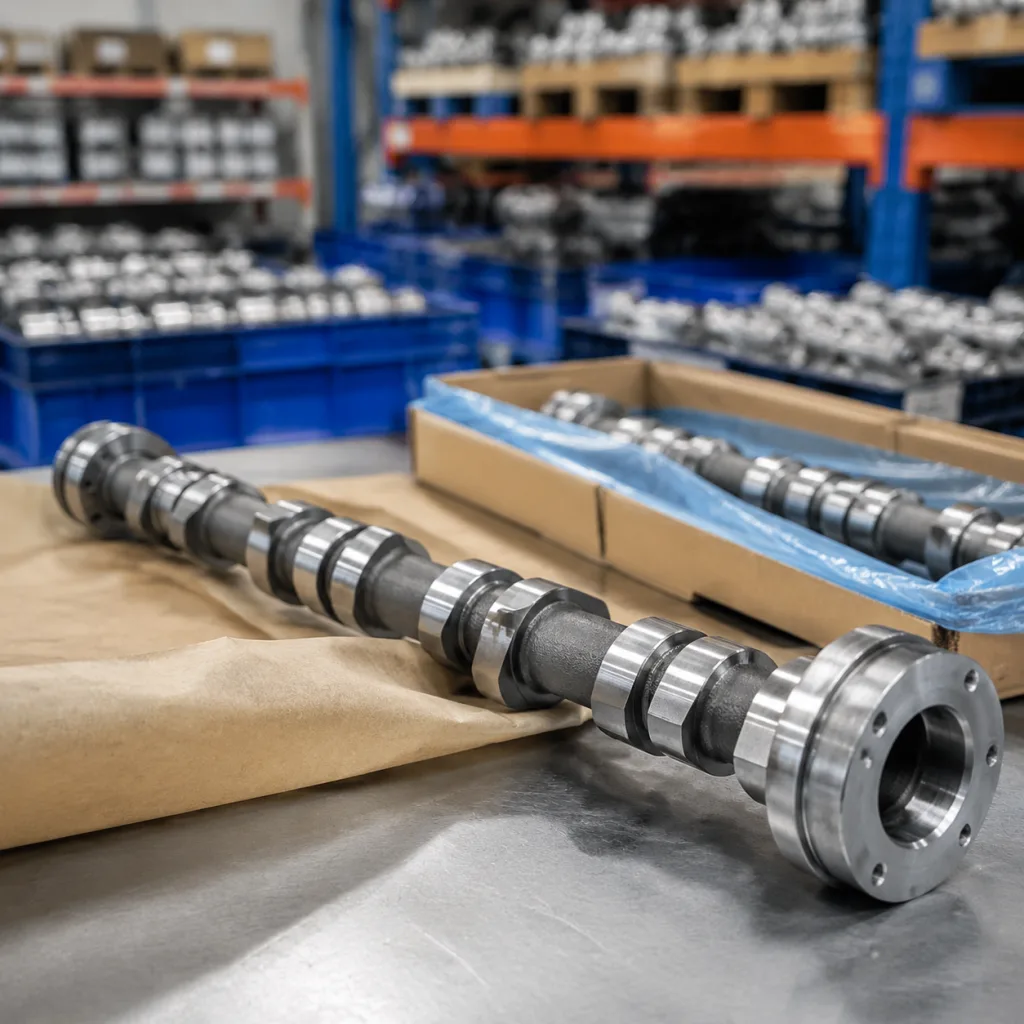
Individual VCI bag, rust-preventive coating or equivalent anti-corrosion method
End protection to prevent journal, lobe and thrust-face impact
Rigid inner support to reduce movement inside the carton and prevent lobe-to-carton contact
Export carton with adequate compression strength for stacked pallet transport
Pallet wrapping suitable for sea freight humidity and warehouse handling
Neutral, private-label or customer label options
Barcode, batch number, application reference and country-of-origin details where required
Desiccant, humidity indicator or reinforced packing where the route or storage period requires it
A practical export pack protects each camshaft individually, separates it from carton walls, prevents axial movement and links the inner label to the outer carton and pallet mark. Buyers should define whether labels require EAN-13, Code 128, QR code, customer SKU, TecDoc-style reference, country of origin, gross/net weight, carton quantity and production batch.
If Amazon-style or retail distribution is involved, add drop-test and carton scuff-resistance requirements. If the programme is wholesale only, pallet strength, humidity exposure and warehouse handling may matter more.
Importers should also standardise how replacement parts are listed in ERP, TecDoc-style catalogues and e-commerce systems. The product title can include the vehicle application for search and fitment clarity, but labels and product pages should state that the part is supplied by an independent aftermarket manufacturer. This reduces compliance risk, supports accurate customer communication and helps avoid incorrect claims of brand endorsement.
Driventus is an independent aftermarket manufacturer; brand names are referenced for fitment only.
Frequently asked questions
Confirm the engine code, production year range, camshaft position, sensor trigger design, timing interface and target market. Where possible, provide drawings, samples, OE references, aftermarket references or VIN-derived fitment data. Driventus verifies these details before quoting to reduce mismatch risk.
Yes. Private-label supply can include neutral packaging, customer carton labels, batch coding, laser marking and agreed inspection documentation. Requirements should be defined during RFQ because packaging, marking, MOQ, inspection scope and reporting affect cost and lead time.
No. IATF 16949:2016 defines automotive quality management requirements. It does not mean approval or endorsement by Mercedes-Benz or any other vehicle manufacturer. Driventus is an independent aftermarket manufacturer; brand names are referenced for fitment only.
If you are building a Sprinter replacement camshaft programme, share your fitment list, target markets, target MOQ, expected annual volume and inspection requirements to [request a quote](/contact.html).