Camshaft for Mercedes-Benz GLC Aftermarket Replacement
A camshaft for Mercedes-Benz GLC aftermarket replacement is a timing-critical engine component. Treat it as a controlled engineering SKU, not a catalogue placeholder.
For distributors, wholesalers, and repair networks, one wrong variant can create valve timing errors, oil-control issues, noise complaints, emissions-related faults, warranty claims, and dead stock. The buying decision should therefore start with application proof and measurable geometry: lobe profile, journal diameter, runout, surface hardness, trigger position, cam phaser interface, oil passages, packaging protection, and traceable production records.
The target is OE-equivalent fit and function based on confirmed application data, without implying vehicle manufacturer endorsement. Driventus manufactures engine components in Taizhou, Zhejiang, and supplies aftermarket distributors, wholesalers, OEM/Tier-1 programmes, and multi-location repair chains in more than 60 countries. This article gives category teams a practical sourcing framework for GLC replacement camshafts across petrol and diesel applications: how to confirm fitment, specify dimensions, release pilot lots, read failure evidence, plan MOQ and lead time, and prevent damage in transit. Driventus is an independent aftermarket manufacturer; brand names are referenced for fitment only.
Start With the Variant, Not the Model Year
Mercedes-Benz GLC applications can share model names while using different engine families, emissions packages, production dates, regional calibrations, and intake/exhaust camshaft layouts. A replacement camshaft must match the intended engine code and position before price, MOQ, or packaging discussions have any value.
Build the buying file around identifiers that can be checked, measured, and repeated:
Vehicle model, platform, production date range, and destination market
Engine code, displacement, fuel type, and emission level where available
Intake or exhaust camshaft position, including left/right bank if applicable
Cam phaser, sprocket, gear, keyway, slot, or bolt-interface type
Camshaft sensor trigger configuration, tooth count, and angular reference
Journal count, nominal journal diameters, thrust face width, and oil-hole location
Lobe count, lobe orientation, base-circle reference, and lift profile reference
Applicable OE cross-reference format when confirmed for the buying file
Do not approve a new SKU from make-model-year data alone. Small differences in trigger angle, phaser interface, thrust face, or oil-hole layout can produce timing correlation faults even when the camshaft looks correct on the bench.
A practical rule: request a reference sample or measurement report before volume approval. Compare the reference and production sample from the same datum system, especially around the trigger wheel, phaser interface, journal axis, and lobe orientation. Buyers can review related engine products through our catalog and the engine component range at /products/engine-components.html. Final confirmation should be made against samples, drawings, verified cross-reference data, or an approved measurement report before bulk ordering.
Specification Deep-Dive: Where Millimetres Become Claims
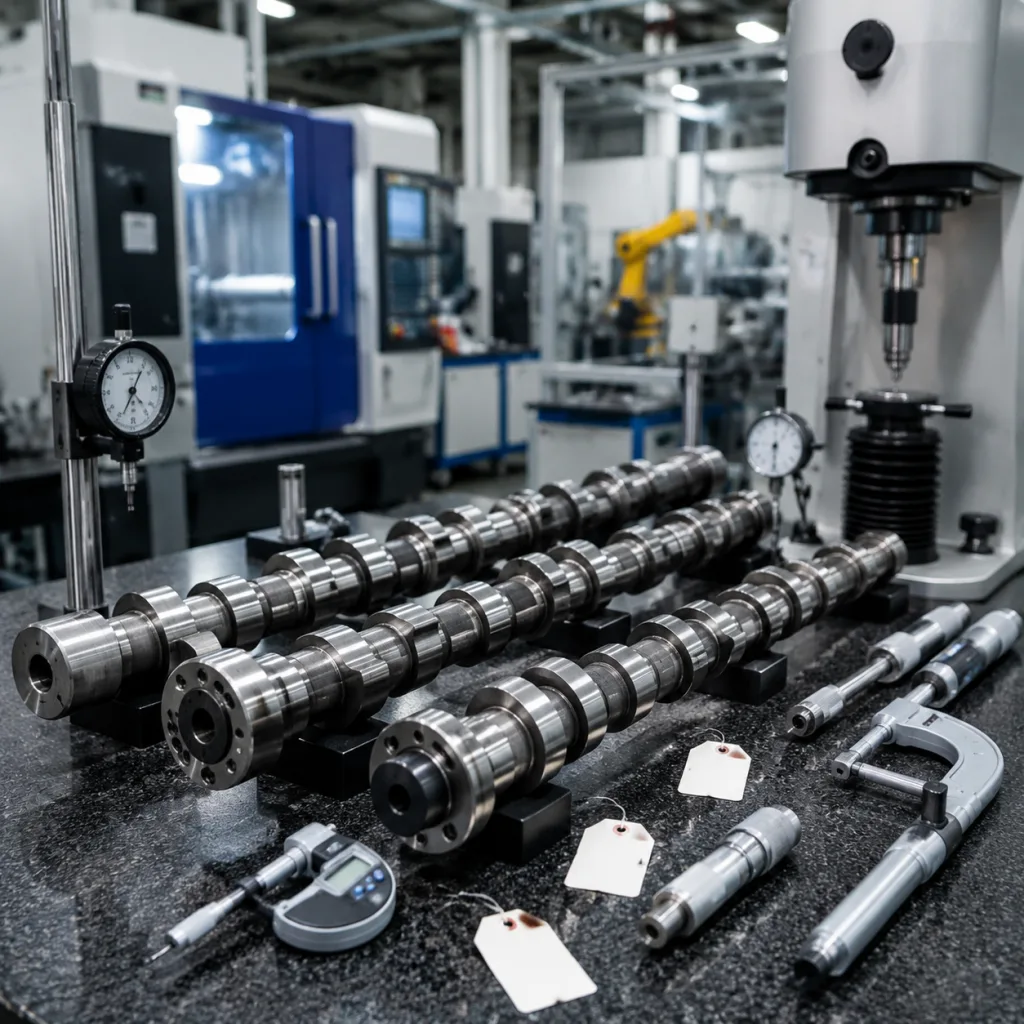
For a camshaft for Mercedes-Benz GLC aftermarket replacement, dimensional equivalence is the first warranty control. A small error in lobe height, base circle, journal concentricity, thrust width, or trigger geometry can become valve train noise, low oil pressure, poor drivability, cam/crank correlation codes, or accelerated wear.
Write the specification as measurable limits, not adjectives. “High quality” does not guide inspection. The targets below are common discussion ranges for camshaft sourcing; final tolerances should follow the confirmed drawing, approved sample, and engine application.
Control point
Typical buying target
Verification method
Overall length and datum faces
Drawing value, commonly within ±0.05–0.10 mm
CMM or calibrated height gauge
Journal diameter
Commonly within ±0.010–0.020 mm of approved data
Outside micrometer, air gauge, or CMM
Journal roundness
Commonly ≤0.005–0.010 mm
Roundness tester
Cam lobe lift
Commonly within ±0.03–0.05 mm of approved profile
Cam profile measuring machine
Base circle variation
Commonly ≤0.02–0.03 mm
Cam profile measuring machine
Runout between journals
Commonly ≤0.03–0.05 mm depending on length
V-block and dial indicator or CMM
Lobe and journal hardness
Commonly 50–60 HRC or application-specific HV range
Rockwell or Vickers testing
Surface roughness on journals
Commonly Ra 0.2–0.4 µm target
Surface roughness tester
Sensor trigger angular position
Commonly within ±0.5°–1.0° from approved reference
Profile inspection and functional check
Oil holes and internal passages, where applicable
100% open, deburred, and clean
Visual inspection, air flow, or cleanliness check
</tr></thead><tbody> </tbody></table>Material route matters because the camshaft must match the follower system, lubrication regime, and engine load. Common routes include chilled cast iron, ductile iron, forged steel, and assembled camshaft construction. Ask the supplier to state the material route, heat-treatment method, surface-hardness range, case-depth target where applicable, surface-finishing process, and post-machining cleaning method.
Traceability should link raw material, heat treatment, machining inspection, final inspection, and packing records. For high-volume SKUs, define process-capability expectations once the process is stable, especially for journal diameter, lobe lift, runout, and trigger angular position.
A Release Sequence That Catches Problems Early
Do not move from quotation to network release in one jump. Replacement camshafts should pass a staged release sequence before they enter a distributor programme, particularly when one stock line will support repair chains across multiple countries.
Use this sequence:
1. Confirm the application file, reference data, and variant position. 2. Approve the sample or first article inspection report. 3. Run a pilot lot and check 3–5 pieces before mass packing. 4. Review hardness, surface finish, runout, cam profile, and oil-passage results. 5. Approve packaging, labels, carton artwork, and anti-rust protection. 6. Release repeat batches against the same inspection and traceability rules.
Driventus production and inspection workflows are managed under IATF 16949:2016 and ISO 9001:2015 certified systems. These standards do not replace part-level validation, but they support process control, corrective action, supplier management, and traceability. For importers selling in the EU, UK, US, Canada, Australia, and Brazil, the same documentation also helps with supplier approval, customs preparation, and warranty review.
Suggested release checks include:
First article inspection against drawing, approved sample, or agreed measurement report
Dimensional inspection from pilot production before mass packing
Visual inspection of lobes, journals, threads, slots, oil holes, and timing features
Hardness checks by batch and heat-treatment lot, with records retained
Cam profile comparison against reference data for lift, base circle, and lobe angle
Journal runout and straightness verification after heat treatment and final grinding
Cleanliness and deburring check for oil holes, grooves, and internal passages
Rust-prevention inspection after packing simulation or agreed storage period
Barcode or batch-number traceability on carton labels and master cartons
Retained sample or measurement record for repeat-batch comparison
For a new GLC camshaft SKU, buyers commonly request pre-shipment photos, a dimensional report, hardness readings, carton artwork confirmation, and a packing list before balance payment or container loading. For environmental and chemical compliance, buyers may request material declarations aligned with REACH (EC) No 1907/2006. For emissions-sensitive applications, correct cam timing helps the vehicle operate as designed; relevant vehicle-level emissions regulations may include ECE R-83 depending on market and application.
Failure Modes: What the Returned Part Is Really Saying
Camshaft demand is usually triggered by workshop diagnosis, not scheduled replacement. That makes failure interpretation important for stocking, technical support, and warranty control.
Typical field symptoms include valve train ticking, misfire under load, camshaft/crankshaft correlation fault codes, low power, rough idle, metallic debris in the oil, hard starting, poor fuel economy, and visible lobe scoring. The camshaft may be damaged, but it may not be the root cause.
Before approving warranty replacement, ask the repair network to inspect:
Lobe wear pattern, pitting, edge loading, and follower contact surface
Journal scoring, discoloration, seizure marks, and bearing cap condition
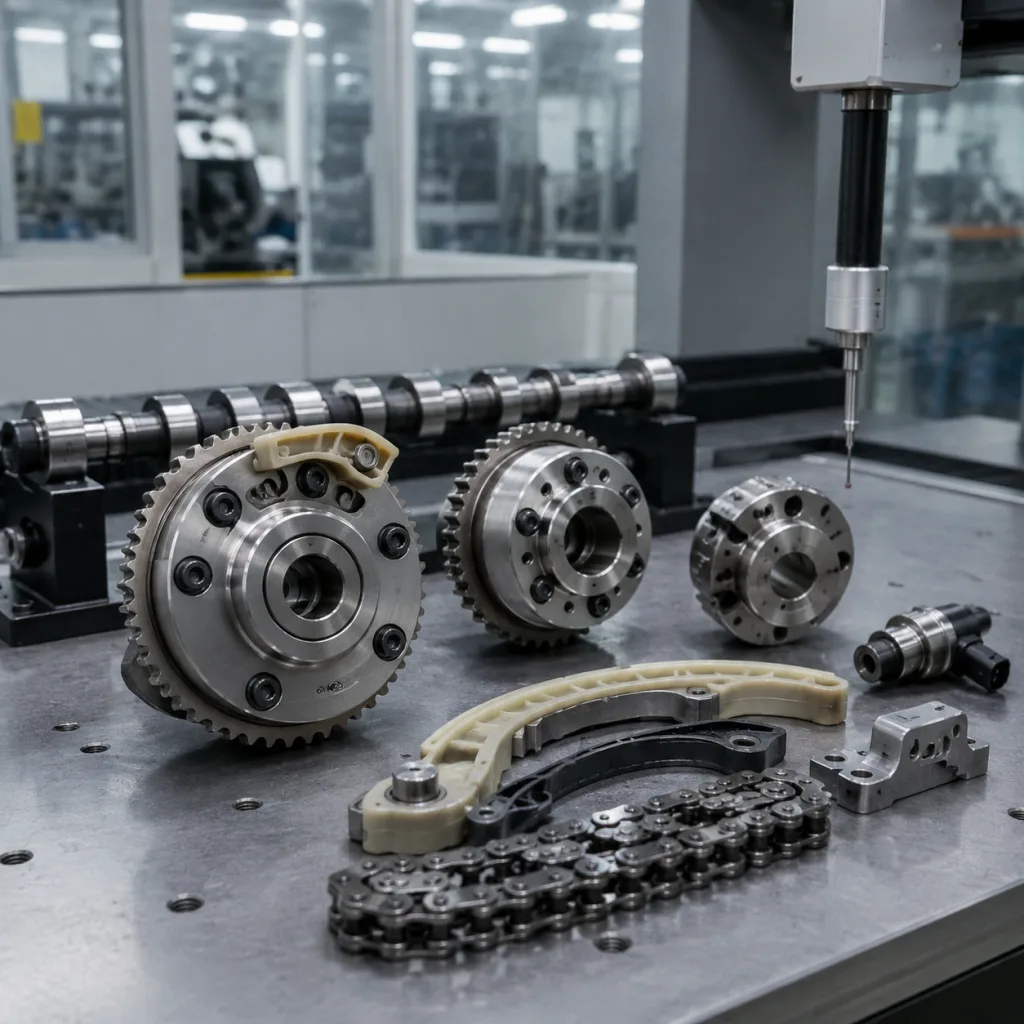
Timing chain, guides, tensioner, sprocket, and phaser condition
Camshaft position sensor, reluctor profile, and stored fault-code freeze-frame data
Engine oil grade, service interval, service history, and contamination level
Installation records, torque procedure, assembly lubricant, and related replaced parts
Read the evidence by pattern. Early distress on one or two lobes often points to lubrication, follower, or contamination issues. Uniform mismatch across several features may indicate wrong-variant fitment. Impact marks on ends or journals usually suggest transport or handling damage. Correlation faults without visible wear may lead back to trigger geometry, phaser interface, timing chain condition, or sensor data.
A replacement camshaft should normally be installed with related wear items where the service procedure requires it. Pairing a new camshaft with damaged followers, contaminated oil, blocked oil passages, or unresolved oil-pressure problems can create repeat failures that are not caused by the supplied part. Request photos, fault codes, mileage at installation, oil-service evidence, and removed-part inspection before issuing credit.
Commercial Decision Framework for Importers
For importers and category buyers, the best supplier is not simply the lowest quote. The stronger question is whether the supplier can repeat the same geometry, finish, hardness, marking, packaging protection, and documentation quality across batches.
Use this decision framework when comparing offers:
Fitment confidence: confirmed application list by engine code, position, and region
Brand execution: neutral, private-label, or customer carton requirements with artwork approval
Logistics protection: anti-corrosion duration target, normally 6–12 months for sea freight and storage
Contract terms: Incoterms, lead time, payment terms, warranty review rules, and credit process
Data control: barcode standard, country-of-origin marking, labelling format, and cross-reference rules
MOQ and pricing should be linked to tooling status and SKU maturity. For an existing developed item, buyers can often discuss trial orders in the 100–300 piece range per part number. New-development or private-label programmes may need higher MOQ because of sample measurement, fixtures, packaging print, and production setup.
Price is shaped by material route, machining time, heat treatment, surface finish, inspection level, carton specification, order volume, and Incoterms. A cheaper camshaft can become more expensive if it reduces inspection coverage, anti-rust packing, or fitment control.
Plan lead time by stage. When data is complete, application review and quotation commonly take 7–15 days. Sample preparation or sample inspection on stocked/developed items commonly takes 20–35 days. Mass production after order confirmation, packaging approval, and deposit commonly takes 35–60 days. New tooling, special material, private-label cartons, or peak-season capacity can extend the schedule.
Driventus supports standard aftermarket supply and custom manufacturing for distributors requiring private-label packaging, controlled cross-reference management, or drawing-based production. The company’s quality system covers incoming material control, machining process checks, final inspection, traceability, and corrective action workflows.
No aftermarket supplier should claim endorsement or approval by a vehicle manufacturer unless a formal approval exists. Driventus does not make that claim. Replacement camshafts are supplied for OE-equivalent fit and function based on confirmed application data, with brand names used only to identify compatibility.
Shipment Scenario: How Good Parts Get Damaged
Imagine a correct, inspected camshaft leaving the factory with clean journals and protected lobes. It then spends weeks in ocean freight, moves through a regional warehouse, and is split into branch-level shipments. If the part can move inside the carton, impact damage at a journal or timing end can turn an approved part into a return.
Packaging must protect machined lobes, journals, threads, oil passages, and timing interfaces from corrosion, abrasion, moisture, and deformation. Specify the protection method instead of assuming standard export packing is enough.
For B2B shipments, define:
Oil paper or VCI protection
End caps where needed
Rigid internal support and immobilised ends
Carton burst strength and gross-weight limit
Pallet stacking limit and pallet height
Drop-test expectation where relevant
Fumigation-free plywood pallet requirement if needed
Anti-rust protection duration for sea freight and storage
A practical packing standard is one camshaft per inner sleeve or protected carton, separated from hard contact points, with VCI bag or oil paper, desiccant where appropriate, and immobilised ends to prevent journal impact. Export cartons should tolerate pallet handling and warehouse stacking without crushing.
Labels should include part number, batch number, quantity, country of origin, gross weight, net weight, carton dimensions, production date or lot code, and customer-specific barcode if required. Private-label programmes may also require different carton artwork, language fields, TecDoc-style references, EAN/UPC formats, marketplace-compliant barcode formats, and destination-specific warning text.
Import documentation commonly includes commercial invoice, packing list, certificate of origin when requested, inspection report, and material declaration where applicable. EU buyers should handle REACH (EC) No 1907/2006 requests before shipment rather than after goods arrive at port. Before shipment, confirm HS code handling with the broker, carton marks against the purchase order, pallet count, gross weight, and treatment marks for any wooden packaging. For consolidated containers, camshafts should not be loaded under heavy brake, suspension, or body parts that can crush cartons.
Frequently asked questions
Confirm engine code, intake or exhaust position, cam phaser interface, sensor trigger profile, journal layout, lobe profile, oil-hole position, and reference sample or drawing data. Model year alone is not enough for procurement approval.
Yes. Driventus can support neutral or customer packaging, controlled labelling, inspection reports, barcode rules, and drawing-based custom manufacturing for qualified B2B programmes subject to MOQ, lead time, and technical review.
No. Driventus is an independent aftermarket manufacturer; brand names are referenced for fitment only. Replacement parts are supplied for OE-equivalent fit and function based on confirmed application data.
For application review, samples, MOQ planning, packaging options, lead-time confirmation, or batch inspection documents, contact Driventus to [request a quote](/contact.html).