Camshaft Lexus Supplier: Sourcing Guide for Buyers
Choosing a camshaft lexus supplier is a technical sourcing decision, not a unit-price exercise. Lexus-fitment programs depend on engine-code accuracy, stable dimensional control, traceable materials, realistic lead times, and inspection records that hold up under buyer review. One missed detail can trigger valve-timing issues, oiling problems, noise, or rapid wear after installation. Driventus manufactures engine and powertrain components in Taizhou, Zhejiang, and supplies distributors, wholesalers, OEM/Tier-1 buyers, and repair-chain teams in more than 60 countries. Our camshaft supply process centers on controlled machining, heat-treatment verification, surface inspection, and documented quality gates under IATF 16949:2016 and ISO 9001:2015. Driventus is an independent aftermarket manufacturer; brand names are referenced for fitment only.
How to Judge Fitment Before You Price It
Buyers usually compare a camshaft lexus supplier across four linked questions: does it fit, does it repeat, can it be documented, and can it ship on schedule. For Lexus-fitment applications, the camshaft has to align with the engine family, valve-train layout, timing system, lubrication path, and sensor arrangement. If any of those are wrong, the failure shows up fast: poor valve timing, low bearing oil film, abnormal wear, diagnostic faults, or engine noise after installation.
A useful RFQ should ask for:
Engine-family coverage and OE-style cross-reference mapping where applicable.
Camshaft type: intake, exhaust, SOHC, DOHC, or VVT-compatible.
Material specification, cast or forged route, and heat-treatment method.
Surface finish target on journals and lobes, plus hardness range and case depth where relevant.
Compatibility with timing parts, cam sensors, lifters, followers, rocker arms, or VVT hardware.
Batch traceability from raw material to final packing.
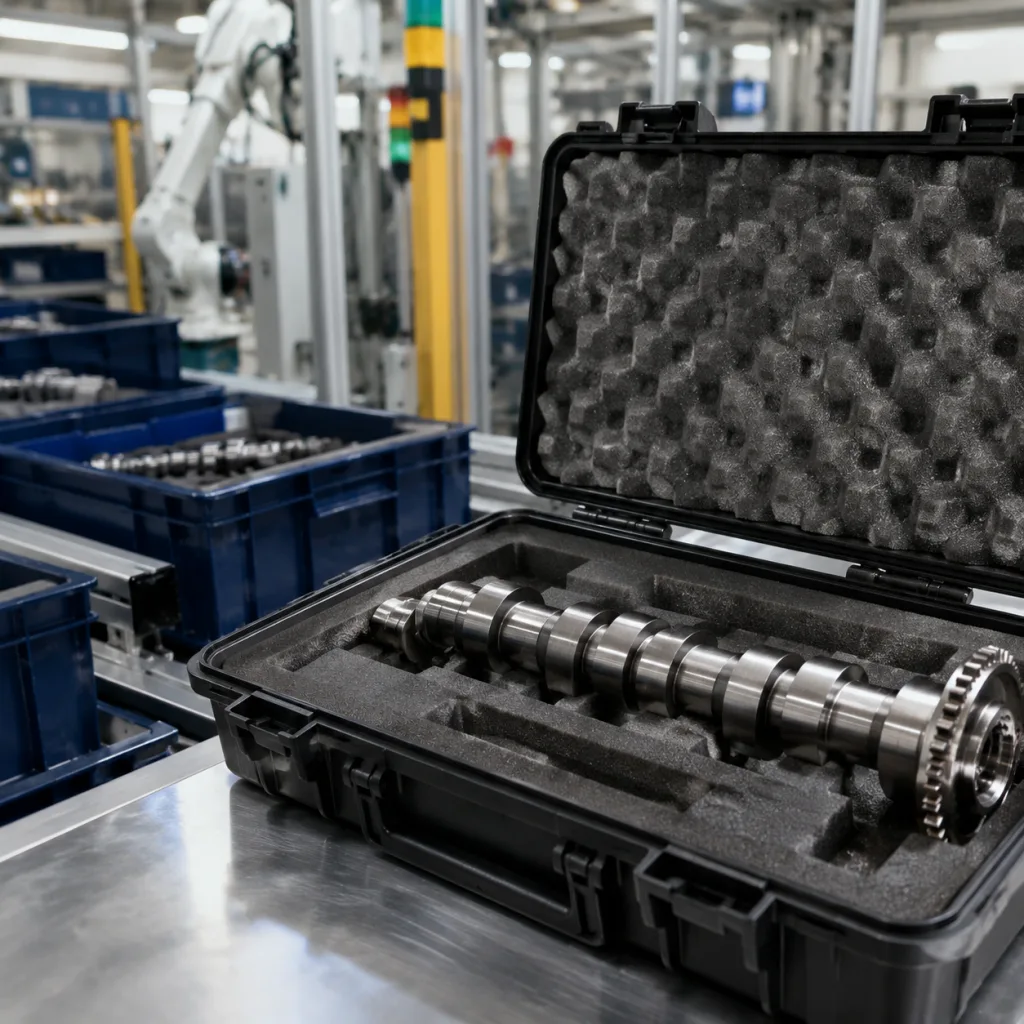
Corrosion protection and export packaging for sea freight, air freight, and warehouse handling.
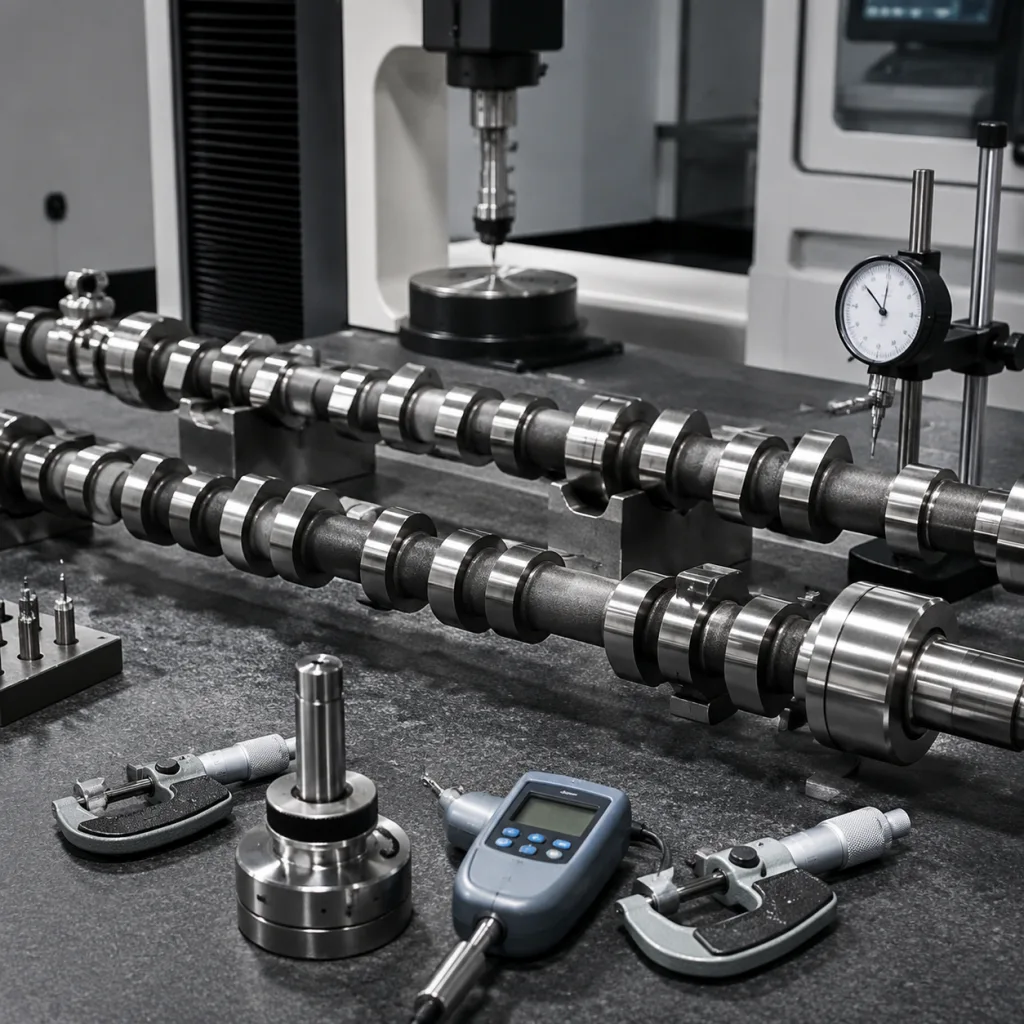
Buyers often benchmark journal diameter at ±0.01 to ±0.02 mm, camshaft runout at or below 0.03 mm, lobe profile variation within ±0.03 to ±0.05 mm, and surface roughness around Ra 0.2 to 0.8 μm depending on design and lubrication condition. Final acceptance should always follow the buyer's engine-code reference, not a generic catalog label. Related engine items are available through our catalog and the engine-component range at /products/engine-components.html. For private-label supply or application-specific development, custom manufacturing is available after technical review.
Where Camshafts Fail in Production
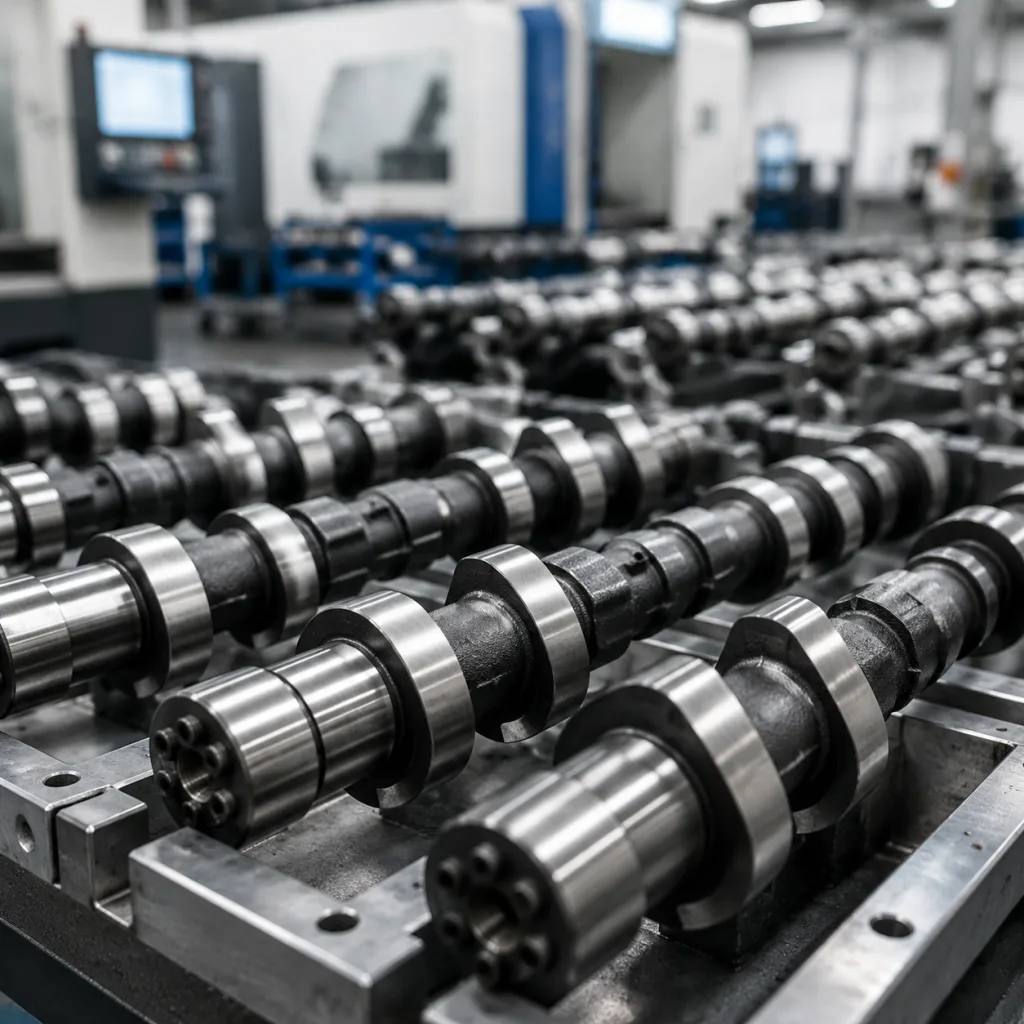
Camshaft production is less about the machine and more about controlling the handoff between steps. A part can look clean and still fail if lobe taper, journal cylindricity, hardness depth, surface finish, or runout drifts outside the agreed spec. Driventus controls the route from raw material confirmation through final inspection, with checkpoints tied to application risk and buyer requirements.
A typical controlled route includes material verification, blank preparation, rough machining, heat treatment, finish grinding, cleaning, anti-rust protection, and final inspection. The real sourcing question is simple: is every stage measurable, and is there a reaction plan when a result slips?
Process stage
Buyer concern
Typical control method
Material preparation
Alloy consistency and machinability
Material certificate review, incoming spectrometer check where specified, and heat number traceability
Rough machining
Datum stability and machining allowance
CNC turning with controlled allowance for finishing and in-process gauge checks
Heat treatment
Wear resistance and distortion
Hardness checks, case-depth review where specified, furnace record control, and quench/load traceability
Finish grinding
Lobe profile and journal accuracy
Profile measurement, micrometre checks, cylindricity, and runout control
Surface treatment or polishing
Friction, oil-film retention, and early wear
Roughness inspection and visual defect screening
Cleaning and rust prevention
Contamination and corrosion during storage
Washing control, dry-air verification if specified, anti-rust oil, VCI bagging, or protective packing
Final inspection
Fitment and batch release
Dimensional report, visual check, packing check, traceability label, and release record
</tr></thead><tbody> </tbody></table>For B2B buyers, the strongest quality proof is measured inspection data, not a certificate alone. Depending on order type and application risk, Driventus can provide sample inspection reports, first-article or sample approval records, production control plans, packaging specifications, and batch traceability records. Our quality system follows IATF 16949:2016 and ISO 9001:2015 requirements for controlled processes, corrective action, supplier management, and continual improvement.
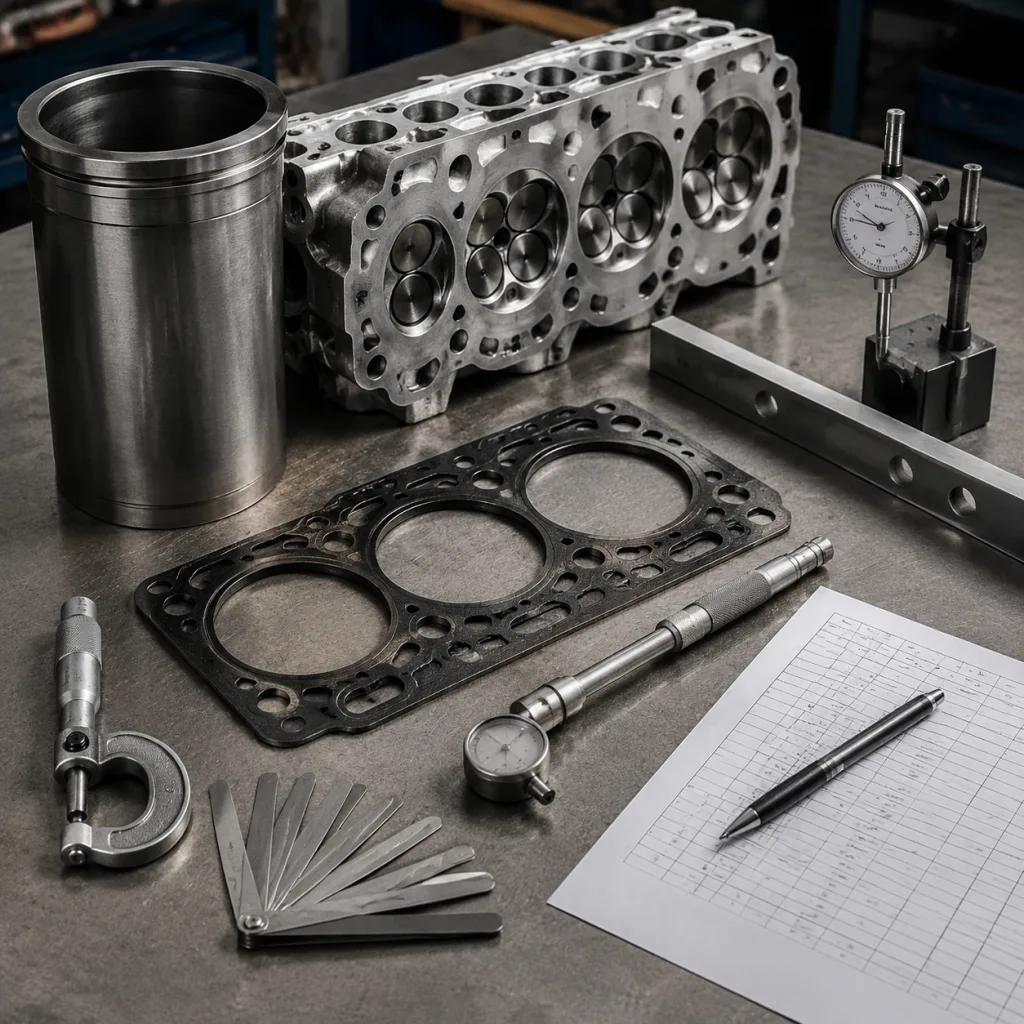
A practical buyer-side acceptance plan usually includes 100% visual inspection for nicks, burrs, rust, and surface damage; sampling for journal diameter, base-circle size, lift, and runout; hardness verification on the production lot; and packaging audit before shipment. If the application is high risk, buyers may also require PPAP-style documentation, gauge calibration records, and retained sample control.
MOQ and Lead Time: The Real Planning Levers
Minimum order quantity depends on application demand, material route, existing tooling, forecast volume, surface-treatment requirements, and packing format. Catalogue camshafts with established tooling usually carry a lower MOQ than new development or private-label work. For new Lexus-fitment references, buyers should allow time for drawing review, sample machining, dimensional verification, functional fitment checks where required, and packaging approval.
A practical sourcing timeline is:
RFQ review: 1–3 working days after receiving part reference, engine code, annual volume, destination market, and packing preference.
Technical confirmation: 3–7 working days if drawings, samples, photos, or detailed specifications are required.
Sample production: commonly 25–45 days for new or modified references, subject to tooling and material availability.
Sample evaluation: buyer-side dimensional, fitment, or bench checks before release to production.
Mass production: commonly 35–60 days after sample approval and deposit, depending on order size and production loading.
Pre-shipment inspection: dimensional sampling, visual inspection, label check, corrosion protection review, and carton or pallet verification before release.
For planning, many buyers use three commercial bands. Stocked catalog parts may start at 50-100 pcs per reference, depending on packaging and carton optimization. Private-label or new-program camshafts often begin at 100-300 pcs after sample approval. Lower quantities can sometimes work for evaluation or market testing, but the unit price is usually higher because setup, heat-treatment loading, and inspection effort are spread across fewer units.
Price is driven by five variables: raw-material route, machining complexity, heat-treatment specification, surface finish requirement, and order volume. Buyers can often reduce landed cost by grouping multiple engine parts into one shipment, standardizing packaging, and sharing 60-90 days of forecast visibility. That helps reserve machine time, align raw-material purchasing, and reduce stockout risk during seasonal demand changes. For distributors, mixed-container planning can reduce landed cost when camshafts ship with pistons, gaskets, water pumps, crankshafts, timing components, or other engine parts. For repair-chain buyers, stable replenishment timing often matters more than one-time low pricing.
What Importers Should Check in a Factory Audit
A factory audit should confirm whether the supplier can repeatedly produce conforming parts, not merely whether the plant has machines. For a camshaft lexus supplier, importers should focus on process flow, calibration discipline, heat-treatment control, non-conforming product handling, and engineering change management.
Recommended audit checklist:
Valid IATF 16949:2016 and ISO 9001:2015 certificates within the relevant manufacturing scope.
Incoming material inspection process, material identification, and supplier approval records.
CNC machining, grinding, heat treatment, washing, and rust-prevention process controls.
Measuring equipment calibration status and gauge repeatability where required.
Control plan, work instructions, inspection frequency, and reaction plan at critical operations.
Segregation process for non-conforming or suspect parts.
Traceability from batch number to material lot, production route, inspection record, and packing record.
Export packing validation for corrosion protection, carton strength, pallet stability, and transit damage reduction.
Buyers should also ask how the plant handles out-of-spec findings. A credible supplier should be able to show containment within 24 hours, root-cause analysis within a defined corrective-action window, and documented approval before shipment resumes. It is also useful to confirm whether the supplier retains golden samples, keeps gauge masters under controlled storage, and records process changes such as furnace loading pattern, grinding wheel condition, or oiling method.
Regulatory expectations vary by market. Camshafts are not normally certified under emissions regulations as standalone replacement items, but engine-related supply chains may still require material declarations, restricted-substance controls, or customer-specific compliance records. For EU-bound shipments, buyers may request support related to REACH (EC) No 1907/2006. For vehicle-level emissions compliance, regulations such as ECE R-83 apply at the vehicle or system level and should not be interpreted as camshaft-only approval.
What Data Pack Actually Prevents Wrong Orders
Fitment errors create high downstream cost: warranty claims, technician time, return freight, and lost customer confidence. Importers should provide as much application data as possible during RFQ: engine family, production years, market region, valve-train type, fuel type, left-hand or right-hand drive market where relevant, and any buyer-owned cross-reference list. Driventus does not claim approval or endorsement by any vehicle manufacturer.
For each confirmed camshaft program, documentation may include:
Part description and application range.
Buyer-supplied OE-style cross-reference format, where applicable.
Key dimensions and tolerance agreement.
Material and heat-treatment summary.
Surface hardness, case depth, and roughness checks where specified.
Sample inspection report and production inspection record.
Carton label, neutral packing, barcode label, or private-label packing specification.
Export documents and country-of-origin information.
A buyer-ready data pack should also define what is critical-to-quality. For example, journal diameter may be controlled to ±0.01 mm, lobe height to ±0.03 mm, trigger-wheel position to ±0.20 mm, and overall camshaft length to ±0.10 mm where the design allows. If a VVT unit or phaser interface is included, the supplier should confirm interface angle, bolt pattern, sealing face condition, and torque-relevant surface quality before production starts.
For catalogue supply, fitment data is checked against internal application records and customer-provided references. For engineered supply, drawings, samples, or 3D data are reviewed before quotation so that profile, journal, sensor, and timing-interface requirements are understood. If the project requires a design change, Driventus can support controlled development through custom manufacturing, including sample submission and pre-production approval steps.
Choosing Between Low Price and Stable Supply
A low unit price can become expensive if the supplier cannot maintain dimensional consistency, documentation quality, or delivery reliability. Buyers should compare suppliers using total procurement cost: defect rate, claim handling, incoming inspection burden, packaging loss, lead-time variation, communication speed, and the cost of emergency replacement orders.
Evaluation factor
Low-control sourcing risk
Preferred supplier capability
Fitment data
Wrong application mapping or missing engine-code detail
Engine-family and cross-reference review
Process control
Batch variation and inconsistent wear performance
Documented control plan and inspection records
Quality response
Slow claim closure or unclear containment
Corrective action with evidence, root-cause review, and containment
Packing
Rust, surface damage, or transit loss
Anti-corrosion packing and export carton verification
Lead time
Unstable replenishment and avoidable stockouts
Forecast-based production planning
Compliance
Missing declarations or incomplete records
Standards-based documentation support
Communication
Delayed technical confirmation
Clear RFQ review and application-data feedback
</tr></thead><tbody> </tbody></table>A practical supplier scorecard should also compare three commercial scenarios: test order, replenishment order, and urgent resupply. Test orders are useful for fitment and packaging validation, but they should not be the only indicator of long-term supply stability. Replenishment orders should be judged on repeatability, not just initial sample appearance. Urgent resupply should be possible only if the supplier has planned safety stock, flexible production slots, or a clearly communicated expedite process.
Driventus supplies aftermarket distributors, wholesalers, OEM/Tier-1 sourcing teams, and multi-location repair chains. The goal is not to replace the buyer’s validation process, but to provide stable manufacturing support, transparent documentation, and repeatable supply conditions. Buyers can request a quote with application references, target annual volume, destination market, packaging requirements, target price band, and preferred lead-time window.
Frequently asked questions
Please provide the engine family, model application, production year range, target market, annual volume, packing requirement, and any buyer-supplied OE-style references. Drawings, samples, photos, or 3D data are useful for new development projects. If you already have the target tolerance range, include journal diameter, runout, lift, and roughness requirements so the quotation reflects the real spec.
Yes. Private-label cartons, neutral boxes, barcode labels, corrosion-protection requirements, and pallet specifications can be reviewed during quotation. Artwork, label data, and destination-market requirements should be confirmed before mass production. Buyers can also specify carton count, master carton drop-test expectations, and whether VCI bagging or anti-rust oil is required.
For established catalog references, MOQ commonly starts around 50-100 pieces per part number, depending on packaging and demand. New or modified references usually need 100-300 pieces after sample approval, with sample lead time often 25-45 days and mass-production lead time commonly 35-60 days after approval and deposit. Exact timing depends on tooling, material availability, and order size.
Buyers often request journal diameter control within ±0.01 to ±0.02 mm, runout at or below 0.03 mm, lobe lift variation within ±0.03 to ±0.05 mm, and surface roughness around Ra 0.2 to 0.8 μm depending on application. The final requirement should always follow the engine-code drawing, sample, or agreed buyer specification.
No. Driventus is an independent aftermarket manufacturer; brand names are referenced for fitment only. We support dimensional, material, fitment, and process documentation, but do not claim approval or endorsement by any vehicle manufacturer.
For camshaft sourcing, sample review, or private-label supply planning, send your application list, target tolerance set, annual volume, and preferred lead-time window to Driventus. You can start with a soft enquiry at /contact.html