Camshaft for Mercedes-Benz GLC Aftermarket Replacement: Sourcing Guide
A camshaft for Mercedes-Benz GLC aftermarket replacement must match the original profile, bearing journal geometry, trigger features, and surface finish closely enough to support reliable valve timing and stable engine operation. For procurement teams, the main task is not simply finding a listed fitment. It is verifying dimensional equivalence, material specification, heat treatment, and inspection control before committing to repeat supply. Driventus supplies engine components for B2B buyers in the aftermarket, OEM, and repair network channels. We manufacture in Taizhou, Zhejiang and operate under IATF 16949:2016 and ISO 9001:2015 systems. Driventus is an independent aftermarket manufacturer; brand names are referenced for fitment only. This article explains what to check when sourcing a replacement camshaft for the GLC platform, how to compare options, and which documents should be requested before purchase.
What buyers should verify first
For the Mercedes-Benz GLC platform, the correct camshaft depends on engine code, model year, emissions calibration, and valve train layout. Do not buy on vehicle model alone. Confirm the engine family, number of lobes, intake/exhaust configuration, cam phaser interface, and OE reference.
Procurement checklist
Engine code and displacement
Intake or exhaust position
OEM cross-reference, if available
Journal diameter and overall length
Sensor or trigger wheel features
Packaging unit and MOQ
Surface hardness and runout limits
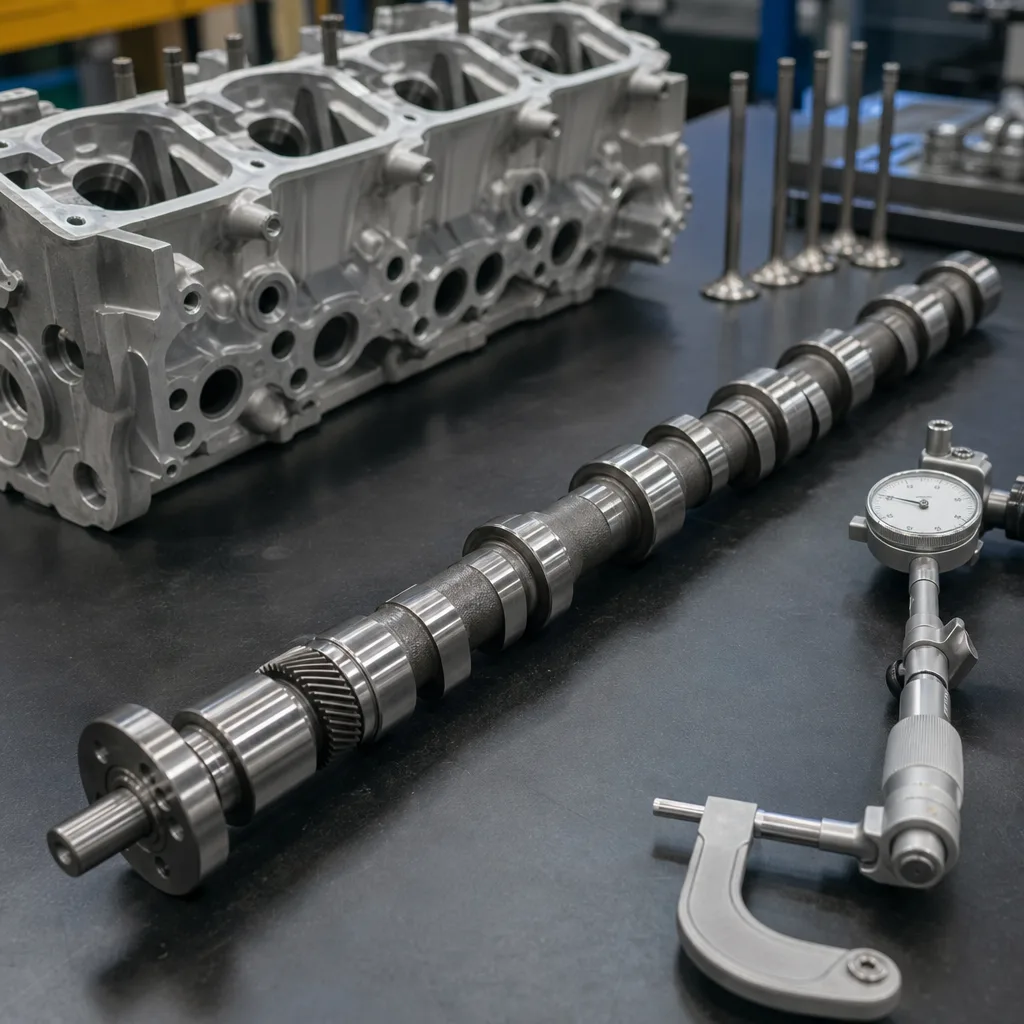
A replacement part should be validated against the original sample or verified drawings. If the supplier cannot state dimensional controls, ask for inspection records and first-article data. For catalog browsing, see our catalog and the engine component range at engine components.
Dimensional match matters more than fitment claims
A camshaft can appear similar externally and still fail in service if the base circle, lobe lift, journal spacing, or end play tolerance is off. Small deviations affect valve opening duration, idle quality, cold start behaviour, and emissions performance.
Item to compare
Why it matters
Typical buyer check
Lobe profile
Controls valve timing and lift
Compare to OE drawing or sample
Journal diameter
Affects bearing clearance
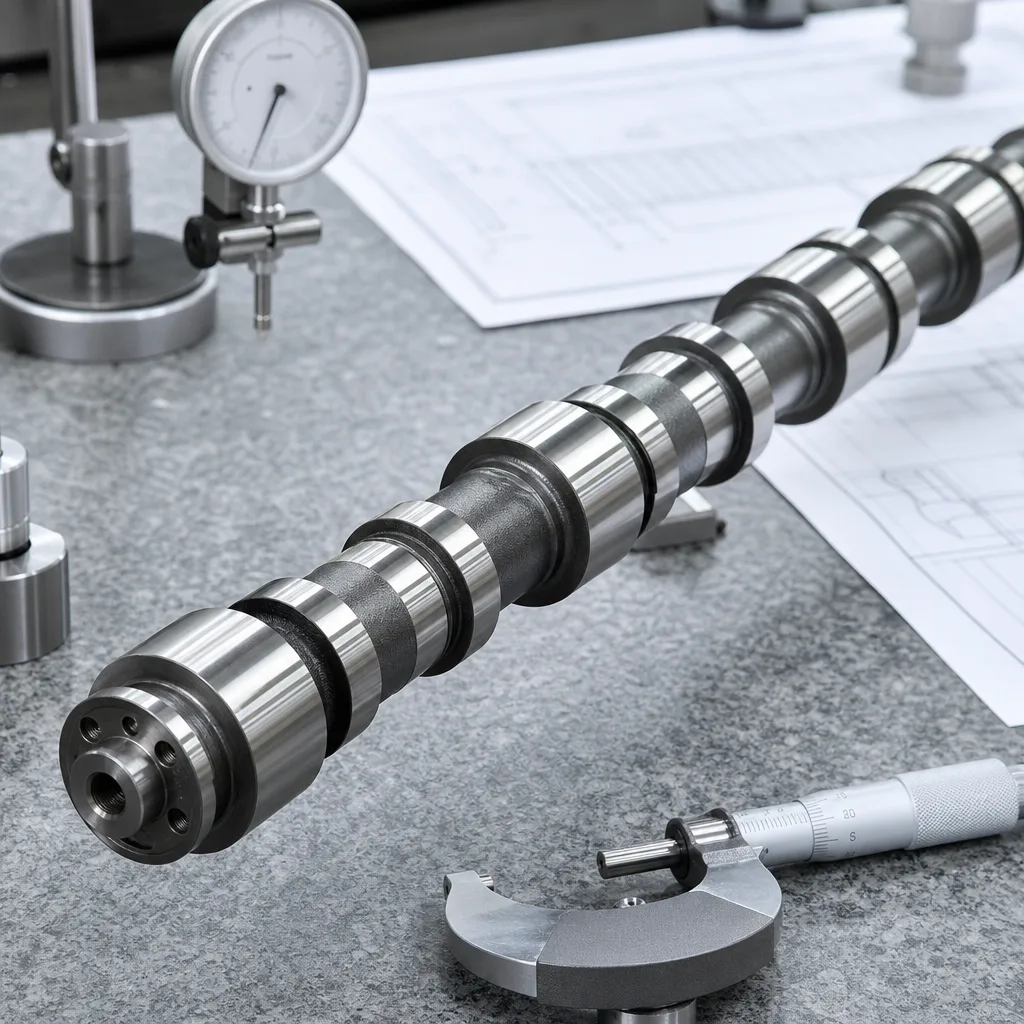
Measure with micrometer
Overall length
Confirms head compatibility
Check against master part
Trigger feature
Supports sensor timing
Verify tooth count and position
Surface finish
Reduces wear at break-in
Request roughness data
Heat treatment
Affects fatigue resistance
Ask for hardness report
</tr></thead><tbody> </tbody></table>For replacement sourcing, ask for dimensional tolerances, often controlled by the supplier’s internal drawing and inspection plan. If the part is for a turbocharged or direct-injection variant, tighter control of timing features is especially important.
Materials, heat treatment, and inspection controls
A credible camshaft supply programme should state the base material and the hardening method. Common approaches include chilled cast iron, alloy steel, or forged steel depending on engine duty cycle and target cost. What matters to procurement is repeatability.
Request these documents
Material declaration
Heat-treatment process summary
Hardness range by functional surface
Concentricity or runout report
100% visual inspection standard
Packaging and corrosion protection specification
We recommend suppliers align production with IATF 16949:2016 and ISO 9001:2015, and maintain lot traceability from raw material through final inspection. Where regulatory scope applies to the finished component or packaging, ask about REACH (EC) No 1907/2006 compliance declarations. For buyers comparing multiple sources, an in-house quality system page should explain incoming inspection, process checks, and final release criteria; see our quality system.
Replacement sourcing for distributors and repair networks
Aftermarket programmes often fail when catalog data is incomplete. For a GLC application, buyers should collect OE reference data, engine variant details, and packaging requirements before placing an order. This reduces returns and claim rate.
Commercial points to confirm
MOQ per part number
Lead time for standard and made-to-order supply
Barcode and carton labelling format
Country-of-origin marking
Warranty terms and claim process
Sampling policy for new vendor approval
If your programme includes private label, kitting, or mixed-model packing, use custom manufacturing to request a build-to-print review. Driventus can support controlled production for aftermarket distribution and regional warehouse replenishment. We do not claim vehicle manufacturer approval or endorsement.
Validation tests that reduce field failures
Before releasing a camshaft for serial purchase, request validation evidence that reflects actual engine duty. For procurement teams, the most useful documents are those that show both geometry and durability.
Useful validation items
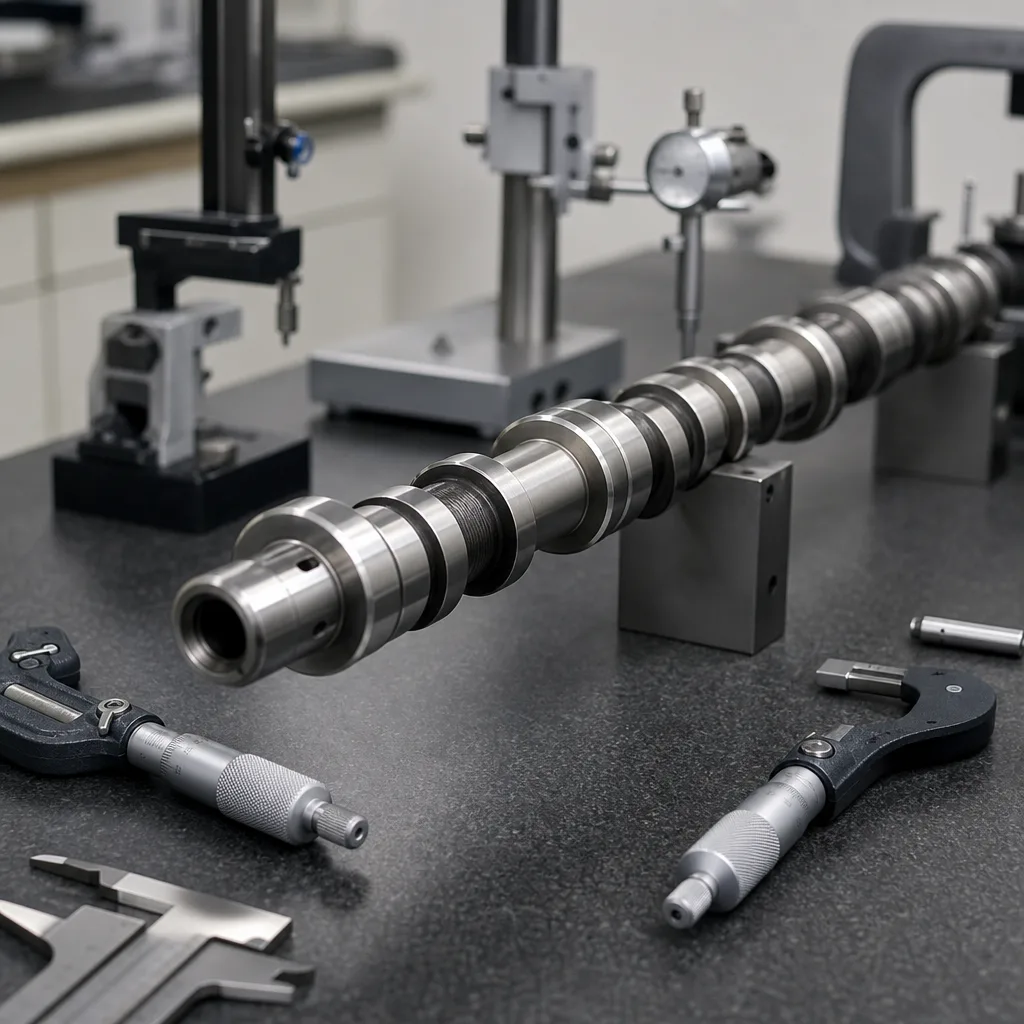
Dimensional inspection against sample master
Rockwell or equivalent hardness report
Surface roughness and lobe profile verification
Static fit check in cylinder head assembly
Endurance or wear-test summary
Corrosion resistance or packaging protection test
Where the application permits, suppliers may reference industry test methods such as SAE J2527 for corrosion-related evaluation of coated or protected parts. For emissions-related system context, technical teams may also reference ECE R-83 at the vehicle level, although the camshaft itself is not type-approved in isolation. Ask for validation that matches your market and warranty exposure.
How Driventus supports B2B replacement demand
Driventus is organised for export supply to distributors, wholesalers, OEM and Tier-1 channels, and multi-location repair networks. For buyers sourcing a camshaft for Mercedes-Benz GLC aftermarket replacement, the practical benefits are controlled production, traceability, and export-ready documentation.
What we can provide
OE cross-reference review using the customer’s stated reference
Drawing-based or sample-based manufacturing review
Lot traceability and inspection records
Stable carton packing for export distribution
Technical communication during sample approval
If you need a supply review, matching documents, or a programme quotation, request a quote.
Frequently asked questions
Yes, if the customer provides a valid OE reference, engine code, and application data. We still recommend sample or drawing verification before mass order.
Yes. We support carton, label, barcode, and document customisation for B2B programmes, subject to approval and order volume.
Ask for material declaration, hardness report, dimensional report, traceability data, and the supplier’s quality documentation.
If you are qualifying a new source or replacing an existing supply line, send the application details and target reference for review. We can help confirm fitment and production scope through our contact page: /contact.html