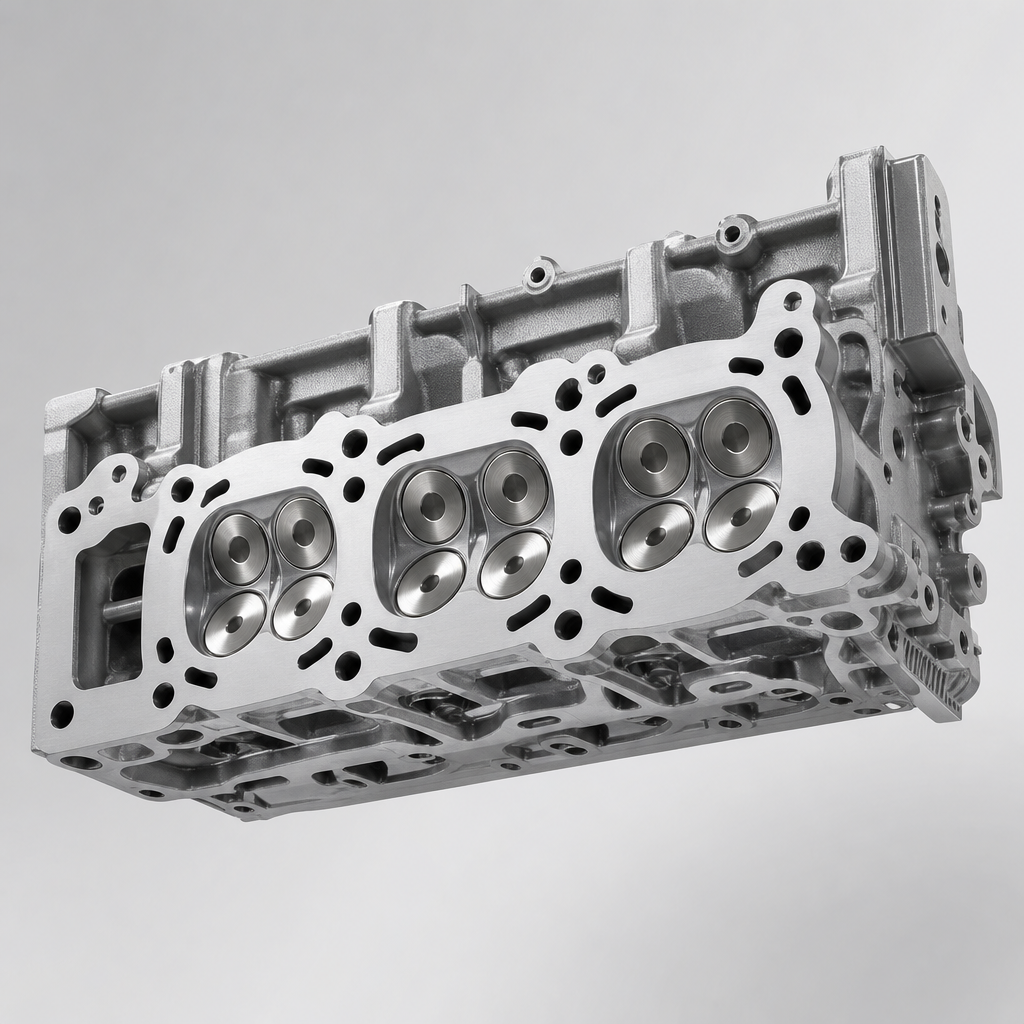
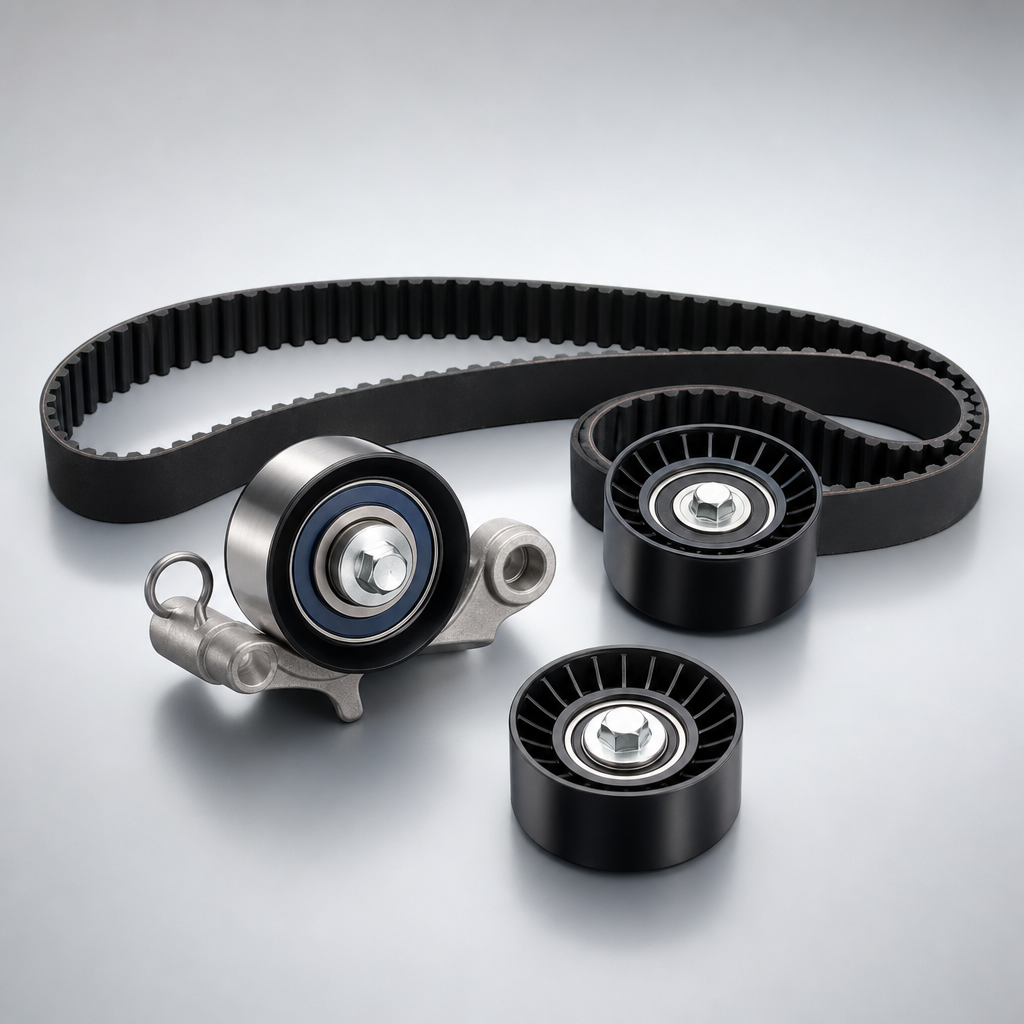
Selecting a camshaft for Toyota Hilux aftermarket replacement is less about finding the cheapest offer and more about controlling fitment, durability, and repeatability. For distributors, sourcing managers, and repair networks, the real decision sits around dimensional accuracy, metallurgy, surface hardness, lobe-profile control, and lot-to-lot consistency. A camshaft that installs without issue but later develops lobe wear, journal scoring, or valve-timing drift can erase any purchase-price advantage once labour, freight, and warranty handling are added.
Hilux demand is also more fragmented than many buyers expect. Different engine families, fuel types, and production years can require different base-circle dimensions, journal diameters, lobe lift, lobe separation, indexing, and end features. That means buyers should ask for measurable limits, not broad claims such as "OE quality." Practical checkpoints usually include journal diameter tolerance in the low hundredths of a millimetre, total indicated runout commonly at or below 0.03-0.05 mm depending on design, surface roughness targets such as Ra 0.2-0.8 um after finish grinding, and hardness windows matched to the material route.
Documentation matters just as much as the part itself. Process controls aligned with IATF 16949:2016 and ISO 9001:2015 can reduce variation between lots, while import markets may also require review of material and chemical compliance under REACH (EC) No 1907/2006. Commercial terms shape outcomes too: prototype samples often carry higher unit cost and need 2-4 weeks of preparation, while repeat orders depend on MOQ, packaging format, and whether blanks are held in stock. Driventus is an independent aftermarket manufacturer; brand names are referenced for fitment only.
Start with the decision screen, not the quotation
When sourcing a camshaft for toyota hilux aftermarket replacement, the first question is not price. It is whether the supplier is quoting the exact engine application and the exact functional geometry you need. Hilux platforms cover multiple diesel and petrol engines, so vehicle name alone is too broad for purchasing control.
Use this decision screen before comparing offers:
Engine code and build range: confirm engine family, production year, emission-market variant, and whether the part is for SOHC, DOHC, intake, or exhaust position.
OE cross-reference: match against the buyer's approved number list, older supplier records, and workshop demand history.
Working tolerances: ask for actual inspection limits, not only nominal values. Journal diameter is often controlled around +/-0.01 to +/-0.02 mm, while runout is commonly limited to 0.03-0.05 mm TIR depending on design.
Heat treatment: confirm the hardness range and whether the shaft uses chilled cast iron, ductile iron, or alloy steel, with lot records in HRC or HV where required.
Surface finish: request measured Ra values from finished grinding rather than visual statements.
Packaging protection: anti-corrosion oil, VCI bag or individual wrapping, end-cap protection, and inner separators are basic for sea freight.
A disciplined approval path usually starts with 3-5 first samples, a dimensional report by characteristic, hardness data, material confirmation, and packing-photo approval. That becomes more important when camshafts are consolidated with other items from our catalog.
Commercially, buyers also need to match order size to the supplier's production logic. Typical aftermarket MOQ may start around 50-100 pcs per SKU for a stocked version, while private-label runs with custom boxes or laser marking may require 200-500 pcs. Sample quantity rarely reflects the long-run ex-works price because setup cost is spread across too few units.
What 'OE-equivalent' should mean in measurable terms
In aftermarket sourcing, OE-equivalence is only useful if it is defined by numbers. The part does not need an OE label. It needs to match the original design's functional, dimensional, and material requirements closely enough to protect service life and fitment reliability.
Comparison points buyers should ask for
Check item
What to verify
Why it matters
Material grade
Confirm cast iron or alloy steel base material, with chemical composition record where needed
Affects fatigue strength and wear resistance
Lobe hardness
Hardness test record by lot, within a defined HRC window
Controls pitting and scuffing resistance
Journal diameter
Within drawing tolerance, often in the +/-0.01 to +/-0.02 mm range depending on size
Prevents oil-clearance problems
Runout
Measured against journal datums, often with a final limit around 0.03-0.05 mm TIR
Reduces vibration and uneven wear
Lobe profile
Compared against a master profile or CNC data, including lift and angular indexing
Maintains valve timing and lift
Surface roughness
Journal and lobe finish record, often specified as Ra after grinding
Supports lubrication-film stability
End features
Sprocket, keyway, dowel, circlip groove, and sensor-trigger details
Ensures correct assembly
Marking and traceability
Lot code, part number, and shift or date marking
Supports containment if a field issue appears
</tr></thead><tbody> </tbody></table>For private-label programmes, shipment-to-shipment consistency matters as much as first-sample approval. A documented quality system helps keep that consistency under control.
A strong acceptance package normally includes material certificate per lot, hardness map, 100% visual and marking check, runout report by sampling plan, full dimensional report on first article, and a retained golden sample signed by both parties. If the supplier cannot explain which characteristics are checked 100%, which are sampled, and which trigger line stoppage, the OE-equivalence claim is still incomplete.
Where the project involves a modified profile, alternative material route, or market-specific packaging, it should be managed as a defined custom manufacturing programme. That usually changes price logic as well: special profile work may need tooling, grinding-program cost, first-article approval time, and a higher MOQ before pricing stabilizes.
Where service life is really won or lost
Camshaft durability is built through process control. Buyers comparing suppliers should therefore look past the finished part photo and ask which operations are done in-house, which are subcontracted, and where variation risk enters the process.
The main production points that affect field performance are:
Blank quality: casting or forging integrity, porosity control, grain structure consistency, and raw-material traceability.
Pre-machining control: datum creation, centre-hole quality, and stock allowance before finish grinding.
Heat treatment control: furnace parameters, hardness mapping, quench control, and lot traceability.
Grinding process: lobe profile consistency, crown control where specified, and final surface finish.
Cleaning and preservation: removal of abrasive residue, chips, and grinding sludge before rust preventive oil and packing.
Final inspection: dimensional checks, runout measurement, visual review, marking control, and packaging verification.
Ask for the real process flow, not the brochure version. A typical route may be blank incoming inspection, rough turning, stress relief where required, semi-finish machining, heat treatment, finish grinding, washing, deburring, 100% visual check, sampling inspection, oiling, and packing. Useful questions include whether runout is checked both before and after heat treatment, whether lobe profile is verified at every setup change, and how often grinding wheels are dressed.
Typical control values worth requesting are:
runout limit by final inspection fixture
journal diameter tolerance by drawing characteristic
lobe lift tolerance and phase-angle tolerance
surface roughness after final grinding
hardness range and effective case depth where applicable
sampling frequency, such as first 5 pcs, then every 50 pcs or every machine setup change
For engine components, process discipline should align with IATF 16949:2016 and ISO 9001:2015. Those standards do not guarantee field life on their own, but they do create a framework for control plans, corrective action, traceability, and supplier management.
When the camshaft is bought together with related valvetrain or timing parts, distributors often review the broader programme instead of one SKU in isolation. Relevant lines can be grouped with other items from /products/engine-components.html.
Lead time also depends on process route. If blanks are stocked, repeat orders may ship in roughly 25-40 days depending on quantity and packaging. If blanks, tooling, or modified grinding programs must be prepared, new-project timing can extend to 45-60 days plus sample approval. Buyers planning consolidation should ask where the bottleneck sits: blank supply, heat treatment capacity, grinding capacity, or export packing.
Failure modes that usually trace back to sourcing mistakes
Most aftermarket camshaft claims do not start as mysterious engine failures. They usually begin with preventable purchasing errors.
Common failure paths
1. Fitment grouped too broadly: one listing is used across several Hilux variants even though journal sizes, lobe profiles, or end features differ. 2. Hardness never verified: the part looks acceptable on arrival but fails early because actual hardness is low or inconsistent across lobes. 3. Sample approval is too shallow: the pilot lot is approved without reviewing runout, profile, finish data, end-feature accuracy, or packaging integrity. 4. Packaging control is ignored: light corrosion during 30-45 day container transit damages journals before installation. 5. Component quality is mixed: the camshaft itself may be acceptable, but mismatched followers, rockers, or lubrication conditions still raise failure risk. 6. Commercial assumptions are unclear: a price for 500 pcs with neutral packing is compared to a 50 pc trial order with custom labels and treated as if it were a like-for-like benchmark.
A practical sourcing process uses PPAP-style documentation where relevant, retained reference samples, and agreed acceptance criteria before mass production. That is especially useful for repair-chain customers where return handling directly affects workshop margin.
Buyers should also calculate claim exposure in full. A small ex-works saving can disappear quickly if even 1-2% of units create workshop rework, return freight, and distributor credit. That is why it is reasonable to ask the supplier to define containment timing, replacement policy, and root-cause response expectations before the first shipment.
Another recurring issue is ordering below the supplier's efficient batch size. Small mixed-SKU orders often increase unit cost because grinding setup, inspection, laser marking, and carton printing are spread too thinly. In some programmes, a blanket order with scheduled releases works better. It keeps per-SKU MOQ manageable while protecting repeat-order pricing.
Driventus is an independent aftermarket manufacturer; brand names are referenced for fitment only.
A repeat-order checklist for comparing supply partners
Once fitment and technical scope are clear, supplier evaluation should shift to repeat-order control. This is where many programmes separate reliable partners from merely competitive quotations.
Ask questions that expose process discipline:
What are the standard material and hardness specifications for the target Hilux application?
Are lobe profiles checked against a master profile or a digital inspection routine?
What runout limit is applied during final inspection?
Is batch traceability maintained from raw material through final packing?
Can the supplier support neutral packing, barcode labels, and customer-specific carton standards?
What is the normal lead time for repeat orders and for new-sample approval?
What MOQ applies for stock, neutral-box, and private-label orders?
Are compliance documents available for destination markets, including REACH (EC) No 1907/2006 where requested?
Importers and wholesalers should also review defect-handling procedure, sample-retention policy, and corrective-action response time. Those points have a direct effect on landed cost once claims appear.
A workable RFQ for camshaft for toyota hilux aftermarket replacement should include engine code, OE reference, photos of both ends, annual volume, trial quantity, target packaging, label format, inspection expectations, destination port, and whether related parts will ship together. That level of detail lets the supplier quote based on real MOQ, tooling assumptions, and lead time instead of risk padding.
Typical commercial logic looks like this:
Samples or pilot lot: higher unit cost, limited quantity, often 2-4 weeks for preparation if a drawing and sample are available.
Standard repeat order: lower unit cost once MOQ is met, often around 25-40 days depending on blank stock and packaging needs.
Private-label programme: added cost for color box, label approval, barcodes, master-carton print, and sometimes 200-500 pcs MOQ per SKU.
Modified-spec project: longer lead time and possible tooling or programming charge before volume pricing stabilizes.
When benchmarking suppliers, ask for the quotation basis in writing: Incoterm, MOQ, inspection standard, included documents, and whether pricing assumes neutral export cartons or retail packaging. Without that, unit-price comparisons are usually misleading.
If you are reviewing sourcing options for Hilux engine parts, a structured RFQ with target dimensions, annual volume, packaging requirements, and inspection expectations will usually produce stronger quotations than a part-name-only inquiry. You can request a quote with those details for a technical review.
Frequently asked questions
Request dimensional inspection records, material and hardness data by lot, runout report, fitment reference details, packaging specifications, and quality-system information aligned with IATF 16949:2016 or ISO 9001:2015 where applicable. For new programmes, 3-5 sample pieces with full first-article data and retained golden sample approval are also useful.
No. Buyers should confirm engine code, production range, camshaft position, critical end features, and key dimensions such as journal sizes and lobe geometry. Hilux platforms cover multiple engine variants, and model-only identification can create costly fitment errors.
A visually acceptable sample does not prove repeat manufacturing control. Warranty performance depends on consistent profile accuracy, hardness, runout, and surface finish across every production lot, especially in distributor and chain-service programmes. That is why buyers should check sampling frequency, traceability, and the supplier's defined limits for characteristics such as runout and journal tolerance.
If you need technical review, sampling support, or volume pricing for Hilux replacement camshafts and related engine parts, contact Driventus through /contact.html with engine code, OE reference, target quantity, and packaging requirements.