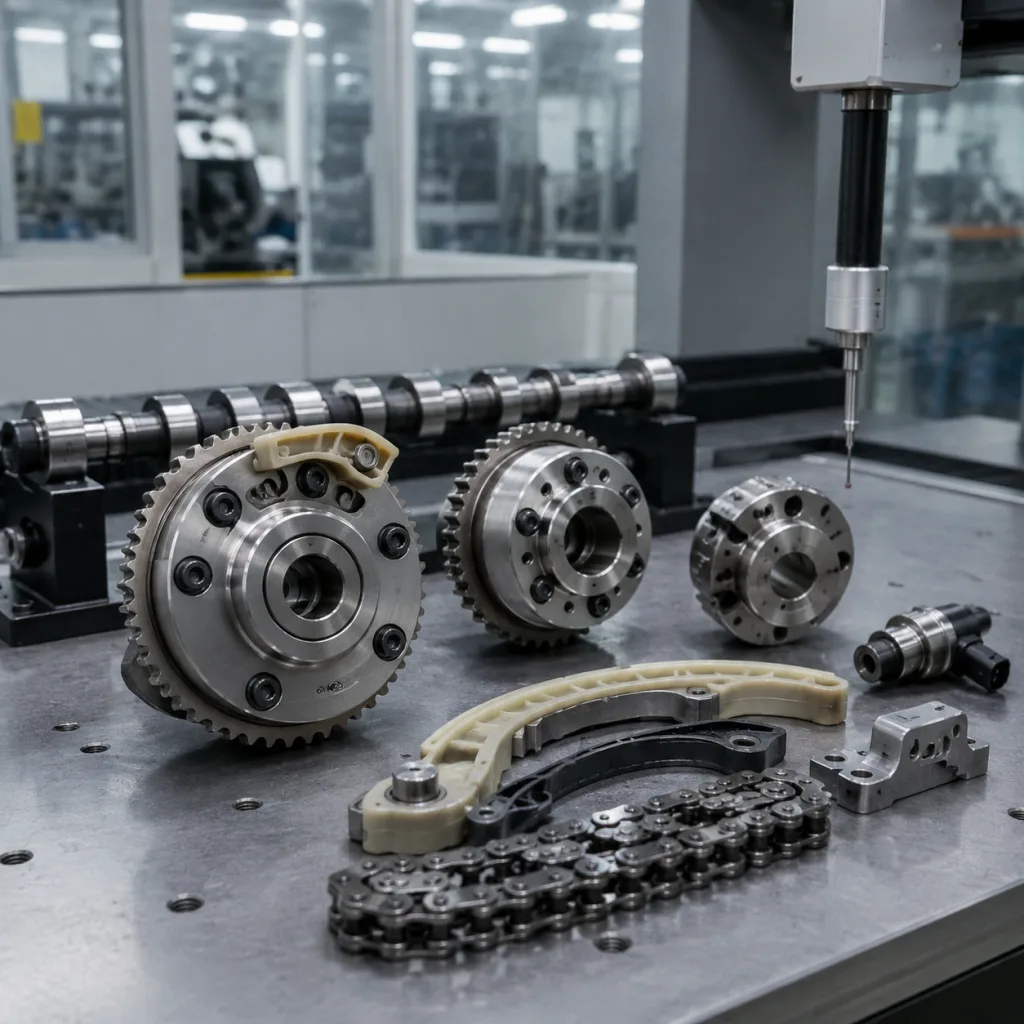
Published 2026-06-18. A buyer sourcing a camshaft for Mazda CX-5 OE equivalent replacement programme is not buying a look-alike shaft. The approval question is narrower and harder: does this part reproduce the valve timing geometry, journal fit, lobe profile, oil-feed layout, thrust control, and sensor or phaser interface required for the target Mazda CX-5 engine variant?
That answer must be proven with numbers. Typical buyer-side checks may hold journal diameter close to the master sample within 0.005-0.015 mm where the drawing permits, total indicated runout around 0.02-0.05 mm, lobe lift variation near 0.02 mm, and angular indexing verified against the drive or phaser datum. Final limits must come from the approved drawing, OE sample study, or buyer specification. “Same as sample” is not a specification unless it is translated into measurable tolerances.
For B2B procurement teams, the sourcing task is to separate a fitment claim from a repeatable supply process. This guide covers the engineering evidence, production controls, validation records, and commercial terms importers, wholesalers, and repair-chain buyers should request before placing volume orders. Driventus is an independent aftermarket manufacturer; brand names are referenced for fitment only.
Decision Gate: What Counts as OE-Equivalent?
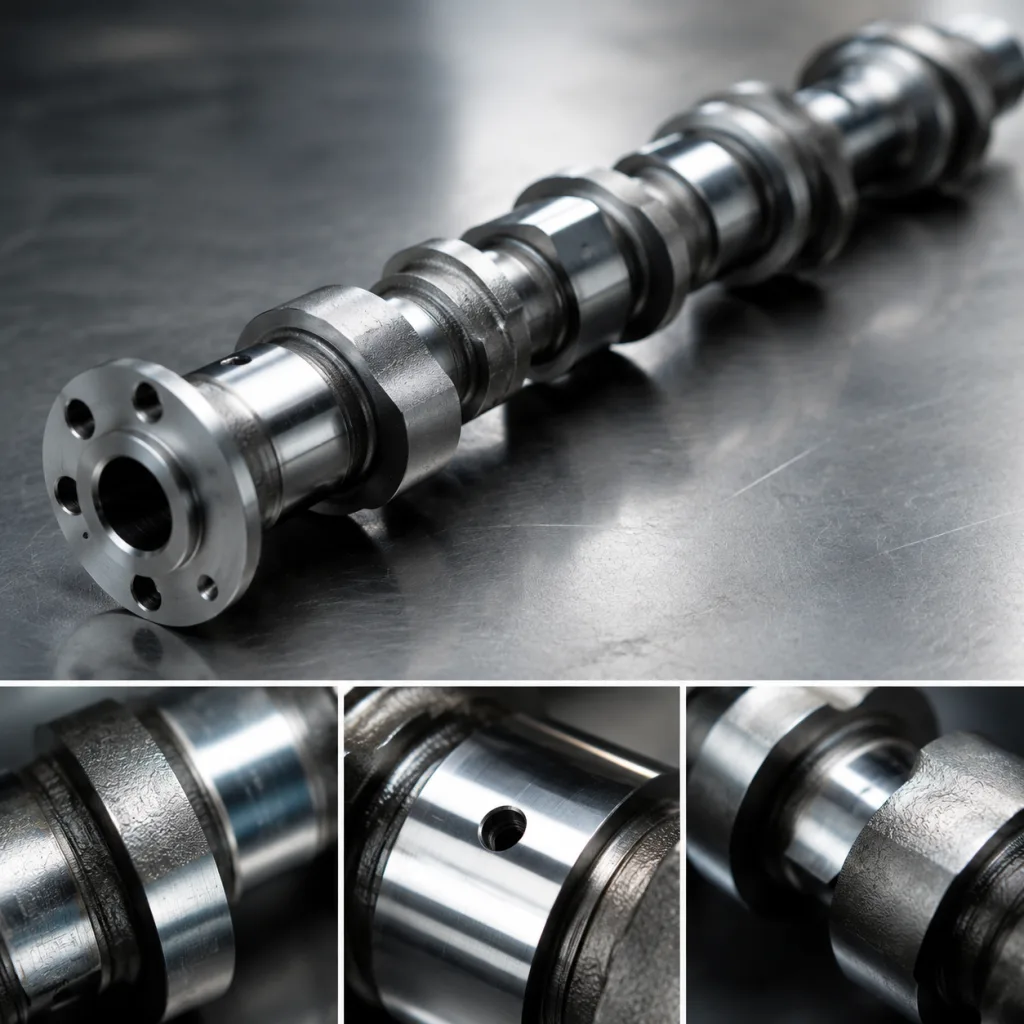
OE-equivalence is not vehicle manufacturer approval. In aftermarket sourcing, it means the replacement component is engineered to match the functional geometry, installation interfaces, and performance requirements of the original application. For a Mazda CX-5 camshaft, the gate should cover lobe timing, lobe lift, journal diameter, thrust-face location, sprocket or phaser interface, oil passages, and sensor trigger features where applicable.
Treat fitment listings as a lead, not approval evidence. A supplier may list compatibility with a vehicle model while still missing an engine-code variation, intake/exhaust difference, model-year change, or regional emissions configuration. The decision file should connect the part number to a defined comparison basis.
A practical sourcing file should include:
Application fitment list by engine code, camshaft position, intake or exhaust side, and model-year range
OE number, buyer reference, sample ID, and revision level used for reverse engineering or drawing approval
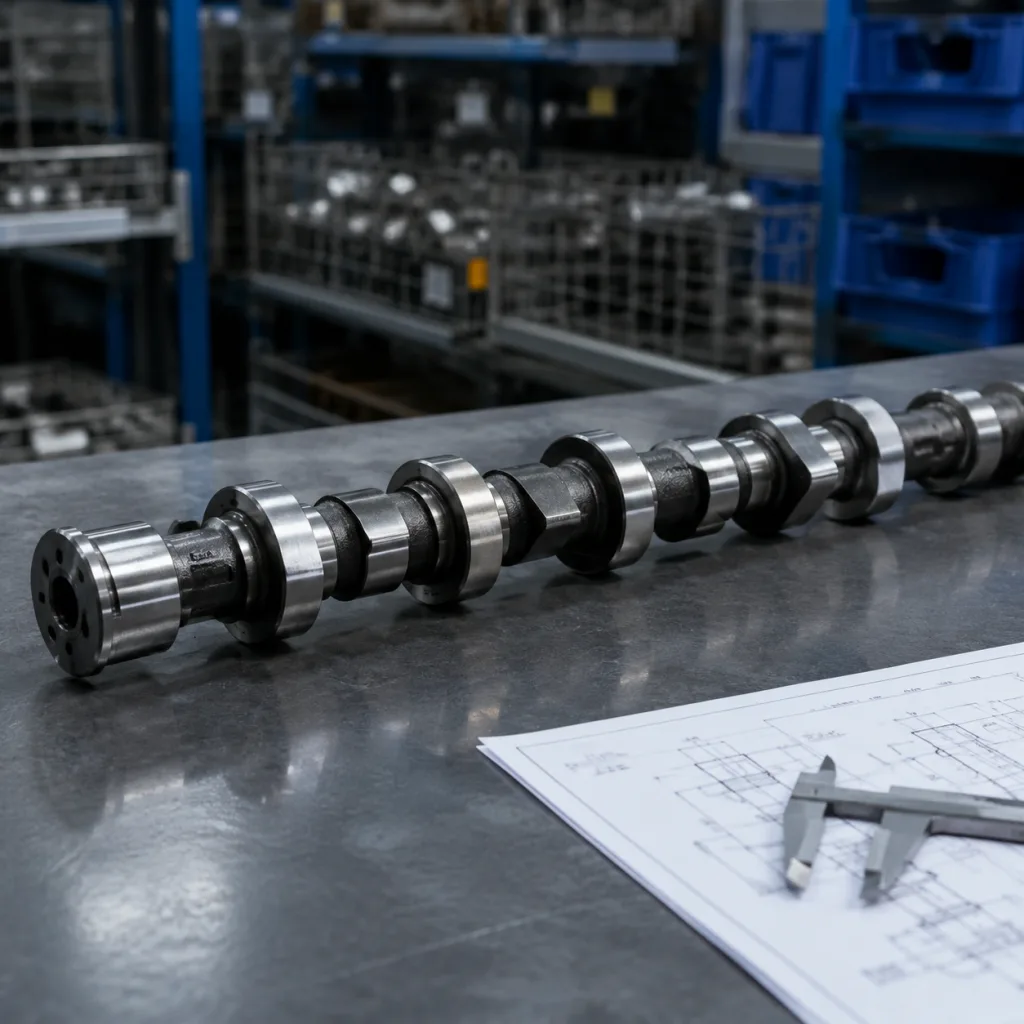
Dimensional inspection report measured against approved drawings or validated master samples, with actual values rather than pass/fail marks only
Material grade, casting or steel batch information, and heat-treatment certificate linked to the production lot
Surface hardness and case-depth records where the design requires hardened lobes, journals, or thrust zones
Runout, straightness, and thrust-face inspection data, including fixture datum and gauge resolution
Oil-hole diameter, angle, position, chamfer, and burr-removal inspection results
Keyway, dowel, slot, bolt, reluctor, or phaser-interface inspection results with angular datum definition
Export packaging specification covering VCI bag, anti-rust oil, end protection, carton strength, and pallet layout
Batch traceability code linked to inspection records, material batch, production date, and carton label
For RFQ control, ask the supplier to separate sample price, tooling or fixture cost if any, mass-production unit price, and documentation cost. A usable first quote should state MOQ per reference, price breaks at agreed volumes, sample lead time, pilot-order lead time, and repeat-order lead time. Driventus supports cross-reference checks through our catalog and related engine parts under engine components.
Failure Modes Hidden Behind a Correct Fit
A camshaft can sit in the cylinder head and still fail the programme. Procurement should focus on the features that control timing accuracy, oil-film stability, assembly interchangeability, and signal integrity. A visual match helps only at the beginning. The expensive problems usually appear after installation, hot running, or extended service.
Feature
Procurement check
Typical sourcing target
Risk if missed
Cam lobe lift
Compare measured lift with approved drawing tolerance
Often within 0.01-0.03 mm of specification
Weak breathing, power loss, emissions complaints
Lobe angular position
Verify timing relationship between lobes and drive interface
Commonly within +/-0.25° to +/-0.50° where specified
Incorrect valve events and drivability issues
Base circle diameter
Confirm consistency across all lobes
Commonly within 0.01-0.02 mm on a controlled batch
Preload variation, noise, or follower problems
Journal diameter
Measure with calibrated micrometers or air gauges
Often controlled within 0.005-0.015 mm depending on journal size
Oil-clearance error, seizure, or low oil-film support
Journal roundness/cylindricity
Inspect on V-block, air gauge, or CMM plan
Frequently targeted below 0.005-0.010 mm
Local oil-film collapse and uneven wear
Total indicated runout
Inspect between centres or on a validated fixture
Commonly held within 0.02-0.05 mm
Vibration and uneven follower loading
Thrust face width and position
Verify against mating cylinder-head geometry
Drawing-controlled; record actual end-face distance
Excess axial movement or end-play noise
Sprocket or phaser interface
Check key, slot, pin, bolt, and seating features
Angular datum and seating face must match master sample
Shifted valve timing alignment
Oil feed holes
Confirm diameter, angle, position, and burr removal
Hole size and chamfer inspected 100% on launch lots
Lubrication restriction or particle release
Sensor trigger profile
Inspect profile and angular position where used
Profile and phase verified against datum fixture
Incorrect engine position signal
</tr></thead><tbody> </tbody></table>The numbers above are sourcing targets, not universal specifications. Final tolerances must come from the approved drawing, a controlled master-sample study, or the buyer’s engineering standard. For a camshaft for Mazda CX-5 OE equivalent programme, the supplier should state which dimensions are checked 100%, which are sampled, and which are audited only during first-article approval.
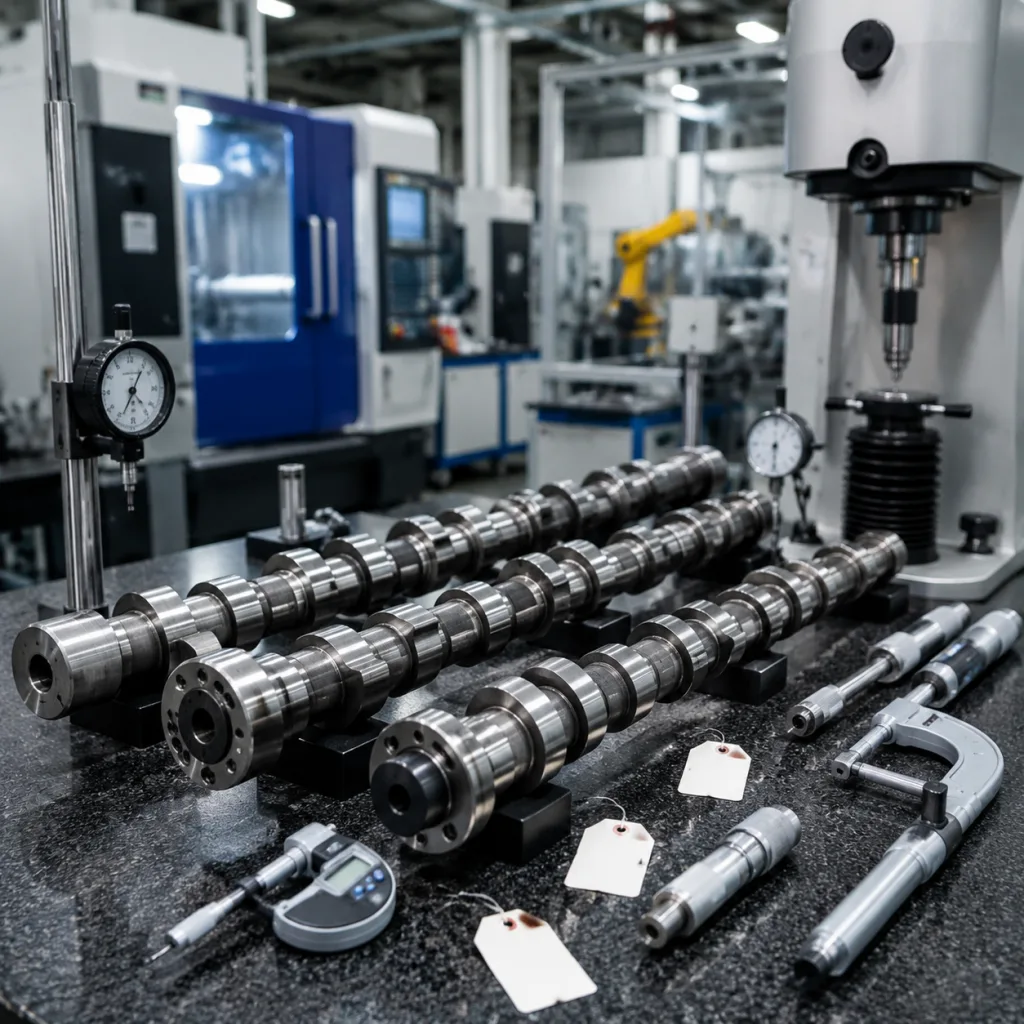
Inspection planning should happen before shipment. A sensible launch plan is 100% inspection of the drive interface, oil holes, visual defects, and major journals for the pilot lot, followed by AQL or statistically defined sampling after capability is proven. Critical features should use calibrated gauges with 0.001 mm or 0.002 mm resolution where required. Geometric tolerancing should follow recognised drawing practice such as ISO 1101 when specified by the customer drawing.
When an importer requests camshaft for Mazda CX-5 OE equivalent supply, Driventus reviews application data, sample references, drawings, and inspection requirements before confirming production feasibility.
Spec Deep-Dive: Material, Hardness, and Finish
A camshaft is a contact-stress component. It works through repeated loading, bending, mixed lubrication, and cold-start boundary conditions before a full oil film is established. Material selection and hardening control therefore decide more than wear life; they influence noise, scuffing risk, and warranty exposure.
Depending on the application design, camshafts may use chilled cast iron, forged steel, or machined steel blanks. The correct route depends on engine architecture, follower type, lubrication conditions, and target wear resistance. Do not approve a material from a generic line such as “cast iron” or “steel.” The RFQ should require the actual grade or agreed equivalent, chemical composition range, hardness target, heat-treatment route, and surface-finish target.
Common buyer checks include lobe hardness reported in HRC or HV, journal hardness where applicable, effective hardened depth or chill depth where the design requires it, and metallographic evidence if the drawing calls for carbide, graphite, or microstructure control. Typical aftermarket sourcing targets may place cam-lobe surface hardness around 50-60 HRC for hardened steel designs, or equivalent wear-resistance targets for chilled cast iron. The approved sample and drawing decide the final acceptance range.
Manufacturing control should cover melt or steel batch traceability, machining sequence, lobe grinding stability, heat-treatment validation, final cleaning, and corrosion protection. Lobe and journal surface finish must retain oil without accelerating follower, bucket, or bearing wear. As a practical RFQ target, buyers often request lobe roughness around Ra 0.2-0.4 μm and journal roughness around Ra 0.2-0.8 μm, subject to the original design and lubrication system.
Small edges matter. Oil holes need controlled deburring because loose particles or raised burrs can damage bearings, followers, or oil-control components. Ask how the supplier confirms cleanliness: washing, air blow-through, magnetic cleaning, borescope review, pin-gauge checks, air-flow checks, or flush inspection.
Useful records include hardness maps, metallographic checks where specified, grinding wheel dressing controls, magnetic particle inspection where applied, surface roughness data, straightening records if used, and final cleanliness checks. For EU and UK importers, material declarations should also support compliance screening under REACH (EC) No 1907/2006 when relevant to supplied articles, coatings, anti-rust oils, and packaging materials. Driventus manufactures engine and powertrain components under IATF 16949:2016 and ISO 9001:2015 systems. The quality system covers incoming material verification, controlled production routing, gauge calibration, nonconforming product handling, corrective action, and batch traceability.
Validation Path: From Sample to Repeat Order
Do not let one clean sample report carry the whole programme. Replacement camshafts should pass dimensional, material, and functional validation before repeat orders are released. The exact test plan depends on engine family, annual volume, warranty exposure, and buyer risk profile, but the following checks are normally relevant for distributor, wholesaler, and repair-chain programmes.
First-article dimensional inspection covering journals, lobes, thrust surfaces, and drive features, with at least 3-5 launch samples measured in full where volume justifies it
Verification of lobe angular position, base circle consistency, and total indicated runout against a named datum system
Hardness testing on specified lobe, journal, and thrust-face zones, including minimum, maximum, and average values
Surface roughness measurement on lobes and journals, with stylus direction and cutoff recorded where required
Oil-hole cleanliness, edge condition, and burr inspection, preferably 100% for pilot lots and after tool changes
Trial assembly against a representative cylinder head or validated fixture to confirm journal seating, thrust control, and drive alignment
Phaser, sprocket, reluctor, or sensor feature check where the target application uses timing feedback or variable valve timing
Packaging drop, vibration, or corrosion-protection review for long-distance export lanes, including 24-72 hour internal rust-risk checks where transit humidity is a concern
Lot traceability audit from raw material or blank to finished carton, including retained sample location and retention period
The best validation package is repeatable lot by lot. Later production may use a different blank batch, heat-treatment load, grinding setup, or operator shift. Ask whether the supplier tracks process capability on critical dimensions. For stable production, many buyers expect Cpk of 1.33 or higher on selected characteristics such as journal diameter, lobe lift, and runout. Warranty-sensitive programmes may require higher internal targets.
A practical release path is sample approval, pilot lot, first mass-production lot, then repeat shipment monitoring. Planning ranges often look like this: samples in 10-20 working days after confirmed drawings or master samples, pilot production in 30-45 days depending on blank availability, and repeat orders in 30-60 days after deposit and packaging approval. These are not guaranteed lead times. Final timing depends on MOQ, fixture readiness, heat-treatment capacity, inspection documentation, and export booking.
Repair-chain buyers should also plan for warranty analysis before returns happen. If a camshaft shows lobe wear, scoring, or abnormal noise, the root cause may involve oil starvation, incorrect installation, contaminated lubricant, damaged followers, timing error, or a material issue. A supplier with retained samples, production-marking photos, and traceable batch records can support a faster, more objective review.
Commercial Trade-Offs Importers Should Price In
Technical approval and commercial terms are connected. A camshaft that passes inspection can still create cost if labels are inconsistent, cartons fail, lead times slip, or claim handling is slow. Importers need stable part numbering, clear application identification, reliable carton strength, neutral export packaging where required, and realistic lead-time assumptions. In aftermarket distribution, barcode accuracy can be as valuable as a small unit-price reduction.
Before placing a production order, confirm:
MOQ by camshaft reference, engine application, and packaging configuration, separating bare part MOQ from private-label carton MOQ
Price breaks by annual forecast and shipment quantity, such as sample, pilot, 100-piece, 300-piece, and 500-piece tiers where commercially relevant
Lead time for samples, pilot order, documentation review, repeat production, and packaging artwork approval
Whether PPAP-style documentation can be prepared when required by the buyer, and whether Level 3-style packs, control plans, or FMEA summaries are included or quoted separately
Country-specific labelling, language, barcode, EAN/UPC, QR code, or documentation needs
Engineering change notification procedure for drawings, materials, tooling, surface treatment, heat treatment, or process routes
After-sales process for technical claims, returned parts, photo evidence, installation data, and batch investigation
MOQ and price logic should be transparent enough for purchasing to compare suppliers fairly. A lower unit price may depend on shared blanks, common machining fixtures, neutral packaging, or consolidated shipment. A higher unit price may be justified when the buyer requires private-label cartons, 100% inspection, additional hardness mapping, full PPAP documentation, special anti-rust packaging, or low-volume mixed references.
For slow-moving camshaft references, ask whether MOQ can be combined across intake and exhaust versions or related engine applications. Do not assume mixed SKUs can share the same production setup. Cam profiles, phaser interfaces, and inspection fixtures may split production even when the vehicle model looks the same.
Driventus exports to more than 60 countries from Taizhou, Zhejiang, and supplies aftermarket distributors, wholesalers, OEM/Tier-1 purchasing teams, and multi-location repair chains. For private-label or application-specific requirements, buyers can discuss custom manufacturing, including drawing review, sample reverse engineering where legally appropriate, packaging configuration, inspection documentation, and export support.
Brand names and vehicle model names should be used only to identify fitment. Driventus is an independent aftermarket manufacturer; brand names are referenced for fitment only.
A 10-Step Approval Scenario for a New Supplier
Use a disciplined approval path when a new supplier quotes a camshaft for Mazda CX-5 OE equivalent programme. The goal is not to create paperwork for its own sake. The goal is to find mismatch early, while it is still a drawing question or sample correction, not a field claim.
Start with the target engine application. Confirm whether intake and exhaust camshafts differ by lobe profile, timing interface, sensor feature, oil-feed layout, or phaser connection. Then compare supplier data against drawings, master samples, and installation requirements. Do not approve a part only because it drops into the cylinder head. Correct valve timing, lubrication geometry, and surface durability are the real acceptance criteria.
A practical approval sequence is:
1. Confirm application scope, engine codes, camshaft position, intake or exhaust side, model-year coverage, and regional emissions version. 2. Freeze the comparison basis: OE sample, buyer drawing, supplier drawing, cross-reference list, and revision level. 3. Review supplier drawings, inspection plan, material specification, heat-treatment route, surface finish targets, and packaging plan. 4. Agree RFQ terms, including MOQ, price breaks, sample cost, documentation cost, tooling or fixture charge if any, Incoterms, and target lead time. 5. Receive samples with inspection reports, material records, hardness data, roughness results, and batch traceability. 6. Perform dimensional verification at the buyer facility or a third-party lab, focusing on lift, angular position, journals, runout, thrust control, and oil holes. 7. Conduct trial assembly, fixture check, or controlled field evaluation, including phaser/sprocket and sensor-trigger confirmation where applicable. 8. Approve pilot order only after deviations are resolved and documented with concession, corrective action, or drawing update. 9. Monitor early warranty feedback by batch, shipment date, customer channel, installer notes, and returned-part condition. 10. Move to repeat production only after lot records, packaging performance, and claim response time meet the buyer’s KPI.
For internal scorecards, buyers can assign weights such as 40% technical conformity, 20% quality-system evidence, 15% delivery reliability, 15% landed cost, and 10% documentation or after-sales support. This keeps the lowest piece price from overriding unresolved risks in runout, hardness, packaging, or traceability.
For camshaft for Mazda CX-5 OE equivalent sourcing, this process gives buyers a repeatable basis for supplier approval. It also creates clear evidence for internal sourcing files, customer audits, warranty discussions, and future reorders.
Frequently asked questions
No. OE-equivalent means the aftermarket part is designed to match the functional dimensions and installation requirements of the original application. It does not imply approval, endorsement, or supply by any vehicle manufacturer. Driventus is an independent aftermarket manufacturer; brand names are referenced for fitment only.
Request an application list, drawing-based dimensional report with actual measurements, material and heat-treatment records, hardness results, runout data, surface finish checks, oil-hole inspection results, packaging specification, MOQ, price tiers, lead-time assumptions, and batch traceability details. For repeat orders, ask how critical dimensions are controlled during production.
Yes. Driventus can discuss private-label packaging, application-specific inspection plans, and engineered supply requirements for qualified B2B buyers, subject to feasibility review, MOQ, documentation needs, artwork approval, inspection scope, and export requirements.
If you are qualifying a replacement camshaft programme, share the target application, sample data, required inspection scope, MOQ expectation, and annual demand so our team can review feasibility. You can [request a quote](/contact.html).