Camshaft Lexus Wholesale: Sourcing and Quality Checks
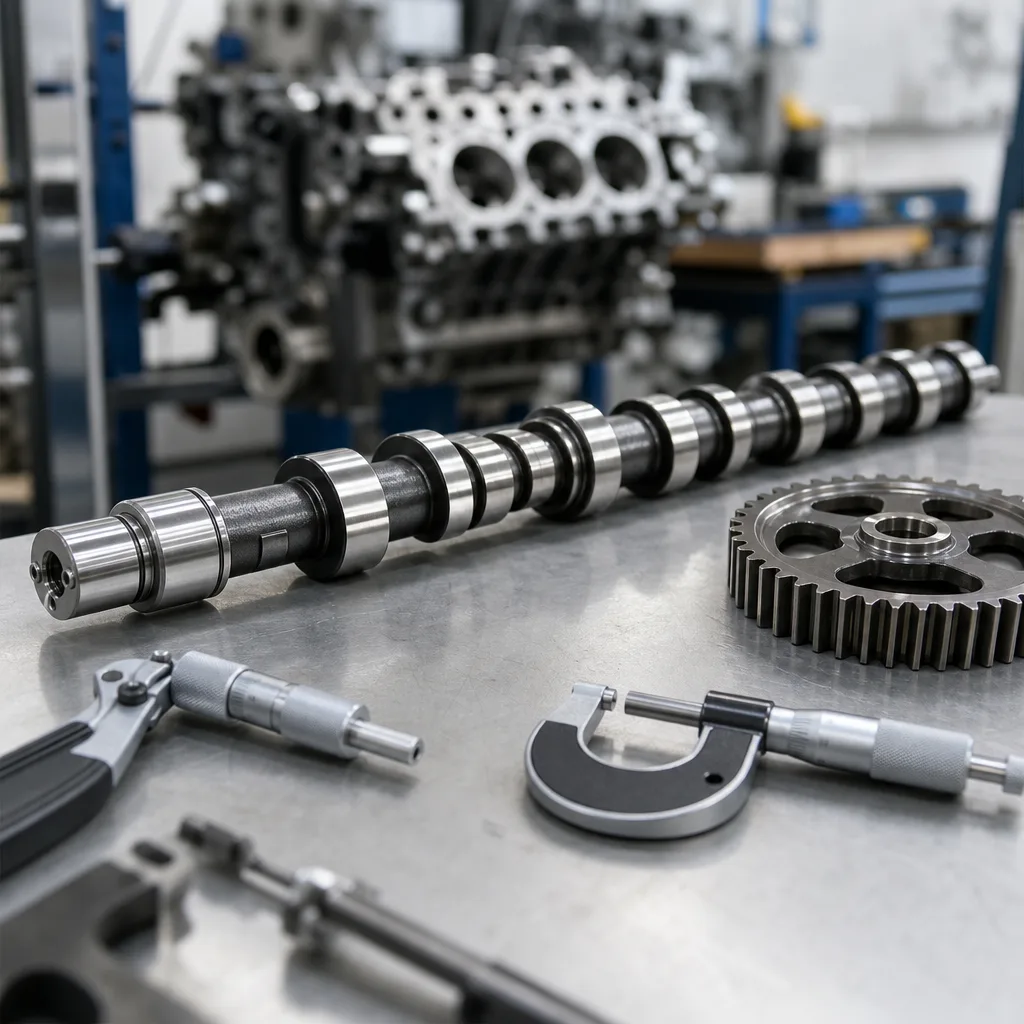
Lexus camshaft wholesale buyers should source by engine code, valve train layout, and OE reference rather than by badge alone. A camshaft that fits one revision can be wrong for another if the trigger pattern, VVT interface, or journal geometry changed. For distributors and repair chains, the priority is stable supply, repeatable dimensional control, and traceable packaging that supports warehouse handling. Driventus is an independent aftermarket manufacturer; brand names are referenced for fitment only. Our production and inspection flow is aligned with IATF 16949:2016 and ISO 9001:2015, and we can support REACH (EC) No 1907/2006 documentation where required. This article sets out the information buyers should specify, the measurements that matter, and the checks that reduce returns in Lexus replacement programs.
What buyers should specify first
Start with the engine code, intake or exhaust position, and whether the application uses fixed timing or VVT-i hardware. Lexus fitment data can look simple at the catalogue level, but the wholesale decision depends on revision control, not the badge on the grille.
For a clean sourcing request, include:
engine code and model-year range
intake/exhaust and left/right bank position
OE reference or approved sample
target market and carton marking rules
annual forecast, first order quantity, and pallet pattern
That package lets us verify interchangeability before production starts and avoids late changes after sampling. See our catalog and engine components for the current scope of supply.
Dimensions and materials that affect fitment
Dimensional control is what separates a usable replacement part from a return. Buyers should require a lot-level inspection report, not just a pass/fail statement.
Control item
What to verify
Why it matters
Journal diameter
Match to drawing and bearing clearance
Prevents oil loss and seizure
Lobe lift and base circle
Compare to OE pattern or approved sample
Affects valve timing and airflow
Overall length and nose geometry
Confirm against the engine family
Avoids interference with caps and sensors
Runout and concentricity
Measure across journals and lobes
Reduces vibration and wear
Surface hardness or treatment
Confirm by process record or test
Supports service life
</tr></thead><tbody> </tbody></table>Common material routes include chilled cast iron, forged steel, and machined billet steel. The correct option depends on the platform, duty cycle, and target cost. For repeat orders, lock the acceptance band to the drawing and keep the approved master sample under revision control.
Quality controls buyers should ask for
Wholesale buyers should ask for the records behind the inspection result. Our quality system is structured around IATF 16949:2016 and ISO 9001:2015, with lot traceability and controlled release procedures.
A practical release file normally includes:
material certificate and heat traceability
dimensional inspection report for the sampled batch
hardness or treatment verification where applicable
packaging audit for rust protection and label accuracy
REACH (EC) No 1907/2006 declaration when chemical compliance data is required
For camshaft production, we also check lobe profile, sensor trigger features, and post-machining cleanliness. If a buyer cannot review those records before first shipment, the risk moves to the warehouse and then to the workshop.
MOQ, lead time, and supply models
Lead time and MOQ depend on the process route, not just the part size. A program built on existing tooling can move faster than a fully custom profile, but every buyer should separate sample approval from production release.
</tr></thead><tbody> </tbody></table>For wholesale planning, share annual volume, target months of cover, and packaging format early. That helps set batch size, corrosion protection, and carton count without carrying excess inventory. If you need mixed-SKU consolidation, align the forecast first; it affects both unit cost and shipment cadence.
Fitment notes for Lexus applications
Lexus applications need fitment checks that go beyond the badge. Many engines share architecture with other Toyota-group platforms, so a part can look correct while the cam sensor pattern, VVT actuator interface, or end machining is different.
Before release, confirm:
intake and exhaust part separation
sensor trigger pattern and phasing
cam cap and bearing journal arrangement
VVT compatibility where fitted
any supersession notes tied to the OE reference
If you are cross-referencing by OE number, validate the revision history and do not assume one number covers every market. We do not claim vehicle manufacturer approval. We supply independent aftermarket parts for fitment-based sourcing and repeat replacement programs.
Frequently asked questions
Engine code, intake or exhaust position, OE reference if available, annual volume, packaging requirement, and target market. A sample or drawing shortens validation time and reduces supersession errors.
Yes. Private label programs work best when carton artwork, barcode format, and lot-marking rules are fixed before sampling. We can align labeling, corrosion protection, and carton count to the buyer's distribution model.
Typical documents include a material certificate, dimensional report, inspection summary, and compliance statements tied to IATF 16949:2016, ISO 9001:2015, and REACH (EC) No 1907/2006 when requested.
If you are sourcing a Lexus camshaft program, send the engine code, OE reference, and forecast volume for a production review. Use [request a quote](/contact.html).