Camshaft for Lexus RX Aftermarket Replacement Guide
A camshaft for Lexus RX aftermarket replacement must do more than fit the cylinder head. For distributors, importers, and repair-chain buyers, the part must match OE valve timing geometry, journal dimensions, lobe profiles, surface hardness, and oil-feed features across applicable RX engine variants. Small deviations in lift, phase position, or journal finish can cause noise, oil-pressure loss, cam sensor correlation faults, or accelerated wear. This article outlines the sourcing criteria Driventus uses for replacement camshafts supplied to B2B aftermarket programs. It covers dimensional matching, material and heat-treatment controls, validation testing, packaging requirements, and documentation expectations for regulated import markets. Driventus is an independent aftermarket manufacturer; brand names are referenced for fitment only.
Replacement Fitment and OE-Equivalent Geometry
For Lexus RX applications, camshaft replacement programs usually cover multiple engine families, production years, and valve-train configurations. Procurement teams should not approve a camshaft only from a model name. The control point is the engine code, cylinder bank, intake or exhaust position, cam sensor trigger design, and variable valve timing interface.
A replacement camshaft should be validated against OE samples or confirmed drawings for:
Overall length and shoulder positions
Journal outside diameter and roundness
Lobe base circle, lift, and angular position
Cam phaser mounting face and dowel location
Sensor trigger tooth profile and timing reference
Oil-feed hole diameter, position, and chamfer condition
Thrust face width and surface finish
Where a buyer uses OE part-number cross-references, they should be treated as fitment references, not as a claim of vehicle manufacturer approval. If a program references a generic number such as OE 11251… or OE 06A…, the supplier should confirm the full application data, sample comparison, and drawing revision before quotation.
Driventus supports camshaft sourcing through our catalog and related engine components programs, including pistons, crankshafts, gaskets, timing components, and water pumps for engine repair supply chains.
Material, Machining, and Heat-Treatment Controls
Most replacement camshafts for this vehicle class are produced from chilled cast iron, ductile iron, or forged steel depending on the OE design and engine load profile. The correct material route is selected to match wear resistance, lobe contact stress, and machinability. Substituting material without validation can change scuff resistance or core strength.
Typical B2B specification points include:
Control item
Typical requirement for aftermarket replacement
Procurement risk if uncontrolled
Journal diameter
Matched to OE drawing or approved sample
Low oil pressure, seizure, bearing noise
Lobe lift
Controlled to drawing tolerance
Power loss, misfire, valve-train noise
Lobe angle position
Verified by cam measuring equipment
Cam/crank correlation fault, poor idle
Surface hardness
Process-specific hardness range
Lobe wear or brittle fracture
Runout
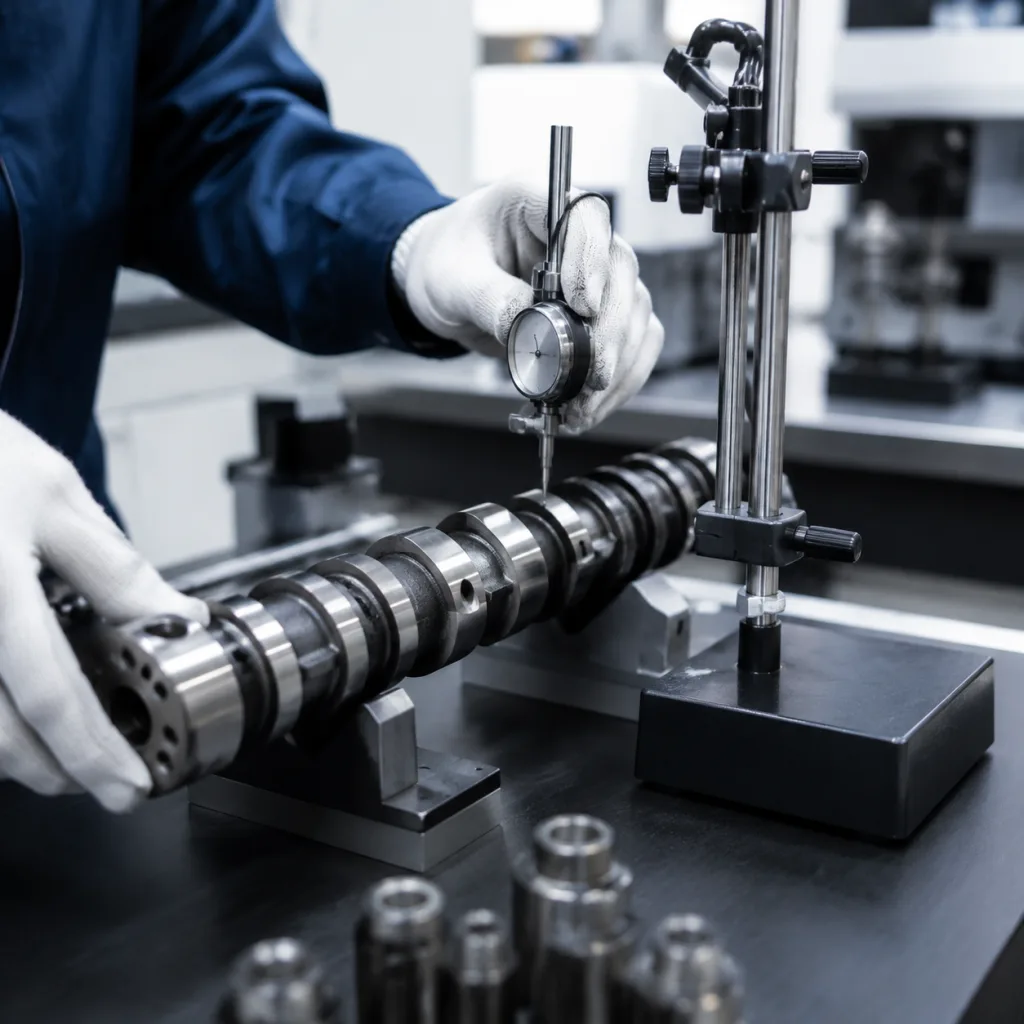
Checked between centres
Bearing load, rotational drag
Surface roughness
Controlled on journals and lobes
Oil-film failure, accelerated wear
Oil-hole deburring
100% visual or process-controlled
Blocked oil feed, metal debris
</tr></thead><tbody> </tbody></table>Heat-treatment validation should include hardness mapping on lobes and journals, microstructure checks where applicable, and process records by batch. For coated or induction-hardened designs, the case depth and transition zone should be controlled because excessive hardness depth can reduce toughness, while shallow treatment can cause premature lobe wear.
For importers, the main documentation requirement is consistency. A supplier should be able to provide material certificates, dimensional inspection reports, hardness data, and batch traceability without relying only on final visual inspection.
Validation Tests Before Series Supply
A replacement camshaft program should be validated before the first container shipment, especially when the buyer supplies mixed applications to repair chains or regional distributors. Driventus uses inspection plans aligned with IATF 16949:2016 and ISO 9001:2015 process discipline. These standards do not approve a specific product, but they define how manufacturing controls, corrective action, traceability, and change management are maintained.
Key validation checks include:
First article inspection against drawing or approved OE sample
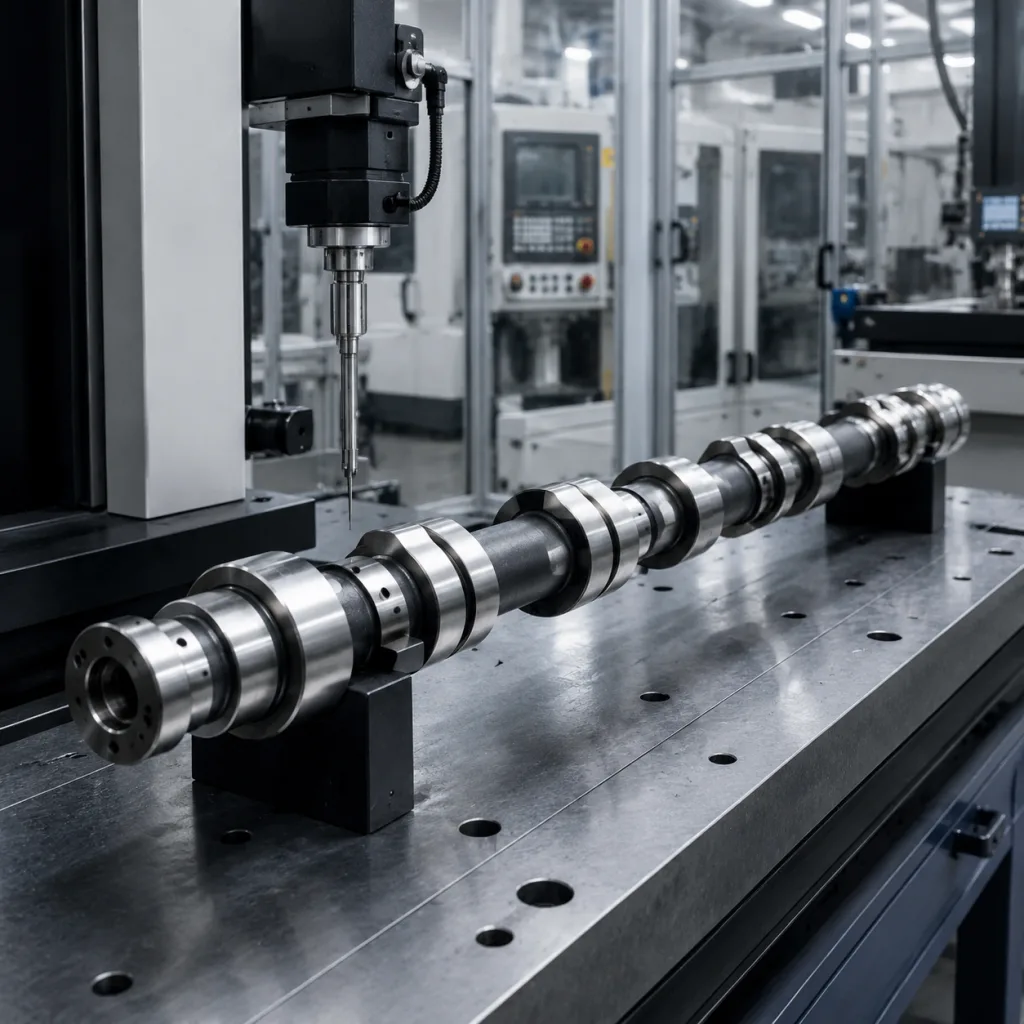
Cam profile measurement for lift curve and angular indexing
Journal roundness, cylindricity, and runout measurement
Hardness verification on functional surfaces
Metallographic inspection for selected batches or new processes
Oil-hole flow and burr checks
Trial assembly review with cam gears, phasers, caps, and seals where applicable
Packaging drop and corrosion-resistance review for export routes
For emissions-related engine parts, dimensional stability matters because incorrect valve timing can affect combustion quality and diagnostic readiness. Regulatory frameworks such as ECE R-83 and US EPA emissions requirements are vehicle-level requirements, not direct camshaft approvals. Procurement teams should still evaluate replacement parts for their effect on timing accuracy, fault-code risk, and repair repeatability.
If a buyer requires a private-label version, Driventus can discuss custom manufacturing, including drawings, marking rules, inspection levels, and packaging specifications.
What Buyers Should Verify in a Lexus RX Camshaft Program
For a camshaft for Lexus RX aftermarket replacement, the strongest purchasing file combines fitment data, engineering evidence, and commercial controls. A low unit price is not useful if the part creates claim exposure after installation.
A practical approval checklist should include:
Application list by engine code, year range, market, bank, and intake or exhaust position
Cross-reference table supplied by the buyer and verified by sample or drawing
Minimum three measured samples from pilot production
Critical dimensions agreed before mass production
Process flow chart covering casting or forging, machining, heat treatment, finishing, cleaning, and packing
Control plan for lobe profile, journals, hardness, oil holes, and runout
Batch traceability from raw material to finished carton
Anti-corrosion packing suitable for sea freight and warehouse storage
Clear warranty handling terms for dimensional or material nonconformity
Common rejection points
The most frequent issues in aftermarket camshaft sourcing are not visible in product photos. Buyers should pay close attention to cam sensor trigger position, lobe indexing, thrust face geometry, and oil-feed drilling. These features directly affect installation success and diagnostic fault risk.
Documentation for import markets
For EU and UK buyers, material declarations and restricted-substance controls may be required under REACH (EC) No 1907/2006. Packaging materials may also need to comply with local waste and recycling rules. For North America, buyers often focus on traceability, claim analysis, and private-label documentation. For Brazil and Australia, import documentation, carton markings, and corrosion protection during long logistics routes are common approval topics.
Driventus Manufacturing and Quality Controls
Driventus manufactures engine and powertrain components in Taizhou, Zhejiang, and exports to more than 60 countries. Camshaft programs are managed within a wider engine-component production environment covering pistons, crankshafts, gaskets, water pumps, turbochargers, and related repair parts. This helps procurement teams consolidate sourcing across matched engine repair categories.
Our quality system is structured around IATF 16949:2016 and ISO 9001:2015. For camshafts, the control plan normally covers incoming material inspection, machining datum control, lobe profile measurement, hardness checks, cleaning, preservation oil application, and final packing inspection.
Commercial program factors can be agreed according to buyer type:
Driventus is an independent aftermarket manufacturer; brand names are referenced for fitment only. No approval, endorsement, or authorisation by any vehicle manufacturer is implied.
Sourcing Notes for Cost, MOQ, and Lead Time
Camshaft cost depends on raw material route, machining complexity, heat-treatment process, inspection level, annual volume, and packaging. Intake camshafts with variable valve timing features or sensor trigger plates usually require tighter process control than simpler exhaust camshafts.
For new B2B programs, buyers should provide the following before quotation:
Target Lexus RX engine application and market region
Required intake or exhaust position and cylinder bank
OE reference format if available, such as OE 11251…
Annual forecast and first-order quantity
Packaging format: neutral, private label, or bulk service pack
Required inspection report format
Any restricted-substance or customer-specific requirements
Lead time is usually driven by tooling availability, sample confirmation, and the first article approval cycle. Existing applications can move faster than newly developed references, but Driventus recommends confirming pilot samples before mass shipment when the SKU is new to a buyer’s market. This reduces catalogue errors and helps avoid mixed-fitment returns.
Frequently asked questions
Confirm engine code, model year, market, intake or exhaust position, cylinder bank, cam sensor trigger design, and variable valve timing interface. OE references should be used only as fitment cross-references and must be checked against drawings or approved samples.
Useful documents include first article inspection reports, material certificates, hardness data, cam profile measurements, process flow charts, control plans, and batch traceability records. REACH (EC) No 1907/2006 declarations may also be needed for EU and UK import programs.
No. Driventus is an independent aftermarket manufacturer; brand names are referenced for fitment only. Replacement camshafts are developed for dimensional and functional equivalence, not as vehicle manufacturer-approved parts.
For drawings, sample review, MOQ, and lead-time discussion, contact Driventus to [request a quote](/contact.html).