Piston Ring Specifications: Sizes, Materials, Tolerances
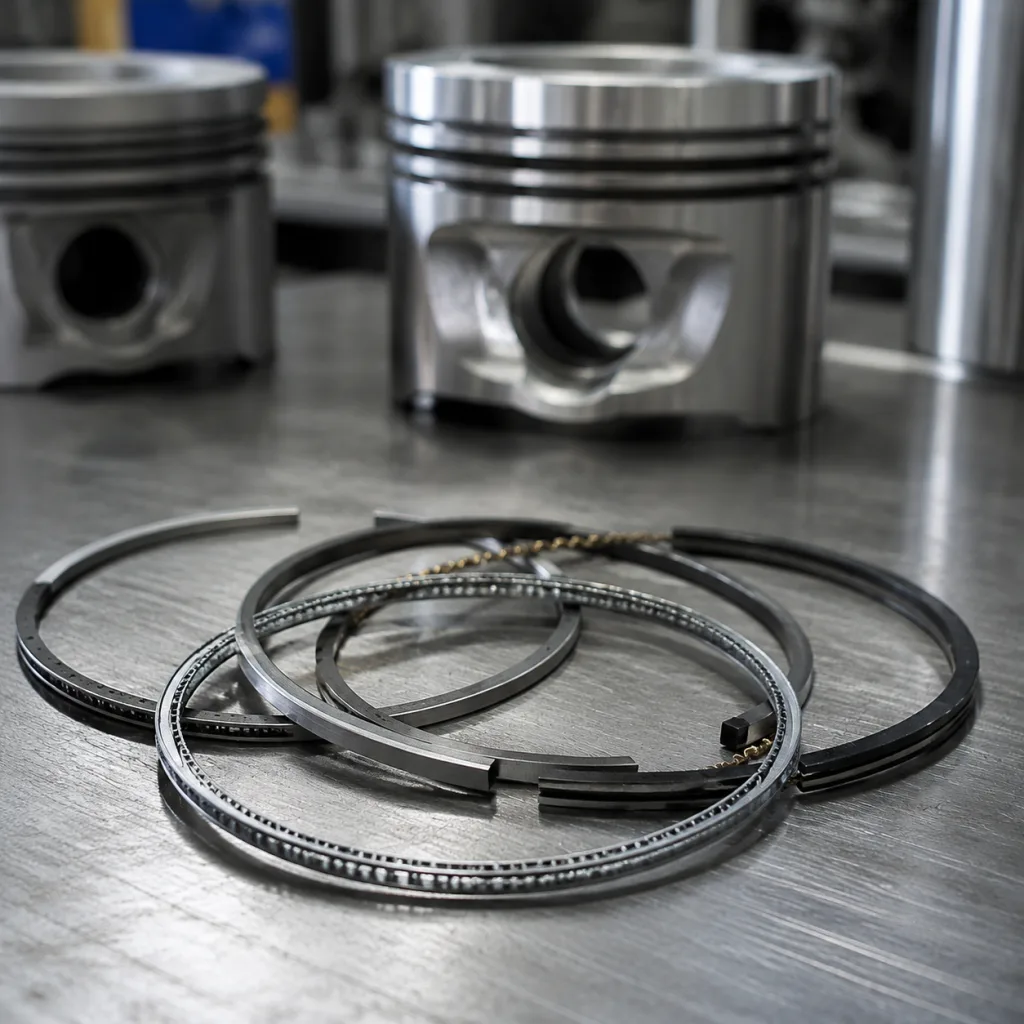
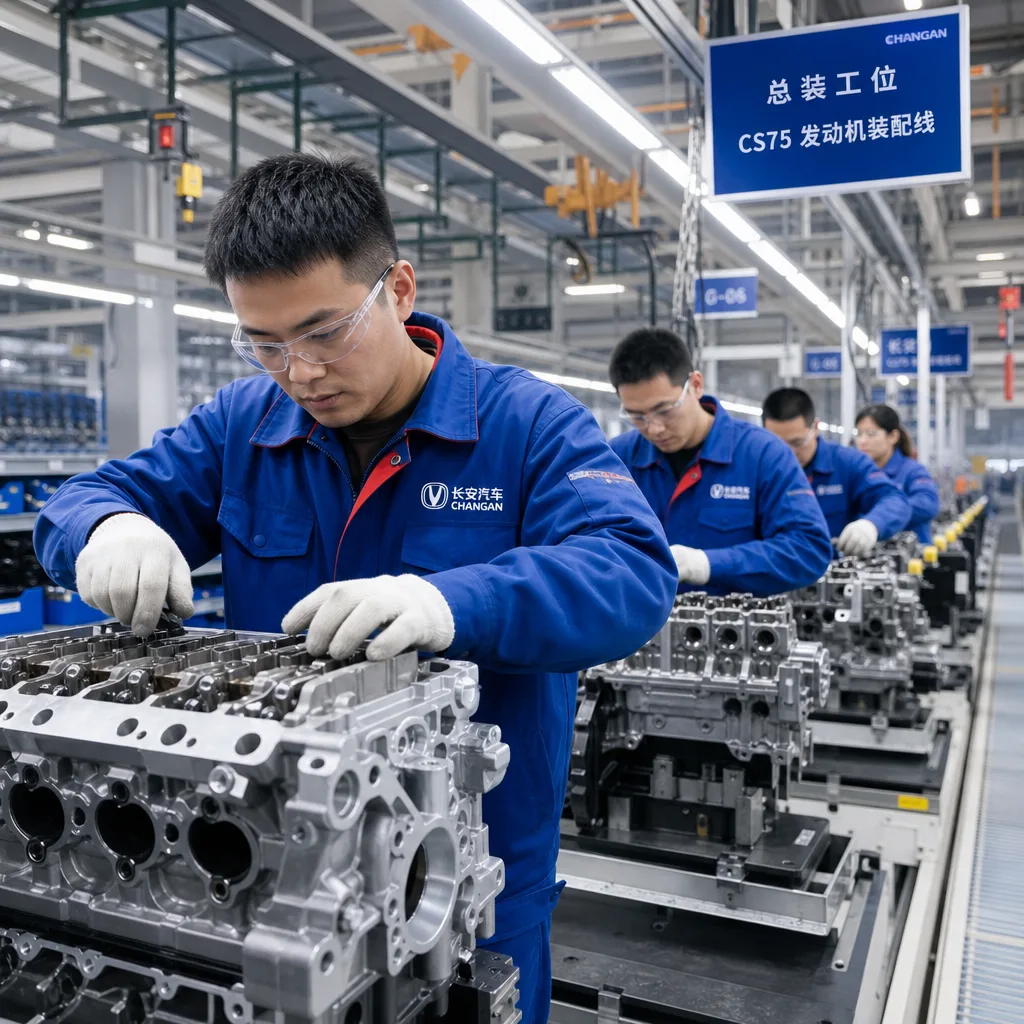
Piston ring specifications define the dimensional, material, and surface requirements that control sealing, oil management, and service life. For procurement teams, the real risk is not the nominal size alone but the full fitment envelope: bore diameter, axial thickness, radial wall, end gap, roundness, coating, and heat treatment all affect installation consistency and repeatability. Buyers sourcing for aftermarket, OEM, or repair-channel supply need specifications that can be measured the same way across batches and tied to the same acceptance criteria every time. Driventus is an independent aftermarket manufacturer; brand names are referenced for fitment only. We manufacture in Taizhou, Zhejiang, and supply engine and powertrain parts to 60+ countries under IATF 16949:2016 and ISO 9001:2015 controls. Use the notes below to compare technical drawings, verify acceptance criteria, and align samples with production requirements before launch or replenishment.
What actually controls fit? Start with the critical dimensions
Piston ring specifications usually start with the measurements that determine whether the ring fits the groove and the cylinder. For purchasing, these are the values that should appear on the drawing, inspection report, and packaging label.
Parameter
Typical specification range
What it controls
Buyer acceptance logic
Bore diameter
Match engine bore; common oversize steps are +0.25 mm, +0.50 mm, +0.75 mm, +1.00 mm
Cylinder fit
Verify against engine code, bore class, and repair size before PO release
Axial thickness
Common compression-ring widths: 1.0 mm, 1.2 mm, 1.5 mm, 2.0 mm; oil rings often 2.0–3.0 mm overall
Groove clearance
Reject if measured thickness varies outside the drawing tolerance band
Radial wall
Must match groove depth and installed tension requirement; commonly controlled within a narrow band such as ±0.02 to ±0.05 mm depending on design
Installed tension
Confirm ring force in the specified bore, not just nominal size
End gap
Often specified as bore diameter × 0.003–0.005 in. for performance applications, or by OEM drawing
Thermal expansion allowance
Measure in the intended cylinder, cold, using the approved gauge method
Free gap
Set by supplier process control and used for sorting
Ring opening before installation
Compare against the control limit on the inspection sheet
Face profile
Flat, taper-face, keystone, or barrel-face
Sealing and oil control
Match profile to ring position and application duty cycle
</tr></thead><tbody> </tbody></table>For commercial sourcing, ask for the complete dimensional set, not only the nominal bore size. If the part is supplied by OE reference, keep the cross-reference visible on the PO and carton label, for example OE 06A107065 when that format is already used in your programme. For repeat orders, require a first-article report with at least 5 samples per size, and define whether the pass rule is 0 defects or an AQL such as 0.65 for critical dimensions.
Material choice is a decision, not a label
Material selection affects wear rate, conformability, and break-in behaviour. The common piston ring materials are cast iron, ductile iron, and alloy steel, with surface treatments selected to match the duty cycle and operating temperature.
Cast iron: common for economy and general service; typical hardness after processing is often around 200–300 HV depending on chemistry and finish.
Ductile iron: offers improved strength and flex resistance for higher loading; often used where crack resistance matters.
Steel: used where higher tension, fatigue resistance, or thinner sections are required; top rings for modern engines are frequently steel.
Coatings: chrome, molybdenum, PVD, nitriding, phosphate, or graphite-based finishes depending on ring position and thermal load.
Heat treatment: normalize, quench-and-temper, or induction-related processes may be used to stabilize hardness and distortion control.
For sourcing, do not approve material by name alone. Ask for grade designation, hardness range, and heat-treatment condition on the drawing or mill certificate. A buyer-ready spec should state material grade, target hardness, acceptable hardness window, coating type, and whether the coating applies to the face only or the full circumference. Buyers should specify coating thickness only when the application truly requires it, because functional acceptance usually depends more on wear performance and hardness than on coating appearance alone. For export programmes, confirm compliance with REACH (EC) No 1907/2006 where applicable, especially for surface treatments, oils, and packaging materials.
Where tolerance stacks turn into rejects
Tolerance control is where supplier quality becomes visible. A ring set can match the nominal drawing and still fail if axial thickness, free gap, or face profile drifts beyond the allowed band.
What to verify on incoming inspection
Axial thickness at defined points around the ring
Radial wall and installed tension
End gap in the specified cylinder bore
Ring roundness and twist
Surface finish and coating continuity
Marking, orientation, and set completeness
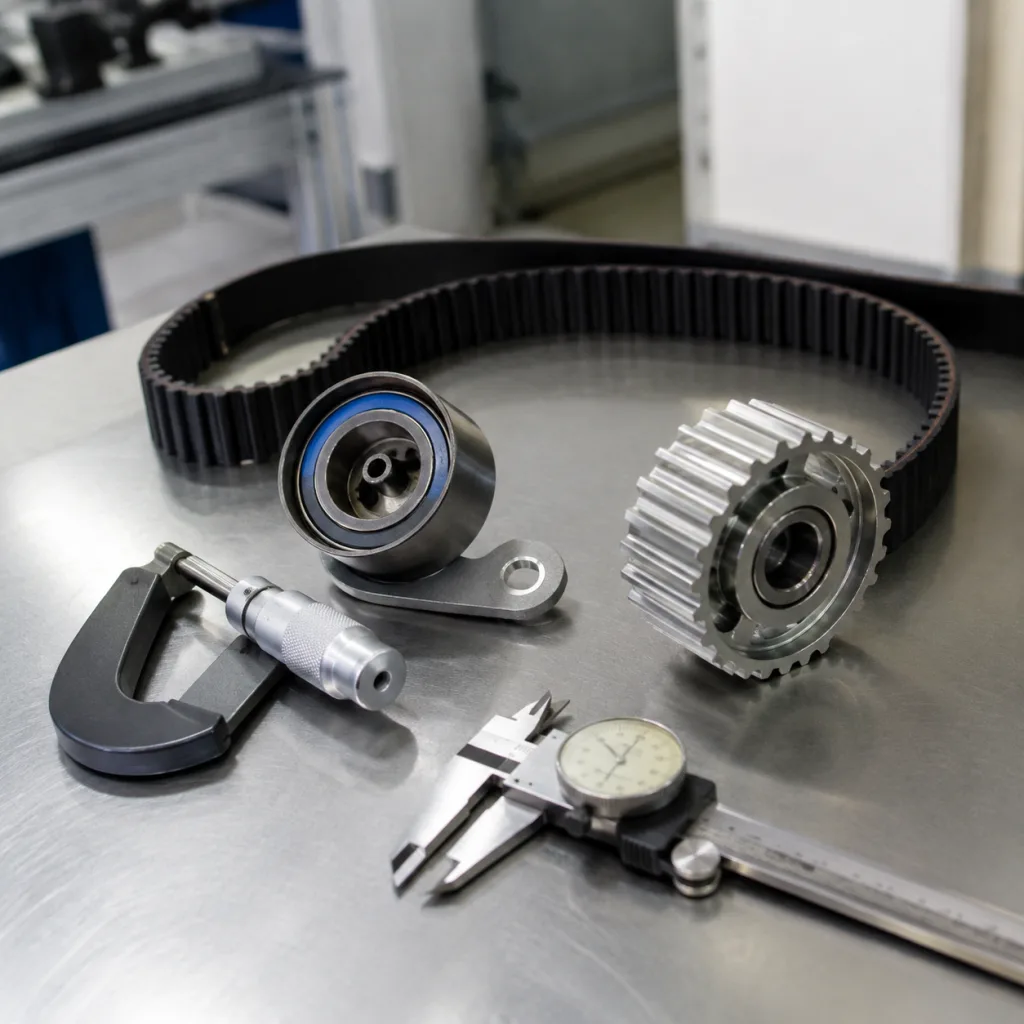
A practical buyer specification should include both the measurement tool and the tolerance location. For example, axial thickness should be checked with a micrometre at three or more positions around the ring, end gap should be measured in the actual bore or a certified master bore, and ring tension should be recorded as force at a defined diameter. Typical procurement language should state the tolerance and the acceptance rule, such as end gap 0.25–0.40 mm, measured in a 86.00 mm bore at 20°C, with no burrs or chips on the mating faces. For production use, request the inspection method together with the tolerance. A dimension without the measurement method is incomplete. If your programme includes durability validation, align the test plan with customer or internal standards such as SAE J2527 for corrosion or environmental exposure where relevant, and confirm any engine-duty validation against your own test matrix. For ongoing supply, agree on lot traceability, sample retention for at least 12 months, and a corrective-action response window of 48 hours for critical nonconformities.
Top ring, second ring, oil ring: same family, different specs
The top ring, second ring, and oil control ring do not carry the same requirements. Each position serves a different function and therefore uses different geometry.
Top compression ring: focuses on primary combustion sealing and heat transfer; commonly tighter face and finish requirements, with higher attention to wear resistance.
Second ring: supports secondary sealing and gas control; it often uses a different face profile and can have slightly different axial thickness or taper.
Oil control ring: manages oil film on the liner and typically uses a three-piece or slotted design; buyer specs should call out expander type, rail thickness, and oil return slot geometry.
This is why a correct part number match is not enough by itself. Two sets for the same engine code may differ by groove height, compression-height interface, or coating specification. For this reason, procurement teams should keep an approved sample, drawing revision, and carton photo on file when reordering. When comparing offers, ask the supplier to confirm each ring position separately, because a set price can hide differences in top-ring coating, second-ring taper, or oil-ring expander design. If the programme is price-sensitive, request a position-by-position BOM so you can see where cost is being added or removed.
How Driventus supports sourcing teams
Driventus supports B2B buyers that need stable repeat supply, technical documentation, and export-ready packing. Our piston ring programmes are controlled under an IATF 16949:2016 and ISO 9001:2015 quality system, with inspection records available for review through our quality system.
If you need a standard replacement programme, review our catalog and the broader engine components range. If the application needs a non-standard diameter, coating, or pack configuration, our custom manufacturing service can support drawing-based development and sample approval.
Typical buyer data to send:
Engine code or OE cross-reference
Bore size and ring pack quantity
Ring width, thickness, and end-gap target
Coating or material requirement
Annual volume and target market
Target MOQ, preferred incoterm, and required shipment window
Commercial logic we use for quoting: standard catalogue items are usually lower MOQ and shorter lead time; drawing-based or coated programmes usually require a higher MOQ, tooling or setup confirmation, and a longer sample-to-approval cycle. As a reference for planning, stocked items may quote on 300–500 sets minimum with 7–15 days lead time, while custom or non-stock ring sets commonly start at 1,000 sets MOQ with 25–45 days lead time after sample approval. For price comparison, ask for the unit price at 1k, 3k, and 5k sets, plus packaging cost, because ring price often changes materially with order volume and carton specification. If you are comparing suppliers, ask for inspection data, packaging specification, and lead-time confirmation before awarding the order.
Frequently asked questions
Send the OE cross-reference, bore size, ring width, thickness, ring count, coating requirement, target annual volume, target MOQ, and preferred delivery window. A drawing or sample is better than a description alone, and a photo of the old ring set helps confirm face profile and marking.
Not always. OE numbers help with fitment, but groove height, face profile, and coating can vary by engine version. Confirm the drawing and sample before approval, and ask the supplier to state the end-gap target, thickness tolerance, and ring-position breakdown on the quote.
Request dimensional inspection data, material traceability, packaging details, and the supplier’s IATF 16949:2016 or ISO 9001:2015 evidence where applicable. For controlled releases, also ask for first-article samples, hardness records, and a lot-traceability list tied to the batch shipped.
If you need a technical quotation or a drawing-based review, send your specification and we will confirm the matching option. Use /contact.html to request a quote.