Camshaft for Jeep Cherokee Aftermarket Replacement
A camshaft for Jeep Cherokee aftermarket replacement must do more than fit the cylinder head. For distributors, repair chains and importers, the part has to match the intended engine family, restore valve timing, control valvetrain noise and survive real service conditions across mixed vehicle ages. Dimensional errors in journal diameter, lobe lift, cam phasing features or surface hardness can create warranty returns even when the catalogue application looks correct. This article explains what procurement teams should verify before sourcing replacement camshafts for Jeep Cherokee applications. It covers OE-equivalent design targets, materials, machining control, validation testing, packaging and supplier documentation. Driventus is an independent aftermarket manufacturer; brand names are referenced for fitment only.
Application fitment and OE-equivalent design targets
Jeep Cherokee applications span multiple generations and engine layouts, so procurement should start with engine-code and production-date mapping rather than vehicle name alone. Depending on market and model year, replacement demand may involve inline four-cylinder, V6 or diesel engine variants. Each camshaft family can differ in journal count, sensor trigger features, oil feed design, thrust control and lobe profile.
For a camshaft for Jeep Cherokee aftermarket replacement, OE-equivalence means the component is engineered to match the original functional geometry for the stated application. It does not mean approval or endorsement by the vehicle manufacturer.
Key fitment controls normally include:
Camshaft overall length and journal spacing
Journal diameter, roundness and surface finish
Lobe lift, base circle and flank geometry
Thrust face width and end-float control
Timing slot, dowel, keyway or phaser interface position
Camshaft position sensor trigger pattern where applicable
Oil gallery location and chamfer geometry
Compatibility with existing followers, lifters, rocker arms and timing components
For catalogue development, buyers should request drawings or inspection reports tied to internal reference numbers and, where applicable, generic OE-style references such as OE 06A… only when already used in the sourcing data. Avoid relying on visual similarity or interchange claims without dimensional evidence.
Material, heat treatment and machining requirements
Camshaft durability is mainly controlled by metallurgy, lobe hardening depth, journal finish and profile accuracy. Aftermarket sourcing teams should define these characteristics in the purchase specification and verify them during production approval.
Common camshaft material routes include chilled cast iron, ductile iron, forged steel and assembled camshaft designs. The correct route depends on engine load, follower type and original design. Flat tappet, roller follower and finger follower systems impose different contact stress patterns, so substitution without engineering review can raise wear risk.
Requirement
Procurement check
Typical evidence to request
Material grade
Confirm casting or steel specification against application
Material certificate and chemical analysis
Lobe hardness
Verify surface hardness and hardening depth
Hardness test report and section sample data
Journal finish
Control oil film stability and bearing compatibility
Roughness report and roundness data
Lobe profile
Match valve lift and timing events
Profile measurement chart
Straightness
Prevent binding and abnormal bearing load
Runout inspection record
Cleanliness
Prevent oil gallery contamination
Cleaning process record and visual inspection
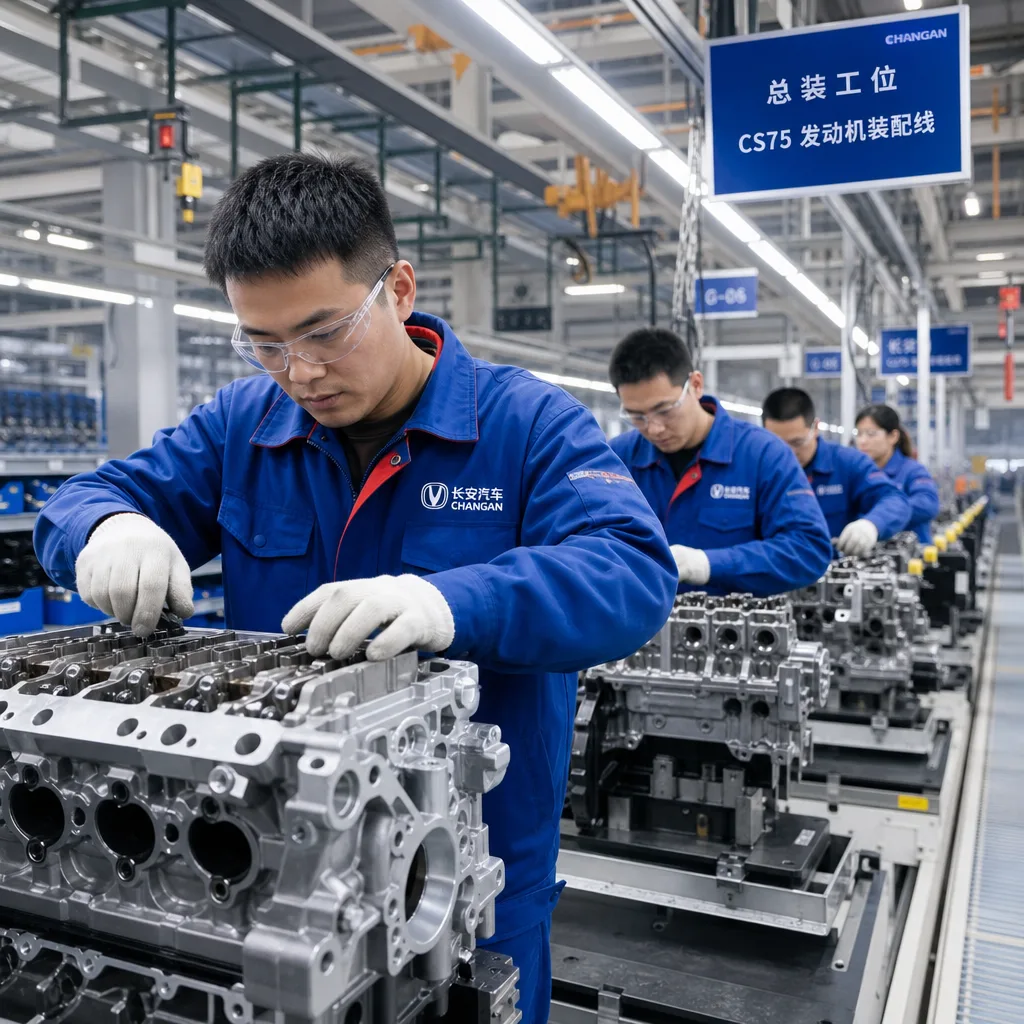
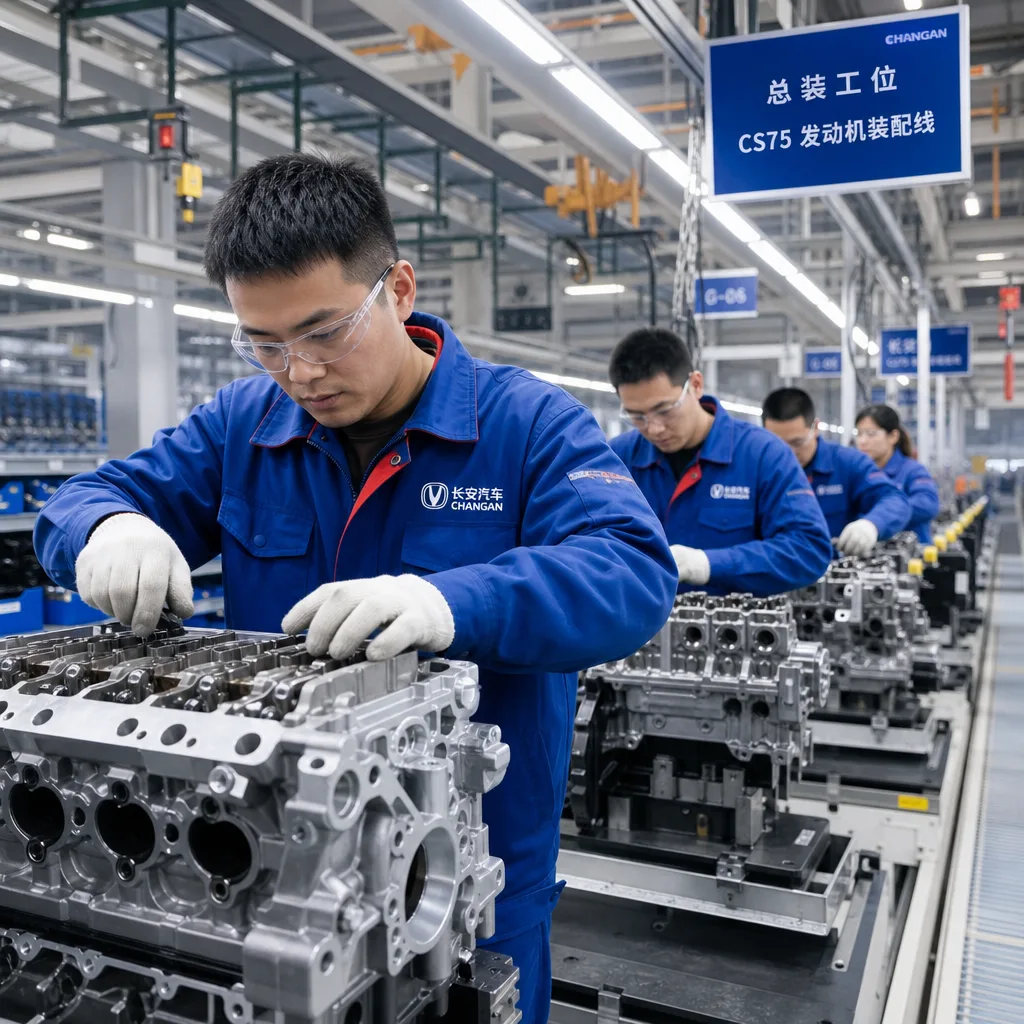
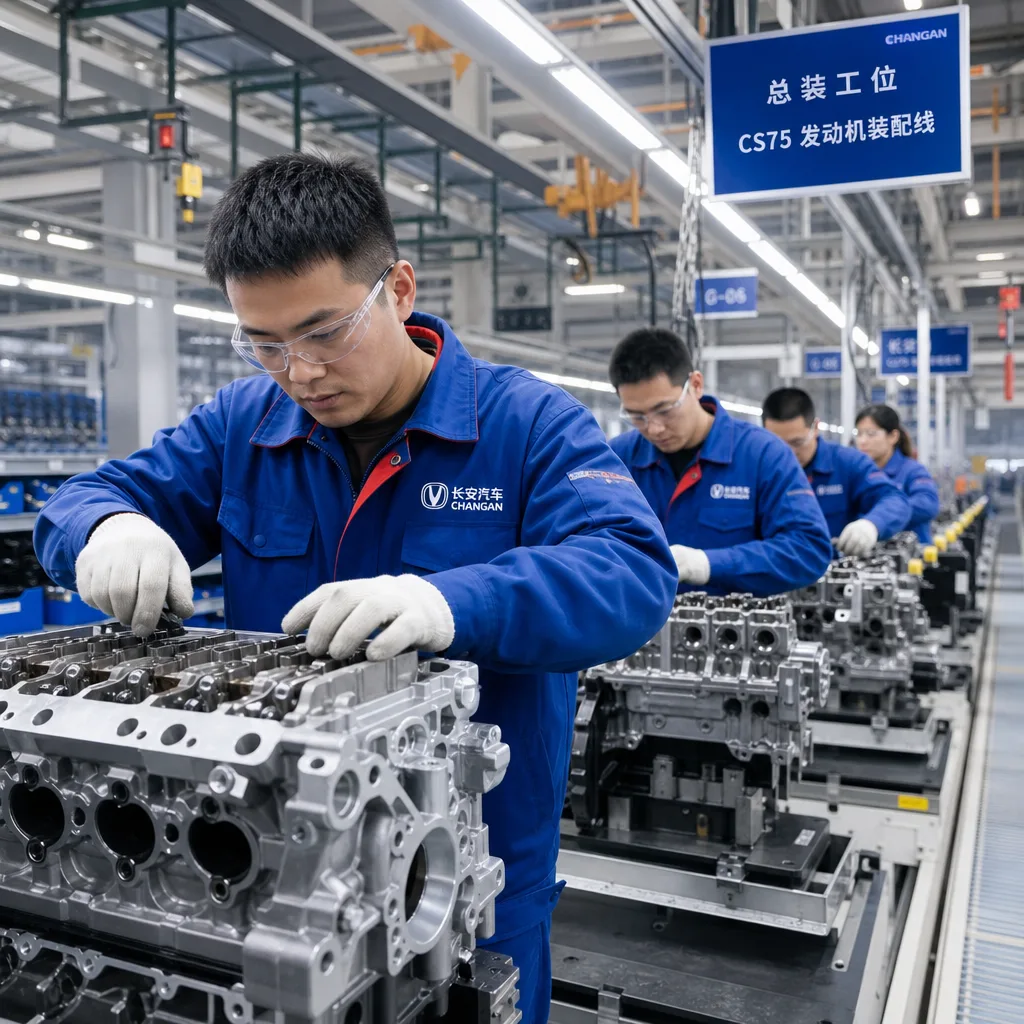
</tr></thead><tbody> </tbody></table>For high-volume aftermarket programmes, a supplier should control cam grinding, straightening and post-machining cleaning as repeatable processes, not as final-inspection corrections. Driventus manufactures engine components including camshafts, pistons, crankshafts, gaskets, water pumps and turbochargers in Taizhou, Zhejiang, with process controls aligned to IATF 16949:2016 and ISO 9001:2015. Related engine part families can be reviewed through our catalog and the engine component range at /products/engine-components.html.
Validation testing before releasing aftermarket stock
Replacement camshafts are often installed into engines with mixed mileage, reused valve train parts and variable lubrication history. Validation should therefore address both new-part conformity and practical installation risk. A correct test plan reduces the chance of noise complaints, premature lobe wear, timing correlation faults or oil pressure issues.
Recommended validation items for a camshaft for Jeep Cherokee aftermarket replacement include:
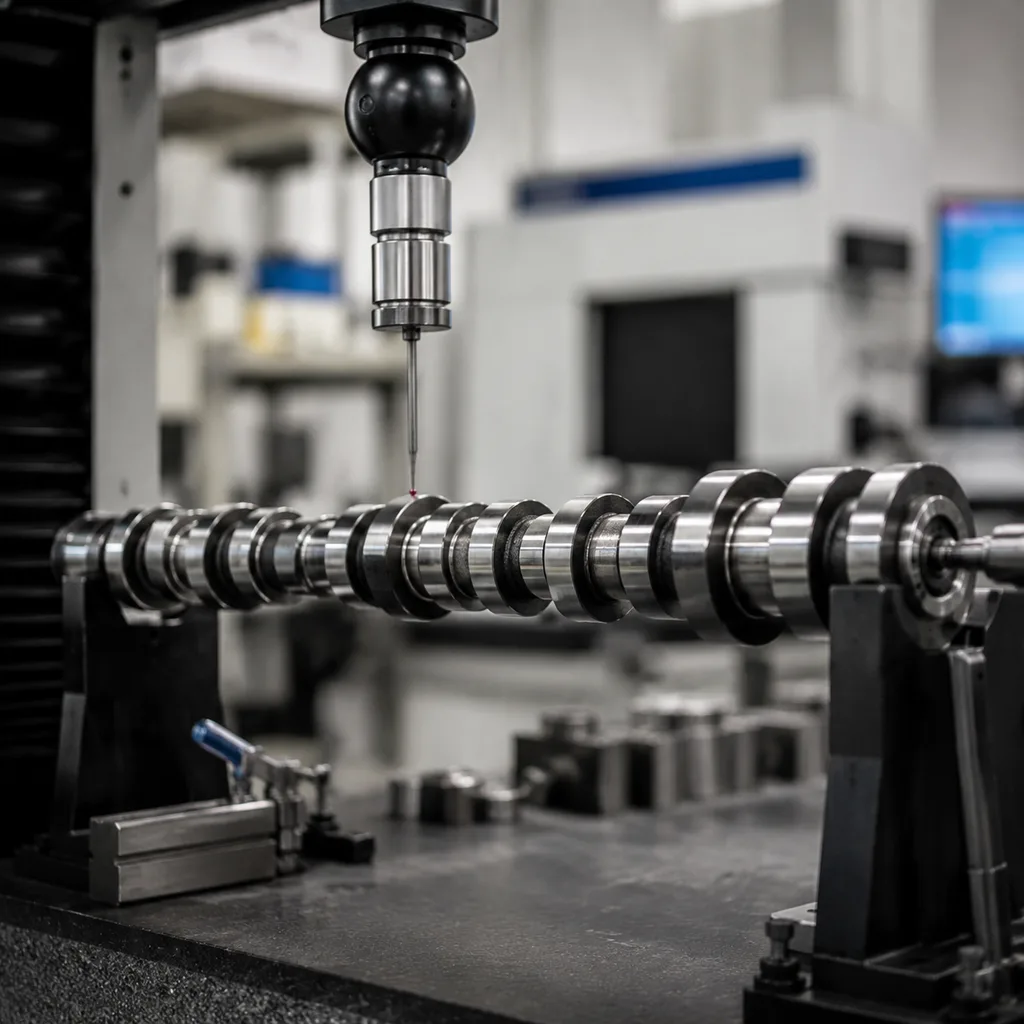
Dimensional first-article inspection: all journals, lobes, thrust faces, timing interfaces and sensor features measured against approved drawings.
Hardness verification: lobe and journal hardness checked at defined locations, with method and acceptance limits recorded.
Profile measurement: lift curve, base circle and angular relationship measured on calibrated camshaft inspection equipment.
Runout and straightness control: inspection before and after heat treatment or final grinding where the process requires it.
Surface roughness testing: journal and lobe finish checked to support oil film formation and follower compatibility.
Assembly trial: fitment into representative cylinder head or fixture, including rotation torque and end-float check.
Packaging transit test: protection against corrosion, lobe impact and journal bruising during sea freight and parcel distribution.
Where emissions-related engine operation is affected by valve timing, aftermarket suppliers should understand regional regulatory context, including ECE R-83 for vehicle emissions type approval in relevant markets. Component-level supply should not imply vehicle emissions approval unless such approval is specifically applicable and documented.
Replacement risks buyers should control
Most warranty issues linked to replacement camshafts arise from a combination of part mismatch, installation conditions and weak documentation. A technically sound supplier should help buyers separate product risk from workshop practice.
Common risk areas include:
Incorrect engine variant: the same vehicle model name can cover different cam profiles, sensor patterns and timing systems.
Mixed valvetrain wear: new camshafts installed with worn followers, lifters or rocker arms can suffer accelerated contact wear.
Lubrication contamination: old oil sludge or blocked galleries can damage journals shortly after installation.
Timing system condition: worn chains, belts, guides or phasers can create fault codes incorrectly attributed to the camshaft.
Inadequate break-in procedure: some cam and follower combinations require controlled lubrication and initial running conditions.
Weak packaging: small dents on lobes or journals can become early failure points.
For importers and distributors, these risks should be reflected in product notes, carton labels and technical bulletins. Repair chains should receive clear guidance on related replacement items, including lifters or followers where required by the engine design. This is particularly important when a replacement camshaft is sold into markets with older vehicle parc profiles, where reused adjacent parts are common.
Supplier documentation and quality controls for bulk sourcing
A reliable camshaft programme needs documented controls from drawing review to shipment. Buyers should ask how the manufacturer handles engineering changes, batch traceability, nonconforming material and corrective actions. Certification alone is not enough, but it provides a framework for audit.
Driventus operates under IATF 16949:2016 and ISO 9001:2015 management systems for automotive production control. Compliance topics for export programmes may also include REACH (EC) No 1907/2006 for substances of concern in the European Union, plus customer-specific packaging, labelling and traceability requirements. Buyers can review our quality system for the general approach to inspection, process control and documentation.
A practical supplier approval file should include:
Business licence and manufacturing scope
IATF 16949:2016 and ISO 9001:2015 certificates where applicable
Process flow chart and control plan
First-article inspection report
Material and heat-treatment records
Gauge calibration records
Packaging specification
Batch traceability method
Corrective action process for field claims
For private-label or application-specific programmes, custom manufacturing can support drawing-based development, alternative materials, packaging formats and agreed inspection plans. Minimum order quantity, lead time and tooling requirements depend on the engine family, annual volume and whether new fixtures or gauges are required.
Sourcing checklist for importers and repair chains
Before placing a blanket order, procurement teams should confirm the commercial and technical conditions in the same approval package. This prevents catalogue expansion from moving faster than engineering validation.
Use the following checklist when evaluating a camshaft for Jeep Cherokee aftermarket replacement programme:
Confirm target markets, engine codes, model years and fuel types.
Separate applications by camshaft position, bank and timing system where relevant.
Request drawings or controlled inspection dimensions for each reference.
Verify material, heat treatment, hardness and surface finish requirements.
Review first-article inspection and profile measurement data.
Confirm compatibility notes for followers, lifters, timing sets and oiling requirements.
Check corrosion protection for ocean freight and long warehouse storage.
Define carton labelling, barcodes, country-of-origin marking and private-label needs.
Agree warranty claim evidence requirements before shipment.
Audit supplier capacity, lead time and batch traceability.
A controlled launch can begin with a limited application set and expand after installation feedback. For distributors, this approach reduces slow-moving inventory. For repair chains, it improves technician confidence because fitment notes and related parts are verified before branch-level rollout.
Frequently asked questions
Confirm the exact engine family, model year range, camshaft position, timing interface and sensor trigger design. Then review dimensional inspection, lobe profile data, hardness records, material certificates and packaging protection. Catalogue fitment should be supported by controlled drawings or inspection reports.
No. OE-equivalent means the aftermarket part is designed to match the functional dimensions and performance requirements of the original component for the listed application. It does not mean approval, endorsement or supply status with the vehicle manufacturer.
Yes. Driventus can discuss private-label packaging, batch traceability, inspection plans and application-specific camshaft development depending on volume and technical requirements. Tooling, MOQ and lead time are confirmed after drawing and sample review.
If you are validating replacement camshafts for Jeep Cherokee applications, send the target engine codes, annual volume and packaging requirements to [request a quote](/contact.html).