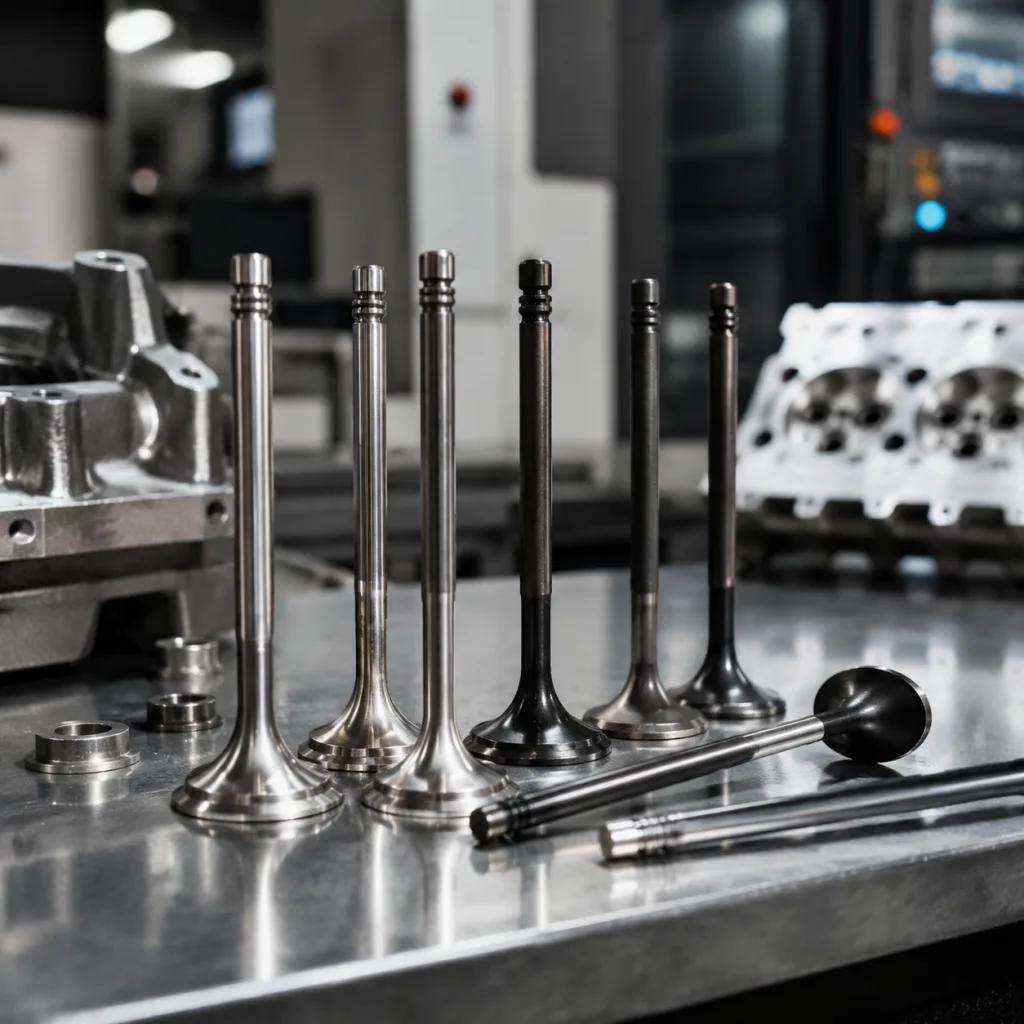
Cylinder liner Kia wholesale procurement requires more than a low unit price. Importers and engine parts distributors need stable bore geometry, correct sleeve interference, traceable materials, predictable packing, and documentation that can pass a customer or regulatory audit. Driventus manufactures dry and wet cylinder liners for passenger car and light commercial engine applications, including Kia-fit replacement programs supplied to aftermarket wholesalers and repair chain distribution. Production is managed in Taizhou, Zhejiang under IATF 16949:2016 and ISO 9001:2015 systems, with inspection records available by batch. This article explains what buyers should confirm before placing a volume order: material grade, machining tolerance, surface finish, MOQ, price drivers, lead time, sample validation, factory audit scope, and export documentation. Driventus is an independent aftermarket manufacturer; brand names are referenced for fitment only.
What wholesale buyers should specify before quoting
For a cylinder liner Kia wholesale enquiry, the most useful starting point is not the vehicle name alone. Buyers should provide the engine code, displacement, production year range, liner type, and any existing OE cross-reference if available. Where the programme covers multiple engines, a structured spreadsheet is preferable to mixed PDF screenshots because it lets engineering confirm bore groups, flange geometry and packing quantities faster.
Minimum RFQ information should include:
Engine family and displacement, for example 1.6 L, 2.0 L or 2.4 L gasoline or diesel applications
Liner type: dry sleeve, wet sleeve, semi-finished or fully finished
Required machining allowance, commonly 0.30–0.60 mm on semi-finished bores unless the drawing states otherwise
Surface finish requirement on the bore and seating faces, including Ra/Rz target if controlled
Quantity by part number and forecast by quarter, split into initial order and annual demand
Packaging requirement: neutral carton, customer brand carton, 1 pc box, 4 pc set or bulk service pack
Destination port, incoterm and documentation needs
For a faster quotation, include tolerances rather than only nominal dimensions. A typical dry sleeve drawing may call out OD tolerance within ±0.010–0.025 mm, bore roundness within 0.005–0.015 mm after finish machining, and flange parallelism within 0.02 mm, but the final limits must follow the application and buyer drawing. Wet liners also require sealing groove position, groove width, O-ring material requirement and protrusion target.
Driventus can cross-check drawings, samples and generic references such as OE 06A… or OE 11251… when supplied by the buyer. We do not claim approval or endorsement by any vehicle manufacturer. For broader engine part sourcing, buyers can review our catalog and the engine product range at /products/engine-components.html.
Material, machining and inspection points
Cylinder liners operate under repeated thermal cycling, ring contact pressure and combustion load. For Kia-fit aftermarket programmes, procurement teams should pay close attention to casting quality, hardness consistency and bore finishing. A low-cost sleeve with poor roundness, porosity or unstable hardness can increase oil consumption, ring scuffing and warranty returns.
Typical specification points used in Driventus quotations include:
Item
Typical procurement requirement
Verification method
Material
Centrifugal cast iron or alloy cast iron, such as HT250/HT300 equivalent or drawing grade
Spectrometer and batch certificate
Hardness
Commonly HB 190–260 depending on application
Brinell or Rockwell test, 3–5 pcs per lot or agreed AQL
Bore geometry
Roundness/cylindricity often controlled within 0.005–0.020 mm where finished
Air gauge, bore gauge, CMM where required
Surface finish
Honed cross-hatch or semi-finished bore; finished bore often Ra 0.4–0.8 µm
Roughness tester and visual inspection
Cross-hatch
Typically 35–45 degrees for finished bores unless buyer specifies
Visual comparison and surface check
Flange height
Application-specific tolerance, commonly within ±0.02 mm on critical faces
Height gauge and fixture check
Packing
Rust protection for 45–90 days sea freight exposure
Anti-rust oil, oil paper, VCI bag or sealed bag
</tr></thead><tbody> </tbody></table>The process normally starts with centrifugal casting or controlled alloy cast iron blank procurement, followed by rough turning, stress relief or ageing where specified, finish turning, boring, honing, flange machining, deburring, washing, anti-rust treatment and final inspection. For wet liners, groove machining and sealing-face inspection are added because an incorrect O-ring groove depth can cause coolant leakage even if the bore size is correct.
For fully finished liners, bore size and surface texture are critical. For semi-finished liners, buyers should confirm machining allowance so local engine rebuilders have enough stock for final boring and honing without cutting through hard spots or leaving taper. Inspection records can be tied to heat number, casting lot and production batch.
MOQ, lead time and order planning
MOQ depends on whether the liner is already tooled, whether the buyer needs custom packaging, and whether the item is ordered alone or with other engine components. Existing applications normally carry lower MOQ than new drawing-based parts because tooling, fixtures and inspection gauges are already available. New programmes need enough volume to cover casting batch set-up, machining fixtures, first-article inspection and packing material.
Typical wholesale planning parameters:
Existing liner applications: MOQ usually starts from 300–500 pieces per reference
Fast-moving references with existing stock or scheduled production: trial orders may be discussed from 100–200 pieces if combined with other engine parts
New or modified liner: MOQ commonly starts from 500–1,000 pieces per reference, depending on tooling and casting batch economics
Sample production: commonly 20–45 days after drawing and material confirmation
Mass production: commonly 35–60 days after sample approval and deposit
Private label packing: add 7–15 days for artwork approval, carton sampling and barcode verification if packaging is new
Mixed container programmes: liners can be consolidated with pistons, rings, gaskets and water pumps
Price is usually driven by casting weight, alloy grade, scrap rate, machining time, honing requirement, inspection frequency, packing format and order volume. A fully finished honed liner with tight bore geometry costs more than a semi-finished sleeve because it consumes more machining time, measuring time and rejection allowance. Very small orders also carry higher unit cost because fixture set-up, documentation and export handling are spread over fewer pieces.
For distributors, the best approach is to separate fast-moving references from long-tail applications. High-turnover Kia-fit liners should be forecast quarterly, with a rolling 3–6 month demand plan where possible. Slow-moving references can be consolidated into scheduled replenishment orders, for example one mixed shipment every 60 or 90 days. This reduces stock-out risk without forcing excessive inventory into the warehouse.
If the liner is part of a wider repair kit, Driventus can support custom manufacturing for dimensional variants, packaging sets or customer-specific inspection plans.
Quality system and audit documentation
Wholesale cylinder liner sourcing is often audited by importers, warehouse groups or repair chain customers. Driventus operates under IATF 16949:2016 and ISO 9001:2015. These standards support process control, corrective action, document control and traceability, but buyers should still define their own part-level approval requirements.
Common documents available for qualified orders include:
Material certificate and chemical composition report, linked to heat or casting lot
Dimensional inspection report by drawing item, including bore, OD, flange and length dimensions
Hardness test record with test location and sample quantity
Surface roughness report where applicable, typically showing Ra values for bore and seating faces
First article inspection report for new or revised parts
Process flow chart and control plan for approved programmes
Gauge calibration records for key measuring tools on request
Packaging specification and carton drop-test approach on request
Batch traceability records from casting lot to final packed carton
Corrective action report format for quality claims, normally using 8D or similar structure
A factory audit should cover casting source control, machining process capability, gauge calibration, final inspection, anti-rust packaging and non-conforming product segregation. Useful audit questions include whether air gauges are mastered daily, whether bore gauges are calibrated to a schedule, how mixed parts are prevented during packing, and how reworked liners are identified. Buyers can review the Driventus quality system before audit planning.
For higher-risk programmes, buyers may request capability data on critical dimensions. Typical targets are agreed by drawing, but buyers often ask for Cp/Cpk evidence on bore, OD or flange height after stable production. Pre-shipment inspection can use ANSI/ASQ Z1.4 sampling levels or a buyer-defined AQL, such as AQL 1.0 for critical dimensions and AQL 2.5 for visual/packing issues.
Regulatory compliance also matters for importers. While a cylinder liner is not an emissions control device by itself, engine components may be sold into vehicles subject to local compliance regimes. Buyers should consider material declarations under REACH (EC) No 1907/2006 where required and confirm any market-specific documentation before shipment.
Comparing sourcing routes for Kia-fit liners
Procurement teams usually compare three sourcing routes: trading companies, general engine parts factories, and vertically integrated component manufacturers. The right option depends on order scale, technical risk and the buyer’s need for documentation.
Sourcing route
Advantages
Risks to manage
Best fit
Trading company
Broad catalogue, flexible small orders
Limited process control, slower root cause analysis, less control over batch traceability
Trial orders and low-volume references
General machining supplier
Competitive machining cost
May lack casting control, bore honing experience or engine validation knowledge
Higher initial documentation requirements and MOQ discipline
Distributor and repair chain programmes
</tr></thead><tbody> </tbody></table>For cylinder liner Kia wholesale projects, integrated supply is often useful when the buyer also imports pistons, piston rings, gasket sets and bearings. It allows shared packaging rules, combined shipments and one corrective action process across the engine repair programme. It also makes kit-level control easier: for example, 4 liners, 4 pistons, 1 ring set and 1 gasket set can be packed or shipped under the same programme schedule.
Price comparison should be made on landed cost, not only ex-works price. Include scrap allowance, warranty rate, packaging damage, import duty, port charges, financing cost and the cost of delayed deliveries. A sleeve that is USD 0.20 cheaper but causes a 2% additional claim rate, rework at the warehouse or delayed consolidation can be more expensive than a controlled part with stable geometry. Ask suppliers to quote the same incoterm, packing unit, inspection level and payment term before comparing offers.
Sampling, validation and commercial terms
Before mass production, Driventus recommends a controlled sample stage. Buyers should install or machine-test samples in the intended repair environment, then return feedback using measured data rather than general comments. Useful validation points include bore finish after final honing, sleeve seating, flange contact, ring travel area, and coolant sealing for wet liner designs.
A practical approval sequence is:
1. RFQ review with drawing, sample or part reference. 2. Material and process confirmation, including casting grade, hardness range and finish level. 3. Sample production and dimensional report, usually 5–20 pcs depending on the programme. 4. Buyer inspection, trial machining or trial assembly, with measured bore/OD/flange feedback. 5. Packaging approval and label confirmation, including barcode scan test if required. 6. Mass production with batch inspection and traceability marking or batch label. 7. Pre-shipment inspection and export documentation.
Sample validation should check the real assembly condition, not only the loose liner. For dry sleeves, confirm interference fit after block boring and pressing, and measure whether the bore remains within the buyer’s taper and roundness limits after installation. For wet liners, confirm liner protrusion, sealing groove condition and O-ring compression. A common cause of field leakage is a liner that passes free-state inspection but fails installed-condition sealing or protrusion control.
Commercial terms vary by programme size and destination. Common terms include FOB Ningbo or Shanghai, CIF by request, and sea freight consolidation for mixed engine component orders. Payment structure, claim handling and spare carton supply should be agreed before the first production order. Buyers should also define whether claims require photos, installation data, measured dimensions, batch labels and returned samples. This prevents disputes and shortens corrective action time.
For new distributors, the first order should focus on a limited range of validated references rather than a very wide catalogue. This makes quality feedback faster and reduces purchasing complexity.
Frequently asked questions
Yes. Driventus can supply neutral or customer-brand packaging for qualified wholesale orders. Buyers should provide carton artwork, barcode format, packing quantity, pallet limits and destination market requirements before production starts.
Depending on the order agreement, Driventus can provide material reports, dimensional inspection records, hardness results, surface finish data, packing specifications and traceability information linked to the production batch.
Driventus supplies cylinder liners and related engine components, including pistons, piston rings, gaskets, crankshafts and water pumps. Mixed programmes can be consolidated for distributors and repair chain buyers.
If you are building a Kia-fit engine parts programme, send your application list, drawings or sample references and we will review feasibility, MOQ, price drivers and lead time. You can [request a quote](/contact.html).