Camshaft Jaguar Wholesale: Sourcing Guide for Buyers
Procurement teams buying Jaguar camshafts need more than a part number match. They need dimensional consistency, controlled metallurgy, clean traceability, and a supplier that can support repeat orders across model years and engine variants. Driventus supplies aftermarket camshafts for wholesale customers from Taizhou, Zhejiang, with export experience in 60+ countries and manufacturing systems certified to IATF 16949:2016 and ISO 9001:2015. Driventus is an independent aftermarket manufacturer; brand names are referenced for fitment only. For Jaguar applications, the sourcing process usually starts with OE cross-reference validation, then moves to lobe profile, journal diameter, hardening depth, and packaging requirements for your distribution network. This article outlines what buyers should verify before placing volume orders, how to compare supplier offers, and which documents to request before production release. If you are building a replenishment programme for wholesalers, repair chains, or export distribution, the focus should be on repeatability, not just unit price.
What wholesale buyers should verify first
Jaguar camshaft sourcing should begin with fitment control and production evidence. A wholesale offer is useful only if the supplier can confirm the engine code, OE cross-reference, and the physical dimensions that affect valve timing and oil control.
Verify these points before RFQ comparison:
- Engine family and application range
- OE cross-reference, for example OE 06A107065 when the keyword set already includes that format
- Intake or exhaust position, or a matched pair requirement
- Journal diameter, overall length, lobe lift, and base circle
- Surface hardening method and target hardness range
- Runout limit and bearing seat finish
- Packaging and corrosion protection for sea freight
- Batch traceability and inspection records
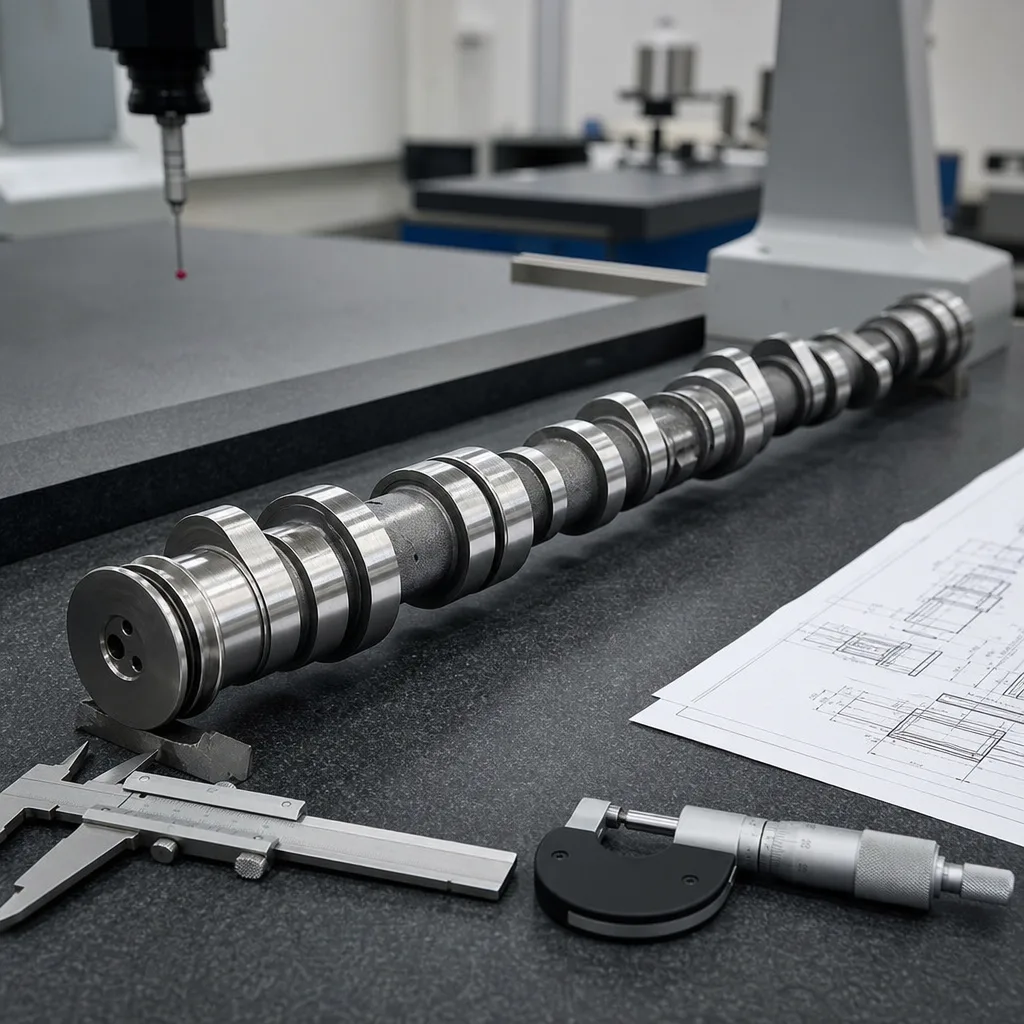
If the supplier cannot provide a dimensional drawing or inspection report, the quote is incomplete. For B2B buyers, that usually creates downstream claims, especially when the camshaft is sold through regional distributors or installed in multi-bay repair operations.
Why manufacturing control matters for repeat orders
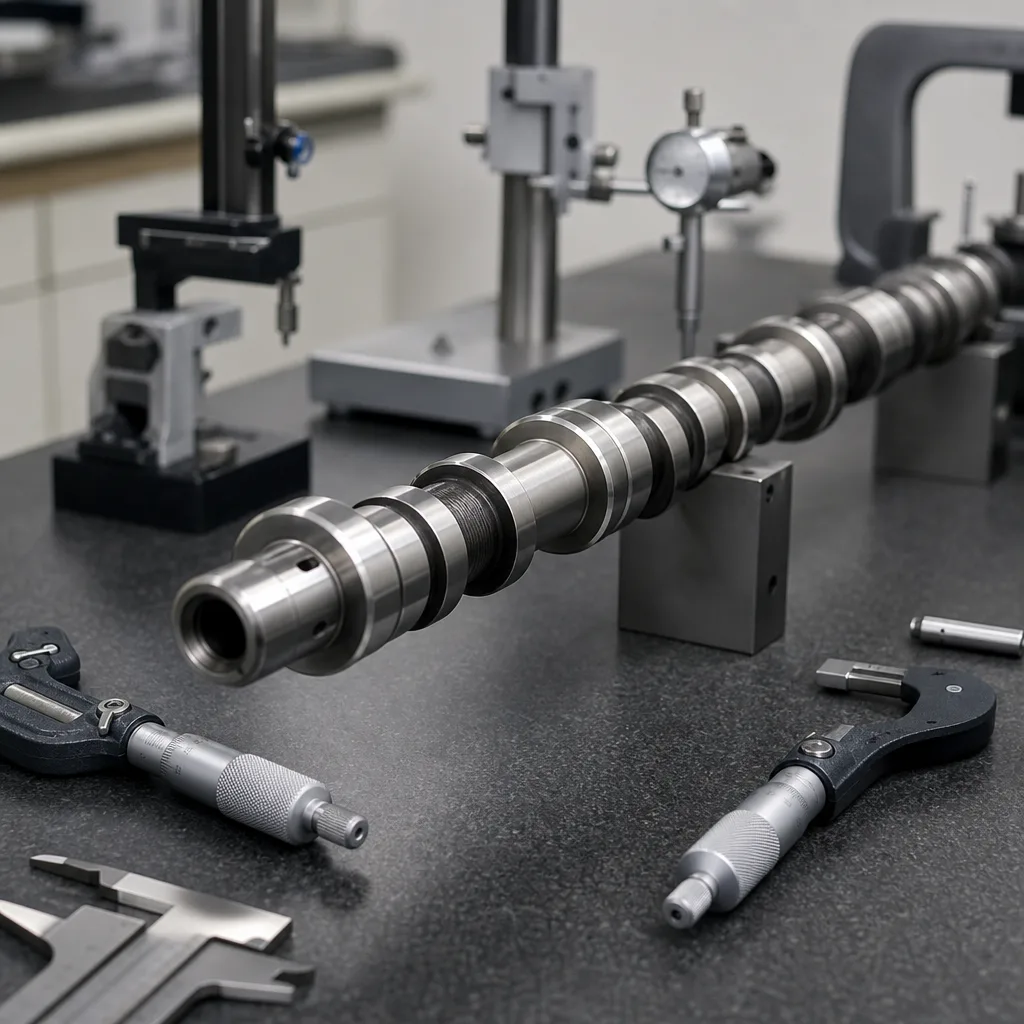
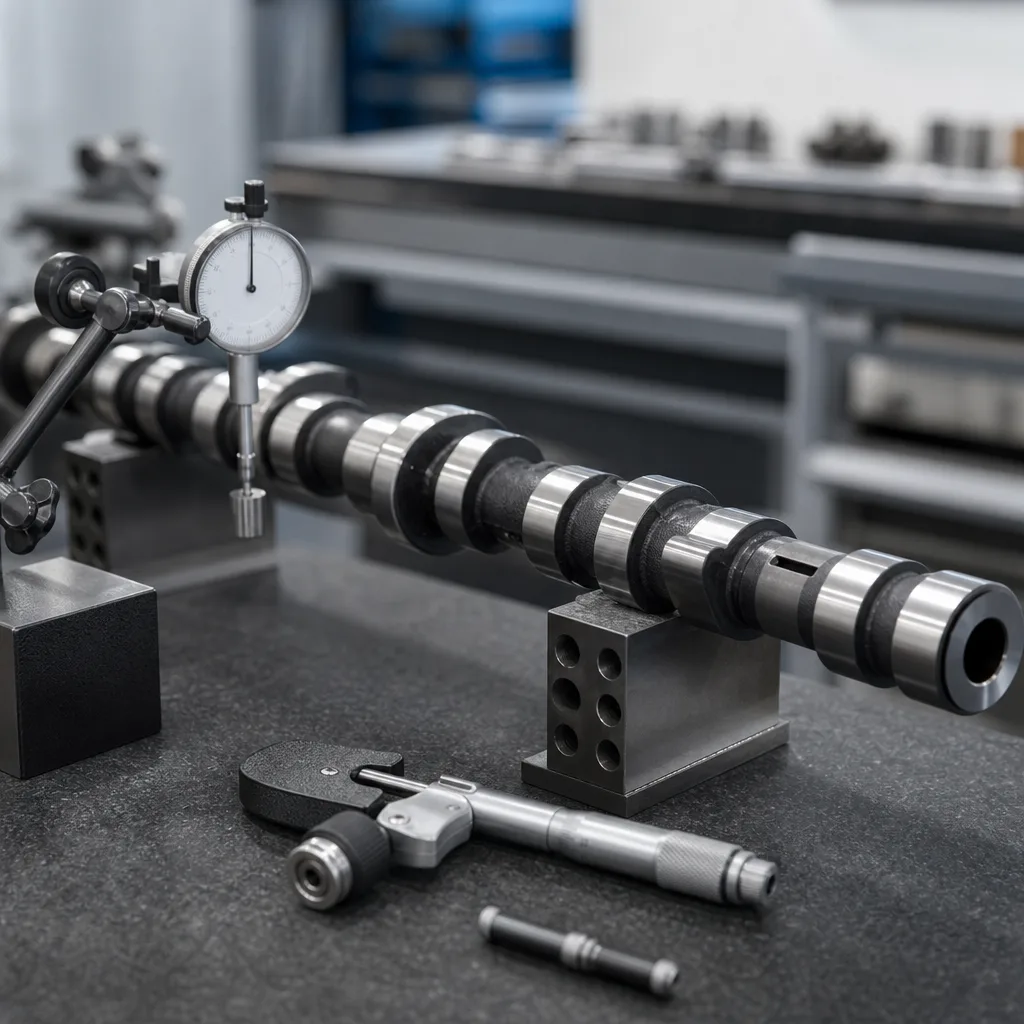
Camshafts are sensitive to profile drift. A small change in lobe geometry can alter valve events, idle quality, and durability. Wholesale buyers should ask how the supplier controls casting or forging input, machining, heat treatment, and final grinding.
Driventus manufactures under IATF 16949:2016 and ISO 9001:2015 systems, with inspection points defined for incoming material, in-process machining, and final verification. That matters for buyers who need stable replenishment over multiple order cycles.
Typical control items in a camshaft programme
| Control item | Why it matters | Buyer request |
|---|---|---|
| Material certificate | Confirms chemistry and batch origin | Mill cert or heat number traceability |
| Hardness check | Supports wear resistance | Target range and test method |
| Journal diameter | Affects bearing fit | Measured tolerances by lot |
| Lobe profile | Controls valve timing | Profile drawing or master sample reference |
| Runout | Reduces vibration and wear | Maximum permitted runout |
| Surface finish | Influences oil film performance | Ra requirement, if specified |