camshaft · 2026-06-11

Camshaft for Infiniti Q50 OE Equivalent: Buyer Guide

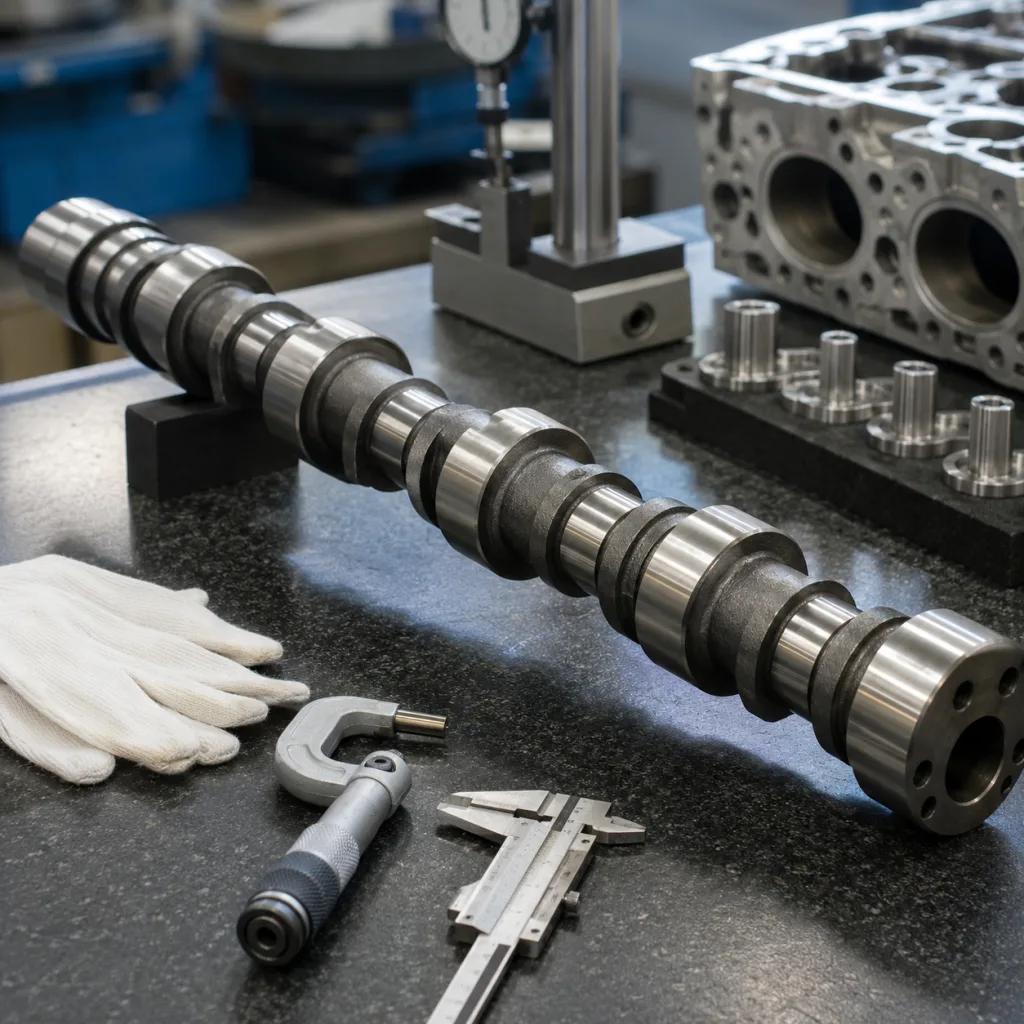
A camshaft for Infiniti Q50 OE equivalent must match more than overall dimensions. Buyers should verify lobe lift, base circle, journal size, phasing, sensor trigger features, surface finish, and the engine code on the vehicle. The Q50 platform spans more than one engine family, so the correct part depends on the exact application, not the badge on the trunk lid. Driventus is an independent aftermarket manufacturer; brand names are referenced for fitment only. For B2B sourcing, the goal is straightforward: a part that installs correctly, maintains geometry under load, and supports repeatable assembly in the shop or on the production line.

What OE-equivalent means on the Q50 platform

OE-equivalent means the camshaft matches the interface and functional behavior expected by the original engine design. That includes journal geometry, lobe profile, keyway or trigger arrangement, timing phasing, and the hardness profile on the working surfaces. It does not mean the part is endorsed by any vehicle manufacturer.

The same Q50 nameplate can cover different engine codes and intake or exhaust layouts, so the correct match starts with the VIN, the engine code, and the OE number from the removed part or parts catalogue. See our catalog and the broader engine components range for related programs.

Fitment checks before you order

Before you place an order, confirm the items below:

  • engine code and displacement
  • intake or exhaust side
  • VVT actuator compatibility
  • sensor trigger pattern and sprocket location
  • bearing count and journal widths
  • packaging for chain, phaser, and front cover clearances
  • whether the application uses hydraulic lash adjustment or rocker geometry that changes cam lift requirements

For fleet buyers, ask for a photo of the existing part, the OE number, and the current failure mode. That reduces the risk of mixing similar-looking parts across Q50 variants. If the parts list is unclear, cross-check the quality system documentation before committing volume.

Specs buyers should compare

Procurement teams should compare the following, not just the headline length.

</tr></thead><tbody> </tbody></table>For a replacement program, ask for first article inspection reports, material certificates, and lot traceability. IATF 16949:2016 and ISO 9001:2015 matter here because they define process control, documentation discipline, and repeatability across batches. For export compliance, confirm REACH (EC) No 1907/2006 status for material declarations.

Validation tests that reduce returns

When a camshaft is bought as an OE-equivalent part, returns usually come from weak validation, not from the catalogue photo. Require:

  • dimensional inspection on every lot
  • profile measurement against master data
  • hardness testing on working surfaces
  • surface roughness checks on journals
  • straightness checks where the design needs it
  • packaging validation to protect the ground surfaces in transit

For longer service programs, buyers may also request endurance data aligned with the application's duty cycle, and where applicable supporting reports that reference SAE J2527 or ECE R-83 test environments. Those standards are not a substitute for camshaft inspection, but they help document the surrounding engine package.

Sourcing terms that matter to buyers

Buying for aftermarket distribution or OEM supply is mostly a documentation problem. A supplier should be able to quote MOQ, lead time, sample count, carton configuration, and the document pack before production starts.

For private label or program-specific needs, custom manufacturing can cover profile adjustments, finish requirements, and traceability labels. If you need a documented source, ask for material certificates, hardness reports, dimensional records, and photo evidence of the sealing and anti-corrosion pack-out. That is the level of detail that supports warehouse intake and workshop installation without extra sorting. If you want to compare this part against adjacent engine families, start with our catalog and then narrow the build against the OE reference.

Frequently asked questions

Engine code, OE number, intake or exhaust position, sample photo, annual volume, and target market. If available, add measurement notes for journal diameter, overall length, and sprocket index. That lets us confirm fitment and decide whether a standard part or custom manufacturing route is appropriate.

No. OE-equivalent means the part is designed to match the original fit, function, and dimensional envelope. Driventus is an independent aftermarket manufacturer; brand names are referenced for fitment only. Buyers should still validate the sample against their own engine code and acceptance criteria.

Request a dimensional report, material certificate, hardness record, traceability by lot, and packaging specification. For regulated markets, also check REACH (EC) No 1907/2006 declarations and your own import documentation requirements.

If you need an OE-equivalent camshaft program for the Q50 platform, send the engine code, OE reference, and annual volume. Request a quote at /contact.html

Request a Quote
Parameter What to verify Why it matters
Journal diameterMatch OE drawing or measured sample within specified tolerancePrevents oil starvation and bearing wear
Lobe lift and durationCompare against OE master samplePreserves valve events and idle quality
Runout and straightnessInspect on a V-block or CMMReduces vibration and timing scatter
Surface hardnessConfirm heat-treatment report and depthControls lobe and journal wear
Surface finishCheck Ra on journals and contact surfacesHelps oil film stability
PackagingVerify side, phaser fit, and sensor triggerPrevents assembly issues