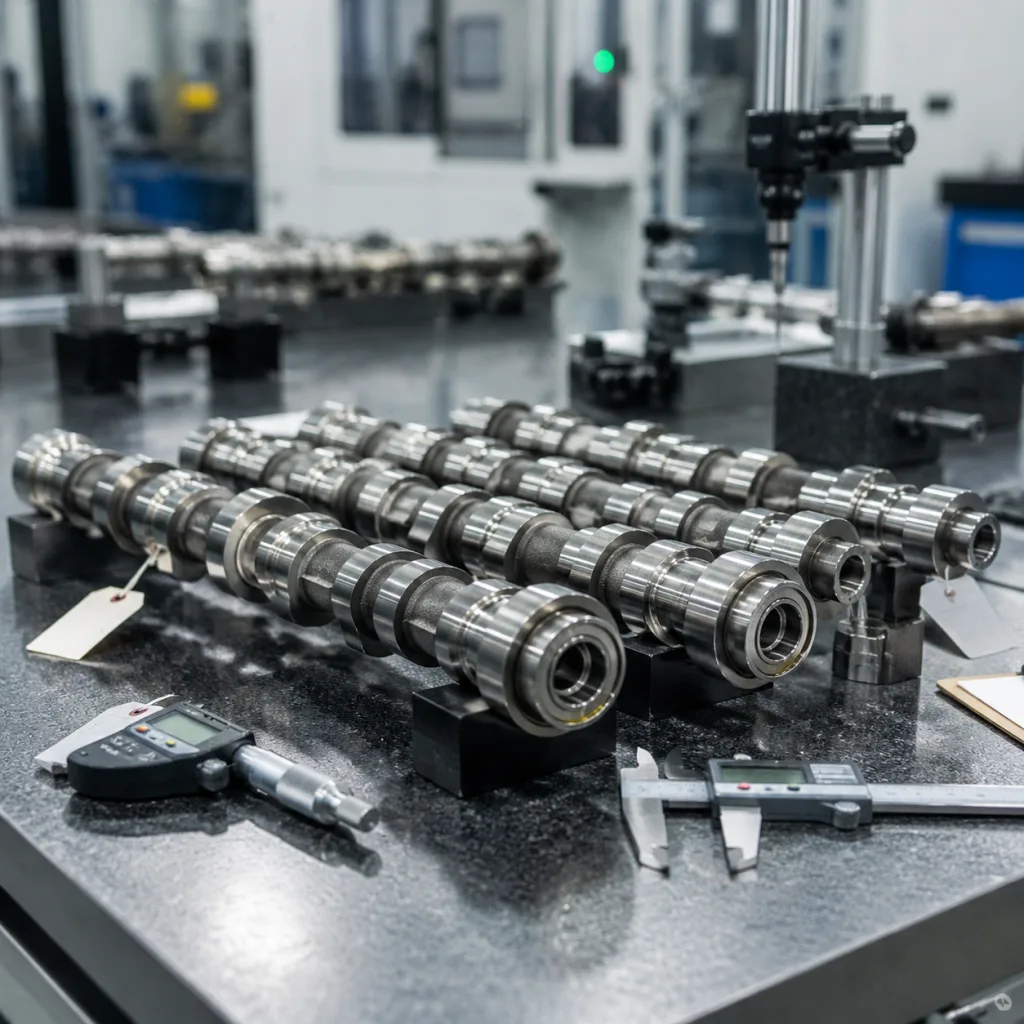
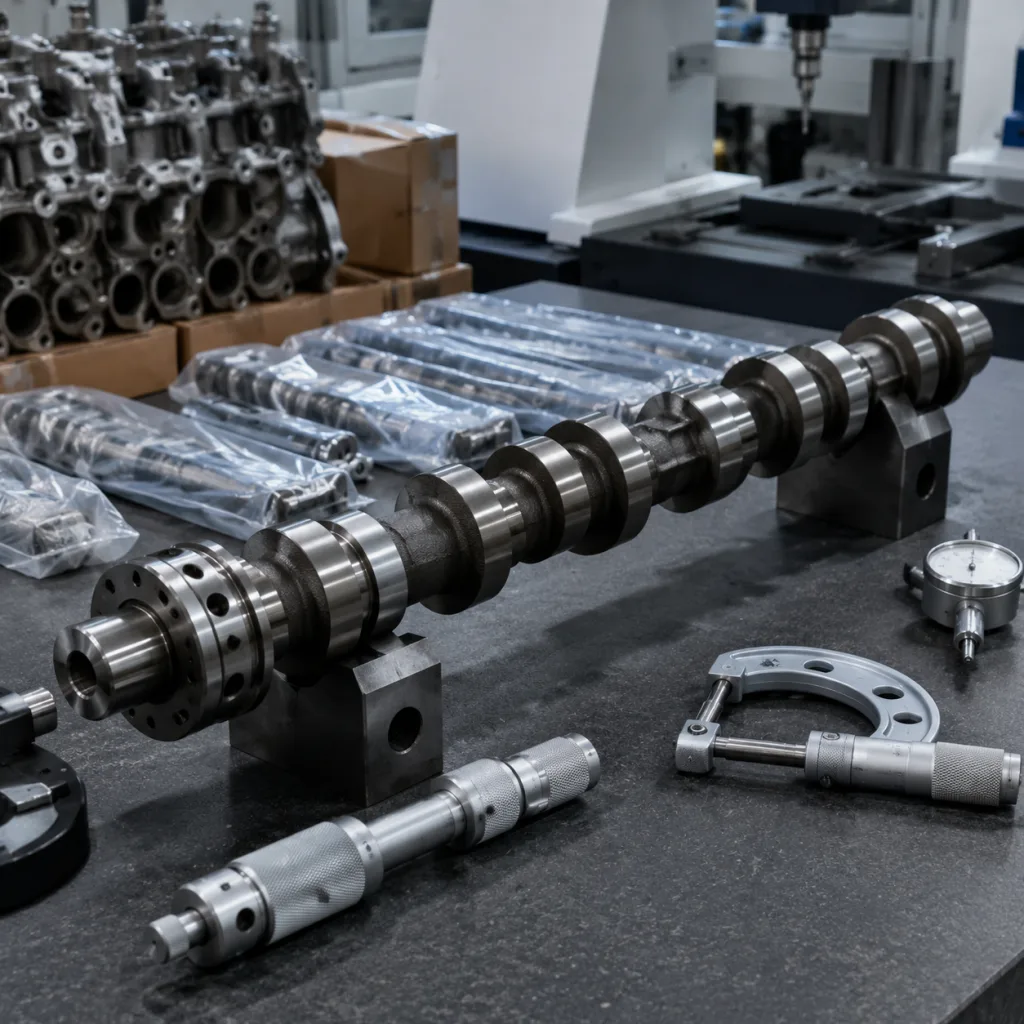
Connecting Rod for Buick Enclave Aftermarket Replacement
A connecting rod for Buick Enclave aftermarket replacement has to match the original geometry, material specification, and load path of the engine it serves. For procurement teams, the real question is not whether the part looks correct, but whether it preserves bearing clearance, centre-to-centre length, big-end roundness, and small-end bush performance under repeated combustion loading. Driventus supplies engine components for B2B replacement programmes with process control aligned to IATF 16949:2016 and ISO 9001:2015. Driventus is an independent aftermarket manufacturer; brand names are referenced for fitment only. The most practical sourcing approach is to verify the OE cross-reference, confirm dimensional tolerances from samples, and require batch traceability before release to warehouse or workshop networks.
What the replacement rod must match
For a replacement programme, the rod should be treated as a precision structural component, not a generic forged blank. The critical attributes are:
- Centre-to-centre length within OE tolerance
- Big-end bore size and roundness after cap assembly
- Small-end bore or bush fit for the wrist pin specification
- Beam section and mass consistency across the batch
- Bolt stretch and clamp load capability
If the application is catalogued as an OE cross-reference, the buyer should verify the engine code, model year, displacement, and any service updates. For Buick Enclave applications, cross-checking the OE number against the VIN decode sheet or workshop EPC helps reduce the risk of selecting the wrong rod variant. Where the listing includes an OE 06A…-style cross-reference, use it only as a fitment reference, not as evidence of manufacturer approval.
Dimensional and material checks before purchase
Replacement quality depends on measurable controls. The table below shows the checks most procurement teams should request from the supplier before PO release.
| Item | Typical control to request | Why it matters |
|---|---|---|
| Centre-to-centre length | Verified against drawing / sample | Preserves piston deck position and compression height |
| Big-end bore | Measured after torqueing bolts | Controls bearing clearance and oil film stability |
| Small-end bore / bush | Measured for pin fit | Reduces pin noise and uneven wear |
| Weight matching | Lot-to-lot and within set | Limits vibration and balance variation |
| Material / process | Forged steel or OE-matched alloy | Supports fatigue resistance |
| Surface finish | Controlled on bearing surfaces | Reduces initial wear risk |