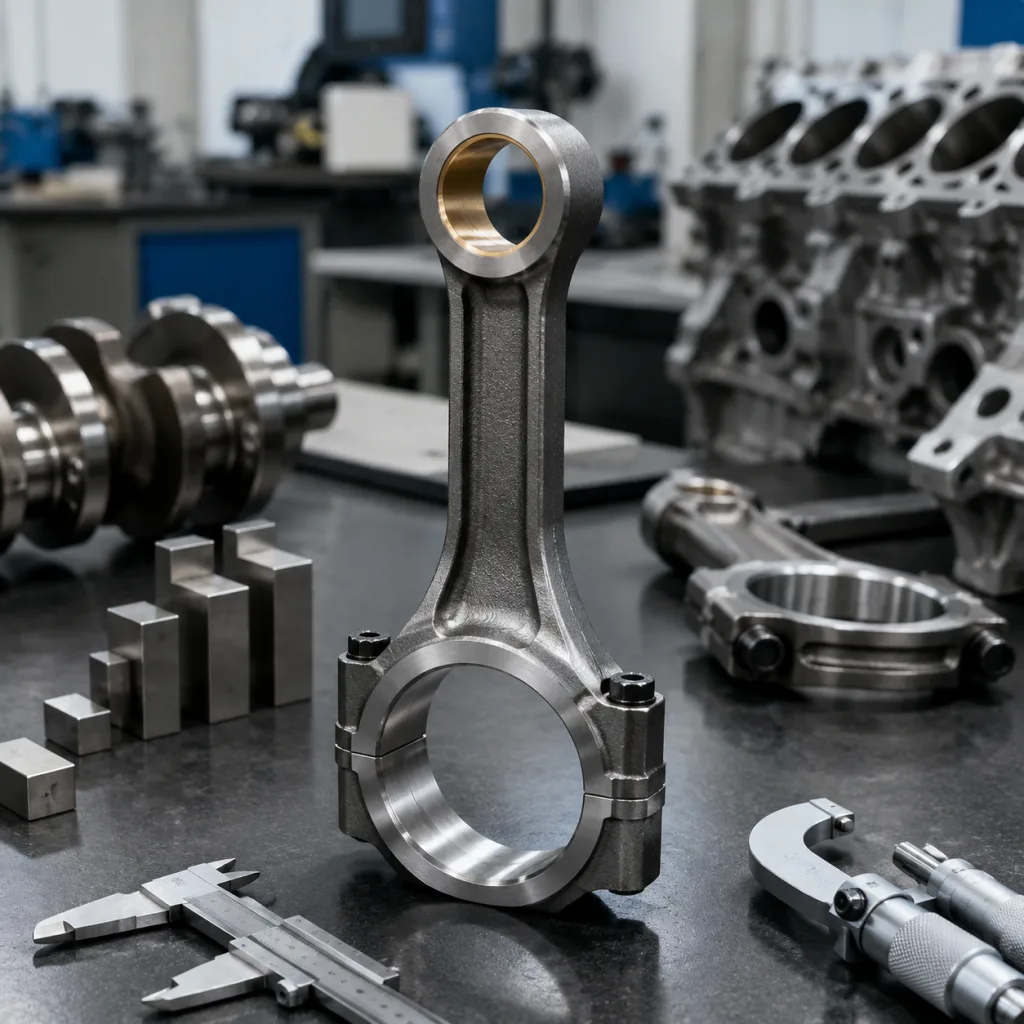
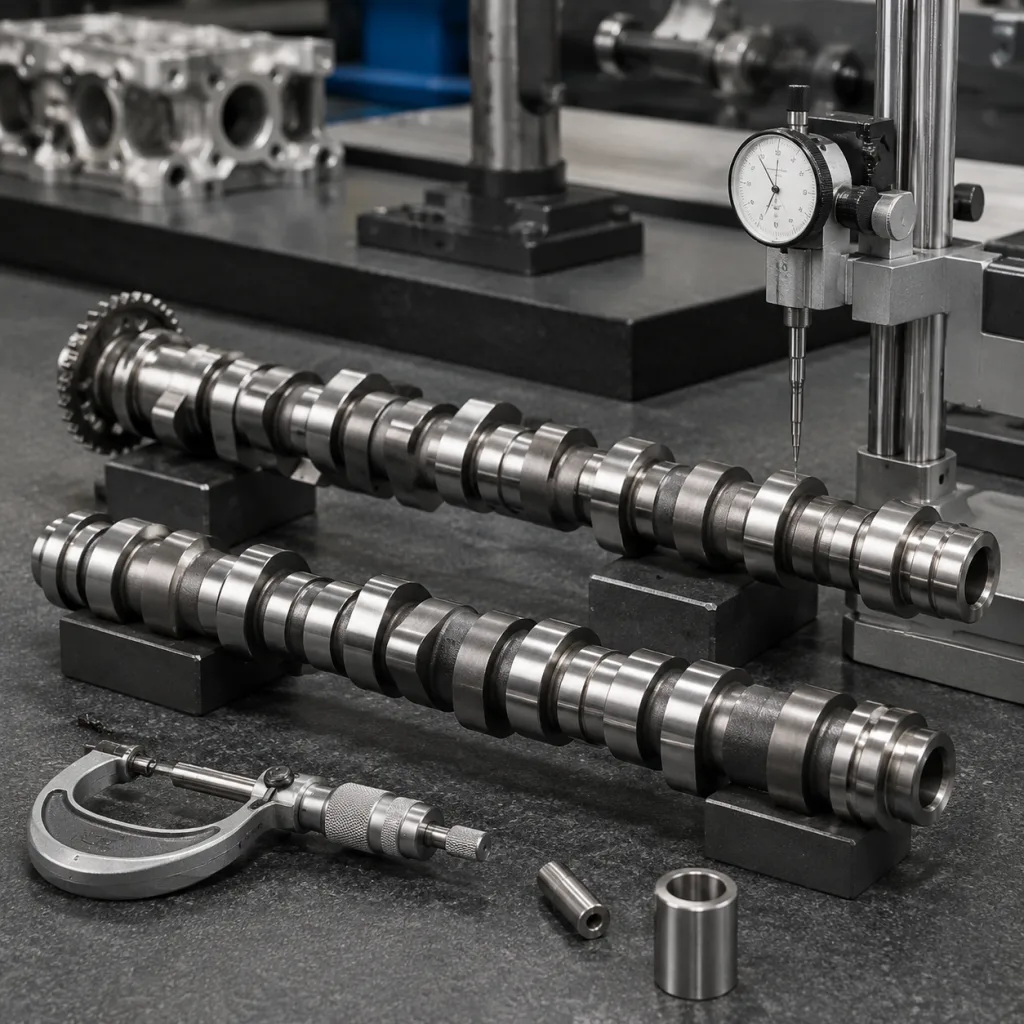
Camshaft for Honda Pilot Aftermarket Replacement
A camshaft for Honda Pilot aftermarket replacement programs must be controlled as an engineered engine component, not treated as a simple catalog match. For importers, repair-chain buyers, and engine parts distributors, the commercial risk usually comes from fitment errors, dimensional variation, incorrect timing reference features, inconsistent surface hardness, poor lubrication details, or packaging damage that leads to avoidable warranty claims. The Honda Pilot has used different V6 engine families, production-year ranges, valvetrain layouts, and market-specific configurations, so procurement teams need disciplined part-number control, application verification, material traceability, and inspection evidence before approving volume supply. Driventus manufactures camshafts and related engine components in Taizhou, Zhejiang, for B2B aftermarket programs. Our production approach focuses on OE-equivalent geometry, controlled lobe profiles, journal concentricity, heat treatment, surface finish, and export packaging suitable for distributor warehouses and long-distance logistics. Driventus is an independent aftermarket manufacturer; brand names are referenced for fitment identification only. This article explains the sourcing checks buyers should apply when qualifying a Honda Pilot replacement camshaft supplier.
Fitment Control for Honda Pilot Applications
Honda Pilot camshaft fitment varies by model year, engine code, destination market, cylinder-head configuration, and camshaft position. A replacement camshaft should therefore be sourced from verified application data rather than from the model name alone. Buyers should confirm whether the engine uses separate intake and exhaust camshafts, whether the position is left or right bank, and whether variable valve timing or sensor reference features are part of the design.
For sourcing files, maintain a controlled cross-reference table that connects the vehicle application, engine family, production year range, camshaft position, customer SKU, and approved reference sample or drawing. If an OE part-number cross-reference is supplied by the customer, record it only as part of that customer’s specification. Do not copy brand-owned numbers from public listings or interchange databases without verification, because small application differences can create installation problems or timing-related faults.
Useful procurement checks include:
- Engine code, displacement, and production year range confirmation before quotation
- Intake or exhaust camshaft position, including left or right bank where applicable
- Variable valve timing, phaser, or actuator interface verification
- Sensor trigger wheel, reluctor, dowel, or timing reference feature check
- Oil-feed hole location, diameter, and passage cleanliness confirmation
- Gear, sprocket, keyway, dowel, or phaser interface dimensions
- Packaging label format for distributor warehouse and installer systems
Driventus maintains application data within our catalog, including engine components for distributor, importer, and repair-chain replacement programs.
OE-Equivalent Geometry and Material Requirements
A camshaft controls valve motion while also operating as a load-bearing rotating component. Small dimensional errors can affect valve lift, valve timing, idle quality, emissions performance, noise, oil-film stability, and long-term wear. For a camshaft for Honda Pilot aftermarket replacement supply program, the technical file should define lobe lift, base circle diameter, journal diameter, total runout, overall length, keyway or dowel position, sensor reference geometry, surface hardness, and roughness targets.
| Control item | Typical buyer requirement | Why it matters |
|---|---|---|
| Lobe profile | Matched to approved drawing or master sample | Controls valve lift, duration, and timing behaviour |
| Journal diameter | Micron-level machining control per drawing | Supports bearing fit and stable oil-film formation |
| Total runout | Checked across journals and critical lobes | Reduces timing variation, noise, and abnormal wear |
| Surface hardness | Verified after heat treatment | Limits lobe, journal, and follower wear |
| Surface roughness | Controlled on journals and lobes | Supports lubrication stability and break-in performance |
| Oil passages | Visual, gauge, or flow-related inspection where applicable | Helps prevent lubrication restriction and early failure |