Water pump quality is verified by checking the features that directly affect seal life, bearing life, hydraulic performance, and dimensional fit. For procurement teams, that means reviewing the pump construction, machining data, test records, and supplier quality controls before release. Appearance alone is not a reliable indicator. A proper inspection should confirm casting and impeller material, shaft hardness, bearing preload, seal type, pulley and flange concentricity, gasket face flatness, and proof of leak, flow, and noise testing. For aftermarket programs, this process also helps control warranty risk across multiple vehicle applications. Driventus is an independent aftermarket manufacturer; brand names are referenced for fitment only. If you are comparing suppliers, use the checklist below together with the supplier’s quality system, product data, and traceability documents. In practice, buyers should expect a water pump supplier to control critical dimensions to the drawing, document measurement methods, and provide batch-level records that can be matched to the shipped lot.
Start with the supplier documents
Before you inspect samples, request the documents that show the pump was built under controlled conditions. A capable supplier should be able to provide traceability, test records, and controlled specifications, not only a sales sheet.
Material declaration for housing, impeller, shaft, seal faces, bearings, and fasteners
Inspection record with part number, batch number, production date, and inspector ID
Leak test and end-of-line performance test results with pass/fail criteria
Certificate to `IATF 16949:2016` or `ISO 9001:2015`
Compliance statement for `REACH (EC) No 1907/2006` where applicable
Control plan or process flow showing machining, assembly, and final test steps
A first article or dimensional report for the key characteristics on the drawing
If the supplier cannot show stable records, do not move to price comparison yet. For buyers who need a wider range of cooling and engine parts, review our catalog and confirm whether the same quality controls apply across the product family. If the application needs a non-standard flange, impeller, or housing design, compare that offer with custom manufacturing before you approve tooling. For a new program, it is also reasonable to ask for PPAP-style evidence, even if the market segment does not formally require PPAP, because it forces the supplier to prove process capability before mass shipment.
Check the core construction details
The main failure points are usually inside the housing, at the bearing set, or at the mechanical seal. Inspection should focus on the features that determine service life, and not just the cosmetic finish.
Item to verify
What good looks like
Why it matters
Housing finish
Clean machining, no porosity at sealing surfaces, no casting flash at the gasket land
Reduces coolant leakage and installation issues
Shaft
Correct hardness and straightness, no scoring at the seal journal
Protects bearing and seal alignment
Bearings
Smooth rotation, no roughness, no axial play beyond spec
Prevents early noise and wobble
Seal
Correct face material and spring load, no visible damage on the seal faces
Controls coolant seepage
Impeller
Accurate blade geometry, secure attachment, balanced assembly
Supports stable flow rate
Gasket face
Flat, free of tool marks, burrs, or scratches
Improves installation sealing
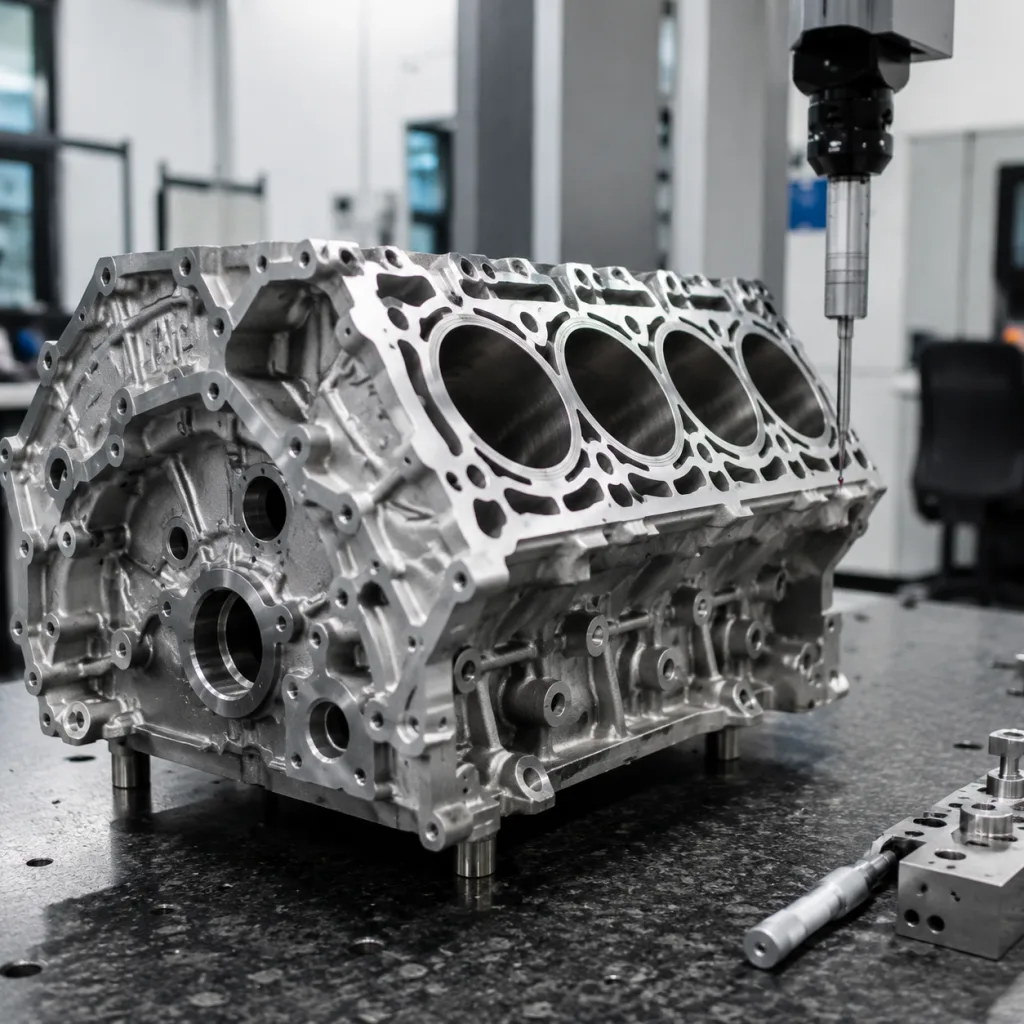
</tr></thead><tbody> </tbody></table>A visual check is useful, but it is not enough. Ask for the dimensional report on the critical characteristics, including bore size, shaft runout, flange concentricity, and mounting-hole position. For a water pump used in a timing-belt drive, even small alignment errors can increase noise, belt wear, and seal load. As a working benchmark, many buyers flag shaft radial runout above 0.05 mm, axial end play above 0.05 to 0.10 mm depending on design, or flange flatness outside 0.05 mm across the sealing face, but the supplier should always be judged against the approved drawing and application requirements. If the pump uses a pressed impeller, ask how the press force and interference fit are controlled, because loose press fit can create cavitation, noise, or flow loss.
Verify dimensional and rotational accuracy
Dimensional control is one of the most reliable ways to verify water pump quality. The pump should fit the engine without forcing the gasket, pulley, or drive system out of alignment. This is where a buyer can separate a controlled production line from a loosely managed one.
Measurement points
Shaft radial runout at the pulley seat
Axial end play at the shaft
Impeller-to-housing clearance
Flange flatness and bolt-hole location
Bore concentricity between bearing seat and seal seat
Pulley groove alignment and face runout, if the pump is pulley-driven
Use calibrated gauges, not just hand feel. A practical inspection kit usually includes a dial indicator reading to 0.01 mm, feeler gauges down to 0.02 mm, a micrometer or bore gauge for critical bores, and a surface plate for flatness checks. If you are auditing a sample lot, measure several pieces from the same batch and compare the spread. For critical rotation features, an acceptable process should show low variation, not just one perfect sample. As a buyer rule of thumb, if runout variation between pieces is large, the process is unstable even when the average value looks acceptable.
If the pump is sold as OE-matched, the dimensional report should support the intended fitment without requiring adjustment during installation. Ask the supplier to identify the inspection method used for each critical characteristic and the acceptance limits applied on the line. Also ask whether measurements are made at room temperature after stabilization, because thermal expansion can distort very tight readings if the part is measured immediately after machining or handling. For incoming inspection, define your own AQL or lot sampling plan, and require the supplier to keep the same gauges and fixture references across production lots so results remain comparable.
Review hydraulic and endurance testing
A pump can look correct and still fail under load. The next step is to verify that the supplier tests for pressure integrity, flow consistency, and long-run durability. This is where the buyer should ask for the actual test conditions, not just a certificate.
Typical verification items include:
Leak test at the assembled pump level, usually with air or water under controlled pressure
Rotation test for bearing noise and drag
Flow test across the specified speed range
Pressure retention or seepage check after thermal cycling
Endurance run under controlled coolant temperature
Cavitation or high-speed stability check for demanding applications
For programs with higher warranty exposure, ask for the test plan, not only the pass/fail summary. Typical buyer questions include: what pressure was used for the leak test, how long was the dwell time, what was the maximum noise level or drag threshold, and how many hours of endurance were completed? A common acceptance structure is a 100% leak test at end of line, plus periodic endurance validation on sample parts from each lot or each tooling cavity. If the supplier says the pump passed but cannot show the speed, pressure, temperature, and duration, the evidence is weak.
If the pump is intended for export markets, confirm that the test environment and reporting format are controlled and repeatable. For example, coolant temperature, ambient temperature, and assembly torque should be clearly defined because a pump can pass one test station and fail another if the setup changes. Where the application requires a broader validation package, align the pump test with the buyer’s own audit plan and the supplier’s documented quality system. For new launches, request that the supplier retain test charts and failure photos for a defined period, such as 12 to 24 months, so field claims can be traced back to the original verification data.
Inspect packaging, traceability, and lot control
Packaging quality affects both product condition and warehouse control. A correct pump should arrive clean, dry, and traceable back to the production lot. Damaged seal faces, contaminated coolant passages, or bent studs often start with poor pack-out rather than poor machining.
Part number on box and label matches the purchase order
Lot code and production date are legible
Protective caps or covers prevent seal and flange damage
Corrosion protection is suitable for transit time and storage conditions
Packing quantity matches the shipping list
Inner packing prevents part-to-part contact during transport
Traceability is not only a compliance item. If a field issue appears, buyers need the lot code, test date, and production record to isolate the scope quickly. At minimum, the label should allow a buyer to trace back to a production batch, work order, and final test date. For higher-volume programs, ask whether the supplier can trace to the machine cell or tooling cavity if needed.
Keep one retained sample from each approved batch if your internal process allows it. This makes incoming quality checks faster and helps confirm whether a later shipment remains consistent with the first article. It also supports negotiation if an out-of-spec lot appears: you can compare the retained sample, measurement report, and shipping record instead of relying on memory. If the supplier’s packaging changes from lot to lot, ask for an updated pack-out spec because inconsistent packaging can hide handling damage or create confusion at the warehouse.
Use a practical acceptance checklist
A simple acceptance checklist works well for incoming inspection, supplier audits, and sample approval. It keeps the review focused on the controls that matter and makes it easier for buyers, engineers, and quality teams to reach the same decision.
1. Confirm the supplier’s certificates and test records. 2. Match the pump to the intended OE cross-reference and application. 3. Measure critical dimensions against the approved drawing or sample. 4. Inspect seal faces, bearing feel, housing finish, and gasket surface. 5. Confirm leak, flow, and rotation test evidence. 6. Check packaging, labels, and lot traceability. 7. Record any deviation before release. 8. Compare the lot against the approved control limits, not just against another sample. 9. Hold shipment if key characteristics are missing, undocumented, or outside tolerance.
For buyers managing multiple vehicle lines, use the same checklist across all programs so that comparison stays consistent. If you need a pump with special mounting, material, or testing requirements, use request a quote after the technical review. That keeps commercial discussions tied to a verified specification rather than a general sample. A useful sourcing rule is to compare total cost, not unit price alone: a slightly higher price is often justified if the supplier shortens lead time from 45 days to 25 days, holds tighter dimensional control, and reduces warranty exposure. Conversely, a lower quote may become expensive if the supplier cannot hold the same tolerance lot after lot.
Frequently asked questions
Start with the supplier’s test record, then check dimensions, shaft runout, seal condition, and packaging traceability. A visual inspection alone is not enough. If possible, confirm the test pressure, dwell time, and measured runout against the approved drawing or sample.
Request the inspection report, batch traceability, material declaration, and proof of certification to `IATF 16949:2016` or `ISO 9001:2015` where applicable. If the part is for a new program, also ask for the control plan and first-article dimensional report.
No. Compare price with dimensional control, leak testing, traceability, and consistency across batches. Lower unit cost can create higher warranty cost if quality is unstable. Buyers should also factor MOQ, lead time, and the cost of incoming inspection when comparing offers.
If you need help validating a sample or building an approved supplier checklist, contact Driventus for technical support and sourcing review at /contact.html