Camshaft for Ford Explorer Aftermarket Replacement: Buyer Guide
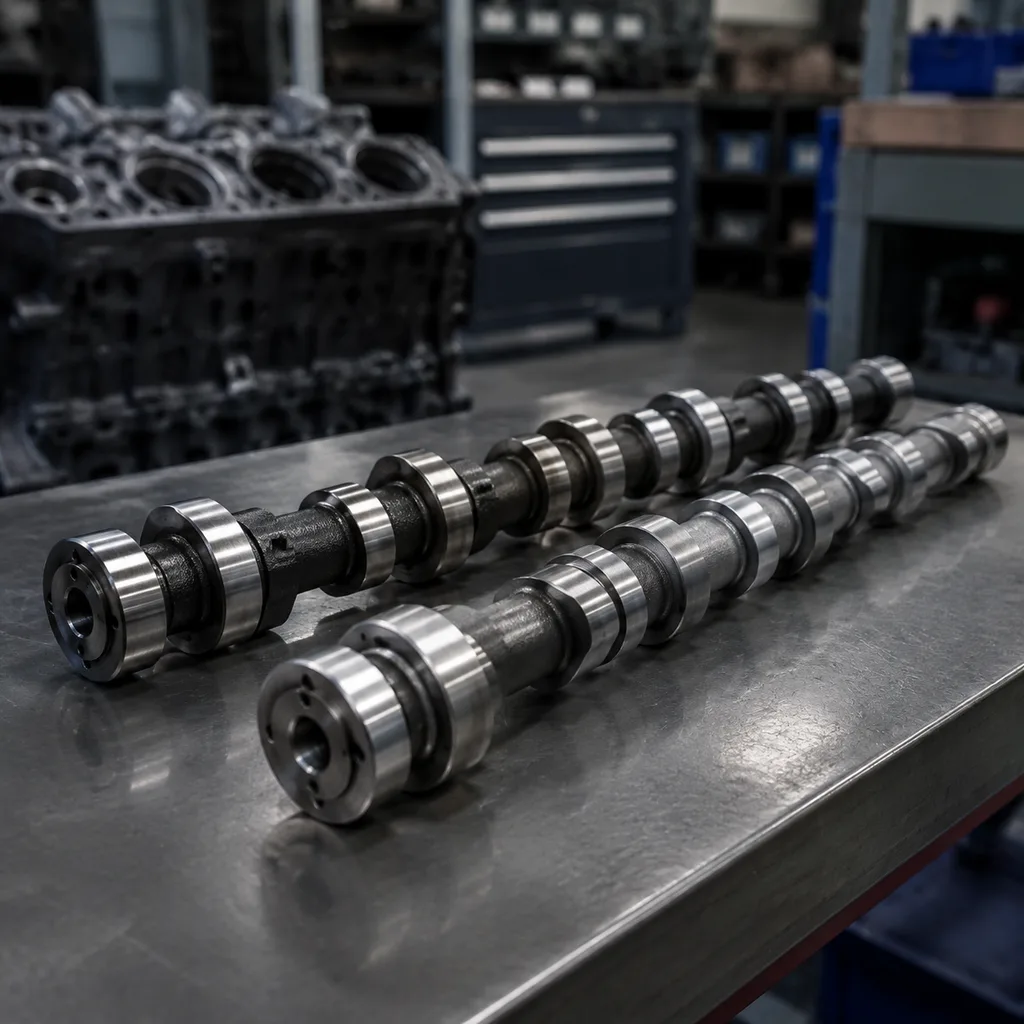
Selecting a camshaft for Ford Explorer aftermarket replacement is mainly a fitment and validation exercise. Procurement teams need a part that matches the OE profile, lobe geometry, timing events, bearing journal dimensions, and sensor interface used on the target engine family. For a replacement program, the key question is not whether the part looks similar, but whether it performs within the same installation envelope and durability target under IATF 16949:2016 and ISO 9001:2015 control. Driventus is an independent aftermarket manufacturer; brand names are referenced for fitment only. For Ford Explorer applications, the right purchase decision starts with the engine code, model year, emissions market, and OE cross-reference, then moves to hardness, runout, and profile verification. The sections below outline what buyers should confirm before approval, how to compare supplier offers, and where to review supporting documents such as dimensional reports and material certificates.
What buyers should verify first
A camshaft purchase should begin with fitment data, not price. For Ford Explorer programs, confirm the engine family, model year range, valve-train layout, and whether the application uses variable cam timing, hydraulic lifters, or a specific trigger wheel arrangement.
Minimum checks before sourcing approval:
OE part number or supersession chain
Intake/exhaust side designation
Journal diameter and overall length
Base circle, lobe lift, and lobe separation angle
Sensor tone wheel position and tooth count
Surface finish and hardness specification
Packaging label traceability by batch and lot
If the buyer cannot confirm these items, the risk is misfit at installation or shifted timing events after start-up. For mixed-market fleets, also confirm whether the target vehicle was sold under US, Canada, EU, UK, Australia, or Brazil calibration requirements.
OE-equivalence versus generic replacement
For replacement parts, OE-equivalence means the camshaft follows the original dimensional and functional envelope closely enough to install and run as intended. That includes lobe phasing, end play control, oil feed features, and sensor indexing where applicable.
Check item
OE-equivalent replacement
Generic aftermarket part
Journal diameter
Matches OE drawing
May vary by supplier
Overall length
Matches OE drawing
May differ slightly
Lobe timing
Within specified tolerance
Often unverified
Surface hardness
Controlled and documented
Sometimes undisclosed
Traceability
Batch and lot traceable
Varies
Validation
Dimensional and functional tests
Limited evidence
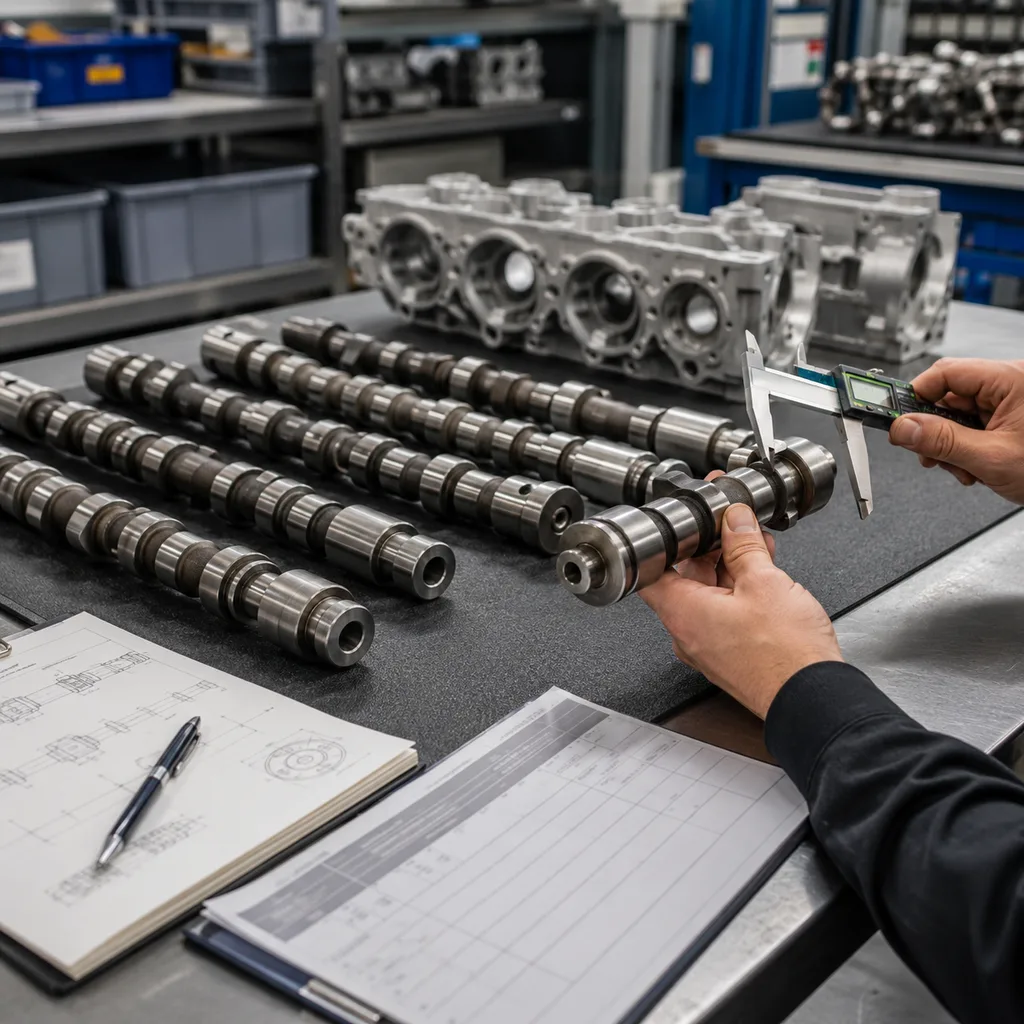
</tr></thead><tbody> </tbody></table>For procurement teams, the practical advantage of OE-equivalence is lower installation risk and fewer comebacks. Ask for a dimensional report, hardness report, and runout measurement before purchase approval. If the supplier cannot provide these documents, the part should be treated as an unvalidated offer, not a direct replacement.
Materials, process, and validation
A camshaft is a highly loaded rotating component, so material route matters. Typical supply options include chilled cast iron for cost-sensitive applications and alloy steel for higher load or performance duty. The correct choice depends on the original engine design and duty cycle.
Validation points that matter to buyers:
Journal runout and straightness
Lobe profile and surface roughness
Case depth or hardness profile where applicable
Nondestructive inspection for cracks or casting defects
Cleanliness control after machining and heat treatment
Packaging protection for polished surfaces and journals
Published standards and quality systems should be cited clearly in the supplier file. Driventus works to IATF 16949:2016 and ISO 9001:2015 controls, and material compliance may be supported against REACH (EC) No 1907/2006 where required by market. If the application is linked to emissions-critical calibration, request the test basis used by the supplier rather than assuming compliance from fit alone.
How to compare supplier offers
Procurement should compare offers on evidence, not only on unit price. The lowest quote may carry hidden costs if the camshaft requires rework, creates timing variation, or lacks export documentation.
Compare these points side by side: 1. OE cross-reference accuracy 2. Drawing revision level 3. Material grade and heat-treatment method 4. Reported tolerance band on critical dimensions 5. Sample approval lead time 6. Production lead time and MOQ 7. Export packing and barcode traceability 8. Warranty terms for dimensional nonconformance
Driventus publishes product coverage through our catalog and supporting controls through the quality system. If a project requires a modified lobe profile, revised sensor indexing, or special packaging, custom manufacturing is the correct route. For broader powertrain sourcing, buyers can also review engine components to align the camshaft with related parts such as timing sets, gaskets, and oil pump hardware.
Sourcing checklist for Ford Explorer programs
Use a formal checklist before issuing a purchase order or sample request. This reduces back-and-forth after the first shipment arrives.
Confirm engine code and model year
Confirm intake or exhaust application
Verify OE part number format, for example OE 06A107065 only when the reference already exists in the project file
Request drawing, sample, and inspection report
Ask for hardness, runout, and profile data
Check packaging for corrosion prevention and label traceability
Align lead time with service level targets
Confirm country-of-origin and customs documentation
For fleet maintenance buyers, consistency matters as much as price. A camshaft that is dimensionally correct on sample one but inconsistent across production lots creates avoidable warranty exposure. Stable process control and documented inspection are the practical indicators of a reliable supply.
Frequently asked questions
No. Driventus is an independent aftermarket manufacturer; brand names are referenced for fitment only. Buyers should verify OE-equivalence, dimensions, and validation data before purchase.
Request the drawing, OE cross-reference, dimensional report, hardness report, and batch traceability record. For regulated markets, ask for REACH-related declarations if needed.
Yes, when the project needs a different lobe profile, sensor indexing, or packaging format. Use the custom manufacturing channel for engineering review and sample approval.
If you need a verified camshaft for Ford Explorer aftermarket replacement, send the engine code and OE reference and we will review fitment, documentation, and lead time. Request a quote at /contact.html