Camshaft for Mitsubishi Lancer Replacement: Fitment Guide
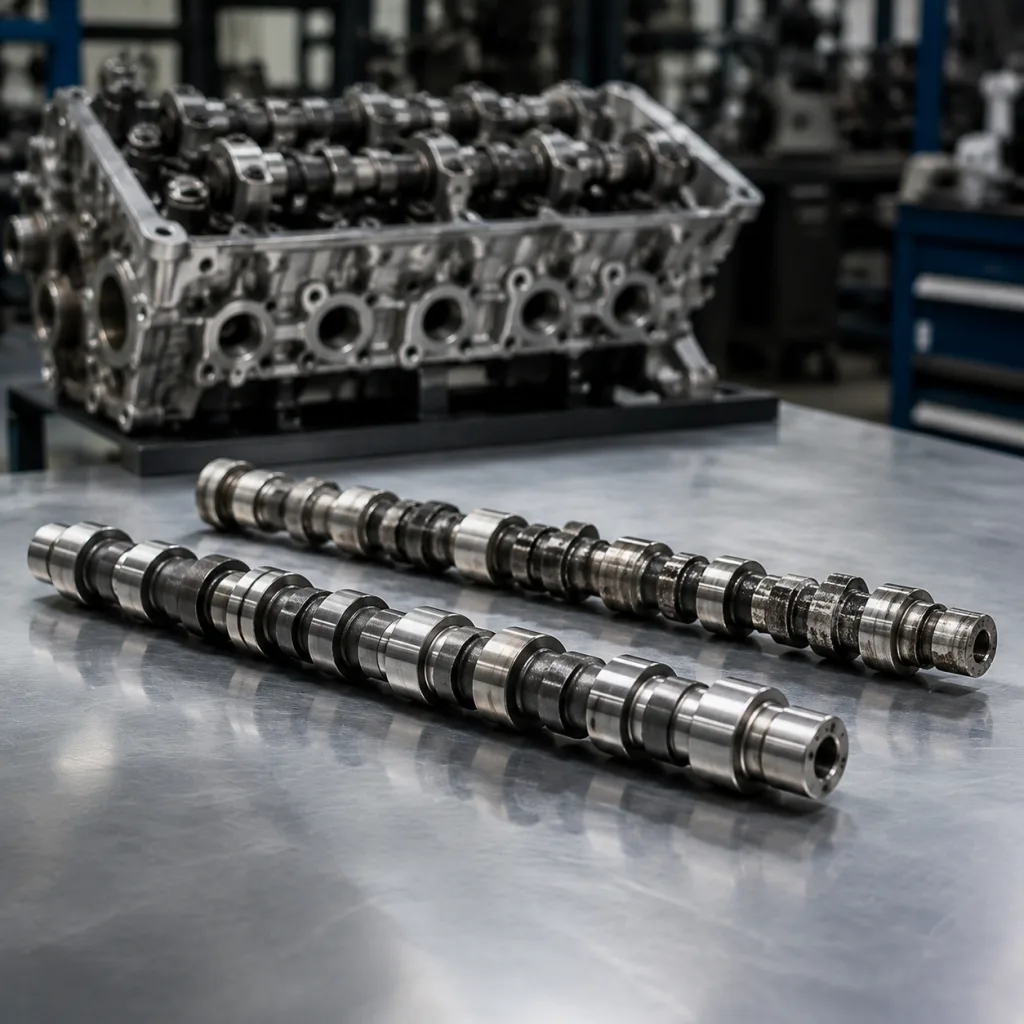
Selecting a camshaft for Mitsubishi Lancer replacement is a specification decision, not a branding exercise. The right part depends on engine code, head layout, timing drive, and trigger features; a near-match can still fail on journal diameter, thrust width, phasing, or sensor indexing. For procurement teams, the real job is to separate true OE-equivalent replacements from parts that only resemble the original. Driventus supplies engine components for aftermarket distribution, workshop networks, and OEM-linked programs, with production controlled under IATF 16949:2016 and ISO 9001:2015. Driventus is an independent aftermarket manufacturer; brand names are referenced for fitment only. The sections below focus on the checks, failure modes, and validation steps that matter when sourcing a camshaft replacement for Mitsubishi Lancer applications.
Start with the fitment decision, not the vehicle badge
A replacement camshaft must be matched to the engine variant first. Mitsubishi Lancer applications span different displacements, cylinder heads, valve counts, and intake/exhaust layouts, so the model name alone does not protect you from a bad purchase.
Verify these points against the OE sample or service data before you quote:
For catalogue control, tie the part number to engine code, valve count, timing drive type, and measured sample dimensions. If your source data is incomplete, stop there. A single line for a `camshaft for mitsubishi lancer replacement` can still cover multiple engine families, and the interchange table has to decide the part, not the badge.
Where OE-equivalent parts pass or fail
OE-equivalent does not mean identical in every manufacturing detail. It means the part installs correctly and behaves within the same functional window as the original component. That makes a few dimensions and material properties non-negotiable.
Control point
Typical requirement for replacement sourcing
Why it matters
Journal diameter
Match OE nominal size and clearance range, commonly held to ±0.01–0.02 mm
Prevents oil pressure loss and bearing wear
Overall length
Match OE within drawing tolerance, often ±0.1 mm
Ensures correct end float and timing alignment
Lobe lift / duration
Match application requirement; lift variation should be tightly controlled
Preserves valve timing and drivability
Surface hardness
Controlled induction or through-hardening, often in the 50–60 HRC band on wear surfaces
Reduces lobe and follower wear
Runout
Low runout, typically ≤0.03 mm unless the OE spec is looser
Limits vibration and timing variation
Surface roughness
Fine finish on journals and lobes, often Ra 0.2–0.8 µm depending on zone
Supports lubrication film stability
</tr></thead><tbody> </tbody></table>If the camshaft includes VVT or sensor-triggered timing, add phasing angle, trigger count, and reluctor position to the approval data. Those features are easy to miss and expensive to discover after launch. Driventus manufactures camshafts with dimensional inspection, heat-treatment control, and final checking against approved samples or customer drawings. The important evidence is traceable inspection data, not a generic compatibility claim.
Validation sequence before the part goes live
A replacement camshaft should be validated before it enters a wholesale line or repair-chain distribution program. The sequence is simple, but skipping one step can turn into a return-rate problem later.
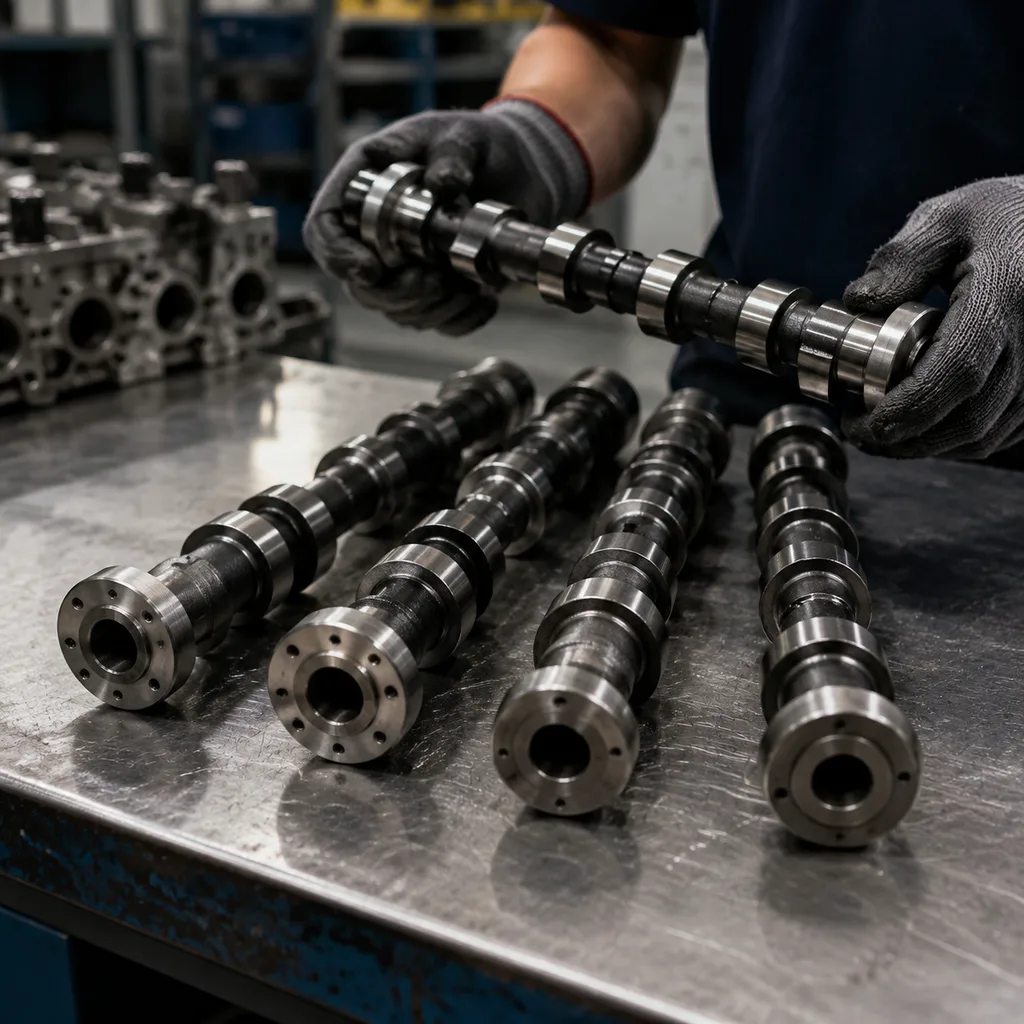
1. Visual inspection for machining marks, burrs, and coating defects 2. Micrometer and gauge verification of journals, lobes, and overall length 3. Runout measurement on a calibrated fixture 4. Hardness confirmation on the specified material zone 5. Trial fit against the head, caps, and timing components 6. Engine-start or bench validation where the purchase volume justifies it
A practical buyer workflow is to sample the first 5–10 pieces from each lot, then tighten acceptance if the part is going into a high-return channel. For incoming inspection, many teams require zero cracks, no visible chatter, no burrs at oil passages, and no more than 1 out of 10 sampled pieces outside the agreed dimensional window. For program launches, a bench spin or engine-start validation should confirm oil delivery, lash behavior, and idle stability over a short run cycle before cataloguing. Relevant references may include IATF 16949:2016 for automotive quality control, ISO 9001:2015 for process management, and REACH (EC) No 1907/2006 for material compliance where applicable in the EU. Endurance screening should follow the engine code and channel risk profile, not a generic pass/fail template.
Typical sourcing mistakes—and how they show up
Most sourcing failures are commercial first and technical second. Buyers order by vehicle name, then discover the head design, timing trigger, or cam profile is different. The symptoms usually appear after the order ships.
Intake and exhaust cams get mixed when profiles are not symmetrical
Sensor trigger features on later engines are ignored
Old supersession lists are used without confirming current OE data
Visual similarity is accepted without checking lobe lift and journal dimensions
Packaging differences are overlooked, creating chain or belt alignment issues
These errors raise returns and make catalogue data unreliable. A cleaner method is to build a fitment master around engine code, OE reference, and measured sample dimensions. If you are expanding private-label supply, use custom manufacturing to lock the geometry and packaging standard before scale-up. For commercial planning, set MOQ and price logic around validation stage: pilot lots can stay small, typically 20–50 units per part number, while production releases may move to 100–300 units depending on machining complexity, material grade, and packaging. Lead time should move with risk: approved replenishment may ship in 25–45 days, while a new application that needs drawing review, sample approval, and tooling adjustment can take 45–75 days or longer.
How Driventus fits into a replacement program
Driventus supplies camshafts as part of a broader engine-component range that includes pistons, crankshafts, gaskets, water pumps, and turbochargers. Buyers can review our catalog and the broader engine components range when building a multi-SKU program.
For replacement sourcing, the practical advantages are clear:
Controlled production under IATF 16949:2016 and ISO 9001:2015
Sample-based dimensional approval before mass supply
Fitment-focused documentation for export markets
Support for private label and carton specification alignment
Consistent replenishment for distributors and multi-location repair chains
The easiest way to start is to send the engine code, OE reference, measured sample, annual forecast, and target market, then request a quotation that splits sample cost, MOQ, unit price tiers, and lead time by order size. That gives sourcing teams a true landed-cost view instead of a unit-price guess. If you need to compare incoming stock against an OE sample, our technical team can review measurements, application notes, and carton requirements before first shipment. You can also check our quality system for process controls and inspection scope. Driventus is an independent aftermarket manufacturer; brand names are referenced for fitment only.
Frequently asked questions
Confirm engine code, valve layout, intake or exhaust position, and the OE sample dimensions. Vehicle model alone is not enough because the Lancer range includes multiple head and timing configurations. Ask for journal diameter, overall length, lobe lift, runout, and trigger-feature confirmation before approval.
Check journal diameter, overall length, lobe profile, runout, hardness, and trigger features. Then verify trial fit and functional timing against the approved sample or drawing. A practical approval set usually includes first-article dimensions, hardness results, and a short validation run before cataloguing.
Yes. We support custom manufacturing for private-label and program-specific requirements, including dimensional control, packaging needs, and application-based validation before scale-up. Buyers can also request MOQ, tiered pricing, and lead-time quotes tied to forecast volume and sample approval status.
If you are building a replacement line or need fitment confirmation for a specific engine code, send your sample data, target volume, and required tolerances through our contact page: /contact.html