Camshaft for Kia Sorento OE Equivalent: Sourcing Guide
Sourcing a camshaft for Kia Sorento OE equivalent replacement programmes is not a simple catalogue exercise. The real risk is approving a part that looks right in a listing but does not match the engine as a controlled mechanical system. Sorento applications can differ by engine code, fuel type, model year, emissions package, cylinder head casting, valve-train layout, cam sensor trigger pattern, and variable valve timing hardware. If those details are missed, the result can be cam/crank correlation faults, abnormal valvetrain noise, loss of power, premature lobe wear, or interference during installation.
Driventus is an independent aftermarket manufacturer; brand names are used only to identify fitment. For importers, distributors, repair-chain buyers, and private-label programmes, the purchasing decision should rest on drawing-controlled dimensions, material and heat-treatment control, first-article inspection, validation evidence, and repeatable export packaging standards. A broad claim of vehicle manufacturer approval is not enough. The goal is straightforward: a camshaft that installs correctly, preserves the intended valve event timing, supports stable engine performance, and can be supplied batch after batch with documents that support import review, warranty analysis, and distributor onboarding.
What OE equivalent means for Sorento fitment
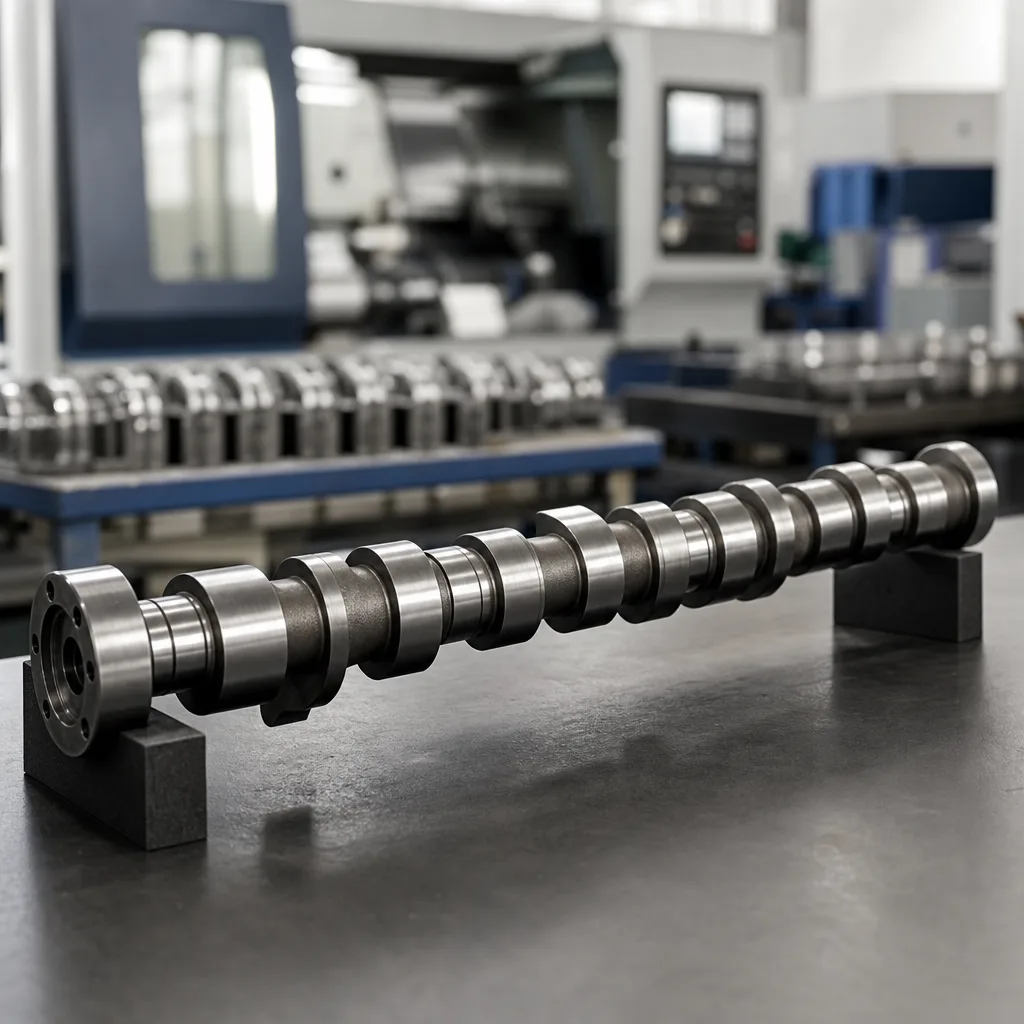
For procurement, "OE equivalent" should mean a camshaft that matches the original part's functional geometry, interface features, material specification, and control characteristics for the intended Sorento engine code. Physical fit inside the cylinder head is only the starting point. The lobe profile, base-circle diameter, journal layout, thrust control, oil-feed features, drive-end interface, sensor trigger geometry, and VVT connection points all need to align with the engine's timing architecture.
That precision matters because the camshaft is not just a rotating shaft with lobes. It controls valve opening and closing events, works with roller followers, flat tappets, or hydraulic lash adjusters depending on the engine family, maintains oil-film stability at the journals, and gives the ECU timing information through the cam sensor target. Small differences in lobe indexing, trigger pattern, dowel position, or thrust-face location can create hard-to-diagnose field failures: P0016/P0017-type cam/crank correlation codes, unstable idle, hard starting, abnormal valvetrain noise, reduced power, or accelerated wear after installation.
A Kia Sorento programme may cover different camshaft layouts across petrol and diesel engines, model years, regional emissions variants, and cylinder head designs. Some applications require separate intake and exhaust camshafts. Others use VVT phasers, actuator wheels, or sensor targets that must be matched exactly. Buyers should therefore avoid approving an item by vehicle name alone and should verify the full application chain before purchase.
The buying team should confirm:
Engine code and VIN application range
Model year and regional market coverage
Intake, exhaust, or matched pair position
Petrol or diesel engine family and cylinder head casting
Valve-train type, including roller follower, bucket tappet, or lash-adjuster arrangement
Presence and type of VVT phaser, actuator wheel, or timing control hardware
Cam sensor trigger pattern, slot count, tooth form, and angular position
Journal count, journal spacing, thrust face location, and bearing-cap specification
Drive-end interface, timing sprocket connection, dowel location, and fastener arrangement
Oil feed holes, annular grooves, chamfers, and lubrication path compatibility
For B2B sourcing, the strongest approval process is an application file that links the OE reference, engine code, physical sample or drawing, inspection report, material route, and packaging label into one controlled record. This helps prevent a common catalogue problem: one part number being stretched across applications that are similar, but not identical. If you need a broader engine-component view before building the sourcing file, start with our catalog or the dedicated engine components section.
Dimensions and materials to verify before purchase
A replacement camshaft should be checked against drawing-level data, not only against a parts listing or product photograph. The most useful procurement file compares the critical dimensions, material route, heat-treatment method, surface condition, and inspection points for the approved camshaft for Kia Sorento OE equivalent application. It should be clear enough for engineering, purchasing, quality, and warehouse teams to work from the same specification.
Check
Why it matters
What to request
Journal diameter and spacing
Controls bearing fit, oil clearance, and shaft support in the cylinder head
Dimensional report against the approved drawing, including tolerance range and measurement method
Overall length and thrust face
Affects end play, axial location, and assembly position
End-play target, thrust surface inspection, perpendicularity, and face finish data
Lobe lift and base circle
Determines valve lift and follower contact geometry
Lift measurement, base-circle diameter, and lobe profile comparison from cam profile measurement or approved template
Lobe timing angle and indexing
Controls valve opening and closing events relative to crank position
Indexing check, angular datum definition, and angular tolerance report
Sensor trigger geometry
Affects ECU timing input and synchronization
Trigger wheel, slot, tooth, or target pattern confirmation, including angular position to the datum feature
VVT or drive-end interface
Ensures correct connection to phaser, sprocket, or timing gear
Maintains lubrication to journals and valve train contact areas
Oil passage location check, burr control, cleanliness requirement, and plug or gallery confirmation where applicable
Material and heat treatment
Drives wear resistance, fatigue strength, and long-term durability
Material certificate, hardness report, case-depth or through-hardness data, microstructure check, and process route
Surface finish and runout
Impacts noise, wear, oil-film stability, and rotating accuracy
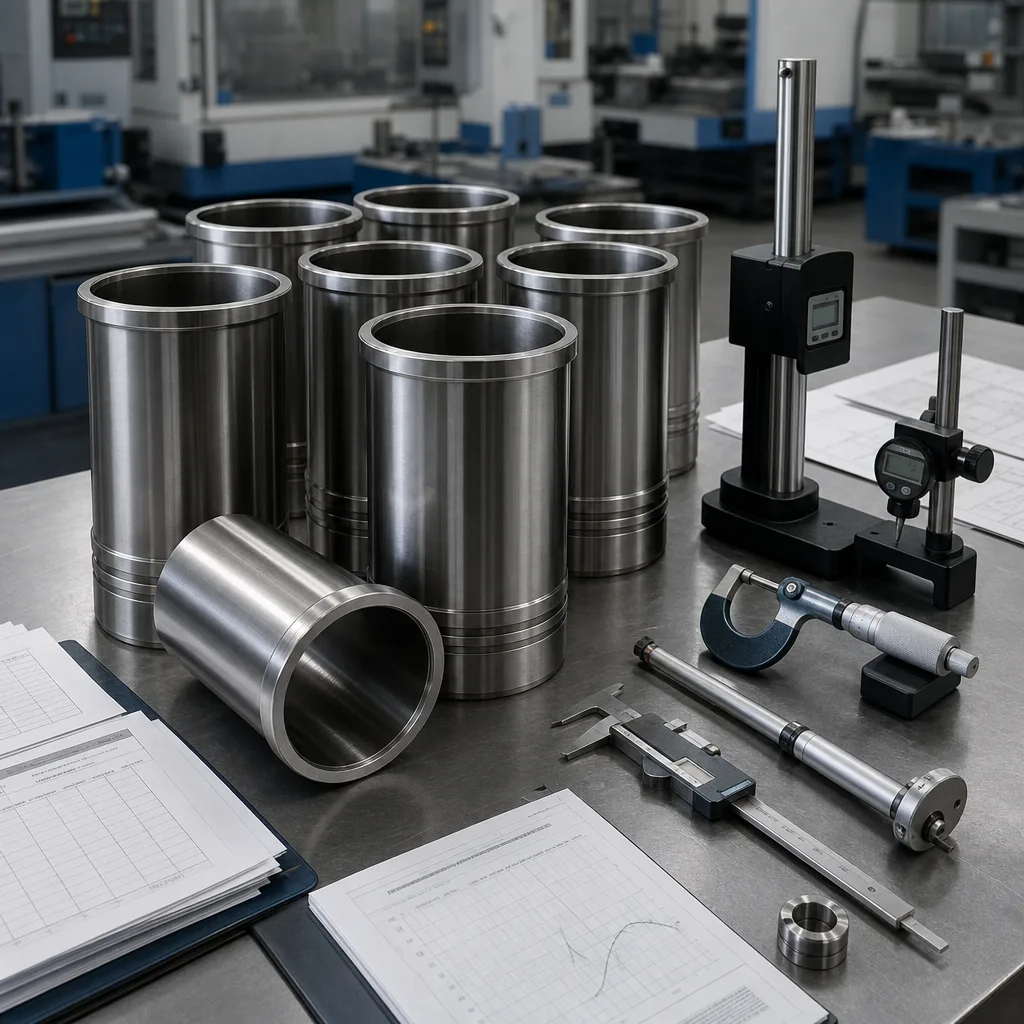
Roundness, runout, straightness, roughness, and final inspection data for lobes and journals
Identification and marking
Supports warehouse control, warranty tracing, and anti-mix procedures
Part marking standard, batch code format, barcode content, and label layout
</tr></thead><tbody> </tbody></table>Typical production routes include forged steel, chilled cast iron, ductile iron, or assembled camshaft designs, followed by controlled machining, hardening, grinding, polishing, washing, demagnetization where required, and anti-corrosion treatment. The approved specification and engine requirement should fix the route, rather than supplier convenience. For example, a camshaft designed for a roller-follower system may need a different lobe surface condition from a flat-tappet application. The wrong hardness, roughness, or crown geometry can cause scuffing during break-in and long-term service.
Material verification should go beyond a generic certificate. Buyers should ask whether the supplier controls incoming material chemistry, casting or forging route, heat-treatment parameters, hardness distribution, and final surface condition by batch. For high-volume programmes, it is useful to request capability data for the dimensions most likely to affect installation and performance, such as journal diameter, lobe lift, lobe indexing, runout, straightness, and thrust face geometry. When a supplier quotes capability, confirm the sample size, production batch, measuring equipment, and whether the data represents routine production or only a pre-production sample.
Packaging specifications deserve review at the same stage as dimensional approval. A camshaft can pass inspection and still arrive damaged if packaging allows contact between lobes, journals, trigger features, or machined thrust faces. Export programmes should specify VCI or oil-film rust protection, journal and lobe guards, end protection, individual wrapping, carton burst strength, pallet layout, humidity exposure expectations, and label information before the first shipment. If you need a non-catalog profile for a private-label line, custom manufacturing can align geometry, packaging, marking, and documentation to your target market.
Validation and quality evidence buyers should ask for
For replacement programmes, documentation is part of product quality. A supplier should be able to show how the camshaft is controlled from incoming material through final inspection, and how sample parts were verified against the target Kia Sorento application. This evidence reduces disputes later because the buyer, supplier, and distributor can all refer to the same approved specification.
A practical document set usually includes:
Material certificate with grade, chemistry, heat number, and batch reference
Casting, forging, or assembled-shaft process route, where relevant
Heat-treatment record and hardness results for lobes and journals
Case-depth or through-hardness results, where applicable
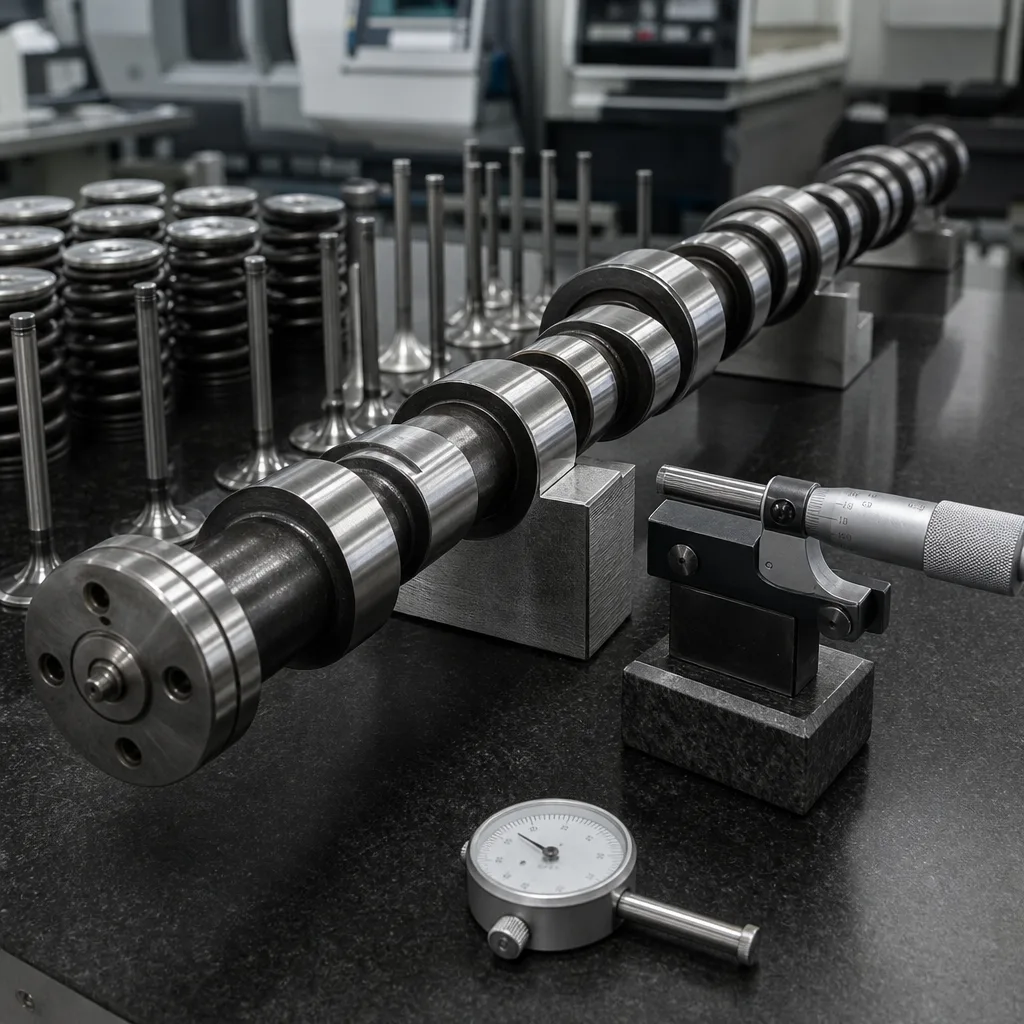
Critical-dimension inspection report against the approved drawing
Lobe lift, base-circle, profile, and lobe-index measurements
Runout, straightness, concentricity, and journal roundness checks
Surface roughness and visual inspection criteria for lobes, journals, thrust faces, and trigger features
Sensor trigger or VVT interface confirmation against a defined angular datum
Cleanliness, burr removal, demagnetization, and corrosion-protection requirements
Packaging specification for individual parts, cartons, and pallets
Traceability by batch, lot number, production date, operator or line record, and inspection record
Control plan or production flow summary for repeat orders
For first article approval, buyers should ask for a sample inspection package before moving into larger orders. The sample should be checked against the intended engine code and position, not just against a generic camshaft drawing. If the programme includes both intake and exhaust camshafts, each position needs its own inspection record and should be protected against mixed packing at the warehouse level through part marking, barcode control, and separate inner packaging.
Functional validation may include installation trial, timing alignment confirmation, free-rotation check with bearing caps torqued to specification, end-play check, valve-to-piston clearance review where relevant, oil-feed confirmation, noise review, and inspection after controlled running where required by the programme. For distributor channels, the aim is not to recreate a full vehicle manufacturer development programme. It is to prove that the replacement part is dimensionally correct, manufactured under control, and consistent enough for repeatable aftermarket supply.
Driventus operates under quality system controls aligned with IATF 16949:2016 and ISO 9001:2015. For material and chemical compliance, REACH (EC) No 1907/2006 should be reviewed for the finished article and for any coatings, preservatives, rust inhibitors, inks, adhesives, or packaging chemicals used in the supply chain. Where a programme requires emissions-linked documentation, ECE R-83 may be relevant to the broader engine package and vehicle performance rather than to the camshaft alone. For exposure testing of related surface systems, SAE J2527 can be referenced when appropriate.
This level of evidence supports distributor onboarding, import compliance review, warranty control, and repeat-order stability. It also gives the purchasing team a clearer basis for supplier comparison. Two parts may carry the same application claim, but the stronger sourcing option is the one with controlled geometry, controlled metallurgy, clear traceability, and inspection records that can be repeated batch after batch.
OE equivalent versus other sourcing options
Buyers often compare three routes: dealer OE, OE-equivalent aftermarket, and custom manufacturing. The right choice depends on volume, cost target, lead time, warranty exposure, brand strategy, and the documentation required by the sales channel. For a camshaft for Kia Sorento OE equivalent sourcing project, the lowest quoted unit price should not be treated as the best value unless fitment data, material control, process capability, and inspection evidence are also strong.
Route
Best for
Trade-offs
Dealer OE
Small-volume service work, urgent repairs, warranty-sensitive repairs, or cases where the customer specifically requires dealer packaging
Higher unit cost, tighter supply constraints, limited private-label flexibility, and less control over export packaging
OE-equivalent aftermarket
Distributors, repair chains, export programmes, fleet repair channels, and recurring service demand
Requires careful validation of engine-code fitment, metallurgy, process control, trigger geometry, and batch consistency
Custom manufacturing
Private label, regional variants, bundled engine repair kits, special packaging, controlled catalogue expansion, and specification-driven programmes
Longer setup time, sample approval, and tooling confirmation, but stronger control over geometry, branding, documentation, and commercial positioning
</tr></thead><tbody> </tbody></table>Dealer OE supply can be useful for benchmarking because it gives the buyer a reference for geometry, packaging expectations, and market pricing. However, it is often not the best route for distributors that need stable margin, private-label continuity, or multi-market stock planning. Supply may also tighten as an application ages or when demand is split by region.
An OE-equivalent aftermarket route is usually the most balanced option for repeat orders when the supplier can prove that the part matches the intended engine application and is produced under repeatable controls. This route gives buyers better control over cost, forecast planning, packaging, and channel positioning, but it puts more responsibility on the procurement process. The buyer should confirm the engine code, camshaft position, VVT compatibility, trigger geometry, journal and lobe data, and documentation set before approving the item.
Custom manufacturing is appropriate when the programme needs more than a standard stocked item. Examples include private-label packaging, a regional application variant, a bundled engine repair kit, a specific label format, enhanced rust protection for long-distance sea freight, or a controlled specification for a distributor network. It can also be useful when the market has inconsistent catalogue references and the buyer wants to lock a verified profile to avoid returns.
For procurement teams that need recurring supply across multiple markets, the OE-equivalent route is usually the most efficient choice when drawing data, metallurgy, sample validation, inspection criteria, and packaging are controlled properly. If you are building a broader engine programme, review our catalog and compare adjacent parts before locking the line plan. A camshaft is rarely an isolated item; timing components, gaskets, seals, followers, oil control valves, oil quality, and lubrication condition often determine final warranty performance.
Procurement checklist for repeatable fitment
Before issuing a purchase order, lock down the technical, commercial, and logistics details so the part can be received, stocked, sold, and supported without avoidable returns. A camshaft for Kia Sorento OE equivalent programme should have one controlled approval file that purchasing, quality, warehouse, and sales teams can all reference.
Use this checklist before order release:
Confirm engine code, model year, regional market, and VIN application range
Identify intake, exhaust, or matched pair requirement
Verify petrol or diesel engine family and cylinder head casting
Confirm valve-train type, VVT compatibility, drive-end interface, and trigger geometry
Check journal layout, lobe lift, base circle, lobe indexing, thrust face, oil-feed features, and datum references
Request drawing-based dimensional data, not only photos or catalogue screenshots
Review material grade, manufacturing route, heat-treatment method, hardness, surface finish, runout, and straightness controls
Approve first samples before moving to bulk production where the programme risk justifies it
Specify corrosion protection, individual packing, carton strength, pallet format, and transport conditions
Confirm product labels, part marking, barcode format, language requirements, and country-of-origin information
Agree on lot traceability, warranty review process, corrective-action format, and document retention period
Define the target market's compliance documents before shipment
Confirm whether the programme needs private-label packaging, neutral branding, or distributor-specific carton design
The request for quotation should include more than an OE reference. Send the engine code, model year range, intake or exhaust position, target market, annual volume, expected packaging format, required certifications, and any known OE or aftermarket cross references. If possible, provide a sample, drawing, or inspection report from the currently approved part so the supplier can compare critical geometry before pricing.
For repeat orders, keep the approved specification stable. If the supplier changes material source, casting or forging route, heat-treatment route, machining process, grinding wheel specification, trigger-feature tooling, washing method, rust preventive, packaging method, or inspection standard, the buyer should be notified before shipment. This change-control discipline is especially important for distributor networks because the same part number may be sold across multiple repair environments and warranty policies.
If your team needs a replacement line, request a quote with the application details, target annual volume, and required documentation set. For channels that need special packaging, branding, or an adapted profile, custom manufacturing is available as a controlled sourcing route.
Frequently asked questions
Check the engine code, model year range, intake or exhaust position, valve-train type, sensor trigger pattern, VVT compatibility, drive-end interface, journal layout, lobe profile, datum references, and drawing-level dimensions. Fitment should be confirmed by application data and inspection evidence, not by vehicle model name alone.
Request material certificates, heat-treatment and hardness results, critical-dimension reports, lobe-index and runout checks, surface-finish data, trigger or VVT interface confirmation, packaging specifications, lot traceability, and supplier control-system evidence. IATF 16949:2016 and ISO 9001:2015 are the key quality-system references.
Yes. If your programme needs a special profile, packaging format, product marking, corrosion-protection requirement, barcode structure, inspection record, or market-specific documentation set, use the custom manufacturing route and send the target application details before quotation.
If you need a controlled OE-equivalent camshaft programme for Kia Sorento applications, send the engine code, camshaft position, volume target, packaging requirements, and documentation needs through [request a quote](/contact.html).