Cylinder Liner Kia Wholesale: Sourcing, Quality Control, and Supply Planning Guide
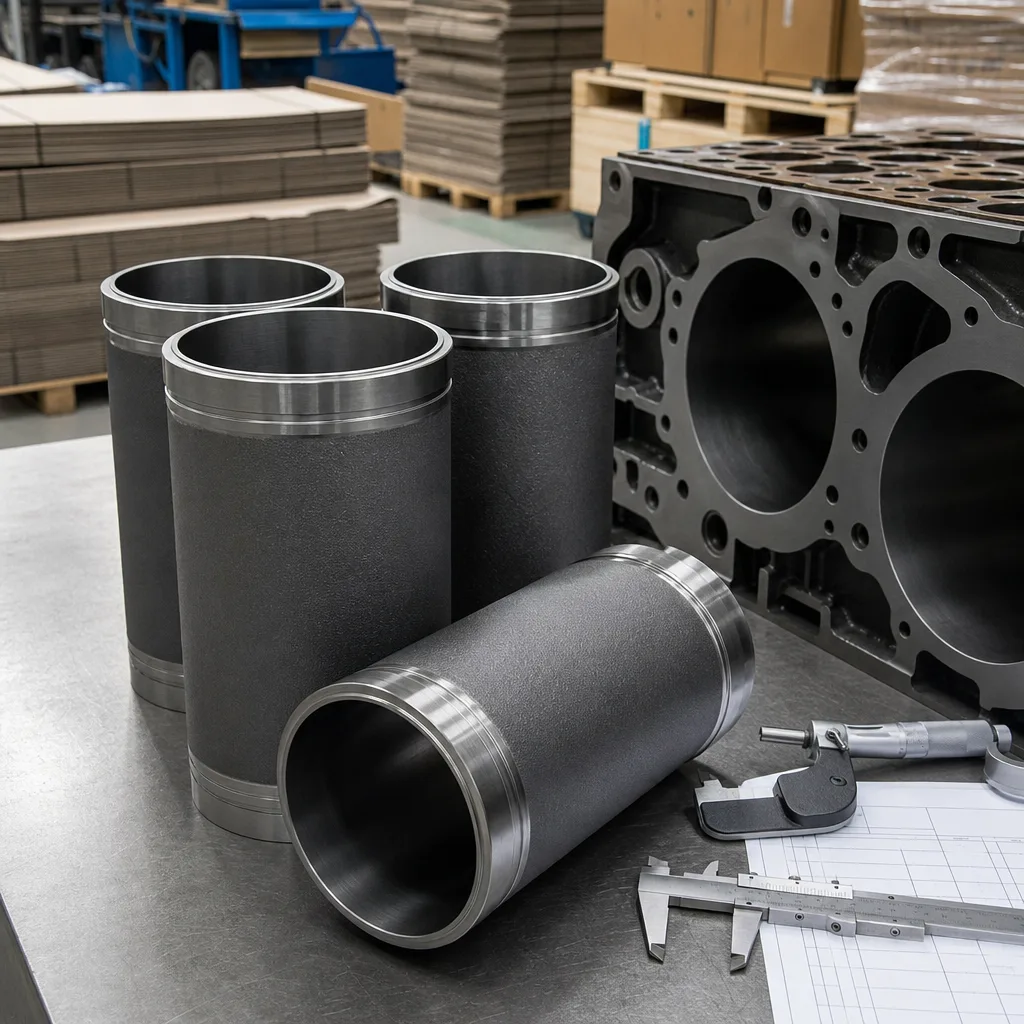
Cylinder liner Kia wholesale sourcing is a technical procurement job, not a simple catalog match. B2B buyers need more than a vehicle application list. They need confirmed engine codes, controlled bore and outside-diameter data, repeatable metallurgy, documented inspection, and a supplier able to support audits, sampling, and stable replenishment across multiple buying cycles. For engine rebuilders, distributors, and procurement teams, the main risk is not unit price by itself. The bigger risk is a specification mismatch: bore finish, outside diameter, flange height, wall thickness, hardness, coating, or machining allowance that does not suit the Kia engine family, block condition, and planned repair route.
Driventus supports export-oriented cylinder liner programmes with controls aligned to IATF 16949:2016 and ISO 9001:2015, and can serve both standard aftermarket requirements and OEM-oriented buying programmes. Driventus is an independent aftermarket manufacturer; Kia and other brand names are referenced for fitment identification only. This guide explains what to verify before placing a wholesale order, how to compare supplier capability beyond catalog language, and which documents should be complete before shipment release.
What wholesale buyers should verify first
The first step in any cylinder liner Kia wholesale enquiry is fitment definition, not unit price. A quotation only becomes useful when the application is fully identified and the supplier is pricing the correct technical scope. Kia passenger and light-commercial applications can vary by engine code, displacement, production year, market, and block repair history. A liner that appears correct by nominal bore can still create assembly or warranty issues if flange height, outside diameter, wall section, or finish-machining allowance is wrong.
Before asking for volume pricing, confirm these points clearly:
- Exact engine code, displacement, production year range, and destination market
- OEM reference, aftermarket interchange number, sample part, or controlled drawing number
- Dry liner, wet liner, or thin-wall repair sleeve configuration
- Standard size or oversize repair dimension, including the final target bore size
- Finished liner or semi-finished liner with stated machining allowance on ID and OD
- Required inner diameter, outer diameter, flange height, total length, wall thickness, and chamfer details
- Surface finish requirement, honing pattern, plateau-honing expectation, and any final machining to be completed locally
- Packaging, labelling, barcode, and lot traceability format required by your warehouse or end customer
Buyers should also define how the liner will be installed and finished in service. A press-fit dry liner for block remachining is assessed differently from a ready-to-assemble finished liner, and the inspection points are not interchangeable. For dry liners, the RFQ should state the intended interference fit or ask the supplier to quote against the mating block bore specification. For semi-finished liners, the order should define remaining stock clearly, commonly as a controlled allowance on the bore and sometimes on the flange or OD depending on the repair process. For finished liners, the supplier should confirm final bore tolerance, surface roughness, cross-hatch condition where applicable, chamfer quality, burr limits, rust preventive, and cleanliness before packing.
A practical RFQ package usually brings three items together: the specification or drawing, the expected annual or per-order quantity, and the target commercial terms such as Incoterm, port, and destination market. This allows the supplier to quote the part, inspection level, preservation method, carton configuration, and export documentation as one controlled offer instead of treating packaging and paperwork as later extras.
For procurement teams, the central question is straightforward: can the supplier hold the same dimensions, material route, and identification from first sample to repeat order? That is the difference between a one-off purchase and a dependable wholesale programme. For a broader view of engine component coverage, see our catalog and the engine portfolio in engine components.
Dimensional and material controls
A cylinder liner is a precision wear component. Its value comes from stable metallurgy and controlled machining, not just the base casting. Wholesale buyers should request dimensional evidence and process evidence together. A supplier that can describe nominal size but cannot explain inspection method, hardness control, honing route, or batch release criteria is not giving enough information for a serious B2B programme.
| Control point | Why it matters in service | What to request from supplier |
|---|---|---|
| Inner diameter | Affects piston-to-bore clearance, ring sealing, oil control, and running temperature | Finished ID tolerance, gauge method, inspection temperature basis, and bore report |
| Outer diameter | Determines press fit or interference fit in the block | OD tolerance, roundness data, taper control, and batch inspection record |
| Flange height | Influences deck position, sealing load, and assembly consistency | Height inspection record, datum definition, and drawing reference |
| Total length | Affects block seating and machining position | Length check report and part drawing confirmation |
| Wall thickness | Impacts stiffness, heat transfer, distortion, and crack resistance | Section confirmation, drawing value, or process control record |
| Roundness and concentricity | Supports uniform ring contact and stable wear | Roundness or concentricity data, gauge type, and inspection frequency |
| Surface finish | Controls ring bedding, oil retention, blow-by, and early wear rate | Honing specification, Ra/Rz or Rpk/Rk/Rvk target where used, and final washing standard |
| Material and hardness | Drives wear resistance, thermal stability, and crack control | Material declaration, hardness range, microstructure requirement where agreed, and treatment route |
| Area | What strong suppliers usually provide | Warning signs to watch for |
|---|---|---|
| Technical definition | Drawing review, sample-to-drawing comparison, dimensional report, and process explanation | Quote based only on model name or engine family with no data support |
| Quality control | Batch coding, inspection records, gauge calibration control, and sample approval route | No lot traceability or reports only after repeated requests |
| Packaging and export readiness | VCI or oil-based corrosion protection, stable palletisation, desiccant where needed, and market-specific labels | Generic thin cartons unsuitable for sea freight, humidity, or warehouse stacking |
| Commercial reliability | Clear MOQ, lead time, quote validity, Incoterm, payment terms, and repeat-order consistency | Price changes between sample and production without material, currency, or process reason |
| Service response | Measured answers to deviations, corrective action support, and third-party inspection acceptance | Slow, generic replies with no inspection data or root-cause detail |