camshaft · 2026-06-10

Camshaft Volvo Wholesale: Sourcing Checks for Buyers

Camshaft Volvo wholesale sourcing starts with fitment control, not catalogue wording. Before comparing price, buyers need the engine code, intake or exhaust position, journal count, drive interface, sensor pattern, and the drawing or approved sample behind the part number. Driventus supplies aftermarket camshafts for distributors, OEM and Tier-1 programmes, and repair chains that need traceable batches, stable dimensions, and export-ready packing. Driventus is an independent aftermarket manufacturer; Volvo and other brand names are referenced for fitment identification only. For buyers in the EU, UK, US, Canada, Australia, and Brazil, the practical questions are consistent: can the supplier hold the lobe profile, document heat treatment, protect the finished surfaces, and ship at a workable MOQ? The sections below set out the sourcing checks that matter, including specification details, inspection records, lead-time planning, and what to send with an RFQ.

What Buyers Should Verify First

Camshaft Volvo wholesale sourcing becomes reliable only after the application is pinned down. Volvo engines can share displacement or model-family wording while using different cam profiles, journal layouts, sensor trigger patterns, oiling details, or drive-end geometry. Before comparing quotes, confirm the engine code, model year range, intake or exhaust position, valve count, and whether the part is for a single overhead cam or dual overhead cam layout.

A cross-reference is useful, but it should never be the final proof of fitment. Check the reference against the drawing, OE sample, or measured dimensions, especially when sourcing for mixed fleets or multiple export markets. Buyers can review our catalog and the related engine components page, but the final approval should come from dimensional evidence and sample comparison, not label wording.

Specification Checklist

A useful camshaft RFQ asks for measurable controls rather than broad fitment claims. For wholesale buyers, the core points are similar whether the programme is for regular stock replenishment, a private-label range, or a drawing-controlled order.

  • Base circle diameter
  • Lobe lift, lobe width, and profile reference
  • Journal diameter and number of journals
  • Overall length and thrust surface width
  • Drive-end, chain wheel, or gear interface
  • Sensor trigger slots, flats, or keyway position
  • Oiling holes, grooves, and surface finish requirements
  • Surface treatment, hardness, and heat-treatment route
  • Packaging, corrosion protection, and batch marking

</tr></thead><tbody> </tbody></table>For finished journal features, many buyers specify precision grinding in the 0.01-0.02 mm range on critical diameters, but the approved drawing always takes priority over a generic tolerance note. For export programmes, ask for inspection records produced under IATF 16949:2016 and ISO 9001:2015 controls, plus material declarations if coating, oil, preservative, or packaging materials need review against REACH (EC) No 1907/2006.

How We Validate A Batch

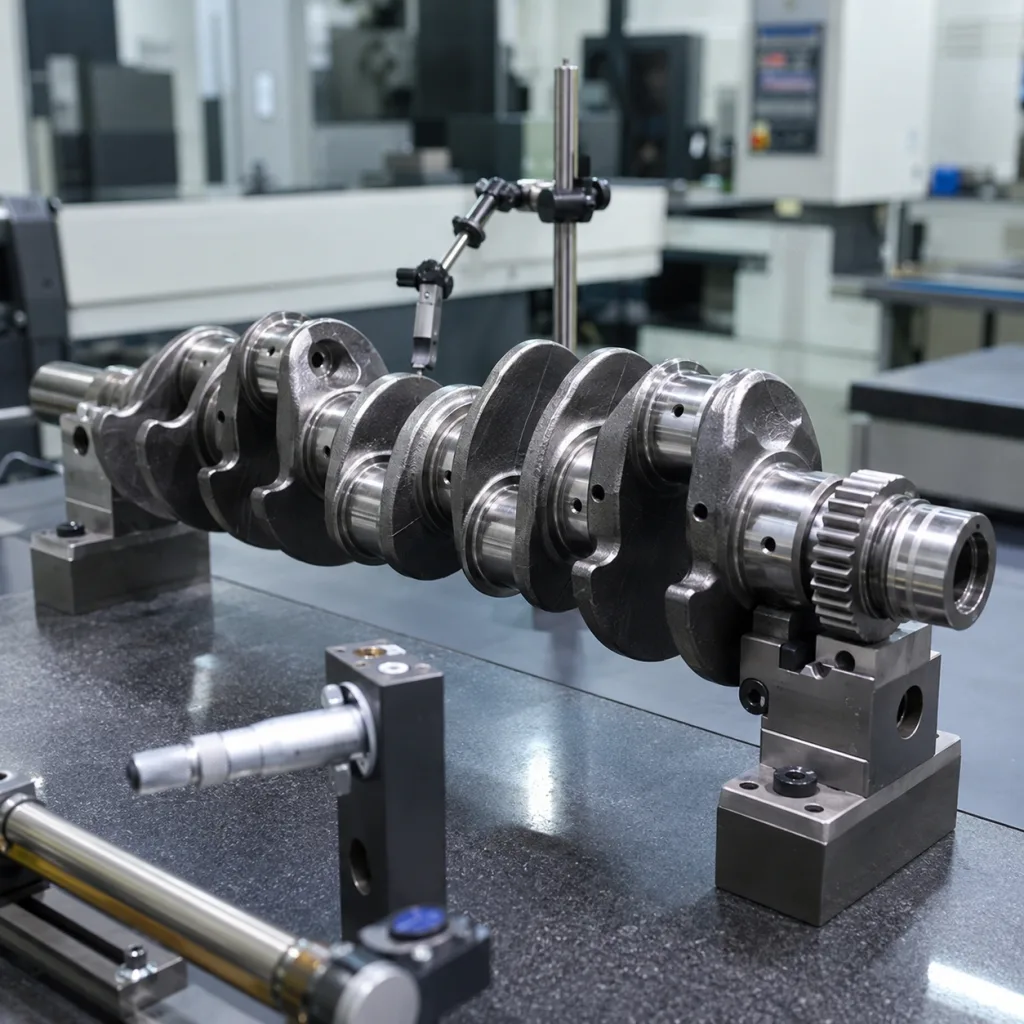
A camshaft is only as dependable as its control plan. The manufacturing route normally includes blank preparation, rough machining, heat treatment, finish grinding, cleaning, rust prevention, and final inspection. Where the engine family requires it, the supplier should also validate runout, lobe indexing, thrust face condition, oiling features, and surface condition before packing.

Driventus uses documented process control so buyers can review the quality system behind the part, not just the finished item. The practical checks include:

  • First article approval against the drawing or sample
  • In-process checks on critical diameters and profile features
  • Final dimensional inspection with traceable records
  • Hardness or heat-treatment confirmation where specified
  • Visual review of lobes, journals, oiling holes, and drive-end features
  • Batch identification on cartons and inner packs

For procurement teams, this matters because a camshaft issue is costly to diagnose after assembly. A small error in lobe position, journal size, or surface finish can create repeat returns across a whole distribution channel. Buyers should ask for photos, measurement reports, and signed sample approval before release, especially when the order will be sold through multiple branches or markets.

Wholesale Terms And Lead Time

Supply terms should match the buying model. A distributor that needs repeat replenishment usually wants predictable carton quantities and fast reorder timing, while an OEM or Tier-1 programme may need drawing control, staged approval, and tighter documentation. The table below shows the usual trade-off.

Check Buyer question Why it matters
Journal geometryDoes it match the approved drawing or sample?Prevents oil-clearance, noise, and seizure problems
Lobe profileAre intake and exhaust timing features controlled?Avoids power loss, misfire, emissions issues, and valve contact
Heat treatmentIs hardness recorded by batch?Controls wear resistance and follower life
Surface finishIs the grinding finish repeatable on lobes and journals?Reduces break-in wear and lubrication risk
TraceabilityAre lot and date codes visible on the pack?Supports claims handling, audits, and recall containment

</tr></thead><tbody> </tbody></table>These figures vary by alloy, blank availability, grinding route, packaging, and documentation requirements. If the programme needs a private label, revised carton, special preservative, or profile change, custom manufacturing is usually the better route than forcing a loose cross-reference into a standard item. For repeat orders, a stable forecast and fixed revision level reduce changeover risk, protect batch consistency, and improve delivery reliability.

How To Place An RFQ

A clear RFQ shortens the quote cycle and reduces sample back-and-forth. Send the following information at the start:

What to send with the RFQ

  • Engine code and platform
  • OE reference, if available
  • Intake or exhaust position
  • Annual volume and target first order
  • Drawing, sample, or key measured dimensions
  • Packaging requirements and label format
  • Destination country and incoterm
  • Any required test report or compliance document

If you are buying for a repair chain or wholesaler network, include the demand pattern by country, warehouse, or branch so the pack size can be matched to your shelf stock plan. If you already have a worn sample, send clear photos of the lobes, drive end, journals, oiling features, and any visible markings. That is usually faster and more accurate than trying to identify the part from a vehicle listing alone. When you are ready, request a quote with the drawing, sample, or engine code.

Frequently asked questions

Yes. We supply catalogue parts and drawing-based custom parts for wholesale buyers, with batch traceability, export packing, and documentation suitable for distributor, repair-chain, OEM, and Tier-1 programmes.

Typical documents include a material certificate, heat-treatment record, dimensional inspection report, packing list, and batch identification details. Where relevant, documentation can align with IATF 16949:2016, ISO 9001:2015, and REACH (EC) No 1907/2006 review requirements.

Yes, if you provide a drawing, sample, or validated target profile. Custom programmes usually need a longer approval cycle than stock items because the profile, material route, heat treatment, and inspection plan must be confirmed before production release.

Send your drawing, engine code, and annual volume, and we will confirm fitment, documentation, batch control, and packaging options for your market. Start with [request a quote](/contact.html).

Request a Quote
Supply model Best fit Typical MOQ Typical lead time Buyer trade-off
Catalogue stockFast replenishment50-100 pcs2-4 weeksLowest setup cost and fewer approval steps
Drawing-based customUnique profile, material, or packaging100-300 pcs30-45 daysHigher setup, stronger specification control
Trial runNew market launch or fitment validation20-50 pcs2-3 weeks after approvalFlexible start, limited pricing efficiency