Camshaft Chevrolet Replacement: B2B Sourcing Notes
A camshaft Chevrolet replacement programme is more than a catalogue-matching task. For distributors, repair-chain buyers, and Tier-1 sourcing teams, the purchase decision depends on fitment accuracy, lobe durability, timing consistency, packaging control, and reliable repeat supply. An incorrect lobe profile, journal diameter, thrust surface, or sensor trigger feature can lead to valve-train noise, misfire complaints, oil-pressure issues, poor drivability, and warranty exposure across multiple repair locations.
Driventus manufactures engine and powertrain components in Taizhou, Zhejiang, for export to more than 60 countries. For Chevrolet-pattern camshafts, our focus is OE-equivalent fitment, validated material selection, controlled heat treatment, dimensional inspection, and practical export documentation. This article explains what procurement teams should verify when sourcing replacement camshafts for aftermarket distribution, private-label programmes, and service networks, including specification control, quality evidence, commercial planning, and cross-reference management.
Driventus is an independent aftermarket manufacturer; Chevrolet and other brand names are referenced for fitment identification only.
Fitment Scope and Cross-Reference Control
Replacement camshafts are often purchased by application, engine family, or OE reference. For Chevrolet applications, buyers should not rely on vehicle model names alone. Camshaft design can vary by engine displacement, production year, fuel system, emissions configuration, cylinder head layout, variable valve timing design, and the position of the camshaft within the engine.
A controlled sourcing file should include:
Engine code or confirmed displacement range
Intake or exhaust camshaft position, where applicable
Timing drive type: chain, belt, or gear
Variable valve timing interface, if used
Camshaft position sensor trigger form
Journal count and journal diameters
Lobe count, lobe lift, and base-circle requirements
Thrust face, locating groove, or end-play control design
Oil-feed features or internal passages, where applicable
Any verified OE part-number cross-reference supplied by the buyer, used only for the confirmed application
This level of detail helps prevent a common sourcing problem: two camshafts may look similar in a catalogue image but differ in the trigger wheel, thrust design, lobe phasing, or journal size. Those differences can create installation delays or field complaints even when the vehicle model description appears correct.
Driventus manages part matching through drawings, verified samples, and customer cross-reference files rather than through brand approval claims. Buyers can review applicable engine components in our catalog, including camshaft-related powertrain parts. For project-specific Chevrolet replacement references, drawings or physical samples are preferred where the programme covers several engine generations or multiple regional applications.
Dimensional Requirements for OE-Equivalent Replacement
A replacement camshaft must match the functional geometry of the original part, not simply the general shape. Small deviations in lobe profile, journal finish, runout, base circle, or end-play surface can affect valve timing, lifter operation, lubrication stability, idle quality, or sensor signal reliability. For procurement teams, the critical question is not only whether the part can be installed, but whether it maintains the same operating conditions after installation.
Typical inspection points include:
Parameter
Procurement relevance
Typical control method
Journal diameter
Oil clearance and bearing load
Micrometer and roundness inspection
Journal runout
Valve-train stability and noise control
V-block or centre-based runout check
Lobe lift
Valve opening and engine performance
Profile measurement against master data
Base circle
Lifter preload, lash, and noise control
Comparative dimensional inspection
Lobe phasing
Timing accuracy between lobes
Cam profile or indexing inspection
Surface roughness
Wear resistance and lubrication
Roughness tester on journals and lobes
End-play surface
Thrust control and axial location
Flatness and width verification
Sensor trigger feature
ECU signal accuracy
Gauge check and functional comparison
Oil holes or grooves
Lubrication path consistency
Visual, gauge, and cleanliness checks
</tr></thead><tbody> </tbody></table>For a camshaft Chevrolet replacement order, Driventus can work from customer drawings, approved samples, or agreed master specifications. The correct control plan depends on annual volume, target market, claim-risk level, and whether the part is intended for aftermarket distribution, private label, or an OEM service-related supply project.
Where a buyer is developing a new reference, first-sample approval should include dimensional reporting on all functional features. For repeat orders, batch inspection can then focus on agreed critical characteristics such as journal diameter, lobe lift, hardness, runout, and trigger geometry.
Materials, Heat Treatment, and Wear Resistance
Camshafts operate under repeated sliding or rolling contact, high local stress, and limited lubrication during cold starts. Material and heat-treatment selection should therefore be confirmed before a purchase order is released. Depending on the application and customer specification, camshafts may use chilled cast iron, forged steel, billet steel, or another specified ferrous material. The right choice depends on the valve-train design, follower type, load, hardness requirement, and expected service environment.
A practical sourcing checklist should request:
Material grade or equivalent specification
Casting, forging, or machining route, where relevant
Heat-treatment process description
Surface hardness range and test method
Case depth or hardened-layer requirement, where applicable
Microstructure verification for cast or hardened parts
Straightness control after heat treatment
Surface finish requirements for lobes and journals
Cleanliness requirements for oil passages, if used
Preservation oil and corrosion-protection method for export shipment
The wear risk is not limited to the camshaft itself. A poorly controlled lobe surface can accelerate wear on followers, lifters, rocker arms, or valve-train contact surfaces. Similarly, inadequate straightness or incorrect hardness can increase noise and reduce service life. For this reason, buyers should evaluate the camshaft as part of the wider valve-train system, especially when the programme supplies installation kits or matched components.
Driventus uses incoming material inspection, process controls, heat-treatment monitoring, and final dimensional checks to reduce variation between batches. For replacement programmes, buyers should require lot traceability and keep reference samples from approved production runs. This is particularly important where the sales region includes long warranty periods, high-mileage fleets, or multi-location repair chains that need consistent installation outcomes.
Validation Testing and Quality Documentation
Procurement teams should request objective evidence rather than broad performance claims. For replacement camshafts, useful validation and release records include dimensional inspection reports, hardness readings, material certificates, surface roughness data, runout checks, and packaging drop or corrosion checks where required by the customer specification.
Driventus operates under IATF 16949:2016 and ISO 9001:2015. These standards support process-based quality management, risk control, traceability, corrective action, and continuous improvement. They do not replace part-specific validation, but they provide a framework for repeatable manufacturing and disciplined documentation.
For EU and UK importers, chemical and material declarations may also be relevant. REACH (EC) No 1907/2006 should be considered for substances in articles, packaging, rust-prevention oils, and supplied documentation where applicable. For emissions-related systems, buyers should also ensure that replacement engine components do not create incompatibility with vehicle compliance requirements such as ECE R-83. A camshaft supply contract is not itself a vehicle emissions approval, but the component still needs to be suitable for the intended application and market.
Useful documents to request from a supplier include:
Control plan and process flow diagram for the part family
Initial sample inspection report
Material certificate and hardness report
Lobe profile, runout, and surface roughness data for critical references
Gauge calibration evidence for critical dimensions
Batch traceability format linking production, inspection, and shipment records
Non-conformance and corrective action procedure
Packaging specification for sea or air freight
Chemical or material declaration where required by the importer
Documentation should be agreed before mass production, not after a shipment is ready. For high-volume or private-label programmes, procurement teams may also define an approved sample retention period, inspection frequency, and claim-response workflow. More detail on Driventus process controls is available through our quality system.
Commercial Sourcing Points for Distributors and Repair Chains
For distributors, a replacement camshaft programme must balance technical accuracy with workable supply conditions. Slow-moving engine references may require mixed-model ordering, while high-volume service parts need stable batch planning, repeatable labelling, and packaging that suits warehouse handling.
Key commercial points to clarify before sourcing include:
Minimum order quantity by reference and by shipment
Forecast requirements for 6- or 12-month supply planning
Lead time for standard references and new development parts
Private-label carton and label requirements
Barcode, QR code, or customer SKU mapping
Incoterms, export carton dimensions, and pallet configuration
Batch identification format on parts, boxes, and documents
After-sales claim review procedure and response timing
Availability of matched components such as followers, lifters, timing parts, gaskets, and seals
A camshaft Chevrolet replacement project may also require related parts for an installation kit. Buyers can review engine products at /products/engine-components.html or discuss custom manufacturing where the programme requires a drawing-based part, modified packaging, regional private-label specification, or an agreed inspection report format.
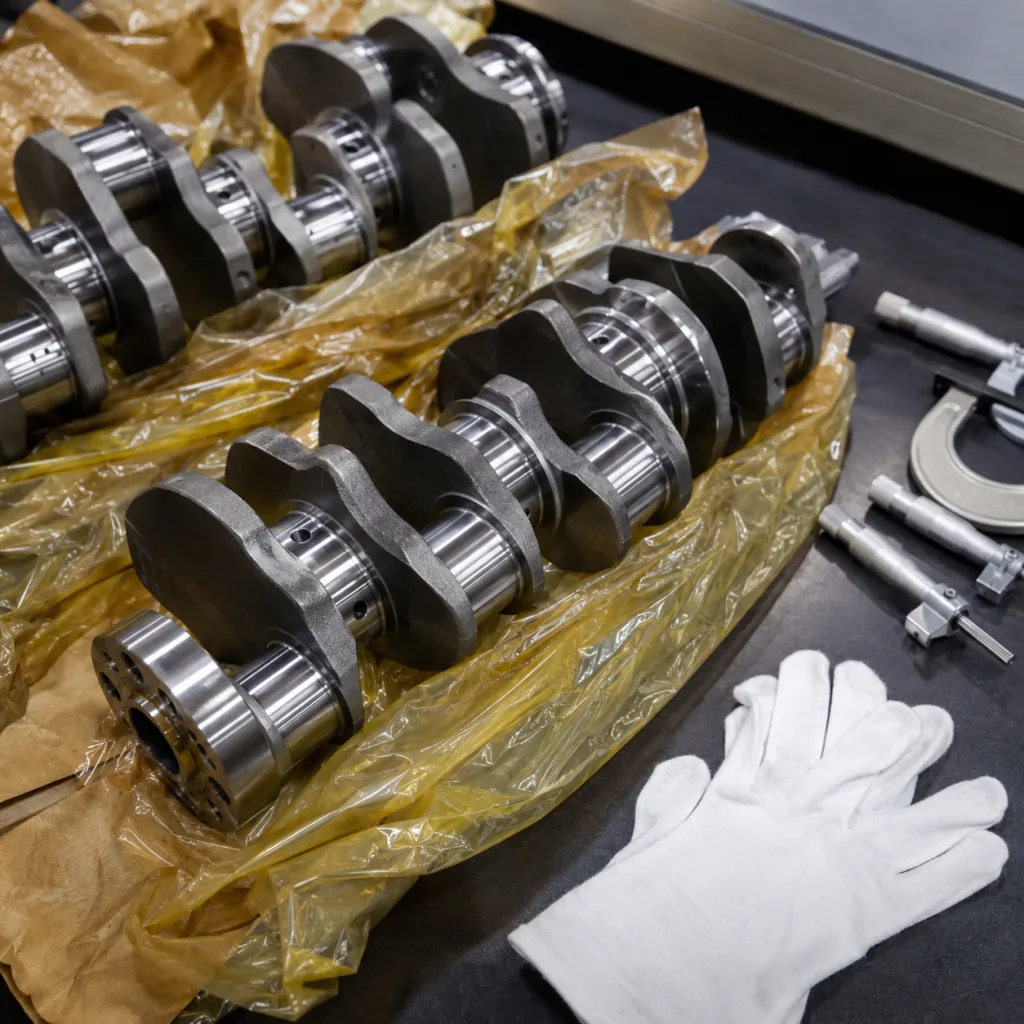
For repair-chain buyers, installation consistency is especially important. A technically correct camshaft should arrive with clean surfaces, protected journals, accurate labels, and cross-references that reduce branch-level selection errors. Packaging should prevent lobe impact, journal damage, contamination, and corrosion during international transport. Clear carton data also helps repair locations identify the correct intake or exhaust camshaft when similar references are stocked together.
Supplier Evaluation Checklist Before Purchase
A supplier audit for Chevrolet-pattern replacement camshafts should focus on evidence. The following checklist can be used for RFQ comparison, factory evaluation, or approval of a new reference:
Confirm IATF 16949:2016 and ISO 9001:2015 certificate validity and scope
Review part drawings, sample approval process, and cross-reference controls
Check material procurement records and heat-treatment traceability
Review calibration records for micrometers, profile equipment, roughness testers, and hardness testers
Confirm batch identification on parts, cartons, and inspection reports
Inspect anti-rust protection and export packaging method
Request warranty-claim response timing and root-cause analysis procedure
Review how engineering changes, superseded references, and customer SKU updates are controlled
Confirm that no supplier documentation implies vehicle manufacturer approval unless formally proven
Driventus is an independent aftermarket manufacturer; brand names are referenced for fitment only. For sourcing teams, this distinction is important. A replacement part can be designed for OE-equivalent fitment without being approved, sponsored, or endorsed by the vehicle manufacturer. Procurement documents, catalogues, online listings, and cartons should use fitment references accurately and avoid misleading approval language.
The strongest supplier discussions combine technical samples, clear drawings, realistic forecasts, and defined quality evidence. This reduces quotation ambiguity and helps both parties confirm whether the proposed camshaft Chevrolet replacement programme is suitable for the intended market, warranty policy, and distribution model.
Frequently asked questions
Provide the engine application, camshaft position, annual volume, target market, packaging needs, and any verified drawing, sample, or OE cross-reference. Photos can help at the first stage, but dimensional confirmation is required before production approval.
Yes. Driventus can support private-label cartons, customer SKU mapping, and mixed-reference export shipments where the commercial and technical requirements are agreed. Label content must remain accurate and avoid any unauthorised brand approval claims.
Validation normally includes dimensional inspection, journal and lobe checks, hardness testing, surface review, traceability control, and packaging verification. Customer-specific inspection reports can be agreed for new references or higher-volume programmes.
For drawings, samples, or a current sourcing list, contact Driventus to confirm fitment, documentation, MOQ, and lead time. You can [request a quote](/contact.html)