engine bearing · 2026-06-06

Engine Bearing Honda OEM Supplier: Sourcing Guide

Procurement teams searching for an engine bearing Honda OEM supplier are usually managing more than unit cost. They need repeatable shell geometry, stable overlay thickness, controlled oil clearance, reliable batch traceability, and documentation that supports incoming inspection and field performance. For Honda-fit applications, sourcing decisions often span OE-equivalent replacement demand, distributor range coverage, and production support for regional engine rebuild programmes. Driventus supplies engine bearings from Taizhou, Zhejiang, under IATF 16949:2016 and ISO 9001:2015 quality systems, with export experience in more than 60 countries. Driventus is an independent aftermarket manufacturer; vehicle brand names are used for fitment reference only. This guide outlines the checks, comparison points, and qualification documents that help buyers reduce sourcing risk across the EU, UK, US, Canada, Australia, Brazil, and other export markets.

What buyers should verify in a Honda engine bearing source

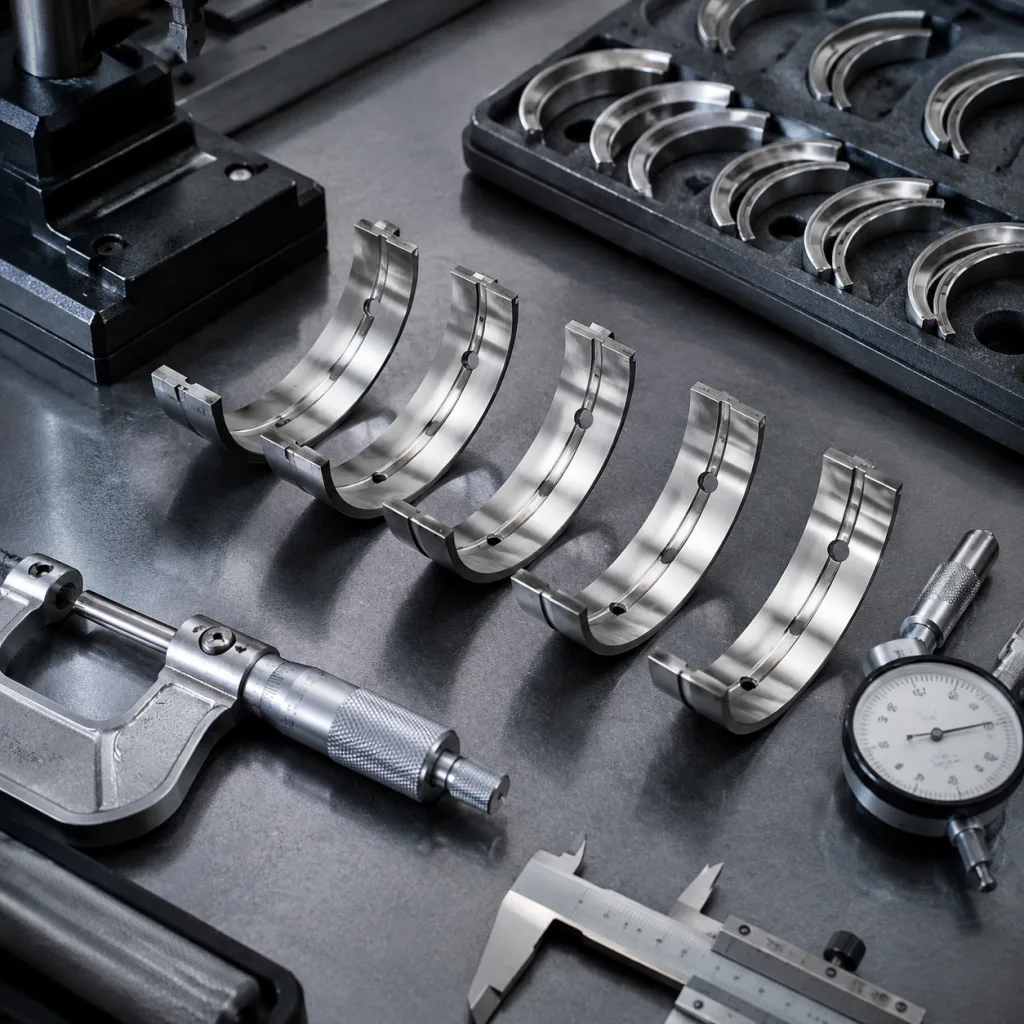
Fitment data is only the starting point for engine bearing procurement. Before approving a supplier, buyers should confirm the bearing family, material construction, nominal wall thickness, oil clearance range, and traceability method for each SKU or bearing set.

Minimum sourcing checks

  • Journal diameter and shell thickness match the intended engine application
  • Backing material, such as lead-bronze or aluminium-based alloy, aligns with the build specification
  • Overlay composition, bonding, and surface finish are controlled by a defined process route
  • Part marking, carton labelling, and lot coding allow batch-level traceability
  • Fatigue, corrosion-resistance, and running-in performance data can be provided when requested

It is also important to understand the supplier’s intended channel. Some factories focus on replacement distribution, others on private-label programmes, and a smaller group can also support production-oriented sourcing. A supplier able to serve all three models usually has stronger process discipline, clearer documentation, and more predictable lead-time control. For a wider view of available parts, see our catalog and our engine components range.

Specification points that matter in qualification

Engine bearings are compact components, but their working margins are tight. For Honda-fit applications, qualification should emphasise dimensional stability, metallurgy, and cleanliness rather than relying on visual appearance alone.

</tr></thead><tbody> </tbody></table>Common buyer requests include dimensional inspection reports, material declarations, and RoHS/REACH status where applicable. In European supply chains, REACH (EC) No 1907/2006 declarations are often part of supplier onboarding, especially for distributors and industrial buyers with formal compliance files. When a programme requires a special width, coating, bearing grade, or set configuration, our custom manufacturing service can review drawing-based production and feasibility.

How Driventus supports OEM and aftermarket sourcing

Driventus operates as a B2B parts manufacturer, not as a representative of any vehicle brand. That distinction is important for documentation, claims language, packaging, and channel positioning. We supply aftermarket distributors, OEM and Tier-1 purchasing teams, private-label brands, and multi-location repair networks that require consistent replenishment.

For sourcing teams, the main points are:

  • IATF 16949:2016 and ISO 9001:2015 quality management systems
  • Export experience across more than 60 countries
  • Drawing review for private-label, special-fitment, or controlled-application programmes
  • Batch traceability supported by pre-shipment inspection records
  • Consolidated supply options for engine, powertrain, and related replacement parts

If your programme requires a structured approval file, our quality system page explains the core documents typically shared during supplier qualification. We can also align labels, carton layouts, barcodes, and packing formats with warehouse receiving rules, helping distributors reduce inbound errors and improve stock control.

Comparison of supply models for buyers

Most procurement teams choose between three practical supply models. The right route depends on MOQ, forecast stability, validation requirements, packaging control, and how quickly the range needs to launch.

Item What to verify Why it matters
Shell thicknessMeasured at multiple controlled pointsDirectly affects installed oil clearance
Housing bore fitConsistency across the production batchHelps prevent local high spots and uneven crush
Overlay thicknessMaintained within process limitsSupports seizure resistance and conformability
Surface roughnessStable, measured, and documentedHelps establish a reliable oil film
Backing hardnessControlled within internal specificationSupports crush retention and seating stability
PackagingVCI protection, correct labels, and lot codesReduces transit damage, corrosion risk, and SKU mix-ups

</tr></thead><tbody> </tbody></table>For Honda-fit applications, many buyers begin with catalogue parts to confirm market demand, then move selected SKUs into private label or drawing-based supply once volumes become predictable. This staged approach reduces launch risk, keeps inventory flexible, and gives both sides time to confirm test criteria, packaging requirements, and inspection standards. If you already have target volumes, reference numbers, drawings, or validation requirements, use request a quote to begin the sourcing review.

Validation, audit, and lead-time expectations

A supplier audit should look beyond certificates. For engine bearings, buyers should review the process flow, incoming material controls, machining and forming stages, thickness measurement methods, surface cleanliness controls, final inspection, and packing discipline. Mixed-lot prevention is especially important when multiple similar bearing sets are handled in the same warehouse or production area.

Common validation documents

  • Batch dimensional inspection report
  • Material certificate or composition declaration
  • PPAP-style submission package when the programme requires it
  • Control plan and process flow summary
  • Packaging specification, carton layout, and label sample
  • Traceability record linking production lot, inspection data, and shipment details

Lead time depends on whether the bearing is stocked, scheduled for routine production, or made to order. Stocked SKUs can usually move faster, while custom builds require drawing review, tooling or fixture confirmation, sample approval, and first-article inspection. Export buyers should expect realistic dispatch windows rather than unsupported promises of unusually short delivery. This matters when qualifying an engine bearing Honda OEM supplier for multi-market replenishment, where one delay can affect several warehouses. Where performance testing is required, buyers may use internal durability protocols or relevant recognised methods, such as SAE J2527 for related component validation, depending on the programme scope.

Frequently asked questions

Yes. We support catalogue supply and private-label programmes. Fitment is based on buyer specifications and part references. Brand names are referenced for fitment only.

We can provide dimensional reports, material declarations, traceability records, and quality documents aligned to IATF 16949:2016 and ISO 9001:2015 workflows.

Yes. Drawing-based sizes, packaging formats, and labelling can be reviewed through our custom manufacturing process, subject to MOQ and technical confirmation.

If you are building a sourcing shortlist for Honda-fit engine bearings, send your target part references, annual volume, and packaging requirements. Request a quote at /contact.html.

Request a Quote
Supply model Best for Buyer advantage Typical trade-off
Standard replacement stockDistributors and wholesalersFaster replenishment and easier range expansionLess customisation
OE-style private labelRegional brands and channel ownersBetter margin control and brand consistencyRequires packaging setup and artwork approval
Drawing-based productionOEM, Tier-1, and engineered programmesExact technical fit and controlled specificationHigher validation effort and longer preparation time