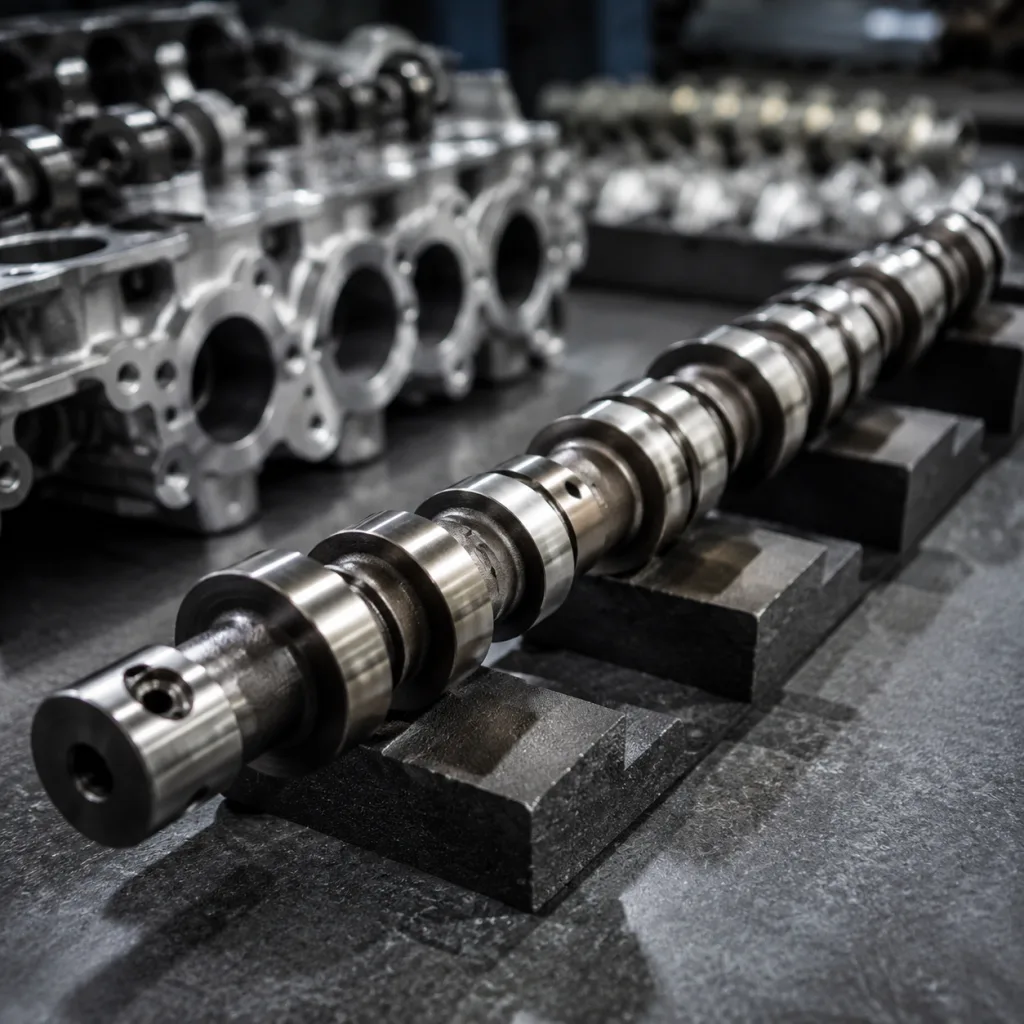
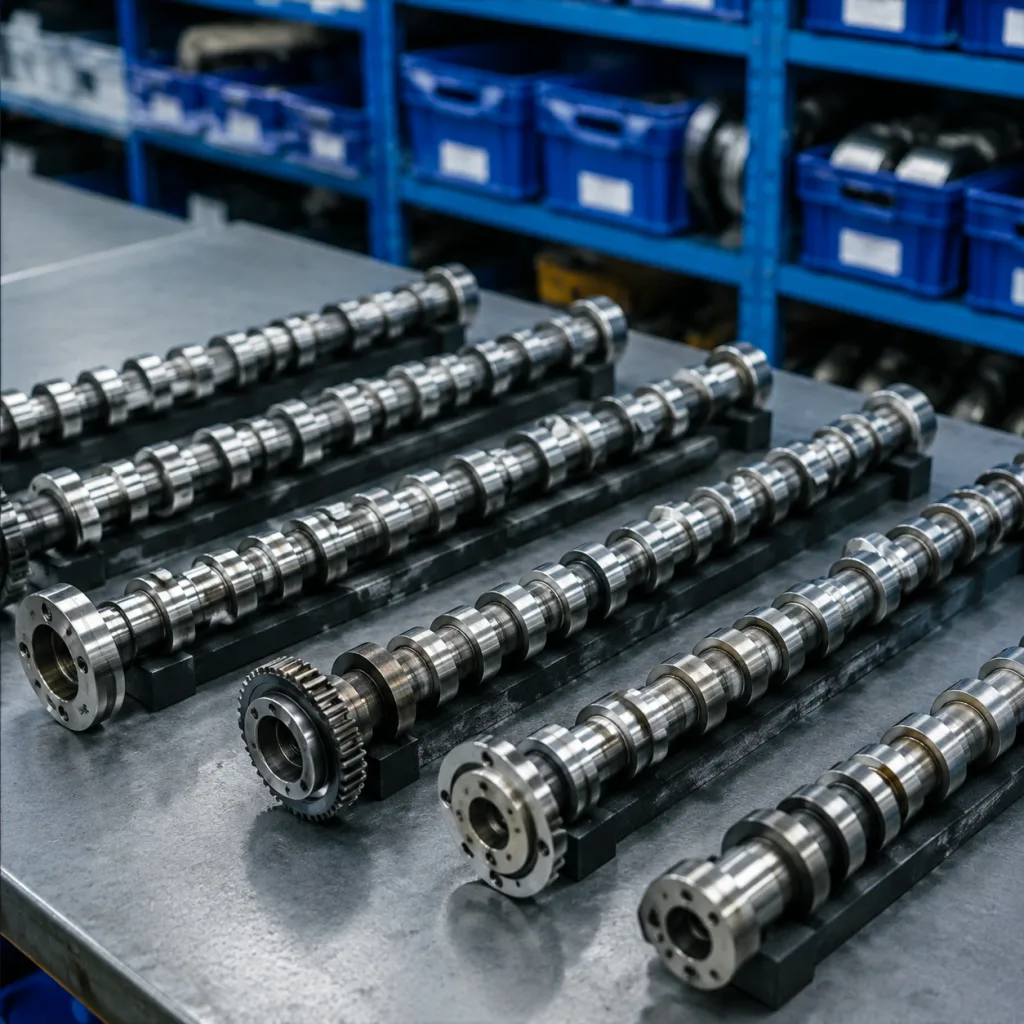
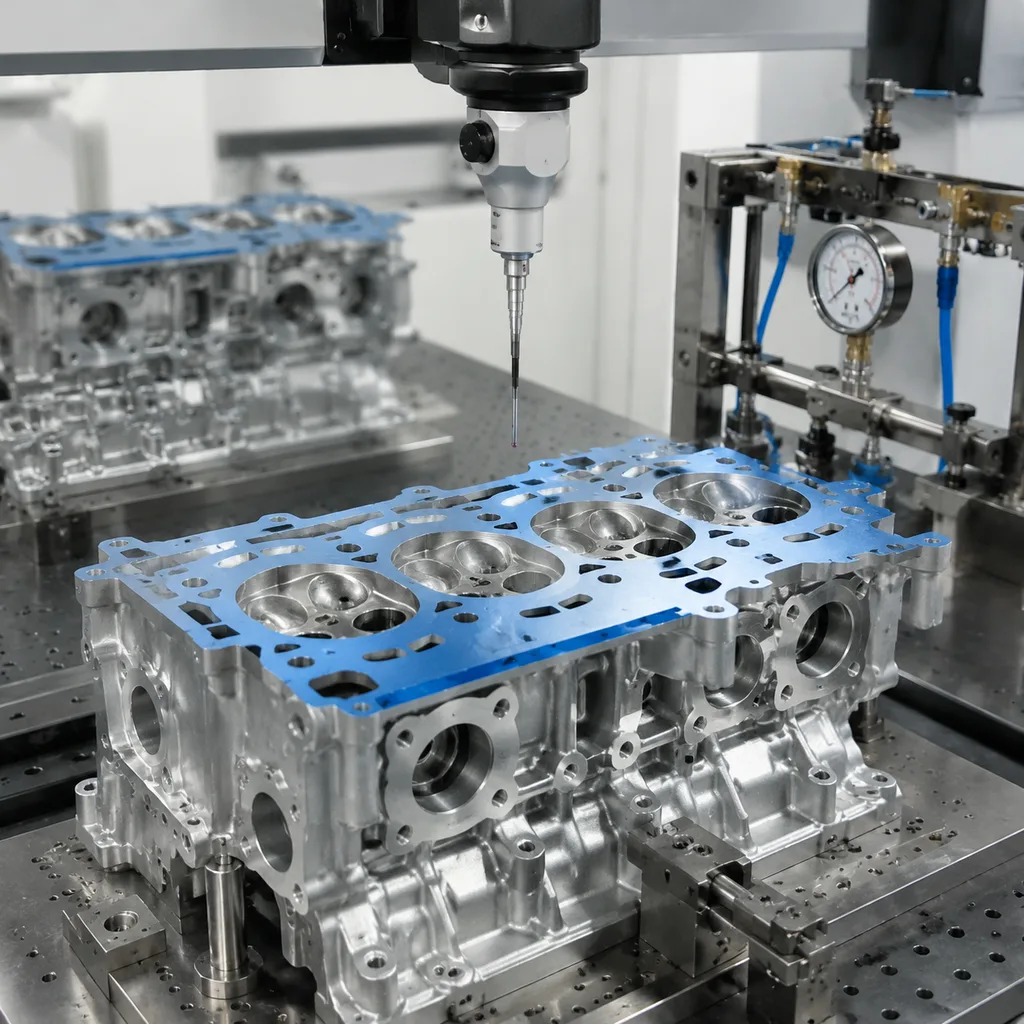
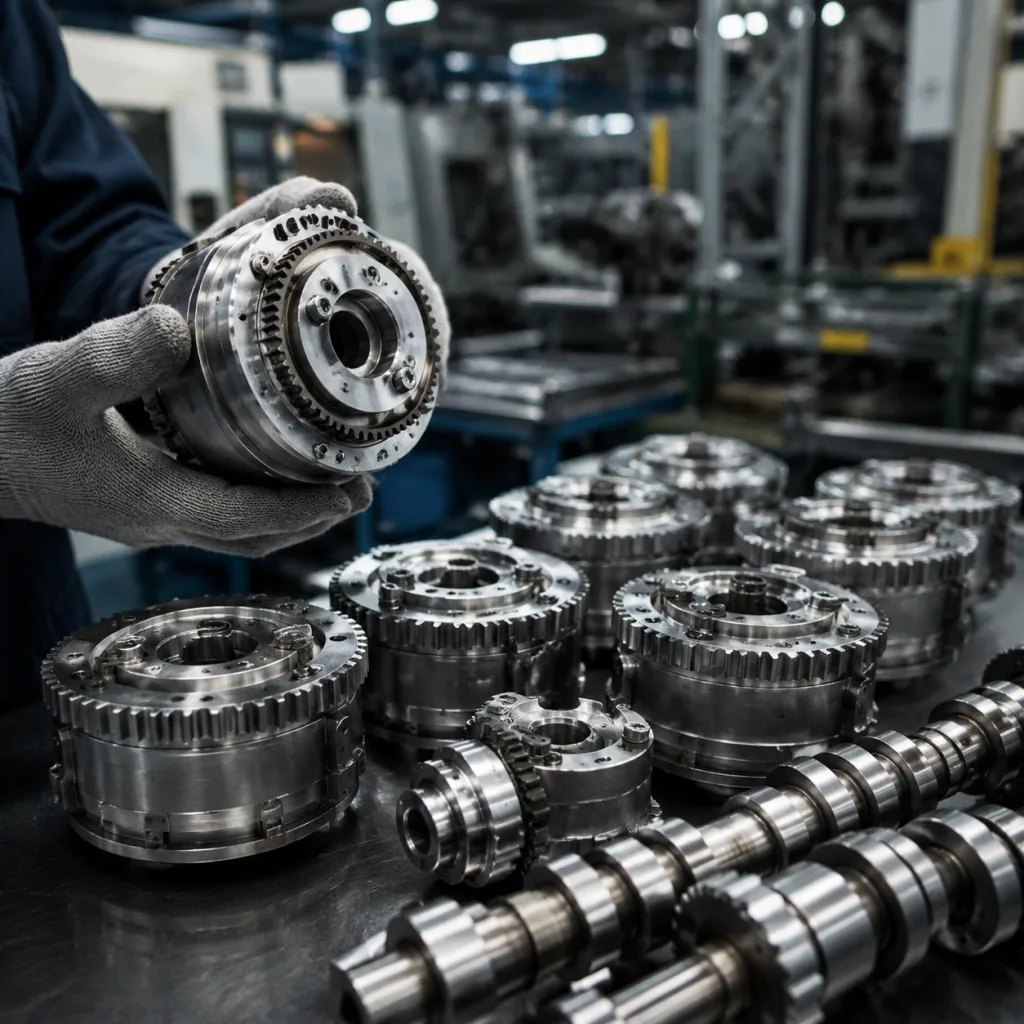
A camshaft for BMW 5 Series OE equivalent replacement is not a catalogue shortcut. It is a controlled match to the engine family’s valve-timing geometry, journal layout, lobe profile, oil-feed design, thrust control, surface hardness, and sensor interface. Get one of those details wrong and the cost appears later: noisy valvetrain operation, fast lobe wear, low oil pressure at the journals, timing-correlation faults, or poor compatibility with hydraulic lifters, followers, and variable valve timing systems. For importers, repair-chain buyers, and aftermarket distributors, the real sourcing question is simple: can the supplier prove the part is functionally equivalent before it enters your stock system? This article shows how Driventus specifies, manufactures, and validates OE-equivalent camshafts for BMW 5 Series applications in the independent aftermarket. Driventus is an independent aftermarket manufacturer; brand names are referenced for fitment only.
Start With the Equivalence Boundary, Not the Catalogue Line
“OE equivalent” should be treated as an engineering boundary. It means the replacement camshaft reproduces the functional requirements of the original part family for the stated application. It does not mean vehicle manufacturer approval, sponsorship, or endorsement.
For a camshaft for BMW 5 Series OE equivalent programme, the boundary must cover the features that affect fit, lubrication, timing, and ECU signal quality. Those include base-circle diameter, lobe lift, lobe phasing, journal diameter, thrust-face position, timing sprocket interface, oil-feed passages, and camshaft position sensor trigger geometry.
BMW 5 Series coverage is broad. Petrol and diesel engines, different generations, and intake/exhaust variants can look similar while carrying different functional geometry. A sourcing file should therefore identify each camshaft by engine code, shaft position, timing architecture, valve-actuation layout, and construction method before price comparison begins.
Fitment variables that usually decide the part family include:
Intake or exhaust camshaft position
Single VANOS, double VANOS, or non-variable timing architecture
Hollow or solid shaft construction
Cast, forged, or assembled camshaft design
Sensor trigger wheel or reluctor geometry
Journal count, oil-feed location, and thrust-control layout
Driventus supports OE part-number cross-references when customers provide them, including generic references such as OE 06A… or OE 11251… where relevant to the inquiry. Cross-references are used for fitment identification and purchasing alignment only, not as a claim of brand approval.
Where BMW 5 Series Camshaft Sourcing Fails
Most camshaft sourcing problems are not dramatic at sample review. They appear after installation, when a small geometry error becomes an engine behaviour problem. A few microns of journal variation can change oil clearance. A small phase-angle shift can affect valve events, idle stability, emissions behaviour, and diagnostic response. A rough lobe or journal finish can shorten the life of the lubrication film.
That is why dimensional approval should be tied to the actual camshaft family, not to a generic “fits BMW 5 Series” listing. Driventus inspection plans are built around customer drawings, reverse-engineered samples, or approved technical data supplied for the programme. Depending on the application, release controls may include coordinate measurement, profile checking, roughness testing, hardness verification, and runout measurement before shipment.
Failure mode to prevent
Control point
Procurement relevance
Low journal oil pressure or bearing noise
Journal diameter
Oil clearance and bearing support
Incorrect valve event
Lobe lift
Valve opening accuracy
Timing-correlation fault or poor response
Lobe phase angle
ECU timing logic and engine behaviour
Noise, drag, or uneven wear
Shaft straightness
Assembly fit and rotation quality
Scuffing or weak oil film
Surface roughness
Lubrication stability
Excessive end float
Thrust face width
Axial control
Sensor signal error
Trigger feature datum and edge position
ECU signal accuracy
</tr></thead><tbody> </tbody></table>Buyers should request the agreed drawing tolerance table for the specific camshaft family. Driventus can align control plans with customer-specific requirements under IATF 16949:2016 and ISO 9001:2015 quality-management principles through our quality system.
Material Choice: Match the Wear System, Not Just the Shaft Shape
A camshaft lives inside a wear system. The lobe, follower or lifter, oil film, surface hardness, and heat-treatment route must work together. A replacement shaft that looks correct but uses the wrong material route can polish too quickly, pit, scuff, or create abnormal wear debris during cold starts and high-load operation.
Depending on the programme, Driventus may manufacture camshafts from chilled cast iron, alloy cast iron, forged steel, or assembled steel construction. The correct route depends on the original design, follower type, oiling environment, and the buyer’s target market. Material substitution is not treated as a purchasing shortcut; it requires technical review because lifter and follower systems need compatible hardness, surface structure, and wear behaviour.
Typical material and process controls include:
Chemical composition verification by batch
Metallographic checks for casting or forging structure
Controlled induction hardening or chilled-surface validation where specified
Case depth and surface hardness testing on lobes and journals
Magnetic particle inspection or equivalent crack screening where applicable
Oil-hole deburring and washing to reduce early lubrication failure
Corrosion-protective packaging for ocean freight and warehouse storage
For EU and UK importers, material declarations may need to support REACH (EC) No 1907/2006 review. For North American, Middle Eastern, African, and Australian buyers, documentation often focuses on traceability, warranty analysis, packaging durability, and repeat-shipment consistency.
A Practical Approval Sequence Before Mass Shipment
Appearance is a weak validation method. It may catch a wrong casting or obvious machining error, but it will not prove valve timing, journal clearance, trigger geometry, or surface durability. For new aftermarket programmes, Driventus uses staged approval so the buyer can separate sample acceptance from mass-production release.
A practical approval sequence is:
1. Map the sample against the target camshaft or customer drawing. 2. Verify hardness and microstructure after heat treatment. 3. Check trial assembly points: journals, thrust faces, sprocket interfaces, and sensor features. 4. Confirm rotation and runout to detect bending or machining distortion. 5. Inspect surface finish on cam lobes and journals. 6. Review batch traceability before export packing.
Where required, customers can request PPAP-style documentation, control plans, inspection reports, and material certificates. Driventus can also support custom manufacturing for distributors or Tier-1 buyers that need private-label specifications, market-specific packaging, application-specific inspection sampling, or controlled engineering changes.
Published vehicle emissions standards such as ECE R-83 matter because valve timing affects combustion and diagnostic behaviour. Still, component suppliers should not claim emissions approval unless a specific certified vehicle-level programme exists. Driventus avoids such claims and limits documentation to component-level conformity and customer-defined validation.
Buyer Scenario: Consolidating Several 5 Series Generations
A common distributor request sounds simple: consolidate several BMW 5 Series camshaft applications into one purchasing project. The risk is that similar applications get merged too early. Intake and exhaust positions may be confused. VANOS and non-VANOS variants may be mixed. Shaft construction, trigger features, or oil-feed locations may differ even when the commercial description looks close.
To avoid that, build the sourcing file before volume negotiation. Confirm both the engineering requirement and the commercial release conditions, especially when the same inventory will supply multiple workshop chains or regional warehouses.
Recommended sourcing checks:
Confirm exact BMW 5 Series generation, engine family, intake or exhaust position, and timing system.
Provide OE cross-reference data, sample parts, or drawings where available.
Confirm whether the requirement is for chilled cast iron, forged steel, or assembled shaft construction.
Request lobe profile, journal diameter, runout, hardness, and roughness inspection records.
Review IATF 16949:2016 and ISO 9001:2015 certification status.
Define export carton, palletisation, corrosion protection, and barcode label requirements.
Agree warranty-analysis steps, including retained batch samples where programme volume justifies it.
Check whether the supplier can consolidate related engine components to reduce shipment complexity.
Driventus exports engine and powertrain components from Taizhou, Zhejiang, to more than 60 countries. Buyers can review our catalog for adjacent product categories including pistons, crankshafts, gaskets, water pumps, turbochargers, and other replacement parts for distributor programmes.
Q&A for Release Files, Labels, and Traceability
What should be in the release file? A typical B2B release package includes the confirmed cross-reference list, drawing revision or approved sample reference, inspection standard, packaging specification, label format, and agreed incoterms. This keeps engineering, purchasing, quality, logistics, and warehouse teams working from the same definition.
How is batch traceability handled? Driventus can support traceability by production lot, heat-treatment batch, and inspection record. For repeat orders, this helps buyers compare warranty claims against shipment data instead of restarting the investigation for every case.
Which documents are useful before shipment? A practical package may include:
Quotation sheet with application scope and exclusions
Product drawing or approved sample record
Control plan and critical-characteristic list
Material and hardness report format
Pre-shipment inspection report
Packaging images and carton specification
Country-specific label or barcode requirements
Does supplier documentation replace buyer validation? No. It reduces ambiguity, but it does not replace the buyer’s own fitment validation. For new programmes, share the application list, target annual volume, destination market, and packaging expectations before requesting tooling, sampling, or programme pricing.
Frequently asked questions
No. OE equivalent means the replacement part is designed to match functional dimensions, materials, and performance requirements for the stated application. Driventus does not claim vehicle manufacturer approval, sponsorship, or endorsement. Driventus is an independent aftermarket manufacturer; brand names are referenced for fitment only.
Provide the vehicle generation, engine code, intake or exhaust position, target OE cross-reference if available, annual volume, packaging needs, and destination market. A sample or technical drawing improves quotation accuracy and reduces fitment risk.
Yes. Inspection reporting can be agreed by programme, including dimensional checks, hardness results, surface-finish data, batch traceability, and packaging verification. The report scope should be confirmed before sampling and mass production.
For application review, sampling, or distributor programme pricing, send your camshaft requirements and target volumes to [request a quote](/contact.html).